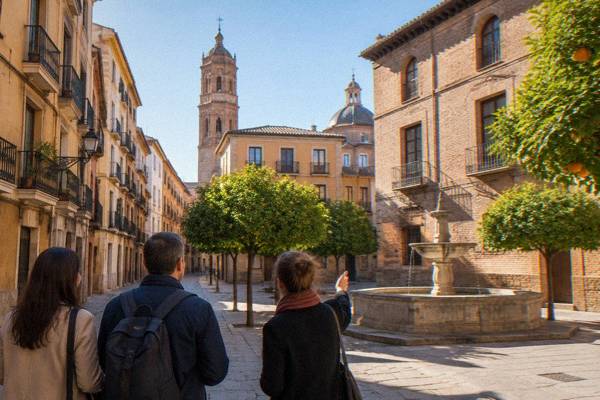
What Is The Prettiest City To Visit In Spain?
Zaragoza, the capital of Aragon on the Ebro, makes one of the strongest cases for the prettiest city in Spain: the Basílica del Pilar, the Aljafería, Roman Caesaraugusta and Mudéjar towers, all in one walkable old town.
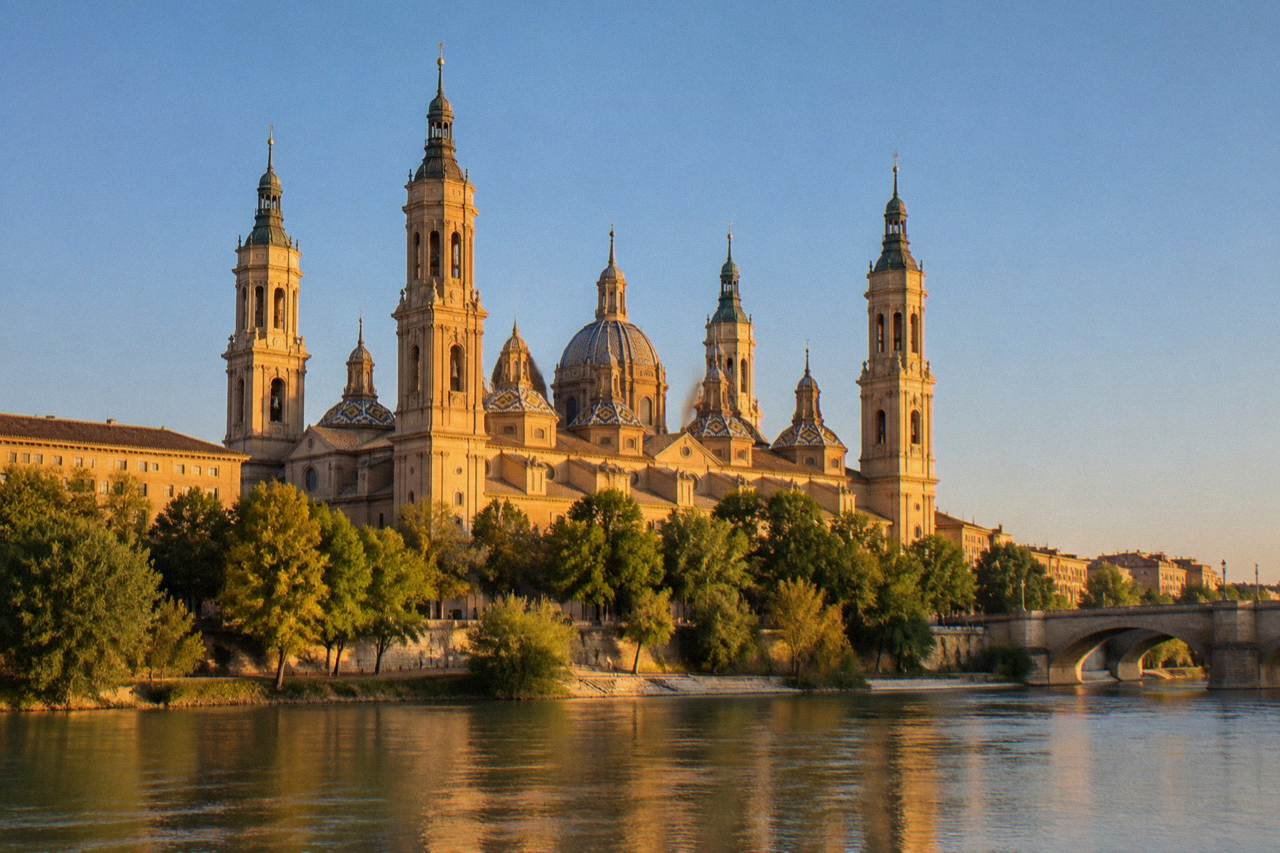
Beauty contests between cities are opinions, not measurements, but Zaragoza, the capital of Aragon on the Ebro in north-east Spain, has a claim built from things anyone can check: a monumental square where a baroque basilica and a Gothic cathedral stand a few hundred metres apart, a fortified Moorish palace, the exposed remains of the Roman city of Caesaraugusta under the modern streets, and a skyline of Mudéjar brickwork inscribed on the UNESCO World Heritage list as part of the "Mudejar Architecture of Aragon" item of 1986. This page makes the case for Zaragoza as the prettiest city to visit in Spain, with verified entry prices, opening realities and the features that give it an edge over the better-known coastal names.
What Is The Prettiest City To Visit In Spain?
On the evidence a visitor can verify, Zaragoza is one of the strongest candidates for the prettiest city in Spain, because it concentrates a baroque basilica, a Gothic cathedral, a Moorish palace and four Roman museums inside one walkable old town, framed by the Ebro and the Puente de Piedra. No ranking crowns a prettiest city, and none is needed: the case rests on the buildings themselves and the fact that almost all of them sit within a short walk of Plaza del Pilar.
That concentration is what separates Zaragoza from cities that spread their beauty across long distances. The Basílica del Pilar is free to enter, with its tower viewpoint priced at EUR 6 for an adult, and the municipal monument timetable puts its doors open through the evening in October. La Seo, the cathedral of San Salvador, charges EUR 10 general admission and that ticket also covers the Museo de Tapices, the Museo Pilarista and the Rosario de Cristal. The Aljafería, the fortified palace of the taifa kings of Zaragoza, costs EUR 7 general or EUR 9 with a guided tour, and is open daily 10:00-18:00 in October. Three architectural eras, three buildings, one short walk along the old Roman cardo.
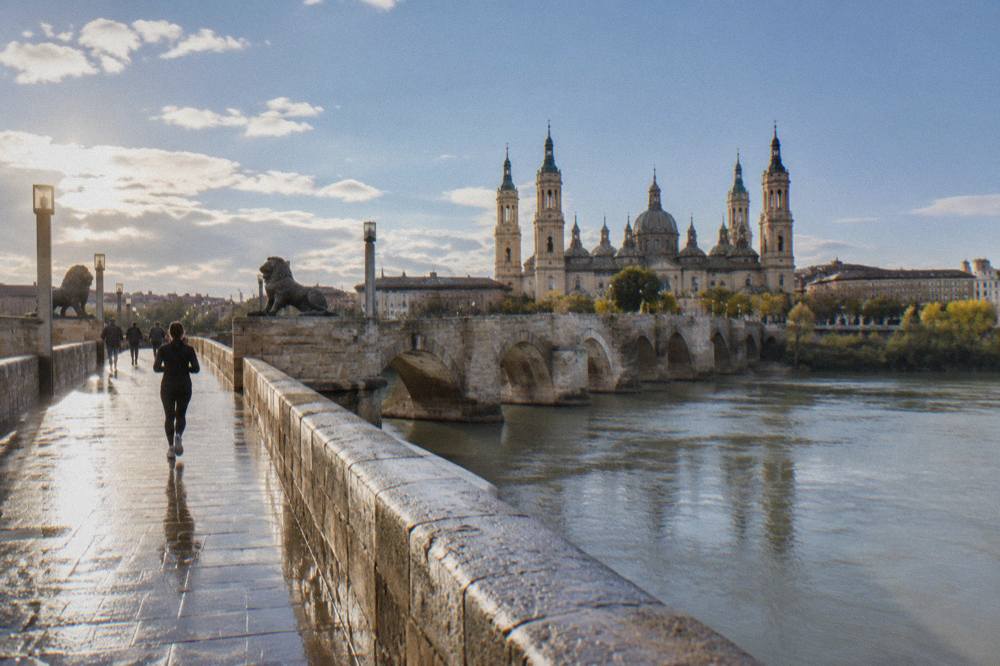
The comparison with Spain's famous beauty spots is fair because Zaragoza does not trade on one landmark. Granada has the Alhambra, Seville its cathedral and Córdoba its mosque, but Zaragoza layers its eras vertically: you stand in Plaza del Pilar, see the baroque Pilar and the Mudéjar-influenced towers, cross the Puente de Piedra, a bridge whose current structure was built from 1401 and opened in 1440, and look back at a skyline that has been painted, described and photographed for centuries. The four bronze lions guarding the bridge date from 1991, a modern touch on a medieval structure.
Why Does Zaragoza Make A Stronger Case Than The Famous Cities?
Zaragoza's advantage is density and price: its four Roman museums sell a combined bono at EUR 7, its basilica is free to enter, and its old district packs a Moorish palace, two cathedrals and Roman ruins into a compact centre that costs far less to visit than the headline cities of Andalusia or the Catalan coast. The beauty is not one monument but a sequence of them, and the sequence can be walked in a single day without a car, a tour bus or a transfer.
The Roman layer is the part most visitors to Spain never expect. Caesaraugusta, the Roman city whose name is the ancestor of the modern name Zaragoza, left a forum, a river port, baths and a theatre, each now a museum. The municipal timetable lists the Foro at EUR 4, the Termas and Puerto Fluvial at EUR 3 each, and a four-museum bono at EUR 7, with free entry the first Sunday of the month. The theatre, the Caesaraugusta museums' centrepiece, sits directly behind La Seo, so the Gothic cathedral and the Roman stage are neighbours.
Then there is the light. AEMET's 1981-2010 normals for the Zaragoza Aeropuerto station show October at a 21.4 C mean maximum with 195 hours of sunshine, and May at 24.1 C with 274 hours, which means the city's stone and brick are photographed under clear skies for most of the visitor year. The same table shows May as the wettest month at 44 mm and July and August the driest at 17 mm, so the prettiest months for pictures are the shoulder seasons, when the mean maximum sits between 17 and 24 C and the square is not yet summer-hot.
Which Sights Give Zaragoza Its Beauty?
The five anchors are the Basílica del Pilar, La Seo, the Aljafería, the Puente de Piedra and the Caesaraugusta museum set, supplemented by the Parque del Agua, a green space of more than 120 hectares in the Ranillas meander beside the Expo 2008 site, and the Museo Goya, reopening on 9 October 2026. Each anchor is independently verified as open and priced, which is what makes the itinerary real rather than aspirational.
The Pilar is the emotional centre. The basilica's own page confirms entry to the temple is free, and the municipal October timetable lists the tower viewpoint at EUR 6 adult, EUR 5 for over 65s and residents, EUR 4 for ages 13-18, students and groups, free under 12, with last access 30 minutes before close. One honest caveat: the dome known as Regina Patriarcharum has been under a restoration agreed on 23 January 2026, funded with EUR 600,000 by Fundación Ibercaja, and its completion is not confirmed, so check the basilica's own notices before expecting a clear dome view. The rest of the planning pages sit on Zaragoza Travel Guide.
| Sight | Verified entry price | Notes from the municipal October timetable |
|---|---|---|
| Basílica del Pilar | Free | Tower viewpoint EUR 6 adult, EUR 4 ages 13-18 |
| La Seo | EUR 10 general | Includes Museo de Tapices, Museo Pilarista, Rosario de Cristal |
| Aljafería | EUR 7 general, EUR 9 guided | Free the 1st and 3rd Sunday and Monday |
| Caesaraugusta museums | EUR 3-4 each, EUR 7 bono | Free the 1st Sunday of the month |
| Museo Goya | Price not published | Reopens 9 October 2026, closed Mondays |
The Aljafería deserves its own paragraph because it is the palace most comparable to the Alhambra, on a smaller and quieter scale. The palace is open daily 10:00-18:00 in October, with Spanish guided tours at 10:30, 12:30, 13:30, 15:00 and 16:00, and last access 45 minutes before closing. The Aljafería's interiors reward the detail-oriented: the carved plasterwork of the oratory and the arcade of the courtyard are the reason art historians put the building on the same family tree as the Alhambra and Seville's Alcázar. For the practical question of access, visiting the Aljafería is straightforward without a car, as the tram runs past it.
When Is Zaragoza At Its Most Beautiful?
The two best windows are mid-October during the Fiestas del Pilar, which the city's official programme holds from 10 to 18 October 2026 with the Ofrenda de Flores on 12 October, and the May shoulder season, which AEMET's 1981-2010 normals place at a 24.1 C mean maximum with 274 sunshine hours. October adds flowers, concerts and fireworks to the stone; May adds long clear evenings to the Ebro banks without festival crowds.
The Ofrenda de Flores is the single most photogenic event on the Spanish autumn calendar. The city's official pages record 994 registered groups processing from Paseo de la Independencia to Plaza del Pilar, and the programme extends to jota contests, concerts and a fireworks schedule that includes displays after the opening pregón on 10 October and a closing show by the Ebro on 18 October. Venezuela is the guest country for 2026. Anyone planning around the festival should read what happens on 12 October in Spain before booking, because the city fills.
For weather-based planning, the honest numbers matter. The same AEMET table shows July as the hottest month at a 32.4 C mean maximum and the sunniest at 348 hours, which makes summer photography excellent but walking tiring, while January sits at a 10.5 C mean maximum with 131 hours of sun. The rain question answers itself from the table: 322 mm across the whole year, spread over 51.1 days of 1 mm or more, which is drier than most of northern Spain.
| Month | Mean max C (1981-2010) | Rain mm | Sun hours | Why it suits a visit |
|---|---|---|---|---|
| March | 17.3 | 19 | 217 | Mild, clear, pre-festival quiet |
| May | 24.1 | 44 | 274 | Warm evenings, green Ebro banks |
| July | 32.4 | 17 | 348 | Sunniest, but hot for walking |
| October | 21.4 | 36 | 195 | Fiestas del Pilar, 10-18 October |
How Do You See The Prettiest Parts Without Missing Any?
The practical answer is to walk the old district with a guide on your first day, then return to whatever caught your eye, and the guided options that fit this are the 2.5-hour historical tour of the old district, the free monumental tour, and a private walk with a local, all of which start from the city centre and cover the Pilar, La Seo and the Roman core in one loop. A first-day orientation walk is the difference between seeing the city and understanding it.
The Historical Tour of the Old District with a Guide is the natural fit for the prettiest-city question because its route is precisely the sequence of beautiful things: the old district, the two cathedrals, the Roman streets beneath them. It runs about 2.5 hours and the listing prices it from $106.92 per person, rated 5 from 14 reviews. Check availability if that route matches your dates.
For a budget-first approach, the Free Monumental Tour of Zaragoza, tip-based and rated 4.65 from 64 reviews, covers the monumental core at no fixed cost, and the Indispensable Zaragoza Free Tour of the Old Town, run on GuruWalk with a local guru, is rated 4.97 from 576 reviews over two hours. For visitors who want the itinerary shaped around themselves, the Private Walking Tour with a Local runs 2 to 6 hours from $54.02 per person, rated 4.7 from 86 reviews. Between them, the free things to do in Zaragoza and the city's own free-entry days, a beautiful week can be assembled cheaply.
Getting there is part of the argument for Zaragoza over the coastal beauties: high-speed trains from Madrid and Barcelona take about 1.5 to 2 hours into Zaragoza-Delicias, the urban tram and bus single is EUR 1.70, and Aragon has no tourist tax, a point the regional government confirmed when it ruled one out in September 2026. The comparison with Valencia and the question of whether Zaragoza is worth visiting both come down to the same trade: less famous, less crowded, and dense with the same architectural pedigree.
Common Questions About The Prettiest City In Spain
What is the prettiest city to visit in Spain?
There is no official ranking, but Zaragoza, the capital of Aragon, makes one of the strongest verifiable cases: the Basílica del Pilar and La Seo facing each other across one square district, the Aljafería palace, four Roman museums and the Puente de Piedra over the Ebro, almost all within a short walk of Plaza del Pilar.
Is Zaragoza prettier than Barcelona or Seville?
Beauty is an opinion, but Zaragoza's advantage is density: two cathedrals, a Moorish palace and Roman ruins in one walkable centre, with free entry to the Pilar and a four-museum Roman bono at EUR 7. Barcelona and Seville are larger and more famous; Zaragoza is more compact and cheaper to see deeply.
What is the most beautiful building in Zaragoza?
The Basílica del Pilar is the city's icon and free to enter, though the Aljafería, the Moorish palace of the taifa kings open daily 10:00-18:00 in October at EUR 7 general admission, is the building art historians place alongside the Alhambra's tradition.
When should I visit Zaragoza for the best views?
Mid-October for the Fiestas del Pilar, held 10 to 18 October 2026 with the Ofrenda de Flores on 12 October, or May, which AEMET's 1981-2010 normals for the Zaragoza Aeropuerto station place at a 24.1 C mean maximum with 274 sunshine hours.
Is Zaragoza expensive to visit compared with other beautiful Spanish cities?
It is among the cheaper options. Entry to the Pilar is free, La Seo is EUR 10 including three further sites, the Aljafería is EUR 7, the tram and bus single is EUR 1.70, and Aragon has no tourist tax.
Can I see Zaragoza's prettiest sights in one day?
Yes. The Pilar, La Seo, the Puente de Piedra and the Caesaraugusta museums sit within a short walk of one another, and a guided old-district walk of about 2.5 hours covers the sequence with context. The Aljafería adds a tram ride and about two hours.
Zaragoza Travel Guide exists because the city rewards attention: the prettiest square district in Spain is a claim you can test on foot in an afternoon, and the entry prices above mean the test costs less than a dinner elsewhere.