Which City Is Better To Visit, Valencia Or Zaragoza?
An honest comparison of Valencia and Zaragoza, Spain, covering character, sights, costs, food and festivals, with verified Zaragoza figures to help you choose.
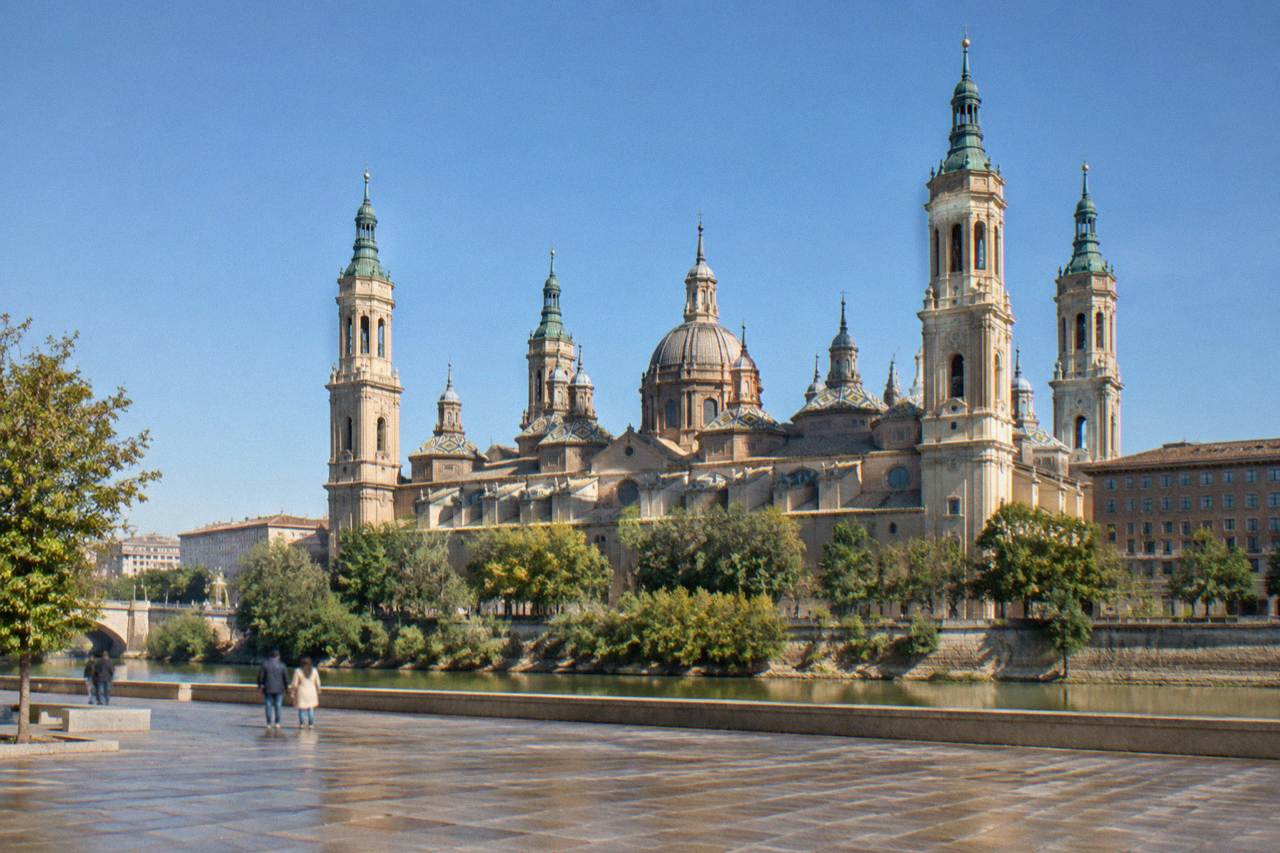
Zaragoza, Spain, the capital of Aragon on the Ebro, is an inland city of Mudéjar towers, Roman ruins and one of Europe's great Marian basilicas, while Valencia is a Mediterranean port known for its coastline, its modern arts-and-sciences complex and its own distinctive food culture. The two cities are often lumped together as "underrated Spanish alternatives", but they suit quite different travellers, and the honest answer to which is better depends almost entirely on what you want from the trip. This comparison leans on verified figures for Zaragoza, where the facts have been checked on official pages, and compares Valencia by character rather than by invented numbers, because no Valencia figure in this article has been verified and none should be guessed at.
Which City Is Better To Visit, Valencia Or Zaragoza?
Neither city is simply better: Valencia suits a traveller who wants the sea, modern architecture and a beach-and-city break, while Zaragoza suits a traveller who wants Roman ruins, Mudéjar architecture, two cathedrals close together and a big Spanish city that still feels lived-in rather than curated for visitors. Zaragoza is drier, more continental and inexpensive to move around in; Valencia is coastal and greener. If monuments, history and festivals are the priority, Zaragoza is the stronger pick; if the beach is non-negotiable, only Valencia qualifies.
That is the short version. The longer version is that the question usually hides a second one: what do you actually want to do all day? Zaragoza's old town packs the Basílica del Pilar, La Seo, the Roman forum, theatre, river port and baths of Caesaraugusta, and the Aljafería palace into a walkable core, and the city sits roughly midway between Madrid and Barcelona on the high-speed line, about 1.5 to 2 hours from either. Valencia has its own considerable strengths, and a fair comparison should say so, but this page can only quote verified numbers for one side of it, and does.
If you are weighing Zaragoza against other inland rivals too, the guide to how Zaragoza compares with Valencia covers the matchup in depth, and what Zaragoza is famous for lists the things that actually pull people here.
What Kind Of Trip Does Each City Suit?
Zaragoza suits a two-to-three-day city break built around monuments, museums, tapas and one of Spain's biggest festivals, the Fiestas del Pilar, which run 10 to 18 October 2026 with the Ofrenda de Flores on 12 October. Valencia suits a longer, slower trip where the beach, the sea and a modern showpiece complex carry the itinerary. Zaragoza is the pick for Roman and Islamic-era history; Valencia is the pick for coastline and contemporary architecture. Neither is a day trip from the other, so the choice is real.
The character difference matters more than any ranking. Zaragoza's climate is dry continental: AEMET's 1981 to 2010 normals for the Zaragoza Aeropuerto station show July, the hottest month, averaging a mean maximum of 32.4 C and just 17 mm of rain, with 348 hours of sunshine, while May is oddly the wettest month at 44 mm. There is no sea and no coast; the water in the picture is the Ebro. The windy city question comes up often, and the cierzo, the cold dry north-westerly that funnels down the Ebro valley, is real but qualitative; no speed figure is published for it.
What can be said honestly is that the two cities' strengths barely overlap, so a reader who wants both usually gives each a separate trip.
For a sense of Zaragoza's scope before deciding, the one-day itinerary answer shows how much of the old town fits into a single day, and the how many days you need answer sets realistic expectations.
How Do The Sights Compare Between Valencia And Zaragoza?
Zaragoza's core sights are the Basílica del Pilar, free to enter, with a tower viewpoint at EUR 6 for adults; La Seo cathedral at EUR 10 general admission including three museums; the Aljafería palace at EUR 7 general or EUR 9 with a guided tour; and the four Caesaraugusta Roman museums on a EUR 7 combined ticket. That is two cathedrals, an Islamic-era palace and four Roman sites in one walkable centre, at prices checked on official pages.
The density is the argument. Entering the Basílica del Pilar costs nothing, and the municipal monument timetable lists its hours, the Museo Pilarista's daily 10:00 to 13:30 and 16:00 to 20:00 opening, and the tower prices: EUR 6 adult, EUR 5 for over-65s and residents, EUR 4 for ages 13 to 18, students and groups of 20 or more, free under 12. La Seo's EUR 10 general ticket includes the Museo de Tapices, the Museo Pilarista and the Rosario de Cristal, and a general-plus-tower combination exists at EUR 12. The Aljafería opens daily 10:00 to 18:00 in October at EUR 7 general, EUR 9 guided, EUR 2 for students, over-65s and Carnet Joven holders, and free on the first and third Sunday and Monday of each month. The Caesaraugusta museums cover the forum at EUR 4, the baths and river port at EUR 3 each, and a four-museum bono at EUR 7.
One honest caveat for visitors: the Museo de Zaragoza's central building on Plaza de los Sitios is closed for Ministry of Culture works with no reopening date, so plan around it. The Museo Goya, meanwhile, reopens on 9 October 2026, Tuesday to Saturday 10:00 to 20:00 and Sundays 10:00 to 14:00, with its admission price not yet published.
| Zaragoza sight | General admission | What the ticket includes |
|---|---|---|
| Basílica del Pilar (temple) | Free | Entry to the basilica itself |
| Pilar tower viewpoint | EUR 6 | Tower mirador access, under 12s free |
| La Seo cathedral | EUR 10 | Museo de Tapices, Museo Pilarista, Rosario de Cristal |
| Aljafería palace | EUR 7 | Palace entry; EUR 9 with guided tour |
| Caesaraugusta four-museum bono | EUR 7 | Forum, baths, river port and theatre |
Valencia's headline sights, its modern sciences complex, its old silk exchange and its central market among them, are genuinely worth a trip, and saying otherwise would be as dishonest as inventing their prices. The fair comparison is not quality but kind: Valencia's showpieces are largely Gothic, modernist and ultra-modern, Zaragoza's are Roman, Islamic, Mudéjar and Baroque. A reader who has done Barcelona and Madrid and wants a third Spanish city with a different historical layer each time will find Zaragoza's stack unusual in Spain.
How Do Costs And Getting Around Compare?
In Zaragoza a single bus or tram fare is EUR 1.70, dropping to EUR 0.55 with a Tarjeta Bus, the airport bus is line 505 at EUR 4.65 single, and there is no tourist tax anywhere in Aragon, so the on-the-ground costs of a Zaragoza stay are low and fully verified. Valencia's costs cannot be quoted here because no Valencia figure has been verified for this comparison, and a guessed number would be worse than none.
Getting to Zaragoza is straightforward: high-speed trains from Madrid or Barcelona take about 1.5 to 2 hours to Zaragoza-Delicias, and the city is often visited as a stop between the two. Within the city, the tram and bus network uses the EUR 1.70 single, the tourist bus runs a 90-minute loop with 16 stops on a EUR 10, 24-hour hop-on-hop-off ticket payable in cash on board, and the Bizi bike-share day pass costs EUR 1 plus EUR 0.50 for the first 30 minutes of each trip. Drivers should note the ZBE low-emission zone in the Casco Histórico: sanctions have applied since 12 December 2025, Monday to Friday 08:00 to 20:00, for vehicles without a DGT environmental label. More of these guides are collected on Zaragoza Travel Guide.
| Zaragoza transport | Price |
|---|---|
| Bus or tram single | EUR 1.70 |
| Same trip with Tarjeta Bus | EUR 0.55 |
| Tourist bus, 24 h hop-on hop-off | EUR 10 |
| Airport bus (line 505) single | EUR 4.65 |
| Bizi day pass plus first 30 min | EUR 1 + EUR 0.50 |
One planning note that genuinely favours Zaragoza: Aragon's regional government explicitly ruled out a tourist tax in September 2026, citing the effect it would have on visitors, so accommodation prices carry no surprise levy. Whether Valencia's cost profile is higher, lower or the same is not something this page will assert.
Which City Is Better For Food And Festivals?
Zaragoza's festival argument is the Fiestas del Pilar, running 10 to 18 October 2026, with the Ofrenda de Flores on 12 October drawing 994 registered groups and close to 99,980 participants along the route from Paseo de la Independencia to Plaza del Pilar, and its food argument is an old-town tapas scene anchored in Aragonese cooking. Valencia's food and festival traditions, paella above all, are famous and need no introduction, but they are a different experience, not a better one.
The Pilar festivals are the single biggest thing on Zaragoza's calendar: the pregón opens them from the Ayuntamiento balcony on 10 October at 21:00, the Ofrenda de Flores fills the centre on 12 October, and the 2026 programme adds fireworks after the pregón, in Parque Pignatelli, at a new plaza San Francisco show and at the Ebro-side closing on 18 October, with Venezuela as guest country. The Ofrenda de Frutos and the Rosario de Cristal are reported for 13 October. If your dates can flex to mid-October, this is a festival on the scale of a whole city, and what happens on October 12 in Spain explains the national holiday it coincides with.
For food, Aragon's own dishes, ternasco lamb, migas and the sweets tradition, are covered in the Zaragoza food guide answer, and the old town's tapas routes are easy to eat through. A guided way in is the Must-See Attractions Walking Tour, a two-hour private walk from $78.78 per person rated 4.6, which pairs the essential monuments with a local guide's pointers on where to eat afterwards; Check availability if that fits your first day. Budget travellers should also know that GuruWalk hosts a free, tip-based historical-centre tour of Zaragoza, one of the platform's most established free walks, though this page carries no price for it because there isn't one.
So Which Should You Choose, Valencia Or Zaragoza?
Choose Zaragoza if you want two cathedrals, an Islamic palace, four Roman museums and a Mudéjar old town in one compact, inexpensive city, especially in mid-October for the Fiestas del Pilar; choose Valencia if the beach, the sea and a modern architectural showpiece define your ideal trip. Zaragoza works as a 1.5-to-2-hour stop between Madrid and Barcelona, which makes it easy to bolt onto a bigger Spanish itinerary. Doing both, on separate trips, is the genuinely best answer.
The decision rarely comes down to quality, because both cities deliver what they promise. It comes down to geography and appetite. Zaragoza is inland on the Ebro, dry, monumental and, by the verified figures above, cheap to move around in, with free entry to the Pilar and a EUR 7 Aljafería ticket. Valencia is coastal and its identity flows from the sea. A reader still unsure whether Zaragoza alone justifies the journey should read is Zaragoza worth visiting, and one planning a stopover should check which city is closer to Zaragoza, Madrid or Barcelona.
Whichever way the comparison lands for you, a first visit to Zaragoza is easiest to anchor on a guided walk: the private must-see option below covers the Pilar, La Seo and the old-town core in two hours, and it leaves the rest of the day free for tapas.
Common Questions About Choosing Between Valencia And Zaragoza
Which city is better to visit, Valencia or Zaragoza?
Neither is simply better. Valencia suits travellers who want the coast, the beach and modern architecture; Zaragoza suits travellers who want Roman ruins, the Aljafería, two cathedrals and the Fiestas del Pilar. Zaragoza is also the easier add-on to a Madrid or Barcelona trip, at about 1.5 to 2 hours by high-speed train from either.
Is Zaragoza cheaper than Valencia?
Only Zaragoza's figures can be verified here: a bus or tram single is EUR 1.70, the Aljafería is EUR 7, La Seo is EUR 10 including three museums, the Pilar is free to enter, and Aragon has no tourist tax. No verified Valencia price exists in this comparison, so treat any claim about Valencia being dearer or cheaper as unverified.
Can you combine Valencia and Zaragoza in one trip?
Yes, but they are not day trips from each other. A practical route is Madrid or Barcelona, Zaragoza-Delicias by high-speed train in about 1.5 to 2 hours, a night or two in Zaragoza, then onwards. Valencia would need its own leg of the journey.
When is the best time to visit Zaragoza?
Mid-October, 10 to 18 October 2026, brings the Fiestas del Pilar and the Ofrenda de Flores on 12 October. AEMET's 1981 to 2010 normals for the Zaragoza Aeropuerto station put October's mean maximum at 21.4 C with 36 mm of rain, comfortably warm and mostly dry. July and August average 32.4 C and 31.7 C mean maximum respectively, which is hot for a walking-intensive visit.
Does Zaragoza have a beach?
No. Zaragoza is an inland city on the Ebro in Aragon, with a dry continental climate and no coast. The water in the city is the river; the Parque del Agua, at more than 120 hectares beside the Expo 2008 site, is the big green space. If a beach is essential to the trip, that is the one requirement Valencia meets and Zaragoza does not.
The honest verdict: pick the city whose list you would rather be walking through by dark, and if the answer is Roman stones, Mudéjar brick and a basilica tower over an inland river at dusk, Zaragoza is the better city for you.