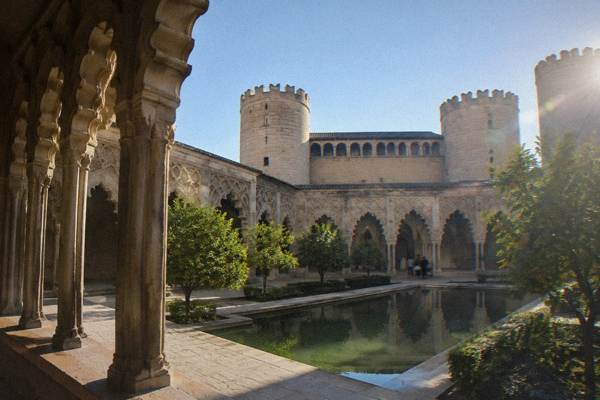
Can You Visit The AljaferíA?
Yes, the Aljafería Palace in Zaragoza, Spain is open to visitors daily. Here are the current opening hours, ticket prices, guided tour times and free-entry days.
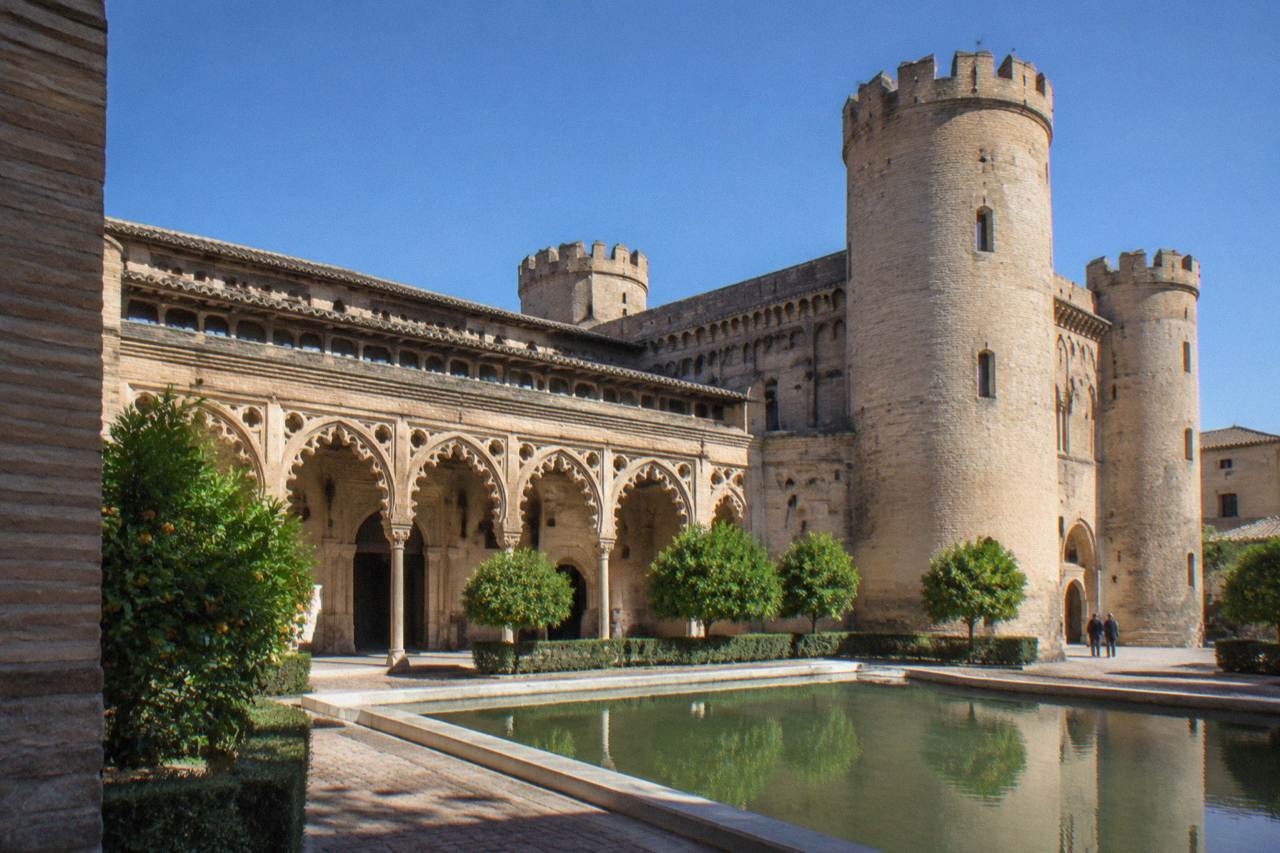
Yes, you can visit the Aljafería. The palace stands in Zaragoza, the capital of Aragon on the Ebro, an inland city in north-eastern Spain, and it is one of the city's most visited monuments. The October monument timetable published by the Ayuntamiento de Zaragoza lists the palace as open daily from 10:00 to 18:00, with tickets sold online through the palace's own ticketing page and last access 45 minutes before closing. There is no need to book a slot weeks ahead for a standard visit, though the guided tours in Spanish have fixed departure times.
Can You Visit The AljaferíA?
Yes, the Aljafería is open to visitors every day of the week. The municipal monument timetable for October lists the palace's hours as 10:00 to 18:00, with last access 45 minutes before closing at 17:15. A general ticket costs 7 EUR, a guided visit 9 EUR, and children under 12 enter free. The palace also opens free of charge on the first and third Sunday and on the Monday of each month.
Those are the practical facts. The fuller picture is that the Aljafería is a working building as well as a monument: it houses the Aragonese regional parliament, which is why parts of the complex can be closed off on sitting days and why the visitor route is clearly marked and signposted rather than free-roaming. None of that stops a normal visit. The palace sits a short tram ride or walk from the centre, on the western side of the old town, and it is the single most important Islamic-era secular building surviving in Aragon.
For anyone planning the wider city around it, the Aljafería Palace attraction page covers what there is to see inside, and the question of how many days you need in Zaragoza usually resolves to two or three if the palace is on the list alongside the Basílica del Pilar and La Seo.
What Are The Opening Times For Aljafería Palace?
The Aljafería Palace keeps the same hours seven days a week: 10:00 to 18:00, with the last admission 45 minutes before the 18:00 close, so the final entry is at 17:15. Spanish-language guided tours depart at fixed times, 10:30, 12:30, 13:30, 15:00 and 16:00, and the exhibition tour "Goya, del Museo al Palacio" runs at 11:30. The timetable comes from the municipality's October monument schedule.
The daily 10:00 to 18:00 window is generous by Spanish monument standards, and it holds through the week, which makes the Aljafería one of the easiest of Zaragoza's big three monuments to fit into a day. The Basílica del Pilar and La Seo both split their opening into morning and afternoon sessions with a lunchtime gap, but the palace runs straight through. That makes it a natural choice for the early-afternoon slot when the churches are closed.
The guided tour times matter if you want an explanation rather than a wander. The Spanish-language tours of the palace leave at five fixed times a day, and the separate tour of the exhibition "Goya, del Museo al Palacio" leaves at 11:30. If your Spanish is not strong, the general ticket still lets you walk the marked route, and the palace's own ticketing page is where the current availability for each departure is shown before you commit to a day.
A guided walk elsewhere in the city pairs well with a self-guided palace visit. The Monumental Walking Tour in Old Town of Zaragoza covers the historic centre, the Plaza del Pilar and the Roman remains, leaving the Aljafería as a separate half-day on its own, and its live listing shows the current departure options, Check availability.
How Much Do Aljafería Tickets Cost?
A general ticket to the Aljafería costs 7 EUR, and a ticket that includes a guided visit costs 9 EUR. Holders of a tourist-bus ticket pay 4 EUR, students, visitors over 65 and Carnet Joven holders pay 2 EUR, and children under 12 enter free. The palace is also free for everyone on the first and third Sunday of each month and on the Monday of each month.
| Ticket type | Price |
|---|---|
| General | 7 EUR |
| Guided visit | 9 EUR |
| With tourist-bus ticket | 4 EUR |
| Students, over 65, Carnet Joven | 2 EUR |
| Under 12 | Free |
| Free-entry days | 1st and 3rd Sunday and Monday of each month |
The free-entry days are the standout line in that table. Most visitors never notice them, but a Monday visit costs nothing at all, and the first and third Sundays of the month are free too. The trade-off is simple: those are the days when the palace is busiest, and the free admission does not include a guided visit, which is priced separately at 9 EUR on any day. The rest of the planning pages sit on Zaragoza Travel Guide.
The reduced tiers are worth a second look as well. The 2 EUR student and senior rate is one of the cheapest monument concessions in the city, and the 4 EUR tie-in with the tourist bus, the Zaragoza Bus Turístico, whose own general ticket is 10 EUR for 24 hours of hop-on hop-off across 16 stops, effectively refunds part of the bus fare if you were going to do both anyway.
Should You Take A Guided Tour Of The Aljafería?
A guided visit costs 9 EUR against the 7 EUR general ticket, so the question is whether the 2 EUR difference buys you enough. The palace's own guided tours run in Spanish only, at 10:30, 12:30, 13:30, 15:00 and 16:00, so an English-speaking visitor is usually better served by the general ticket and a good written guide, or by one of the private guided options that include the palace as part of a wider city walk.
The honest answer depends on your Spanish. The palace's own tours are in Spanish, and the fixed departure times mean you plan your day around them rather than the reverse. For a visitor who speaks the language, the 2 EUR premium is one of the better value upgrades in Aragonese tourism, because the palace's story, a taifa residence that became a royal palace, then a monastery, then a barracks and now a parliament, is not something the rooms explain on their own.
For everyone else, the alternatives are on the tours below. Private walking tours with a local guide can be booked in English and several cover the palace alongside the old town, and the Basílica del Pilar guided visit is another fixed-time option for the same day. The history of the Aljafería Palace and what is inside the Aljafería are worth reading before either choice, because they tell you which rooms you actually care about.
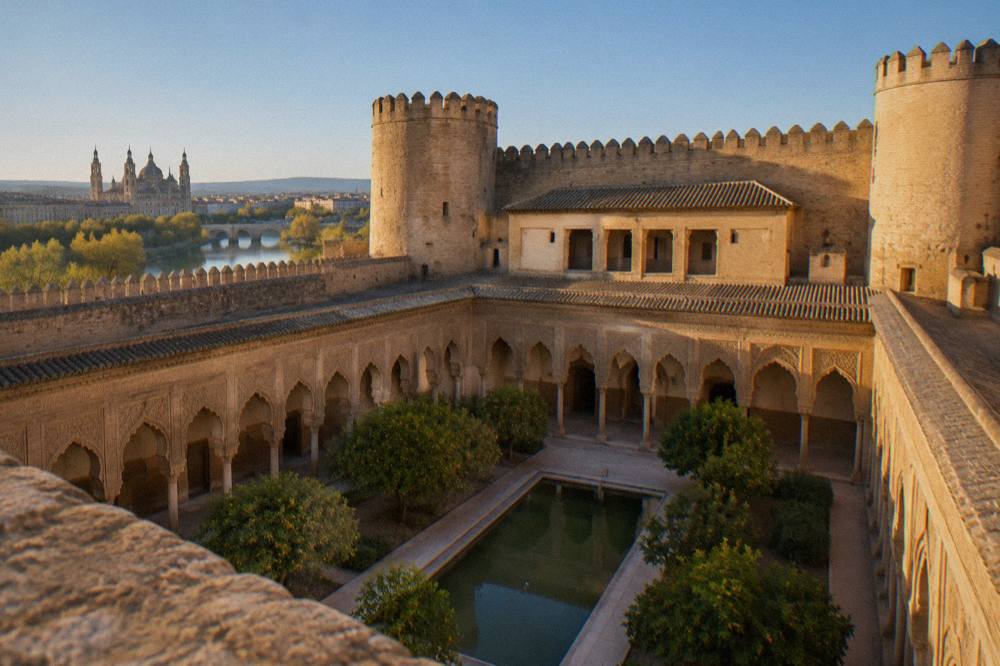
What Is The Aljafería'S UNESCO Status?
The surviving Mudéjar features of the Aljafería Palace are one of exactly three Zaragoza components of the UNESCO World Heritage property Mudéjar Architecture of Aragon, inscribed in 1986 and extended in 2001. The other two Zaragoza components are the tower and parish church of San Pablo and the apse, parroquieta and cimborio of La Seo. The listing covers the Mudéjar parts of the palace, not the whole building.
This distinction matters more than it sounds. The UNESCO property, criterion (iv) on the World Heritage list, strings ten components across the provinces of Teruel and Zaragoza, and the Aljafería's entry refers specifically to its surviving Mudéjar features, the Islamic-era stucco and brickwork that later Aragonese kings kept and built around. The palace as a whole, parliament and all, is not what the inscription names.
The practical effect on a visit is that the Mudéjar elements are the reason the palace carries World Heritage weight at all. The rest of the visitor route, the later royal apartments and the modern parliamentary chamber, is interesting, but the listed substance is concentrated in a few extraordinary rooms. The Mudéjar architecture guide traces the same style across the city's other listed and unlisted buildings.
Any of those three options slots neatly around the palace's fixed timetable. The old-town monumental walk runs about two and a half hours, the Basílica del Pilar visit an hour and a half, and a private custom walk can be shaped to whatever window the day leaves open, so the palace's 10:00 to 18:00 span absorbs whichever one fits.
Common Questions About Visiting The Aljafería
Can you visit the Aljafería?
Yes. The palace is open to the public daily from 10:00 to 18:00, with last access at 17:15. A general ticket costs 7 EUR, children under 12 enter free, and the palace is free for everyone on the first and third Sunday and on the Monday of each month.
What are the opening times for Aljafería Palace?
10:00 to 18:00 every day of the week, with the last admission 45 minutes before closing. Spanish-language guided tours depart at 10:30, 12:30, 13:30, 15:00 and 16:00, and the "Goya, del Museo al Palacio" exhibition tour leaves at 11:30.
How much are Aljafería tickets?
7 EUR general, 9 EUR with a guided visit, 4 EUR with a tourist-bus ticket, 2 EUR for students, visitors over 65 and Carnet Joven holders, and free for children under 12. Tickets are sold through the palace's own ticketing page.
Is the Aljafería free on certain days?
Yes. The palace opens free of charge on the first and third Sunday of each month and on the Monday of each month. Those days are busier, and the free admission does not include the guided visit, which costs 9 EUR on any day.
Are the Aljafería guided tours in English?
The palace's own guided tours are conducted in Spanish, at five fixed times a day. English-speaking visitors usually take the general ticket and walk the marked route, or book one of the private guided tours of Zaragoza that can be led in English and include the palace.
Is the Aljafería a UNESCO World Heritage Site?
The surviving Mudéjar features of the Aljafería Palace are one of the three Zaragoza components of the UNESCO property Mudéjar Architecture of Aragon, inscribed in 1986 and extended in 2001. The listing covers the Mudéjar parts of the palace rather than the whole building, and the Basílica del Pilar is not part of it.
The Aljafería rewards an hour of anyone's time, and with a fixed daily timetable of 10:00 to 18:00 it fits into any Zaragoza day that also covers the Pilar and La Seo.