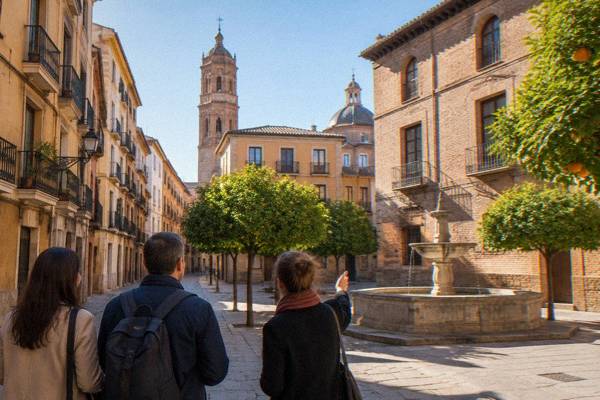
Why Is Zaragoza Called Zaragoza?
The name of Zaragoza, the capital of Aragon in Spain, comes from the Roman city of Caesaraugusta. Here is what that means, what survives from it, and how to see it today.
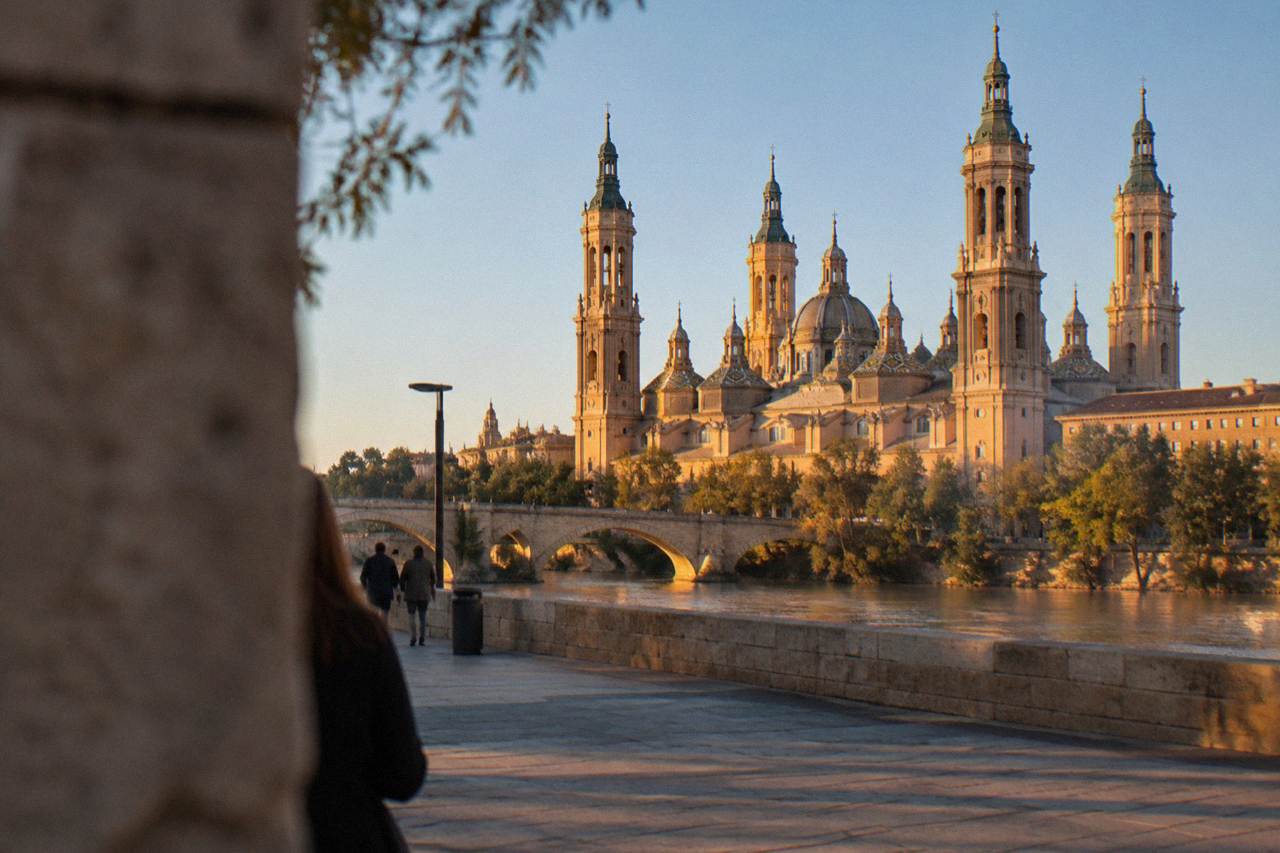
Zaragoza, the capital of Aragon in north-east Spain, sits inland on the Ebro, and its name is one of the most compressed in Europe. Say it slowly and you can hear an older city inside it: Caesaraugusta, the Roman settlement whose remains still surface in the middle of the modern streets. The city is not in Catalonia and not a Basque city, despite a question that circulates often enough to have its own page, and it is not named after the football club, the Mexican and Colombian places that share the surname, or the Zaragoza International Bridge at El Paso. The name came first. Everything else borrowed it.
Why Is Zaragoza Called Zaragoza?
Zaragoza is called Zaragoza because the modern name is a worn-down form of Caesaraugusta, the name of the Roman city that stood on the same site on the Ebro. Centuries of everyday speech compressed the Latin name until it became the Arabic-influenced and then Romance form that is written today. The Roman city of Caesaraugusta is the ancestor of the modern name, and that is the whole chain: the ruins under the streets are the direct evidence.
What makes this particular name interesting is how little of it had to change for it to become unrecognisable. Latin names with many syllables did not survive casual speech intact anywhere in the peninsula; they were sanded down by the people who used them daily, traders, farmers, soldiers, and their children. Caesaraugusta was a mouthful. Zaragoza is what a mouthful becomes after enough generations of people saying it quickly on their way to the market.
The city's own museums make this story visible rather than abstract. The Museo del Foro de Caesaraugusta, the Museo del Puerto Fluvial, the Museo de las Termas and the Museo del Teatro all display the Roman city in situ, and the municipal ticketing runs them as one family of sites. You can read a fuller account of those in the guide to the Roman remains of Caesaraugusta, and the question of what Zaragoza is famous for covers the rest of the inheritance, the Basílica del Pilar, La Seo, the Aljafería and the Mudéjar towers.
What Survives Of The Roman City Under The Streets?
Four museum sites preserve the Roman city in place: the Forum museum at EUR 4, the River Port museum and the Baths museum at EUR 3 each, and the Theatre museum, with a combined four-museum ticket at EUR 7, or EUR 5 reduced. All four open Tuesday to Saturday 10:00-14:00 and 17:00-21:00, and Sunday and holidays 10:00-14:30, with free entry the first Sunday of the month. The October monument timetable published by the municipality lists all of these hours.
The Forum site sits directly off the Plaza del Pilar, which means the Roman city's ceremonial centre and the city's most famous church now stand within a short walk of each other. That layering is the real answer to the name question. Most cities push their ruins to the edge of town; Zaragoza built every successive century on top of the last one, so the Roman street plan, the medieval quarter and the Baroque showpieces all overlap in the same few blocks.
The table below is the practical version of that overlap, using the admission prices the municipality publishes for October.
| Site | What It Preserves | Admission |
|---|---|---|
| Museo del Foro de Caesaraugusta | The Roman forum, beneath the modern square | EUR 4 |
| Museo del Puerto Fluvial | The river port of Caesaraugusta on the Ebro | EUR 3 |
| Museo de las Termas | Roman baths and the nearby wall | EUR 3 |
| Museo del Teatro de Caesaraugusta | The Roman theatre | Combined 4-museum ticket EUR 7, reduced EUR 5 |
The four-museum ticket is the obvious buy if the name question is the reason for the trip, because the four sites together are the closest thing to a walk through Caesaraugusta that still exists. Free entry on the first Sunday of the month applies to the whole family of sites, which makes that day unusually good value for anyone building a trip around the Roman layer.
A guided walk ties the fragments together better than self-direction does, because the visible pieces are scattered and the connections between them are not obvious from the pavement. The Must-See Attractions Walking Tour With A Guide runs from $44.72 per person and is rated 5 from 3 reviews, and it moves through the monumental core where the Roman, Moorish and Baroque layers sit on top of one another. Check availability
How Did The Name Travel Through Arabic And Into Spanish?
After the Roman era the city passed into Arabic-speaking hands, and the name travelled with it, reshaped again by everyday use. The Arabic-speaking period of the city's history is why the Aljafería palace exists, and the palace's own guided visits in Spanish run daily in October from 10:00 to 18:00 at EUR 9 for the guided option, EUR 7 general. The modern Spanish name settled once the city was inside a Spanish-speaking kingdom, and it has not changed since.
The Aljafería is the standing proof that the Arabic-speaking centuries left more than a sound shift. The palace is one of the most complete surviving Islamic-era palaces in Spain, and the municipality opens it daily in October from 10:00 to 18:00, with Spanish guided tours at 10:30, 12:30, 13:30, 15:00 and 16:00, last access 45 minutes before closing. Admission is EUR 7 general, EUR 9 with the guided visit, EUR 2 for students, over-65s and Carnet Joven holders, and free for under-12s. The palace is also free on the first and third Sunday and Monday of each month, which is one of the most generous standing offers in the city. More of these guides are collected on Zaragoza Travel Guide.
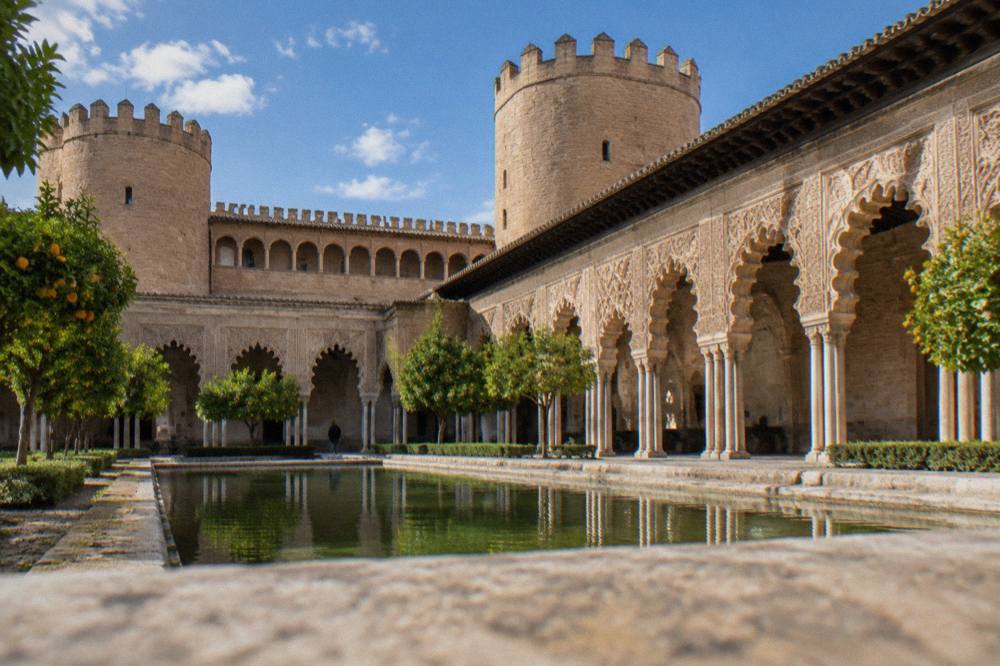
The palace deserves its own planning, and there are dedicated pages for whether you can visit the Aljafería and what is inside it. For the name question, the point is simpler: the city that Rome named Caesaraugusta kept being important enough, century after century, that every new ruling language had to say its name, and each language left a fingerprint on it.
Does The Roman Name Show Up Anywhere Else In The City?
Yes, and not only in the museums. The city's football club is called Real Zaragoza, its main railway station area is named Delicias, and the Roman name Caesaraugusta survives openly in the names of the four museum sites and in the Club Atlético Caesaraugusta-style local usage that appears on plaques and signage around the old town. The strongest single place to feel the double name is the Plaza del Pilar, where the Forum museum entrance and the Basílica del Pilar stand in the same square.
The Basílica del Pilar itself is free to enter, with the Holy Chapel zone open 8:00-20:30 and the main altar zone on a split daily timetable, and its tower viewpoint costs EUR 6 for an adult, EUR 5 for over-65s and residents, and EUR 4 for ages 13-18, students and groups of 20 or more, free under 12. The tower hours in October are Monday to Thursday 10:30-14:30 and 16:00-20:00, Friday to Sunday 10:00-20:00, with last access 30 minutes before closing. The full breakdown is in the guide to the Basílica del Pilar tower.
A second table puts the two names side by side, because that is really what the city offers: one square, two eras, both charging nothing or almost nothing to stand in them.
| Layer | Name It Carries | Entry Cost |
|---|---|---|
| Roman forum, Plaza del Pilar | Caesaraugusta | EUR 4, or EUR 7 four-museum ticket |
| Basílica del Pilar, same square | Zaragoza's Marian basilica | Free entry; tower viewpoint EUR 6 adult |
| La Seo cathedral, a few streets east | The city's cathedral, on the Roman wall line | EUR 10 general, includes three museums |
| Aljafería palace, west of the centre | The Arabic-speaking centuries | EUR 7 general, EUR 9 guided |
La Seo's EUR 10 general ticket includes the Museo de Tapices, the Museo Pilarista and the Rosario de Cristal, with over-65s at EUR 9, students and ages 13-18 at EUR 7, under-12s free, and the cathedral plus tower combination at EUR 12. Aragon residents get free entry on the 6th, 12th, 23rd and 27th of each month. The cathedral's own timetable for October is Monday to Saturday 10:00-14:30 and 16:00-20:00, Sunday mornings 10:00-12:00, and its page is the La Seo cathedral guide.
How Should You Plan A Visit Around The Name?
Plan around the four Caesaraugusta museums as a single block, using the EUR 7 four-museum ticket, and put the first Sunday of the month in your calendar if you want them free. Add the Aljafería on a first or third Sunday or Monday for free entry there too, and enter the Basílica del Pilar free of charge between the two. Two days is enough for all of it, which is the answer the site gives to the question of how many days you need in Zaragoza, Spain.
The Fiestas del Pilar, from 10 to 18 October 2026, add a reason to time a trip, though they also add crowds to exactly the squares where the Roman remains sit. The Ofrenda de Flores on 12 October fills the route from Paseo de la Independencia to Plaza del Pilar with flower-carrying groups, and the municipality's own Fiestas page lists the full programme. Anyone weighing the city against a coastal alternative can compare it in the answer on Valencia or Zaragoza, and anyone arriving by rail should know the high-speed connection from Madrid or Barcelona runs about 1.5 to 2 hours.
For anyone who prefers to move at their own pace while still getting the layered story, the self-guided options are the natural fit. The City of Four Cultures audio tour, from $11.99 per person and rated 4.2 from 5 reviews, is built around exactly the idea this page describes, one city carrying the fingerprints of Roman, Arabic-speaking and later Spanish Zaragoza, and the free historical centre walk on GuruWalk covers the same ground on a tip-based footing.
Common Questions About Why Zaragoza Is Called Zaragoza
Why is Zaragoza called Zaragoza?
The Roman city of Caesaraugusta is the ancestor of the modern name. Centuries of everyday speech compressed the Latin name into the form written today, and the four Caesaraugusta museum sites under the old town preserve the city that carried it.
Was Zaragoza a Roman city?
Yes. Caesaraugusta stood on the Ebro where the old town now stands, and its forum, river port, baths and theatre are each preserved as an in-situ museum, open Tuesday to Saturday and Sunday mornings, with a EUR 7 combined ticket and free entry the first Sunday of the month.
Is Zaragoza in Catalonia or the Basque Country?
Neither. Zaragoza is the capital of Aragon, an inland autonomous community in north-east Spain, and the city sits on the Ebro. The name shares nothing with the Basque Country, and the football club, the Mexican and Colombian places and the El Paso bridge all borrowed the name rather than gave it.
What can you still see of Roman Zaragoza today?
The Forum museum on the Plaza del Pilar, the River Port museum on the Ebro, the Baths museum and the Theatre museum, all run by the municipality on one ticket. The Aljafería palace and the Mudéjar churches carry the later, Arabic-speaking and post-Reconquest layers of the same city.
How is Zaragoza pronounced?
The Spanish pronunciation is roughly tha-ra-THa in Castilian Spanish, with a soft theta sound for the z and c, and tha-ra-SA in Latin American and much of southern Spanish usage. The site has a full answer on the question of how Zaragoza is pronounced.
The name is the city's oldest monument, older than the basilica, older than the bridge, and unlike them it needs no ticket: it is spoken thousands of times a day in the streets that sit on top of the forum it came from.