Can You Drink The Water In Zaragoza?
Yes, the tap water in Zaragoza, Spain is safe to drink. A practical guide to taste, restaurants, ice, summer heat and bottled water in the Aragonese capital.
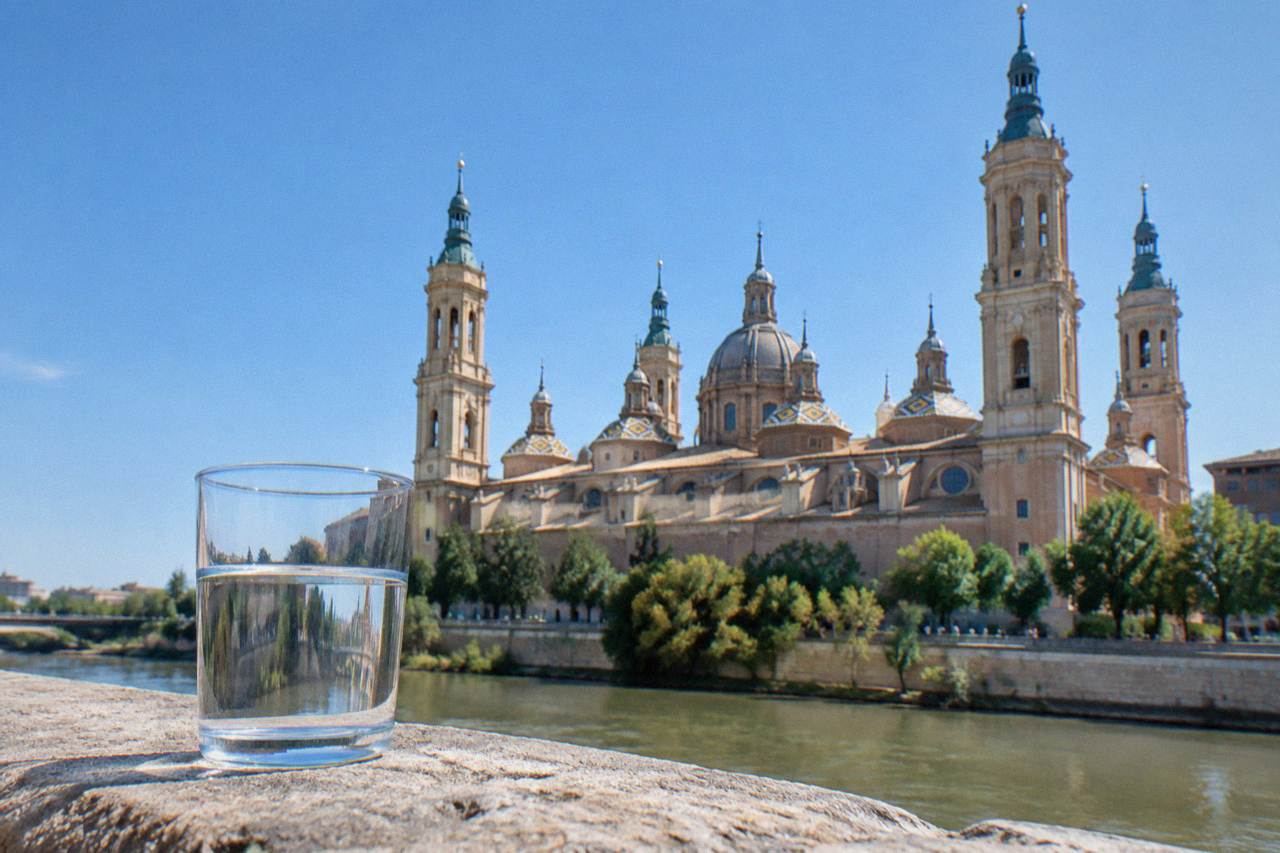
Zaragoza, the capital of Aragon on the Ebro, is an inland city with a dry continental climate, and one of the first practical questions visitors ask is what comes out of the tap. The answer is reassuring: the municipal water supply is treated and monitored under the same European Union drinking water rules that govern every Spanish city, and you can drink it, cook with it and brush your teeth with it without a second thought. What follows is the practical detail: how the water tastes, how restaurants and bars handle a request for tap water, what to do about ice, and how much water you should be carrying when the July sun is at its strongest.
Can You Drink The Water In Zaragoza?
Yes, the tap water in Zaragoza is safe to drink. The city's municipal supply is treated and monitored under the European Union's drinking water framework, the same rules that apply across Spain, and no special precaution is needed for drinking, cooking or brushing your teeth. Plenty of residents drink it every day. The only question worth asking is about taste, not safety, and if the flavour is not to your liking, bottled water is cheap and everywhere.
That answer surprises some visitors because a persistent rumour circulates online that Spanish tap water should be avoided. It is worth being clear about where that idea comes from. In a handful of Spanish coastal and island destinations the tap water can taste strongly of minerals or chlorine, and travellers generalise from those experiences. Zaragoza is not one of those places. The water here is drawn from the Ebro basin, treated to the standard the EU drinking water directive requires, and delivered through a municipal network that is subject to routine quality checks, as any Spanish city of this size must be.
The distinction that matters is between safety and palatability. Safety is settled: the water that reaches a Zaragoza tap has passed through treatment and testing, and drinking it will not make a healthy adult, child or visitor ill. Palatability is a matter of personal taste. Water from an inland river basin carries dissolved minerals, and some people notice that in the flavour, while others do not notice it at all. If you are sensitive to that kind of taste, the fix is a bottle from any supermarket, not a change of plans.
One practical note on language. If you ask for water in a bar and simply say "agua", you will usually be brought a bottled mineral water, often carbonated, and often charged for it. That is a service convention, not a safety signal. Tap water in Spain is a separate thing you ask for by name, and the phrase for it is "agua del grifo". More on that in the restaurant section below.
Where Does Zaragoza'S Tap Water Come From?
Zaragoza's drinking water comes from the Ebro river system and the groundwater of the Ebro valley, treated through the municipal supply network before it reaches the tap. The Ebro is the city's defining geographical feature, the river the Roman colony of Caesaraugusta was founded beside, and it remains the reason a city of this size can sit comfortably in one of Europe's driest corners. Treatment brings it up to the EU drinking water standard before distribution.
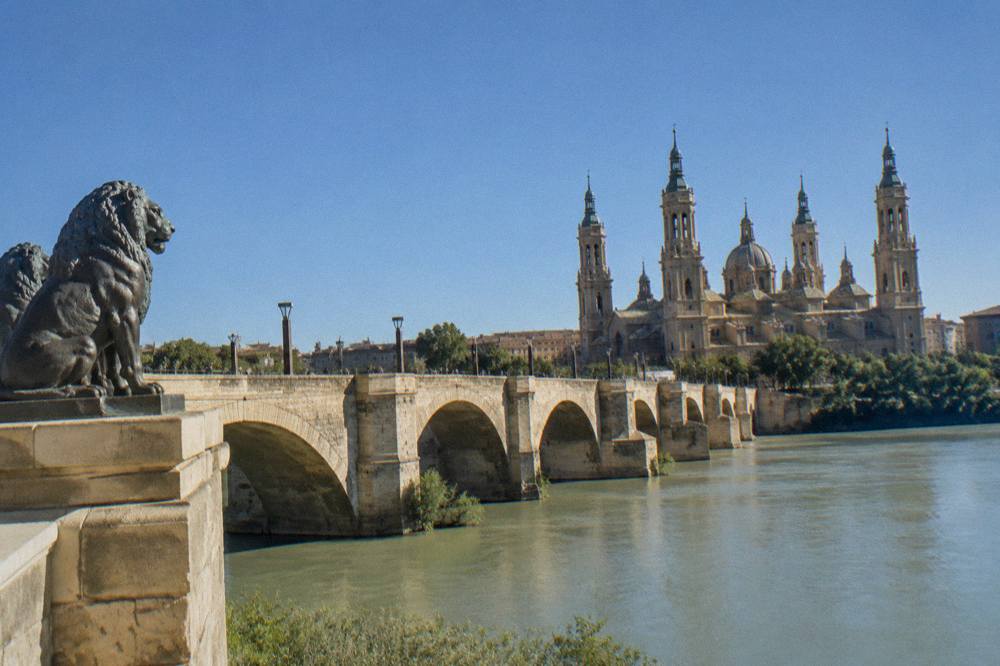
The Ebro shapes Zaragoza in more ways than one. The city sits on the river's alluvial plain, and the dry continental climate, with AEMET's 1981 to 2010 normals for the Zaragoza Aeropuerto station showing just 322 mm of rain across a typical year, means water has always been managed carefully here rather than taken for granted. The same river that supplies the city also gave it the Puente de Piedra, the stone bridge whose current structure was built from 1401 and opened in 1440, and the riverside walks that line both banks today.
Because the water travels through mineral-rich valley geology before treatment, the taste is what most people notice first. Inland Spanish tap water is generally harder than the soft water of northern Europe, and Zaragoza's is no exception. Hardness is not a health problem, it is a flavour and limescale issue, and it is the reason a kettle in a Zaragoza apartment will fur up faster than a kettle in Glasgow. If you are staying in a rental for more than a few days, that is the single most visible consequence of the water chemistry.
None of this changes the safety verdict. The treatment process exists precisely to take river and groundwater and make it fit for every tap in the city, and the monitoring regime that sits behind it is a legal requirement across Spain, not a local courtesy. If you want to read the detail, the municipality publishes water quality information as every Spanish municipality must, and the annual consumer confidence style reporting is where the treatment figures live.
A refillable bottle is, in fact, one of the better accessories for this city, and the guided options below are a good way to see the old town while someone else handles the navigation.
Do Restaurants And Bars Serve Tap Water?
Yes, you can ask for tap water in a Zaragoza restaurant or bar, and the phrase to use is "agua del grifo". It is a normal, accepted request in Spain, and staff will generally bring a jug or a carafe of the same safe municipal water that comes from every tap in the city. What you should not expect is for tap water to arrive automatically, because the default in Spanish hospitality is a bottled mineral water, sometimes carbonated, which will appear on the bill.
The custom trips up a lot of visitors, so it is worth spelling out the mechanics. When you sit down and order drinks, the waiter will not ask still or sparkling, they will simply assume you want a bottle unless you say otherwise. That is not a scam and it is not a comment on the tap water, it is simply how the service has evolved. Spaniards in restaurants frequently drink bottled water by choice, and the request for "agua del grifo" is respected when made, though in very busy places a small charge for the service is not unheard of, and a few establishments may politely decline during peak hours.
There is no health reason to avoid what comes out of the kitchen tap. The ice in your drink is made from the same municipal supply, the salad was washed in it, and the coffee was brewed with it. If you are happy to drink tap water at home in Spain's other big cities, you can be equally happy here. The only genuine difference between tap and bottled in a Zaragoza restaurant is the mineral flavour and the price line on the bill.
For self-catering, the calculus is simpler still. Supermarkets stock bottled water cheaply by the case if you prefer the taste, and the tap is free. If you are planning your eating around the city, the food Zaragoza is famous for pairs well with either, and a walking route through the old town will pass more bars than you could visit in a week.
Should You Carry A Bottle Through A Zaragoza Summer?
Yes, and it is not optional advice. AEMET's 1981 to 2010 normals for the Zaragoza Aeropuerto station put July's average maximum at 32.4 C with 348 hours of sunshine that month, and June and August are close behind at 29.3 C and 31.7 C. Rain barely offsets it, at 17 mm in both July and August. Anyone walking the old town between midday and late afternoon in summer needs water on them, not a plan to find some later.
The dryness is the part visitors underestimate. Zaragoza's climate is classified as semi-arid continental, and the same AEMET table shows the whole year averages just 322 mm of rain, less than many northern European cities see in three months. Combined with the summer heat, that means you sweat more than you notice, because the air is so dry that evaporation does its work quietly. Hikers and sightseers who set out for a long loop of the Basílica del Pilar, La Seo and the Aljafería can lose more fluid than they realise on a cloudless afternoon.
| Month | Mean max C (1981-2010) | Mean C (1981-2010) | Rain mm (1981-2010) | Sun hours (1981-2010) |
|---|---|---|---|---|
| June | 29.3 | 22.6 | 26 | 307 |
| July | 32.4 | 25.3 | 17 | 348 |
| August | 31.7 | 25.0 | 17 | 315 |
| September | 27.1 | 21.2 | 30 | 243 |
Every figure in that table is the 1981 to 2010 average from AEMET's Zaragoza Aeropuerto station, the only window the station publishes, so treat it as the shape of a typical year rather than a forecast for your dates. If you want the deeper picture of the city's heat, the page on the hottest month in Zaragoza covers it, and the one on rain in Zaragoza explains why umbrellas are rarely the first thing in a local's bag.
Practically, the advice is straightforward. Carry a refillable bottle, refill it from the tap at your accommodation before you set out, and top up from public fountains where you find them in the parks. The Parque del Agua, with more than 120 hectares in the Ranillas meander beside the old Expo 2008 site, is the city's great green escape and a sensible place to spend a hot afternoon, with running circuits of 5 and 10 km if you are exercising rather than strolling. In the peak hours, plan indoor stops, a long lunch, or the shaded stretch of the Ebro riverbank between museums.
What About Ice, Salads And Brushing Your Teeth?
All three are fine with Zaragoza tap water. The ice in bars and restaurants is made from the treated municipal supply, salad and fruit are washed in it, and brushing your teeth with it is exactly what the city's residents do every day. There is no category of ordinary kitchen or bathroom use where the tap water in Zaragoza carries a risk a visitor needs to manage around. The safety question is settled, and the only judgement call is whether you enjoy the taste.
This is worth stating plainly because the ice question is the one people whisper about and rarely ask out loud. The answer is the same as for the water itself: the municipal supply meets the EU drinking water standard, and everything downstream of the tap, ice machines, kitchen washers, coffee makers, inherits that same standard. A visitor who drinks bottled water out of preference but accepts ice in a soft drink is making a taste choice, not a health calculation, and both choices are entirely reasonable in Zaragoza.
The same logic covers the hotel bathroom. Tap water for brushing teeth is safe everywhere in the city, including older buildings in the historic centre where the plumbing has character. There is no district of Zaragoza where a different water source serves the taps, and no reason to buy bottled water for the bathroom. If you have a sensitive stomach on any trip, the usual culprits are changes in diet and alcohol rather than treated tap water, and Zaragoza's supply is no more likely to trouble you than the supply in Madrid or Barcelona.
For families, the practical note is that children can drink the tap water as freely as adults. If a child turns their nose up at the mineral flavour, diluting juice with it or chilling a bottle in the fridge solves the problem without cost. And if you are touring in October for the Fiestas del Pilar, the same rules apply in the middle of the biggest crowds of the year, which is worth knowing because the fiesta days of 10 to 18 October fill the centre with processions and the tap water is exactly the same as it is in February.
What Does Zaragoza'S Tap Water Taste Like?
Zaragoza's tap water carries the mineral character typical of an inland Ebro valley supply: it is on the hard side, with a flavour some drinkers describe as slightly earthy or chalky compared with soft bottled water. It is not unpleasant, and most visitors drink it without comment, but it does taste of where it comes from. Chilling it in a fridge noticeably softens that character, which is the single easiest improvement a visitor can make.
Taste is subjective, so the honest framing is a range rather than a verdict. Some people drink Zaragoza tap water straight and never think about it again. Others notice the hardness immediately, especially if they come from a soft-water region, and switch to bottles for the week. Both reactions are common, and neither says anything about safety. What is universally true is that temperature changes the experience more than anything else: the same water that seems flat from a warm tap on a July afternoon is perfectly agreeable after a few hours in a fridge.
Bottled water, for those who want it, is one of the cheapest items in any Spanish supermarket, and both still and sparkling versions are stocked everywhere, from corner shops to the larger stores. Restaurants will offer still or carbonated by default. If you are touring with a guide, the Old Town Monumental Walk covers the historic district in the company of a local guide, and guides in this city are used to building in shade and drink stops on hot days. Check availability
| Water-Connected Sight Or Service In Zaragoza | Verified Figure |
|---|---|
| Parque del Agua Luis Buñuel, the city's great riverside park | More than 120 hectares in the Ranillas meander |
| Running circuits inside Parque del Agua | 5 km and 10 km loops |
| Acuario de Zaragoza, general admission | EUR 20 |
| Acuario de Zaragoza, children 4 to 14 and seniors | EUR 14 |
| Acuario de Zaragoza, family pack online, 2 adults and 2 children | EUR 55 |
| Puente de Piedra, the Ebro's stone bridge | Built from 1401, opened 1440 |
That table is the water-flavoured side of the city beyond the kitchen sink: the river that supplies it, the park that celebrates it, and the aquarium that displays the river life of five continents. None of it changes the drinking verdict, but it does explain why water is a bigger theme in Zaragoza than in most inland Spanish cities.
If a guided visit is part of your plan, these are the options that pair best with a walking day in the old town, whatever you decide to carry in your bottle.
Common Questions About Drinking Water In Zaragoza
Can you drink the water in Zaragoza?
Yes. The municipal tap water in Zaragoza is treated and monitored to the European Union drinking water standard and is safe to drink, cook with and brush your teeth with. The only consideration is taste, since the Ebro valley supply is mineral-rich, and bottled water is cheap and available everywhere if you prefer it.
Is Zaragoza tap water safe for children and babies?
Yes, the same treated municipal supply serves every tap in the city and there is no age-based restriction. For infants, standard practice is the same as anywhere in Spain: follow the usual guidance on formula preparation, and if you prefer, use bottled water for bottles, which is a taste and convenience choice rather than a safety one.
How do I order tap water in a Zaragoza restaurant?
Ask for "agua del grifo". It is a normal, accepted request and staff will usually bring a jug or carafe. Without that phrase, the default in Spanish restaurants is a bottled mineral water, sometimes carbonated, which will appear on the bill.
Is the ice in Zaragoza safe?
Yes. Ice in bars and restaurants is made from the same treated municipal supply as the tap water, and it meets the same EU drinking water standard. There is no reason to decline ice in Zaragoza on health grounds.
Does the tap water taste different from bottled water?
It can. Zaragoza's water carries the dissolved minerals of the Ebro valley, so it is harder than soft bottled water and some drinkers notice an earthier flavour. Chilling it in a fridge noticeably improves the taste for most people.
How much water should I carry in summer?
More than you think. AEMET's 1981 to 2010 normals for the Zaragoza Aeropuerto station put July's average maximum at 32.4 C with 348 hours of sunshine, and the air is dry enough that you lose fluid without noticing. Carry a refillable bottle and refill from the tap before you set out.
The bottom line for Zaragoza Travel Guide readers is simple: the water is safe, the taste is a preference, and the only thing you really need to plan for is carrying enough of it in July. Whether it comes from the tap of your apartment or a bottle in the old town, it will do its job on a walking day through Aragon's capital.