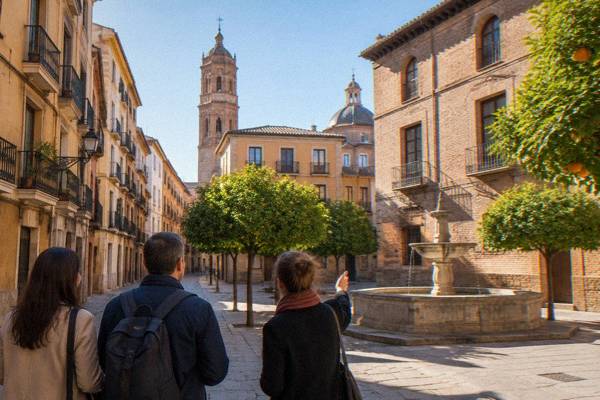
What Is The Most Underrated City In Spain?
The case for Zaragoza, the capital of Aragon, as Spain's most underrated city: Roman ruins, the Basílica del Pilar, the Aljafería, Mudéjar architecture and Fiestas del Pilar, all without coastal crowds.
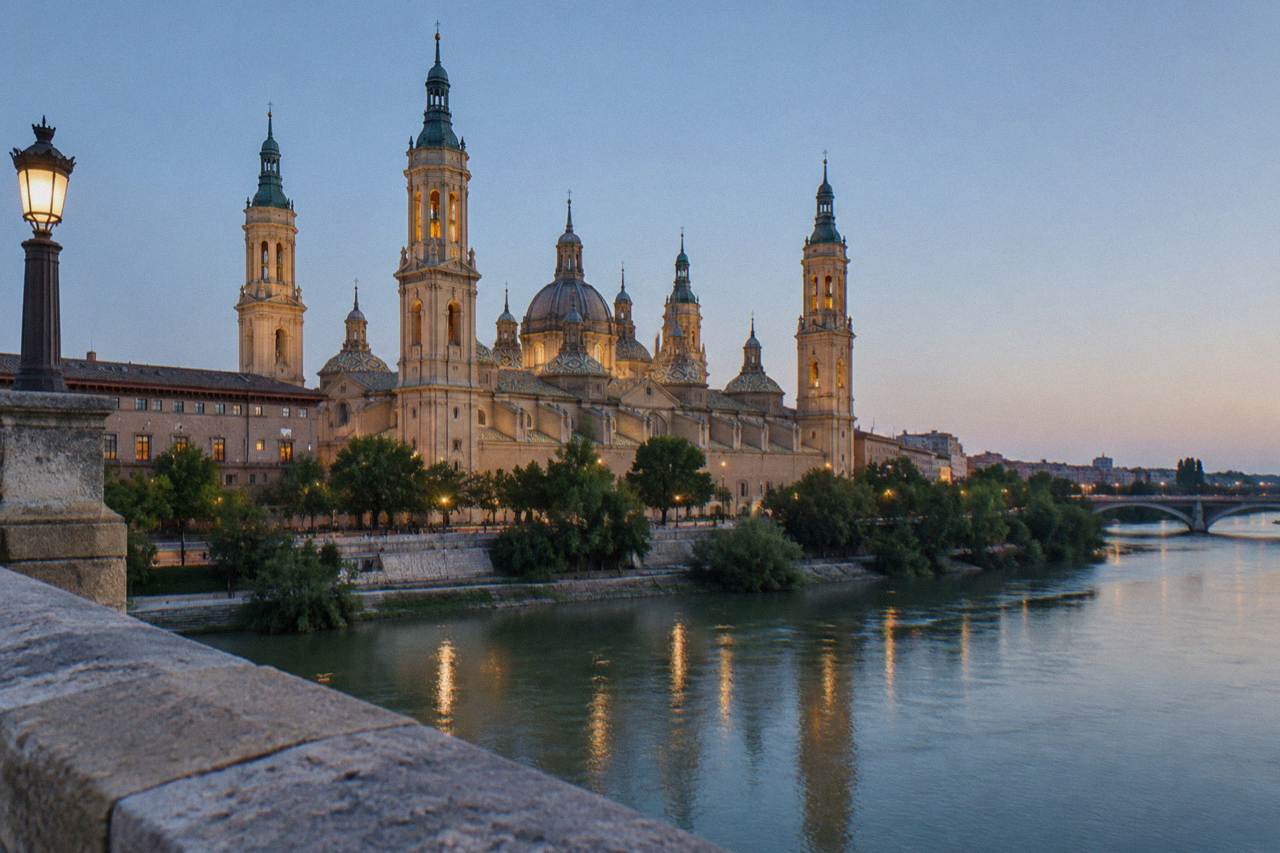
Zaragoza, the capital of Aragon on the Ebro in north-east Spain, is the strongest candidate for the most underrated city in the country. It holds a Roman forum, river port, baths and theatre under its streets, one of Europe's largest baroque basilicas, a surviving Islamic palace and a UNESCO-inscribed Mudéjar architectural tradition, and it sits about 1.5 to 2 hours from both Madrid and Barcelona by high-speed train. Yet it never appears on the standard first-timer circuit of Madrid, Barcelona and Seville. The question of which city deserves the label is an opinion, but the features that earn Zaragoza its nomination are all verifiable, and this page sets them out.
What Is The Most Underrated City In Spain?
On the evidence, Zaragoza, the capital of Aragon, is the most underrated city in Spain. It is the only large Spanish city where a Roman colony's forum, river port, baths and theatre, an Islamic palace, a giant baroque basilica and a UNESCO-listed Mudéjar tradition all stand within walking distance of each other, about 1.5 to 2 hours from Madrid and Barcelona, and it stays off most first-visit itineraries. No ranking body awards the title, but no other candidate combines that density with that obscurity.
The word "underrated" is doing real work here, so it helps to define it. A city can be underrated because it is hard to reach, or because it is genuinely overlooked. Zaragoza is the second kind. High-speed trains reach it from Madrid and Barcelona in roughly an hour and a half to two hours, the city's own airport carries flights from Ryanair, Wizz Air, Vueling, Volotea, Binter and Alba Star across 13 destinations, and still the crowds that fill Toledo and Segovia day after day largely pass it by.
What the visitor gets instead is a city where the headline sights are spaced minutes apart on foot. The Basílica del Pilar, whose tower viewpoint costs 6 EUR for an adult, faces La Seo cathedral across the Plaza del Pilar; the Roman remains of Caesaraugusta sit between and beneath them; and the Aljafería palace, open daily in October from 10:00 to 18:00 with general admission at 7 EUR, stands a short tram ride away at 1.70 EUR a single ticket. That concentration, at those prices, is the practical case for the label.
Why Does Zaragoza Stay Off The Standard Spain Itinerary?
Zaragoza stays off the standard itinerary because the Spanish tourist imagination is organised around the coast and the south: Madrid for art, Barcelona for architecture, Andalusia for Moorish heritage. Zaragoza competes in every one of those categories, with Roman ruins, Mudéjar towers and an Islamic palace of its own, but it is inland, it has no beach, and no single postcard image does the marketing work that a coastline does for others.
The geography matters. Zaragoza sits inland on the Ebro, in a dry continental semi-arid climate: AEMET's 1981-2010 normals for the Zaragoza Aeropuerto station show just 322 mm of rain across the whole year, with July and August the driest months at 17 mm each and May the wettest at 44 mm. That is desert-adjacent weather by Spanish standards, and it produces a city built for evening life rather than beach life. The rain question comes up often enough that there is a full answer on whether it rains a lot in Zaragoza.
There is also a naming problem, oddly enough. "Zaragoza" is also a famous football club, a Mexican and Colombian place name and surname, and the Zaragoza International Bridge between El Paso and Juarez, so the city's name travels badly in search and conversation, and first-time visitors sometimes arrive with a blurred idea of where they actually are. The city's own answer to that is on the ground: the Roman city of Caesaraugusta is the ancestor of the modern name, and the ruins carrying it are open to visit.
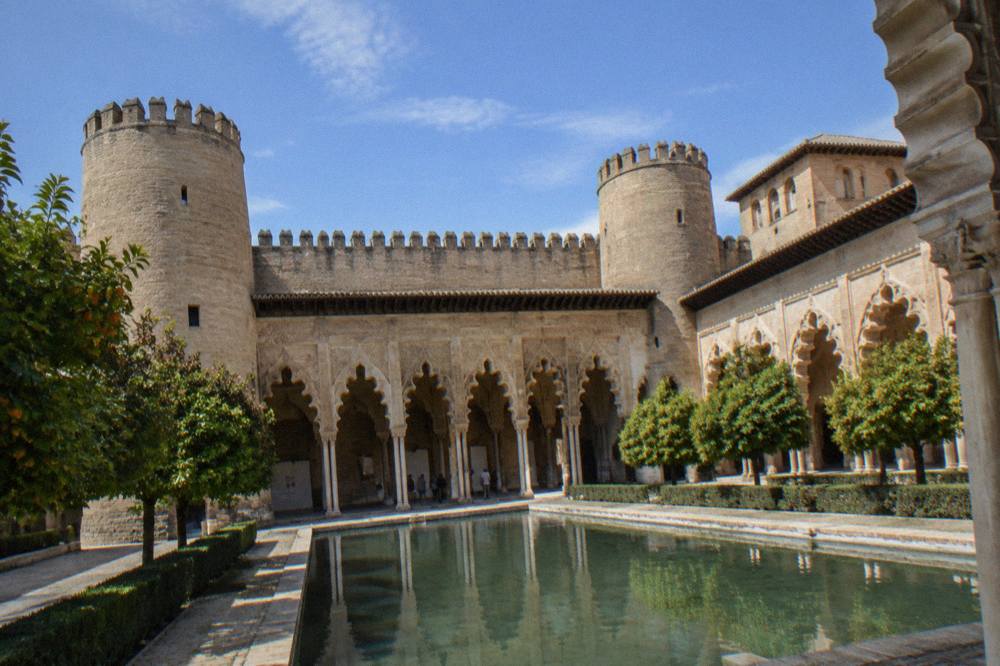
The underrated label is also a fair description because the city does not lean on one monument. The Aljafería, built as a taifa palace and today open daily in October from 10:00 to 18:00 at 7 EUR general admission or 9 EUR with a guided tour, is one of the best-preserved Islamic palaces in Spain, and the question of whether you can visit the Aljafería has a straightforward yes for an answer. Free entry applies on the first and third Sunday and Monday of each month.
What Can You Actually See In Zaragoza?
In one day you can see the Basílica del Pilar, whose entry is free and whose tower viewpoint costs 6 EUR, La Seo cathedral at 10 EUR including three associated museums, the four Caesaraugusta Roman museums on a 7 EUR combined ticket, and the Aljafería palace at 7 EUR, all connected on foot or by a 1.70 EUR tram ride. A second day adds the Puente de Piedra, the Ebro river walk and the Parque del Agua.
The core is compact. The Pilar and La Seo face each other across one square, with the Roman Forum museum between them at 4 EUR and the river port and baths museums a few minutes away at 3 EUR each. The four-museum bono at 7 EUR, or 5 EUR reduced, covers all of Caesaraugusta, and the first Sunday of the month is free. The municipal October timetable lists La Seo from 10:00 to 14:30 and 16:00 to 20:00 Monday to Saturday, and the Pilar's tower viewpoint from 10:30 to 14:30 and 16:00 to 20:00 Monday to Thursday, with longer Friday-to-Sunday hours.
The Puente de Piedra, the stone bridge across the Ebro, was built from 1401 and opened in 1440 on the line of a Roman-era crossing, and its four bronze lions have guarded it since 1991. From the bridge the whole Pilar skyline reads at once, which is why the one-day itinerary question has such a dense answer. For a fuller treatment of the city's sights, see the things to do in Zaragoza guide.
The most efficient way to string these together is with a guide. The Monumental Walking Tour in Old Town of Zaragoza, rated 4.9 from 15 reviews and priced from $97.47 per person, covers the old town's monuments in one guided loop, Check availability if that pace suits you. There is also a pay-what-you-want option through GuruWalk, the Free Tour through the Historical Center of Zaragoza, rated 4.15 from 122 reviews, which costs nothing up front.
How Does Zaragoza Compare With Spain'S Better-Known Cities?
Zaragoza compares well with Spain's headline cities because it offers the same categories of sight at lower cost and lower crowd density: Roman remains comparable to Mérida's, Islamic architecture comparable to Córdoba's, a basilica of national scale, and Mudéjar towers inscribed on the UNESCO list in 1986, all with adult admissions between 3 and 10 EUR and no coastal crowds. The trade-off is that it has no beach and a smaller art-museum scene than Madrid or Barcelona.
The honest comparison is category by category, and the table below puts the verified numbers side by side.
| Sight in Zaragoza | Category | Adult admission | Notes from the municipal October timetable |
|---|---|---|---|
| Basílica del Pilar | Baroque basilica | Entry free, tower 6 EUR | Tower open Mon-Thu 10:30-14:30 / 16:00-20:00 |
| Aljafería | Islamic palace | 7 EUR, 9 EUR guided | Daily 10:00-18:00, free 1st and 3rd Sunday and Monday |
| La Seo + Museo de Tapices | Gothic cathedral | 10 EUR | Includes Museo Pilarista and Rosario de Cristal |
| Caesaraugusta museums | Roman ruins | Bono 7 EUR | Forum 4 EUR, baths and river port 3 EUR each |
| Museo del Fuego y los Bomberos | Specialist museum | 3 EUR | Free the 1st Sunday of the month |
Against Valencia, the comparison is close enough that it gets a full answer on the page on whether Valencia or Zaragoza is the better visit. The short version: Valencia wins on the sea and the City of Arts and Sciences, Zaragoza wins on Roman and Islamic heritage and on price. Against Barcelona, the gap is in fame rather than substance, and the high-speed rail connection between the two makes the comparison easy to test in a single trip.
The Mudéjar point deserves its own emphasis, because it is the least-known strong card. The UNESCO World Heritage item "Mudejar Architecture of Aragon" was inscribed in 1986, and Zaragoza's churches carry that tradition in brick. The style is covered in detail in the guide to Mudéjar architecture.
When Should You Visit Zaragoza?
The best time to visit Zaragoza is October, and specifically the Fiestas del Pilar from 10 to 18 October, when the city stages its Ofrenda de Flores on 12 October. AEMET's 1981-2010 normals for the Zaragoza Aeropuerto station show October averaging 21.4 C by day and 11 C by night with 36 mm of rain, while July and August, at 32.4 C and 31.7 C mean daily maxima, are the months to avoid.
The festival is the single biggest argument for an October visit. The Ofrenda de Flores brings hundreds of registered groups in regional dress along the Paseo de la Independencia to the Plaza del Pilar, and the 2026 programme includes concerts, jota competitions and fireworks, with Venezuela as guest country. The full picture is in the Fiestas del Pilar guide.
For weather planning, the verified monthly averages from AEMET's 1981-2010 series, the only window the station page publishes, are these:
| Month | Mean daily max | Mean daily min | Rain | Sun hours |
|---|---|---|---|---|
| March | 17.3 C | 5.8 C | 19 mm | 217 |
| April | 19.6 C | 7.9 C | 39 mm | 226 |
| May | 24.1 C | 11.8 C | 44 mm | 274 |
| July | 32.4 C | 18.3 C | 17 mm | 348 |
| October | 21.4 C | 11.0 C | 36 mm | 195 |
One planning note: October 2026 also sees the Palacio de Sastago closed and the Museo Pablo Gargallo temporarily closed, so check sight openings for your dates before building a museum day. The Museo Goya's reopening on 9 October 2026 adds a fresh option for that month.
How Many Days Does Zaragoza Need?
Two days is the honest minimum for Zaragoza: one for the Pilar, La Seo and the Caesaraugusta Roman museums, and one for the Aljafería, the Ebro river walk and the Parque del Agua or a tapas evening. Three days allow a relaxed pace plus a day trip toward the Moncayo or the Monasterio de Piedra, and a single well-planned day covers the essential square, cathedral, forum and palace if time is short.
The density that earns the underrated label is what makes a short stay work. Everything in the first day's list stands within a few minutes' walk of the Plaza del Pilar, and the Aljafería is a short tram or bus hop at 1.70 EUR a single, or 0.55 EUR with the Tarjeta Bus. The question of how many days you need in Zaragoza gets a fuller breakdown elsewhere on Zaragoza Travel Guide, including a three-day version with a day trip.
Food should be scheduled, not left to chance. Ternasco de Aragon lamb, migas aragonesas and the city's tapas bars are reason enough for an evening, and the question of what food Zaragoza is famous for covers the territory. A guided tapas or wine evening, such as the city's wine tasting and tapas products from $106.92 per person on their listings, folds the old town and the table into one outing.
What Makes Zaragoza Worth The Detour Rather Than A Stopover?
What makes Zaragoza worth a detour rather than a stopover is depth: the Roman layer alone fills a full day across four museums, the Aljafería and the Mudéjar churches fill another, and the Fiestas del Pilar in October are a regional festival of national scale, so a city many travellers see only from a train window between Madrid and Barcelona rewards two or three nights instead. The stopover habit is exactly the underrated problem.
That habit has a structural cause. The high-speed line from Madrid to Barcelona passes through Zaragoza-Delicias, so the city becomes a blur for most of Spain's rail traffic. Getting off is the whole trick. From Delicias the tram reaches the old town cheaply, and the sights listed above begin within half an hour of arrival.
For anyone testing the claim, the cheapest structured introduction is the Zaragoza Monumental Sightseeing Tour, a 105-minute first orientation from $10.41 per person, rated 4.4 from 36 reviews on its listing. From there, the deeper options include the Historical Tour of the Old District with a Guide, rated 5 from 14 reviews from $106.92 per person, and the Aljafería Palace guided tour in Spanish with ticket, rated 4.8 from 103 reviews from $24.76 per person, which pairs the palace visit with a guide's explanation that the building repays.
Common Questions About Underrated Cities In Spain
Is Zaragoza Spain worth visiting?
Yes. The city's headline sights, the Pilar, La Seo, the Aljafería and the Caesaraugusta museums, cost between free and 10 EUR each to enter, stand close together, and are backed by a food scene built on ternasco de Aragon and tapas. The full case is made on the page on whether Zaragoza is worth visiting.
What is Zaragoza famous for?
Zaragoza is famous for the Basílica del Pilar, the Aljafería palace, its Roman ruins as the former city of Caesaraugusta, Mudéjar architecture, and the Fiestas del Pilar each October. The full answer on what Zaragoza is famous for covers each in turn.
Where in Spain is Zaragoza?
Zaragoza is in the north-east of Spain, inland on the Ebro river, and it is the capital of the autonomous community of Aragon. It is not in Catalonia and not a Basque city. Our page on where in Spain Zaragoza is gives the geography in full.
Is Zaragoza cheaper than Madrid or Barcelona?
On the verified figures, yes: the main monuments charge between free and 10 EUR, a tram or bus single is 1.70 EUR, and the tourist bus is 10 EUR for 24 hours of hop-on hop-off across 16 stops. There is no tourist tax in Aragon, which the regional government explicitly ruled out in September 2026.
The underrated label is only worth having while it lasts, and Zaragoza's combination of a Goya museum reopening in October 2026, a major October festival and cheap high-speed access suggests it will not last forever.