What Is The Richest City In Spain?
The richest city in Spain has no single official answer, and rankings shift with the measure used. Here is how the question plays out, and where Zaragoza, the capital of Aragon, fits into it.
Spain has no official "richest city", and any confident answer you read is choosing one yardstick and hiding the others. Madrid, the national capital, carries the largest total economy as the seat of government, banking and most corporate headquarters. Barcelona anchors Mediterranean industry, port trade and tourism. And Zaragoza, the capital of Aragon on the Ebro, an inland city roughly halfway between the two, holds the regional economy of its own autonomous community, with a Roman past, a monumental old town and a logistics position on the Madrid to Barcelona high-speed corridor that keeps it economically relevant far beyond its size. This page works through the question honestly: what "richest" can mean, why the answer changes with the measure, and what Zaragoza, Spain contributes to the picture.
What Is The Richest City In Spain?
There is no single official answer, because Spain publishes no crown for its richest city. Madrid holds the largest total economy as the national capital and the seat of most banking and corporate headquarters, while Barcelona leads in industry, port trade and tourism. Wealth measured per resident rather than in total produces a different league table again, one where smaller prosperous cities compete with the giants. The honest answer is that the title depends on the measure, and no measure is official.
That may sound like a dodge, so it is worth unpacking what actually happens when the question is asked. Total economic output favours the biggest urban areas, and Spain's two metropolises, Madrid and Barcelona, are in a league of their own on that count, which is why most casual answers name one of them. Output per person, the measure economists prefer when they say "rich", behaves differently: it can lift mid-sized cities with strong local industries above sprawling capitals with wide income spreads. Household income, purchasing power and municipal budget all shuffle the order again.
The comparison matters for a visitor in a practical way. A city's wealth shapes what it costs to eat, sleep and move around, and it shapes what has been built there: museums, monuments, transport, restored heritage. Zaragoza, the capital of Aragon, sits in an interesting middle position on all of these, and the rest of this page looks at why.
Why Madrid And Barcelona Lead Any Total-Wealth Ranking
Madrid tops almost any ranking built on total economic weight, because it concentrates the institutions that generate the most value: national government, the central bank, the stock exchange, and the Spanish headquarters of most large companies. Barcelona follows as the Mediterranean centre of industry, port logistics and mass tourism. Both cities also concentrate population and investment, which is why a total-output measure nearly always produces Madrid first and Barcelona second.
Neither of those facts is controversial, and neither needs a precise figure to be true. What a visitor feels on the ground is the consequence: high hotel rates in the centres of both cities, expensive restaurants in the prime districts, and crowds at the headline sights through most of the year. A high-speed train connects Zaragoza to both, with journeys to Madrid and to Barcelona taking about 1.5 to 2 hours from Zaragoza-Delicias, which is why many travellers use Zaragoza as a cheaper base and visit one or both metropolises as day trips. The comparison between Madrid and Barcelona as neighbours is a question this site answers in its own right.
The interesting economics, though, are not only at the top. Regional capitals like Zaragoza, Valencia, Seville and Bilbao each carry the administrative, cultural and commercial weight of their autonomous communities, and they deliver a quality of visit that the two giants cannot always match on price. The case for visiting Zaragoza rests partly on exactly that trade.
What Zaragoza Contributes To Spain'S Wealth
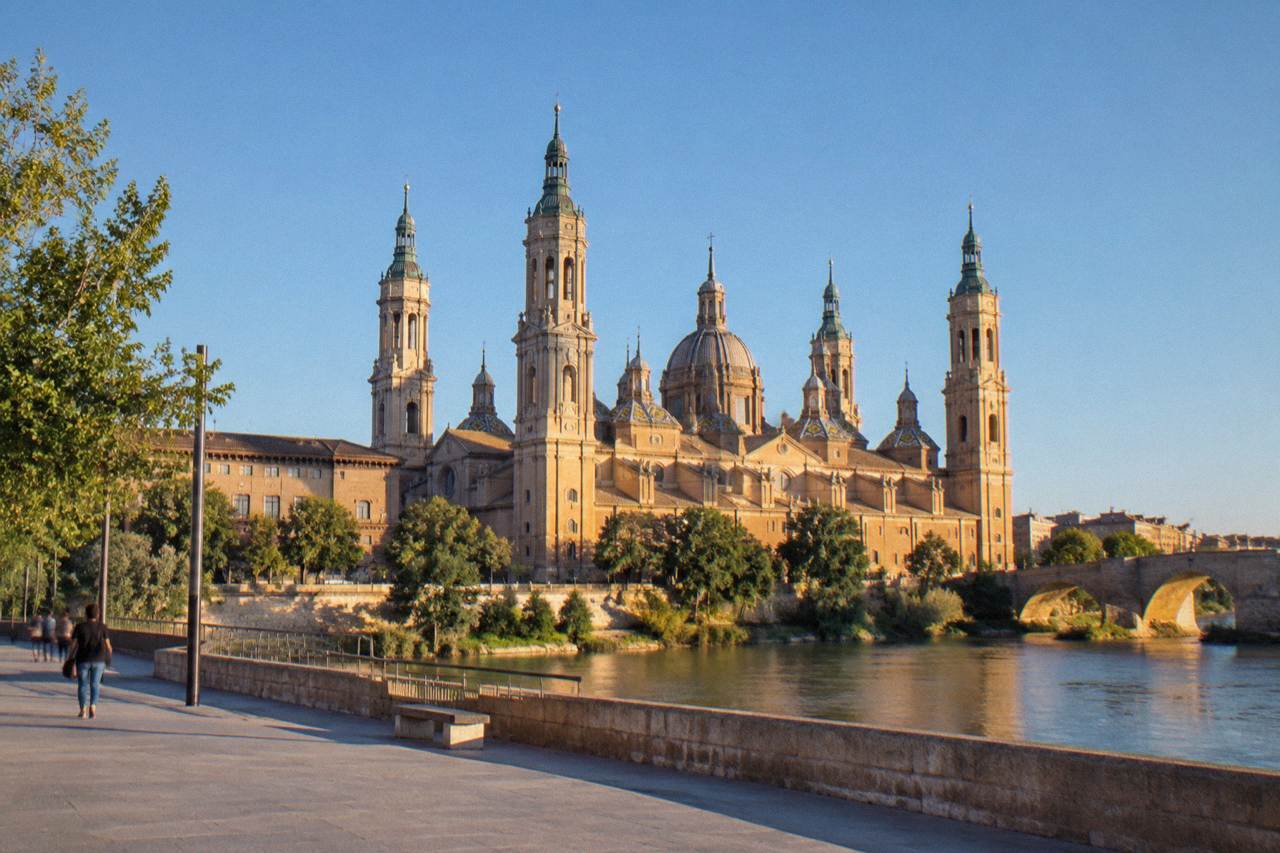
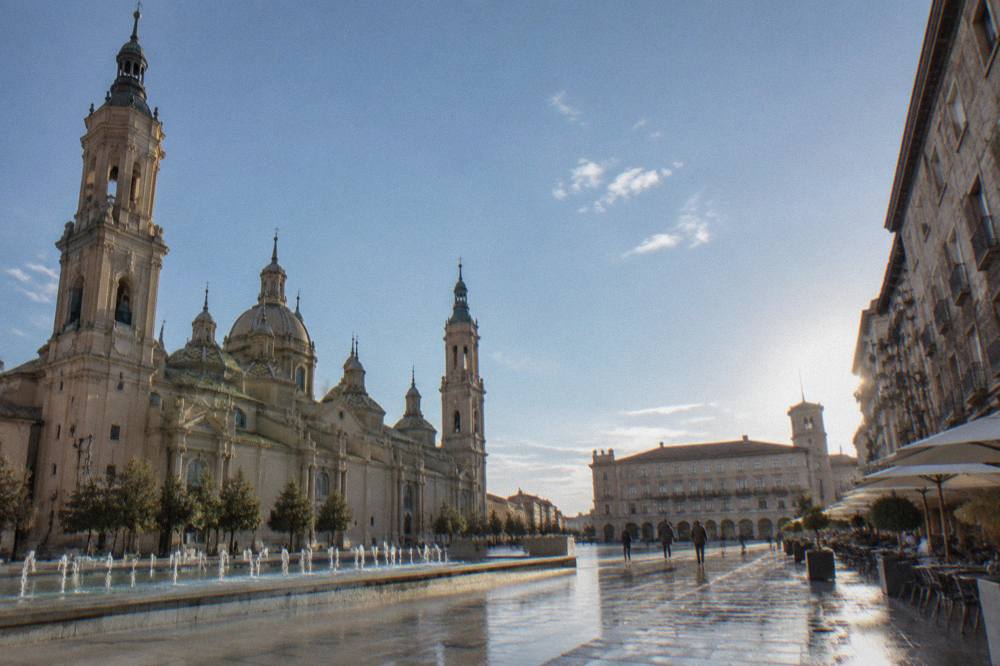
Zaragoza, the capital of Aragon, contributes the economy of one of Spain's mainland autonomous communities: regional government, a historic agricultural and logistics hinterland, and a strategic position on the high-speed corridor between Madrid and Barcelona about 1.5 to 2 hours from each. Its visitor economy runs on the Basílica del Pilar, the Aljafería, La Seo, the Roman Caesaraugusta museums and the Fiestas del Pilar, which run from 10 to 18 October 2026.
None of that makes Zaragoza a candidate for the richest-city title, and it does not need to be one. What it does have is a density of heritage that cities several times its economic size would struggle to match. The Basílica del Pilar is free to enter, with the tower viewpoint at 6 EUR for an adult. La Seo charges 10 EUR general admission, and that ticket includes the Museo de Tapices, the Museo Pilarista and the Rosario de Cristal. The Aljafería, the Islamic palace that now also seats the Aragonese regional parliament, is 7 EUR general or 9 EUR with a guided tour, and free on the first and third Sunday and Monday of each month.
| Sight in Zaragoza | Adult entry | What the ticket includes |
|---|---|---|
| Basílica del Pilar (temple) | Free | Entry to the basilica itself |
| Pilar tower viewpoint | 6 EUR | Lift and viewpoint access, last entry 30 min before close |
| La Seo cathedral | 10 EUR | Museo de Tapices, Museo Pilarista, Rosario de Cristal |
| Aljafería palace | 7 EUR | Palace access; 9 EUR with guided tour |
| Caesaraugusta four-museum bono | 7 EUR | Foro, Puerto Fluvial, Termas and Teatro |
The Roman layer deserves its own word. Caesaraugusta, the Roman city whose name is the ancestor of the modern name Zaragoza, left a forum, a river port, baths and a theatre, each now a municipal museum. A four-museum bono costs 7 EUR, or 5 EUR reduced, and all four are free on the first Sunday of the month. A good way to take this in is the Must-See Attractions Walking Tour, a two-hour guided walk that covers the headline sights with a guide, Check availability if the dates line up with your trip.
Is Zaragoza A Rich City By Spanish Standards?
Zaragoza is a prosperous regional capital rather than a national economic giant, and no verified income or ranking figure puts it at the top or bottom of any Spanish league table. What can be said from what is checkable: it is the capital of its own autonomous community, it sits on the main high-speed corridor between Spain's two richest cities, and it charges its visitors noticeably less than they do, with no tourist tax at all in Aragon.
That last point is more unusual than it sounds. Many of Europe's most visited destinations have added tourist taxes in recent years, and the regional government of Aragon explicitly ruled one out in September 2026, on the stated grounds that it would discourage visitors. A traveller in Zaragoza pays no tourist tax on a hotel bed, and the everyday costs inside the city are low by the standards of the two metropolises down the line. The urban bus and tram single fare is 1.70 EUR, or 0.55 EUR with the Tarjeta Bus. The Bizi bike-share day pass is a fixed 1 EUR plus 0.50 EUR for the first 30 minutes of each trip. The hop-on hop-off tourist bus is 10 EUR for 24 hours across 16 stops. The wider set of guides lives on Zaragoza Travel Guide.
| Everyday visitor cost in Zaragoza | Price |
|---|---|
| Bus or tram single | 1.70 EUR |
| Bus or tram with Tarjeta Bus | 0.55 EUR |
| Bizi bike day pass | 1 EUR fixed, plus 0.50 EUR per trip up to 30 min |
| Tourist bus, 24 hours | 10 EUR |
| Tourist tax in Aragon | None |
There is also a cultural richness here that has nothing to do with income statistics, and it is the part a visitor actually experiences. The Fiestas del Pilar, the city's great October festival, run from 10 to 18 October 2026, with the Ofrenda de Flores, the flower offering to the Virgin, on 12 October and the opening speech from the town hall balcony on the 10th at 21:00. The festival draws enormous crowds into the centre for a week and is the single largest thing that happens in the city each year.
How Does Zaragoza Compare With Valencia?
Valencia is the larger coastal economy, with a major port and a heavier tourism industry, while Zaragoza is the inland capital of Aragon with a logistics position on the Madrid to Barcelona rail corridor. Neither city competes with Madrid or Barcelona for total wealth. For a visitor, the practical difference is price and pace: Zaragoza's verified visitor costs, from a 1.70 EUR transit fare to free basilica entry, sit below what either coastal metropolis typically charges.
The Valencia comparison comes up often because the two cities attract a similar kind of traveller: someone who has done Madrid and Barcelona and wants a Spanish city that feels lived-in rather than performed. Valencia has the beach and the paella tradition; Zaragoza has the Ebro, the Mudéjar towers and a food tradition built on ternasco lamb and migas. The full Valencia or Zaragoza comparison runs in its own answer, but the economic framing is the same one as everywhere on this page: total wealth concentrates in the giants, and the mid-sized regional capitals compete on what a visitor actually gets for the money.
Zaragoza's own claim to richness, if you want to call it that, is architectural and historical rather than financial. What Zaragoza is famous for is precisely this concentration, and it costs a fraction of what the same day costs in Spain's two richest cities.
Does A City'S Wealth Change Your Visit?
Yes, but not in the direction most people assume. The richest cities are usually the most expensive to visit, with higher hotel, food and transport prices concentrated in the prime districts, while prosperous regional capitals like Zaragoza deliver monumental sights, functioning public transport and free-entry heritage at a lower cost. Wealth measured per resident tells you little about a visit; wealth measured in what your money buys tells you a lot.
Concretely, in Zaragoza: entering the Basílica del Pilar is free, the IAACC Pablo Serrano contemporary art centre is free, the Centro de Historias is free, and the Torreon de la Zuda viewpoint on the fifth floor is free. Add the free-entry days at the Aljafería and the Caesaraugusta museums and a careful visitor can spend two days in one of Spain's monumental cities for very little. The one-day itinerary shows how the free and paid pieces fit together.
The weather is part of the value too. AEMET's 1981 to 2010 normals for the Zaragoza Aeropuerto station put the annual mean at 15.5 C, with July the warmest month at a mean maximum of 32.4 C and 348 hours of sun, and May the wettest at 44 mm of rain. October, the festival month, averages a 21.4 C mean maximum. Those are the only climate numbers that should carry any weight, because they are the ones the station actually publishes.
Common Questions About Wealth And Riches In Spain
What is the richest city in Spain?
There is no official answer. Madrid has the largest total economy as the national capital, Barcelona leads in industry, port trade and tourism, and a per-resident measure reshuffles the order entirely. The title depends on which yardstick you pick, and none of them is official.
Is Zaragoza a rich city?
Zaragoza is a prosperous regional capital and the seat of the government of Aragon. No verified income or ranking figure places it in a Spanish wealth league table, and this site does not print one. What is verifiable is its position on the high-speed corridor between Madrid and Barcelona, its monumental heritage and its low visitor costs.
Is Zaragoza cheaper than Madrid or Barcelona?
On the verified figures, yes. The bus and tram single is 1.70 EUR, the Basilica del Pilar is free to enter, La Seo is 10 EUR and the Aljafería is 7 EUR, and Aragon charges no tourist tax on accommodation. High-speed trains put Madrid and Barcelona about 1.5 to 2 hours away for a day trip either way.
Do rich cities make better destinations?
Not necessarily. Wealth concentrates hotel and restaurant prices in the prime districts of the biggest cities. Regional capitals such as Zaragoza offer free-entry basilicas, free museums, a 1.70 EUR transit fare and a dense monumental old town, which often buys a better visit per euro spent.
What is Zaragoza's biggest economic asset?
Its position. Zaragoza sits inland on the Ebro as the capital of Aragon, roughly on the high-speed line between Madrid and Barcelona, each about 1.5 to 2 hours away, which makes it a natural logistics and stopping point between Spain's two largest economies.
The richest city in Spain, in the end, is a question with a moving target, and the honest traveller treats it as a starting point rather than an answer. Madrid and Barcelona hold the totals, the mid-sized capitals hold the value, and Zaragoza, capital of Aragon, is one of the best cases in the country for spending less and seeing more.