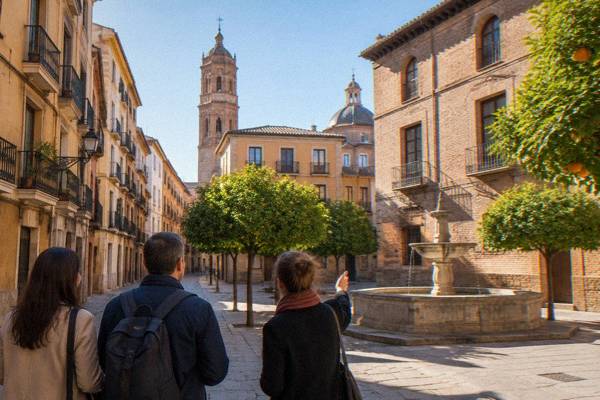
Where To Avoid In Zaragoza?
A sober, source-based answer to where to avoid in Zaragoza, Spain: no go-areas are few, but closures, the low emission zone, fiesta crowds and July heat are worth planning around.
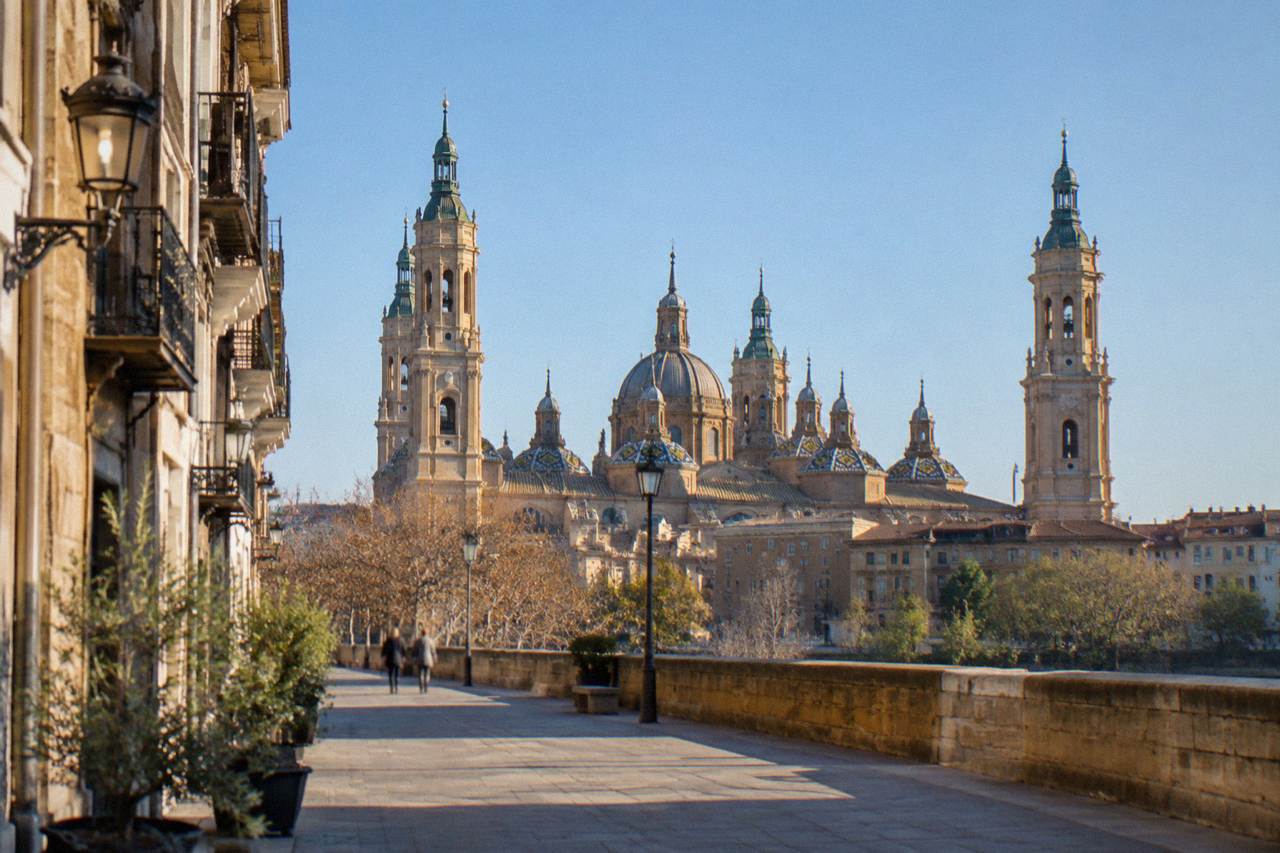
Zaragoza, the capital of Aragon on the Ebro, is a large inland Spanish city where the honest answer to a safety question is boring, and boring is good. No official page read for this article flags any neighbourhood as a place visitors should not go, and no verified crime statistic for any district exists in the sources behind this site, so none is printed here. What the primary sources do establish is a short list of things genuinely worth avoiding: driving into the historic centre's low emission zone without the right label, turning up at museums that are closed, standing in the October fiesta crowds unprepared, and underestimating July. This page works through each of those in turn, with the figures the official pages actually publish.
Where To Avoid In Zaragoza?
No district of Zaragoza appears on any official source as a place visitors should avoid, and this site holds no verified neighbourhood safety or crime statistic for any part of the city, so naming a quarter to skip would be invention. The things a visitor should actually avoid are conditions rather than places: the Casco Histórico's low emission zone if driving without a DGT environmental label, the museums that are currently closed, the densest Fiestas del Pilar crowds on 12 October, and the July heat.
That answer will disappoint anyone hoping for a list of postcodes. It should not. A city where the avoidable things are a driving restriction and a closed museum is a city in good shape, and the rest of this page gives each of those conditions the detail it needs. The distinction matters because plenty of online content names districts as rough or sketchy without a source behind it, and a name is not a fact.
For orientation, the old town around the Basílica del Pilar, La Seo and the Aljafería is where almost every visitor spends their time, and a good one day itinerary for Zaragoza keeps you there. If the underlying question is whether the city rewards the trip at all, the separate answer on whether Zaragoza is worth visiting covers that in full.
What Situations Should You Plan Around In Zaragoza?
The four situations worth planning around are the Fiestas del Pilar of 10 to 18 October 2026, when the Ofrenda de Flores on 12 October fills the centre with 994 registered groups; the low emission zone active in the Casco Histórico from Monday to Friday 08:00 to 20:00; the sights closed at present, including the Museo de Zaragoza's central building and, in October, the Palacio de Sástago; and the July heat, with a 32.4 degree mean maximum in the 1981 to 2010 AEMET normals.
Each of these has a verified date or figure behind it, which is why each earns a place on the list. The fiesta figure comes from the city's own fiesta pages, the emission zone from the municipal ZBE rules, the closures from the official monument timetable and the museum's own notice, and the temperature from AEMET's 1981 to 2010 normals for the Zaragoza Aeropuerto station.
| Situation | When it applies | What the official source says |
|---|---|---|
| Fiestas del Pilar crowds | 10 to 18 October 2026 | Ofrenda de Flores on 12 October with 994 registered groups |
| Low emission zone | Monday to Friday 08:00 to 20:00 | Sanctions since 12 December 2025; DGT environmental label required |
| Museo de Zaragoza central building | Closed indefinitely | Ministry of Culture works at Plaza de los Sitios 6, no reopening date |
| July heat | July | 1981 to 2010 mean maximum of 32.4 C, the year's highest |
If your dates are flexible, the practical read of the table is simple. October outside the fiesta week is one of the city's best windows, with a 21.4 degree mean maximum and 195 hours of sun in the same normals. Inside the fiesta week the city is spectacular but packed, and the Ofrenda day in particular is not a sightseeing day, it is an event day. The guide to how many days you need in Zaragoza helps you budget time around whichever window you choose.
A guided walk is one of the better answers to the packed-centre problem, because a local guide routes around the worst of the crush rather than into it. The Old Town Monumental Walk covers the historic core in a single outing, from $97.47 per person and rated 4.9 from 15 reviews, and there is an evening alternative if the daytime heat is the thing you are dodging.
Where Should You Not Drive In Zaragoza?
The place not to drive in Zaragoza is the Casco Histórico low emission zone, active Monday to Friday from 08:00 to 20:00, where vehicles without a DGT environmental label have faced sanctions since 12 December 2025. Labels B, C, ECO and 0 are allowed in; the rules provide a 15 minute grace period if you enter by mistake, and a second, tighter phase is scheduled from 2030.
This is the single most concrete avoid-item in the city, because it carries a fine rather than an opinion. The zone covers the historic centre, which is exactly the part of Zaragoza a visitor is most likely to be circling looking for parking near the Basílica del Pilar. The municipal FAQ is explicit that the restriction runs on weekdays only, so weekends are clear, and that the 15 minute grace exists for drivers who realise the error and leave.
The alternative is cheap and verified. The urban bus and tram single fare is 1.70 EUR, or 0.55 EUR with a Tarjeta Bus, and the card itself costs 7 EUR and works on both. The tourist bus runs a 90 minute loop with 16 stops on a 24 hour hop-on hop-off ticket at 10 EUR, cash only on board. Parking outside the zone and using any of those beats risking a label check.
| Transport option | Verified fare | Notes from the official tariff pages |
|---|---|---|
| Bus or tram single | 1.70 EUR | No transfer; 1.00 EUR on night lines |
| Tarjeta Bus trip | 0.55 EUR | Card costs 7 EUR, valid on bus and tram |
| Tourist bus | 10 EUR | 24 hours, 16 stops, 90 minute loop, cash on board |
| Bizi day pass | 1 EUR fixed | Plus 0.50 EUR for the first 30 minutes of each trip |
The Bizi bike share is the sleeper option for the riverside: a day pass at 1 EUR plus 0.50 EUR per half hour trip, with a 50 EUR card deposit held. The Ebro river walk and the Parque del Agua are both flat, and the answer on Zaragoza being a windy city explains the cierzo, the cold dry north-westerly that shapes cycling here more than any hill does.
Which Sights Are Closed Or Under Wraps In Zaragoza?
The sights to skip for now are the Museo de Zaragoza's central building at Plaza de los Sitios 6, closed indefinitely for Ministry of Culture works with no reopening date; the Palacio de Sástago, closed in October; the Museo Pablo Gargallo, temporarily closed; and the Etnología and Cerámica sections in the Parque Grande, shut pending a new exhibition. The Museo Goya reopens on 9 October 2026, Tuesday to Saturday 10:00 to 20:00, but no admission price has been published.
This is the avoid-list that changes most often, so it deserves its own table. Every line below comes from the official October monument timetable or the institutions' own notices, and the standing rule is to check the operator's or museum's own page before you set out, because temporary closures do not always reach the aggregated listings quickly.
| Sight | Status | Verified detail |
|---|---|---|
| Museo de Zaragoza, Plaza de los Sitios 6 | Closed | Ministry of Culture works, no reopening date published |
| Palacio de Sástago | Closed in October | Listed in the municipal October timetable |
| Museo Pablo Gargallo | Temporarily closed | Municipal October timetable |
| Museo Goya | Reopens 9 October 2026 | Tue-Sat 10:00-20:00, Sun 10:00-14:00, Mon closed, price not published |
| Basílica del Pilar dome, Regina Patriarcharum | Restoration agreed 23 January 2026 | Completion not confirmed, do not assume it is finished |
The Pilar dome line deserves its own sentence. The restoration agreement was signed on 23 January 2026 for 600,000 EUR funded by Fundación Ibercaja, with a roughly six month execution expected, but completion is not confirmed on the basilica's own pages, so plan for scaffolding on one dome rather than a finished view. The basilica itself remains free to enter, and its tower viewpoint charges 6 EUR for an adult, so the works affect one dome, not access.
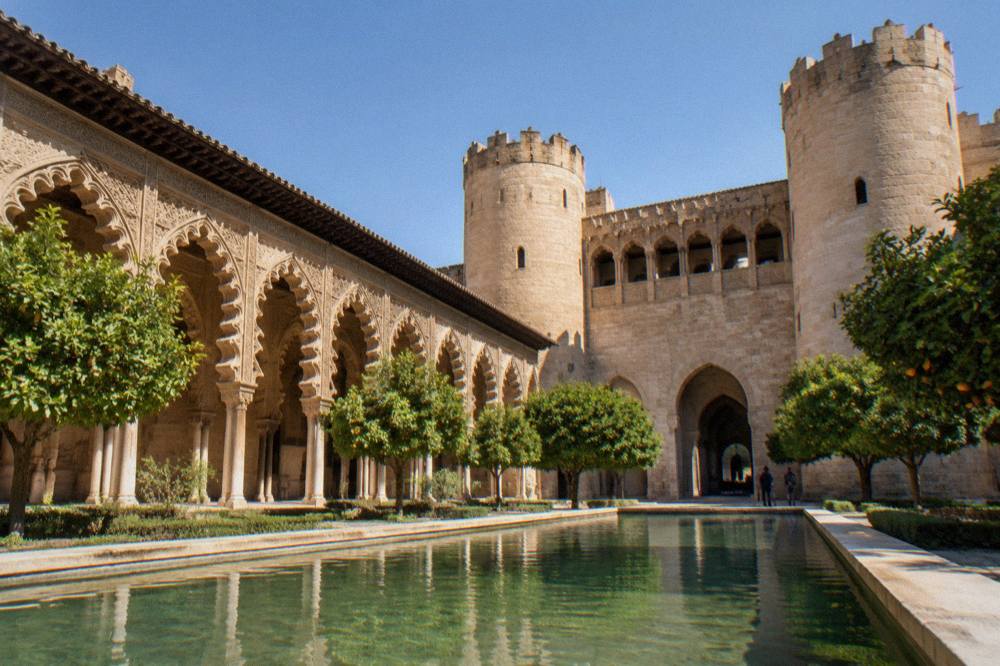
Everything else on the visitor's shortlist is open. The Aljafería runs daily 10:00 to 18:00 in October at 7 EUR general admission, free the first and third Sunday and Monday of the month. La Seo charges 10 EUR including three associated museums, and the Caesaraugusta sites sell a four museum bono at 7 EUR. The full picture of what the city is known for is in the answer on what Zaragoza is famous for.
When Is The Weather Worth Avoiding In Zaragoza?
The month most worth avoiding on weather alone is July, which carries the year's highest mean maximum at 32.4 C in AEMET's 1981 to 2010 normals for the Zaragoza Aeropuerto station, alongside the joint driest conditions at 17 mm of rain. May, not winter, is the wettest month at 44 mm, and the cold edge of the year is January with a 2.7 degree mean minimum, so the extremes to dodge are July heat and the cierzo wind in the colder months rather than rain.
Zaragoza is inland and dry continental, with 322 mm of rain across the whole 1981 to 2010 year, so the classic coastal worry about washout weeks barely applies. The normals put July and August together at the bottom for rainfall, 17 mm each, and July alone at the top for sunshine, 348 hours. That combination makes July the month where the sensible plan is museums and evening streets rather than midday plazas.
The cierzo is the qualitative wildcard. It is the cold, dry north-westerly that funnels down the Ebro valley, and AEMET publishes no speed or frequency figure for it at this station, only regional wind warnings, so this site states none. What the normals do show is that October, the fiesta month, is mild at a 21.4 degree mean maximum, and that the question of whether it rains a lot in Zaragoza has a firm no attached to it for most of the year.
Timing a guided walk is the easiest weather fix of all. The Old Town Monumental Walk runs through the historic core, and an early or late slot sidesteps both the July maximum and the midday closing gap that affects several museums, which shut between 14:00 or 14:30 and 16:00 or 17:00 depending on the site.
Are Any Parts Of Zaragoza Just Quiet Rather Than Unsafe?
Yes, and the distinction matters: several districts of Zaragoza are quiet, peripheral or simply far from the monuments, and none of them is documented as unsafe in any source this site holds. The Delicias district around the train station, the Actur and Expo Ribera neighbourhoods north of the Ebro, and the outer residential rings are ordinary working districts where the honest description is that there is little for a visitor, not that there is something to fear.
The sources behind this site include no neighbourhood crime statistic, no official safety warning for any district, and no verified incident pattern, so any page that names a Zaragoza barrio as one to avoid is going beyond its evidence. What can be said from the geography is practical. Delicias is where the high speed trains arrive, and it is a short hop from the centre rather than a place to linger. The Actur side holds the Parque del Agua, more than 120 hectares of it, which is a destination in its own right rather than a district to be wary of.
The genuinely sobering excursion is Belchite, the Civil War ruin town reached on a day trip, and it belongs on a day trip page rather than this one, but the tone point transfers: the serious history around Zaragoza is treated with respect, not as a spooky detour. Within the city, the old town at night is lit and busy around the Pilar square, and the things to do in Zaragoza rundown keeps the evening options in the walked, lit core.
The one crowd risk with a verified number attached is the Ofrenda de Flores, when the route from Paseo de la Independencia to Plaza del Pilar fills with 994 registered groups. That is a crush of flowers and families, not a threat, but anyone who dislikes dense crowds should treat 12 October as a day for the riverside or a day trip, and the answer on what happens on 12 October in Spain explains the national dimension.
Common Questions About Avoiding The Wrong Things In Zaragoza
Where to avoid in Zaragoza?
No district is flagged by any official source as a place visitors should avoid. The verified avoid-items are conditions: the Casco Histórico low emission zone if you drive without a DGT label, the currently closed museums, the Ofrenda de Flores crowds on 12 October, and the July heat.
Is the old town of Zaragoza safe to walk at night?
This site holds no verified safety statistic for any part of Zaragoza, so no claim is made either way. What the sources do show is that the old town is the lit, monument-lined core where evening tapas tours and night walks operate, including a guided historical walk rated 5 from 14 reviews on its listing.
Can I drive into Zaragoza city centre?
Only with a DGT environmental label. The Casco Histórico low emission zone runs Monday to Friday 08:00 to 20:00 with sanctions since 12 December 2025, and there is a 15 minute grace period if you enter by mistake. Park outside the zone and use the bus or tram at 1.70 EUR a single.
Which museums in Zaragoza are closed right now?
The Museo de Zaragoza's central building at Plaza de los Sitios 6 is closed indefinitely for Ministry of Culture works, the Palacio de Sástago is closed in October, the Museo Pablo Gargallo is temporarily closed, and the Etnología and Cerámica sections in the Parque Grande are shut pending a new exhibition. The Museo Goya reopens on 9 October 2026.
What is the worst month to visit Zaragoza?
July, on the numbers. AEMET's 1981 to 2010 normals for the Zaragoza Aeropuerto station give it the year's highest mean maximum at 32.4 C and the joint lowest rainfall at 17 mm. October outside the fiesta week, at a 21.4 degree mean maximum, is a far more comfortable window.
Is Zaragoza crowded during the Fiestas del Pilar?
Very, on the key dates. The 2026 fiestas run 10 to 18 October, and the Ofrenda de Flores on 12 October has 994 registered groups on the city's own figures. If dense crowds are the thing you are avoiding, pick dates outside that week or head to the riverside on the day itself.
The short version of this whole page: in Zaragoza, the capital of Aragon, you avoid a traffic zone, a handful of closed doors and a hot month, not a neighbourhood, and the Zaragoza Travel Guide pages on each sight carry the current hours and prices you need to keep the list that short.