Does It Snow In Zaragoza?
Snow in Zaragoza is rare but not impossible. AEMET's 1981-2010 averages for the city show what winter actually delivers: frost, fog and the cierzo wind, with only occasional snowfall on the Ebro plain.
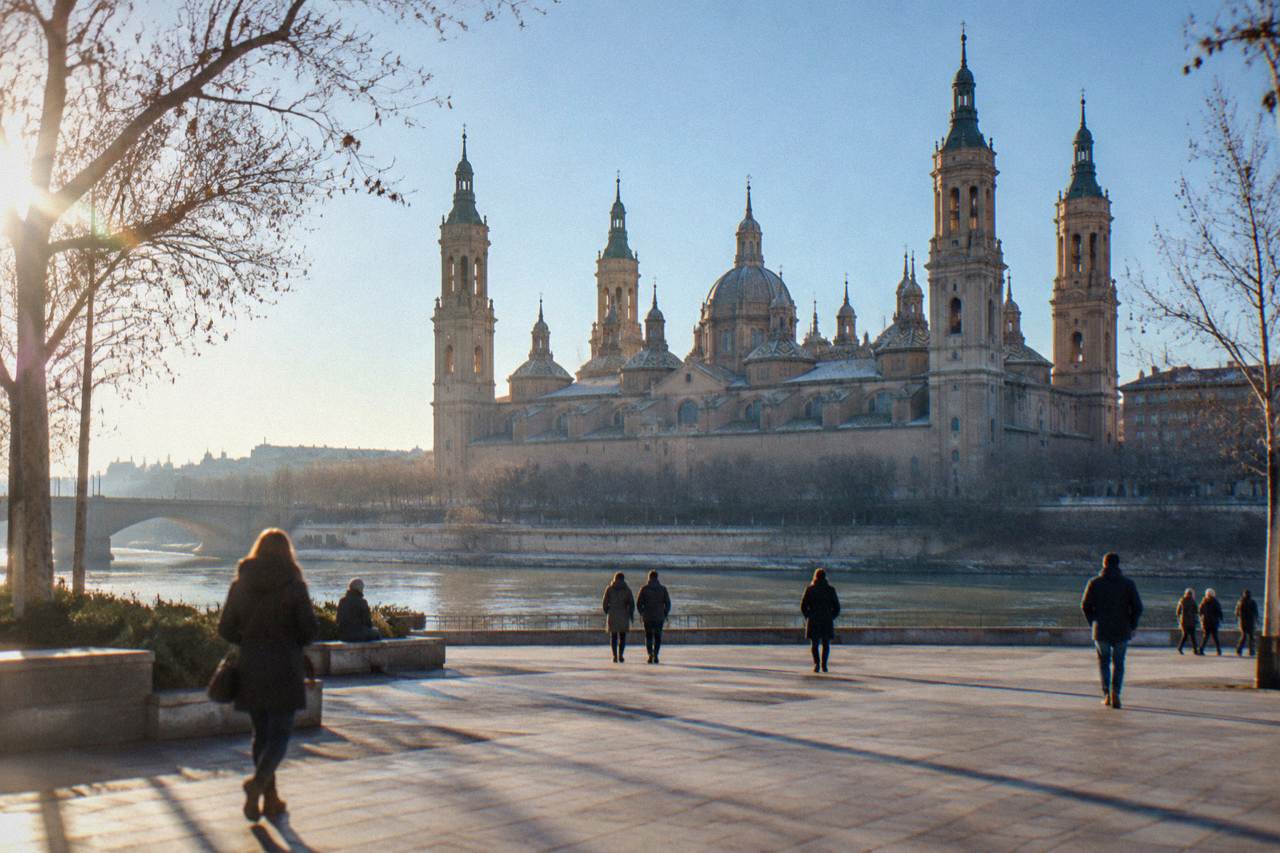
Zaragoza, the capital of Aragon, sits inland on the Ebro in one of the driest corners of Europe, and that geography answers most of the winter weather question before any thermometer comes out. The city's climate record, published by AEMET for the Zaragoza Aeropuerto station, describes a dry continental regime: hot summers, cold nights in winter, modest rainfall, and a cold north-west wind called the cierzo that funnels down the Ebro valley. Snow does reach the city some winters, but it is a rare visitor, not a season, and the averages the station publishes say so in their own way, by counting frost rather than snowfall.
Does It Snow In Zaragoza?
Yes, but rarely, and almost never as anything that settles for long. Zaragoza's published climate record for the Zaragoza Aeropuerto station contains no snowfall figure at all, because snow on the Ebro plain is an occasional event rather than a measurable season. What the 1981-2010 AEMET averages do record is 23.1 frost days a year, a January mean minimum of 2.7 C and a December mean minimum of 3.2 C, which is the profile of a city that freezes at night more often than it snows.
The distinction matters for anyone packing. A visitor in January will very likely meet air cold enough for frost on parked cars and on the embankments of the Ebro, and may well see the Moncayo massif to the west wearing snow on its high ground for weeks at a stretch. Actually standing in falling snow in the city streets is a different matter. The plain around Zaragoza is semi-arid, with just 322 mm of rain across the whole 1981-2010 record year, and winter precipitation that does arrive often falls as cold rain or sleet because daytime temperatures climb back above freezing. When snow does fall, it usually comes in short episodes between December and February and melts within a day or two as the mean maximum climbs past 10 C.
That is the honest version of the answer, and it is the version the numbers support. Anyone planning a winter city break around snow should plan around frost instead: early mornings down near the river, on the Puente de Piedra or along the Ebro river walk, will feel genuinely cold, while afternoons in the sun on a terrace can feel mild. For more on the city's location and why its climate behaves this way, see where Zaragoza sits in Spain.
How Cold Does Zaragoza Actually Get In Winter?
By the 1981-2010 AEMET averages for the Zaragoza Aeropuerto station, January is the coldest month with a mean temperature of 6.6 C, a mean maximum of 10.5 C and a mean minimum of 2.7 C. December and February sit close behind at 7.0 C and 8.2 C mean, with mean minimums of 3.2 C and 3.3 C.
The same record counts 23.1 frost days and 21.3 fog days a year, so the cold is real but it belongs to nights and mornings rather than frozen afternoons.
The full winter picture from the station's published normals looks like this, and every figure is the 1981-2010 average:
| Month | Mean C | Mean max C | Mean min C | Rain mm | Sun hours |
|---|---|---|---|---|---|
| December | 7.0 | 10.8 | 3.2 | 21 | 124 |
| January | 6.6 | 10.5 | 2.7 | 21 | 131 |
| February | 8.2 | 13.1 | 3.3 | 22 | 165 |
Two things stand out. First, winter in Zaragoza is dry: 21 to 22 mm of rain per winter month is less than half of what May, the wettest month in the record at 44 mm, receives. Second, the sun keeps coming: even in December the station averages 124 hours of sunshine, and by February that rises to 165 hours. A cold, bright, dry city is the reality the numbers describe, not a grey one. Frost forms on clear nights when the ground loses heat fast, and those same clear nights are why the winter light on the Basílica del Pilar and the Mudéjar brickwork is famous among photographers.
The practical reading for a traveller is that layers matter more than a heavy coat. A warm jacket for the morning, something lighter for the afternoon, and decent shoes for stone paving that can hold frost in shade until midday. If the trip falls in the colder months, the guided walks are the best use of the bright hours, and the options below cover the old district, the historic centre and the classic sightseeing loop.
The historical tour of the old district is a 2.5-hour guided walk rated 5 from 14 reviews, from $106.92 per person, and it spends its time exactly where Zaragoza's cold-weather sightseeing works best: the compact streets around La Seo, the Roman remains and the river edge, where the walking is short and the indoor stops are close together. Check availability
When Is Snow Most Likely In Zaragoza?
December, January and February are the months when snow reaches Zaragoza, because they are the only months whose 1981-2010 mean minimums sit near freezing, at 3.2 C, 2.7 C and 3.3 C respectively. Even then, snow needs cold air and moisture to arrive together, and the same AEMET record shows those winter months are among the driest of the year at 21 to 22 mm of rain each. The realistic expectation is a light dusting every few winters.
The geography explains the gap between the city and its horizon. Zaragoza lies at about 249 metres of altitude on a wide river plain, and cold air that slides in under clear skies produces frost at ground level while the air a few hundred metres up stays warm enough for rain. The Moncayo massif to the west and the Pyrenees to the north-east are high enough to hold snow through much of the winter, which is why a bright January day in the city can include a view of white peaks from certain vantage points near the Ebro. The Iberian System ranges visible on clear days play the same role to the south. Other pages covering the same trip are gathered on Zaragoza Travel Guide.
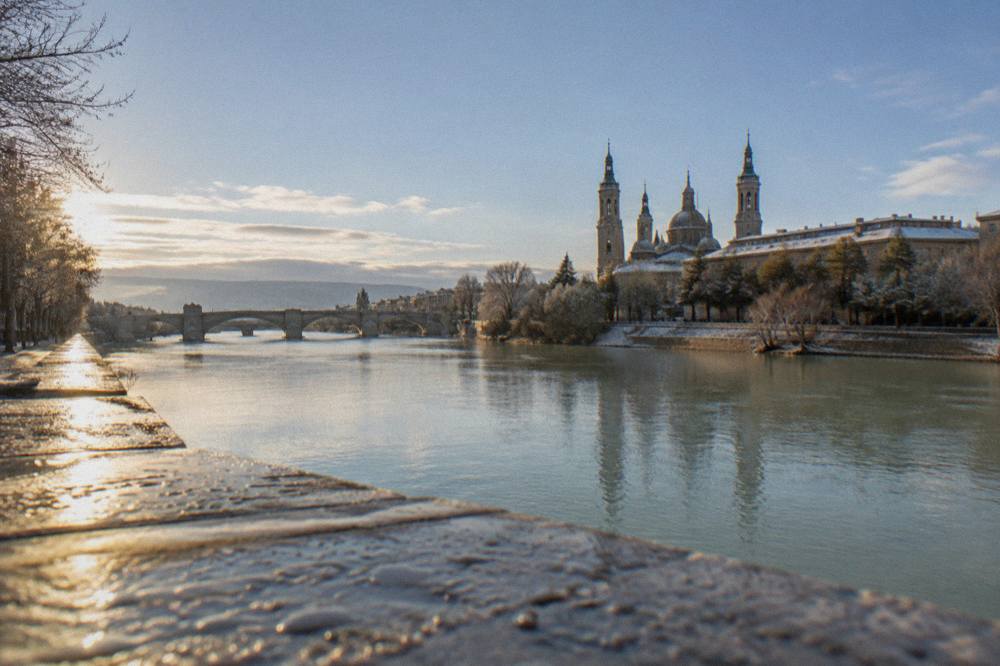
For travellers, the honest advice is to treat snow in the city as a bonus, never a plan. If the forecast shows a genuine cold snap, the mornings are the time to be out, because frost on the Puente de Piedra and fog lifting off the Ebro are more photogenic than any brief flurry. If the sky is clear and the wind is up, the cierzo changes the arithmetic completely, and that wind deserves its own section.
What Makes A Zaragoza Winter Feel Colder Than The Thermometer?
The cierzo, the cold, dry north-west wind that funnels down the Ebro valley, is the reason a Zaragoza winter day can feel far colder than its stated temperature. The published AEMET normals carry no wind speed figure, so the cierzo is described qualitatively only, but its effect is well known in the city: it strips warmth from exposed riverbanks, bridges and open squares. Frost and fog, at 23.1 and 21.3 days a year in the record, do the rest.
Fog is the quieter of the two winter characters. The station averages 21.3 fog days a year, and they cluster in the cold months when the Ebro and the irrigated huerta around the city release moisture into still, cold air. A foggy morning along the river, with the towers of the Basílica del Pilar appearing and disappearing above the mist, is one of the most atmospheric walks the city offers, and it costs nothing. The fog usually burns off as the sun climbs, because even December delivers 124 hours of sunshine on average.
The cierzo deserves respect rather than fear. It is a dry wind, so it does not bring rain or snow with it, but it makes open spaces like the Expo 2008 site, the Parque del Agua and the river embankments feel biting, while the narrow streets of the Casco Histórico stay comfortable. Planning a winter day around the wind means keeping the middle of the day for the open sights and the morning and evening for the sheltered ones. The wind has its own dedicated write-up in is Zaragoza a windy city, and the rainfall side of the climate is covered in does it rain a lot in Zaragoza.
Winter evenings also solve themselves well in Zaragoza, because the city's food culture is built for cold weather. A hot tapas route through the old town, with ternasco de Aragón and migas aragonesas on the menu, turns a short winter afternoon into a full evening, and the food Zaragoza is famous for is hearty by design. For the warm-weather comparison, the hottest month in Zaragoza shows the other extreme of the same continental climate.
A legends and ghosts night tour is one way to use a winter evening well: the streets of the old town after dark, with the guide's stories and the cold air, run about 2 hours from $15.76 per person, rated 5 from 1 review. It is an evening activity that does not depend on weather at all, which is exactly what a January trip wants in reserve.
How Should You Pack For A Zaragoza Winter Trip?
Pack for frost, wind and bright sun rather than for snow, because the 1981-2010 averages describe cold nights around 2.7 to 3.3 C and mild afternoons around 10.5 to 13.1 C, with very little rain at 21 to 22 mm a month. A warm layered jacket, a windproof outer layer for the cierzo, and comfortable shoes that grip frosty stone cover the realistic range. An umbrella is optional, a scarf is not, and sunglasses matter more than most visitors expect under the winter sun.
The layering logic follows the numbers directly. Mornings start near or below freezing on the coldest days, so a warm base and a mid-layer are needed for the first hours. By early afternoon the mean maximum of 10.5 C in January and 13.1 C in February, combined with the strong winter light the station's sunshine hours imply, makes a heavy coat feel like a burden. The windproof layer earns its place the moment the cierzo blows, especially on the bridges and along the Ebro.
A simple packing table for the three winter months, using the 1981-2010 AEMET averages:
| Condition | What the averages show | What to pack |
|---|---|---|
| Cold nights | Jan mean min 2.7 C, Feb 3.3 C, Dec 3.2 C | Warm base layer, hat, gloves |
| Mild afternoons | Jan mean max 10.5 C, Feb 13.1 C | Mid-layer you can remove |
| Cierzo wind days | Qualitative, no speed figure published | Windproof outer shell |
| Frost and fog | 23.1 frost days, 21.3 fog days a year | Gripping shoes, reflective detail |
| Rain | 21 to 22 mm per winter month | Compact umbrella, optional |
The final piece of winter planning is timing the visit itself. The Fiestas del Pilar run from 10 to 18 October 2026, which sits on the warm edge of the season, while the deepest cold comes in the weeks around January. Travellers weighing a winter trip against a spring or autumn one can compare the options in how many days you need in Zaragoza, and the wider case for the city in the cooler months is made in is Zaragoza worth visiting.
Common Questions About Snow And Winter In Zaragoza
Does it snow in Zaragoza, Spain?
Snow reaches the city occasionally, mostly between December and February, but it is a rare event that rarely settles for long. The published AEMET 1981-2010 averages for the Zaragoza Aeropuerto station carry no snowfall figure, while recording 23.1 frost days a year, which is the honest shape of a Zaragoza winter: frost yes, snow rarely.
What is the coldest month in Zaragoza?
January, with a 1981-2010 mean temperature of 6.6 C, a mean maximum of 10.5 C and a mean minimum of 2.7 C, according to AEMET's averages for the Zaragoza Aeropuerto station. December and February follow closely at 7.0 C and 8.2 C mean.
Can you see snow near Zaragoza even if it does not snow in the city?
Yes. The Moncayo massif to the west and the Pyrenees to the north-east are high enough to hold snow through much of the winter, and the surrounding ranges can be visible from the city on clear days. Day trips into the Pyrenees from Zaragoza are a regular way to reach real snow country.
Is the cierzo wind dangerous in winter?
No, but it is uncomfortable if unprepared. The cierzo is a cold, dry north-west wind that funnels down the Ebro valley, and the published climate record carries no wind speed figure, so it is described qualitatively. A windproof layer on exposed bridges and embankments is the practical answer.
Is Zaragoza a good winter city break?
Yes, if the plan is built around what winter actually delivers: bright, dry, cold mornings, 124 to 165 hours of sunshine per winter month on the 1981-2010 averages, frosty photo walks by the Ebro, and hearty indoor food. Anyone travelling specifically for snow in the streets should instead look at the mountain day trips.
The short version of the whole page: Zaragoza, the capital of Aragon on the Ebro, is a frost city rather than a snow city, and a winter visit planned around that fact, with layers, a windproof shell and an appetite for hot tapas, gets the best of the season.