Is Zaragoza A Basque City?
No, Zaragoza is not a Basque city. It is the capital of Aragon, an inland region in north-east Spain on the Ebro river. Here is where the confusion comes from and what the city actually is.
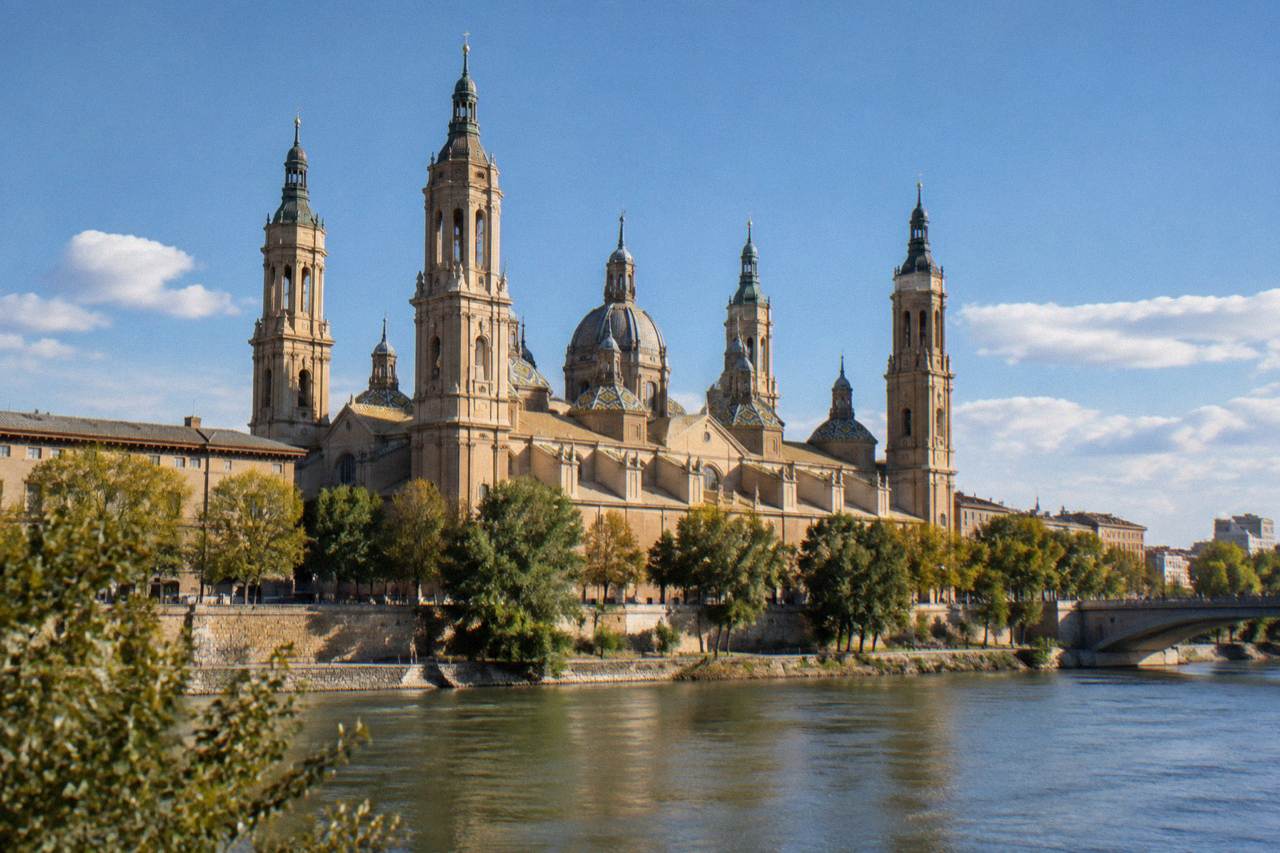
Zaragoza, the capital of Aragon in north-east Spain, sits inland on the Ebro river, and no part of it belongs to the Basque Country. The question comes up more often than you might expect, usually from travellers sketching a northern-Spain route who see "Zaragoza" on the map between Madrid, Barcelona and the Pyrenees and assume it belongs to the same cultural region as Bilbao or San Sebastián. It does not. Zaragoza is Aragonese, it has been since the medieval kingdom of Aragon, and its great monuments, the Basílica del Pilar, La Seo and the Aljafería, are Aragonese landmarks, not Basque ones.
Is Zaragoza A Basque City?
No, Zaragoza is not a Basque city. It is the capital of Aragon, an inland autonomous community in north-east Spain, and it stands on the Ebro river far outside the Basque Country, a separate community in the north. Zaragoza's monuments, the Basílica del Pilar, La Seo and the Aljafería, are Aragonese landmarks, and the city's name descends from the Roman city of Caesaraugusta. The confusion comes from the map of northern Spain, not from the city itself.
That is the short answer, and it is worth being blunt about it because the mistake has real consequences for trip planning. A traveller who expects Basque culture in Zaragoza, pintxos bars, coastal scenery, the green landscapes of the Cantabrian side, will be surprised by what they find instead: a dry, continental, inland city of wide avenues, Mudéjar brickwork and one of the largest churches in Spain. The reverse mistake happens too. People skip Zaragoza precisely because they file it under "that northern industrial region" and never discover that it holds a Roman theatre, a Moorish palace and a festival, the Fiestas del Pilar, that fills the streets every October.
The two regions do not even share a border in the everyday sense that travellers imagine. Aragon stretches from the central Ebro valley up to the Pyrenees, and Zaragoza sits near its middle, at the point where the Huerva and Gállego rivers join the Ebro. The Basque Country lies to the north-west, a different community with its own language, its own institutions and its own coastline. Zaragoza has no coast at all. The nearest thing it has to a seaside atmosphere is the Ranillas meander of the Ebro, where the Parque del Agua Luis Buñuel covers more than 120 hectares of riverside green space on the Expo 2008 site.
If you want the fuller picture of where the city sits and how to reach it, the companion page Where In Spain Is Zaragoza covers the geography, the rail connections and the airport, all from the same verified sources.
Where Is Zaragoza If Not The Basque Country?
Zaragoza is in Aragon, the inland autonomous community that occupies the north-eastern stretch of the Ebro basin, and the city is both the capital of the province and of the region. It lies on the Ebro river, with no sea and no coast, in a dry continental climate where AEMET's 1981 to 2010 normals for the Zaragoza Aeropuerto station record just 322 mm of rain across the whole year. High-speed trains link Zaragoza-Delicias to Madrid and Barcelona in about 1.5 to 2 hours.
That rail position is the honest explanation for the whole mix-up. Zaragoza-Delicias sits on the Madrid to Barcelona high-speed corridor, so almost anyone crossing northern Spain by train passes through it, often changing there for Pamplona or the Pyrenees. On a map viewed quickly, the city looks like a natural stop in a Basque or northern circuit. In practice it is the hub of Aragon, and the day trips that make sense from it run to Aragonese and Pyrenean destinations: Monasterio de Piedra, Albarracín, Tarazona, the Moncayo, and the Ordesa valley.
The climate tells the same story. This is not the green north. AEMET's 1981 to 2010 averages for the Zaragoza Aeropuerto station put July's mean maximum at 32.4 C with only 17 mm of rain, and May, the wettest month, at just 44 mm. The Basque Country's reputation is built on the opposite weather. The famous cierzo, the cold, dry north-west wind that runs down the Ebro valley, is a Zaragoza institution, and there is a whole page on whether Zaragoza is a windy city if you want the details.
| Fact about Zaragoza | Verified answer |
|---|---|
| Region | Aragon, of which Zaragoza is the capital |
| Setting | Inland, on the Ebro river, no coast |
| Climate | Dry continental, 322 mm of rain per year (AEMET 1981 to 2010, Zaragoza Aeropuerto) |
| Hottest month by mean maximum | July, 32.4 C (AEMET 1981 to 2010) |
| Urban bus and tram single fare | 1.70 EUR, or 0.55 EUR with a Tarjeta Bus |
| Fiestas del Pilar 2026 | 10 to 18 October, Ofrenda de Flores on 12 October |
For a first visit, a guided walk is the fastest way to see how the city fits together, and the guided options below are a good place to start comparing.
Why Do People Confuse Zaragoza With The Basque Country?
The confusion is a naming and mapping problem, not a historical one. Northern Spain is often sold as one block, and Zaragoza's name, unfamiliar to many travellers, gets filed alongside Basque names simply because it appears on the same rail map. But the city's name has nothing to do with Basque: it descends from the Roman city of Caesaraugusta, whose forum, theatre, river port and baths are still visitable in the centre today. Aragon and the Basque Country are separate communities with separate histories.
The Roman layer is the best proof you can walk through. The Caesaraugusta museums, the Forum, the River Port, the Baths and the Theatre, sit within a few streets of the Plaza del Pilar, and the four-site bono costs 7 EUR, or 5 EUR reduced, with free entry on the first Sunday of the month. Nothing in that archaeological record points north-west to the Basque Country. It points to Rome, and to the Ebro valley that Rome governed from this crossing point. The ancient Roman ruins in Zaragoza get their own treatment elsewhere on this site if you want the full run-down.
Language is the other giveaway, though you should not expect to hear much of anything other than Spanish and a good deal of tourism. Aragon's public life runs in Spanish, and the Basque language, Euskara, has no place in Zaragoza's street names, institutions or daily conversation. If you are curious about what you will actually hear day to day, including how much English to expect, the page on whether they speak English in Zaragoza answers that directly.
What Is Zaragoza Actually Known For?
Zaragoza is known for being the capital of Aragon and for one of the densest monumental centres in inland Spain: the Basílica del Pilar, whose temple is free to enter, La Seo cathedral, whose 10 EUR general ticket includes three further museums, and the Aljafería, the great Islamic palace of the city, which charges 7 EUR general admission. Around them sit the Roman Caesaraugusta sites, Mudéjar brickwork from the Aragonese tradition, and the Fiestas del Pilar, held from 10 to 18 October 2026.
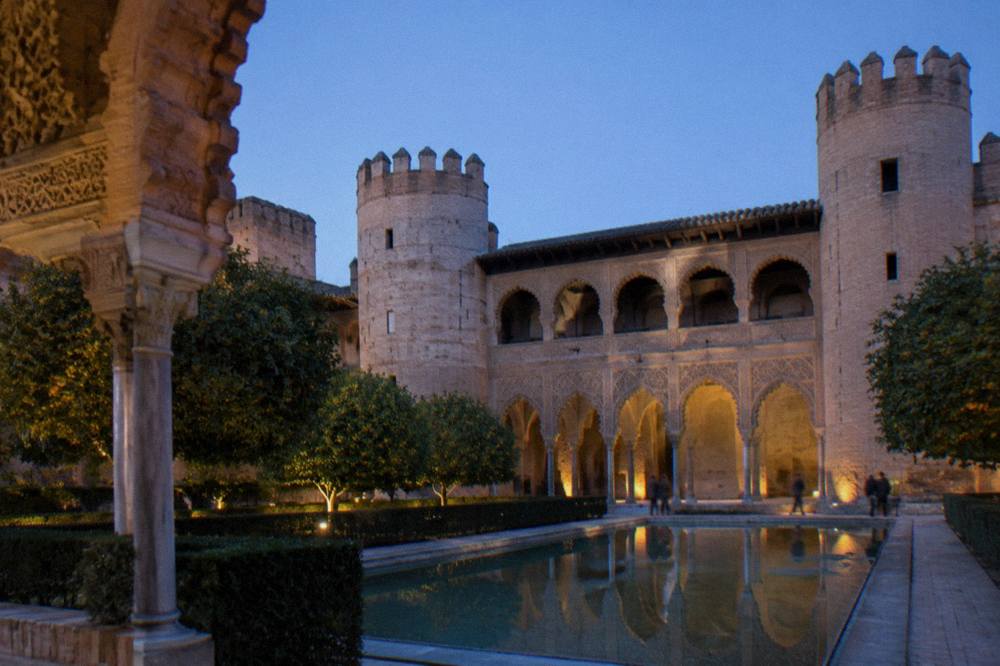
None of that is Basque, and all of it is specific to Aragon. The Mudéjar tradition in particular is an Aragonese phenomenon: the UNESCO World Heritage item "Mudejar Architecture of Aragon" was inscribed in 1986, and it is the reason the region's brick churches and towers look like nowhere else in Spain. The Aljafería, meanwhile, is the greatest surviving Islamic palace of its era on the Iberian Peninsula, a taifa palace that later became a royal seat of the Catholic Monarchs. You can check whether you can visit the Aljafería and what is inside it on the dedicated pages.
The festival calendar seals the point. The Fiestas del Pilar, running 10 to 18 October in 2026, with the Ofrenda de Flores on 12 October, is an Aragonese celebration of Aragon's patroness, the Virgen del Pilar, whose image stands in the basilica that carries her name. The pregón opens the festivities from the balcony of the Ayuntamiento on 10 October at 21:00, and the programme for 2026 includes jota competitions, the Aragonese song and dance form, headline concerts and an expanded fireworks schedule. Jota aragonesa is about as far from Basque traditional culture as Spanish regional culture gets.
A two-hour guided walk is enough to tie these landmarks together on a first day, and the must-see attractions walk below is one of the highest-rated ways to do it.
Is Zaragoza Worth Visiting If You Expected The Basque Country?
Yes, provided you visit it as what it is rather than what it is not. Zaragoza offers a free-to-enter basilica of national importance, a Moorish palace, four Roman museums on one combined ticket, a Mudéjar UNESCO tradition and a nine-day October festival, all in a walkable centre where a tram ride costs 1.70 EUR. Travellers expecting the Basque coast will not find it, but those expecting an underestimated Spanish regional capital generally find one of the most rewarding inland cities in the country.
The honest framing is that the two destinations do different jobs. The Basque Country delivers coast, green hills and a famous food culture; Zaragoza delivers monumental density, Roman archaeology and a festival that transforms the city for nine days each October. Neither is a substitute for the other. What Zaragoza does have, in its favour, is position: about 1.5 to 2 hours by high-speed train from both Madrid and Barcelona, it works as a destination in its own right or as a natural overnight break between the two, which is exactly how most travellers first encounter it. The comparison with its bigger neighbours is laid out in is Zaragoza worth visiting, and the practical question of how many days you need in Zaragoza has its own answer page.
For orientation, the Zaragoza Monumental Sightseeing Tour, a 105-minute guided introduction from $10.41 per person, rated 4.4 from 36 reviews, is designed for exactly this situation: a first walkthrough of the Plaza del Pilar, the old town and the riverside that puts the city's geography and history in order before you explore on your own. You can find it at the 105-minute monumental introduction, and Check availability on the operator's live listing if the timing suits your trip.
For a deeper comparison with another inland city that gets the same treatment, see which city is better to visit, Valencia or Zaragoza.
Whichever guided option you prefer, the trio below covers the main ways to see the city with a guide.
Common Questions About Zaragoza
Is Zaragoza a Basque city?
No. Zaragoza is the capital of Aragon, an inland autonomous community in north-east Spain on the Ebro river. The Basque Country is a separate autonomous community in the north, and Zaragoza has no historical, linguistic or institutional connection to it.
Is Zaragoza in Catalonia?
No. Zaragoza is in Aragon, of which it is the capital. Catalonia is a different autonomous community to the east. The two regions are neighbours in north-east Spain, but Zaragoza's monuments, festivals and history are entirely Aragonese.
What region is Zaragoza the capital of?
Zaragoza is the capital of both the province of Zaragoza and the autonomous community of Aragon. It stands inland on the Ebro river, with no coast, in a dry continental climate.
Where does the name Zaragoza come from?
The modern name descends from the Roman city of Caesaraugusta, founded on the Ebro crossing whose forum, theatre, river port and baths are still visitable as city museums today.
Is Basque spoken in Zaragoza?
No. Public life in Zaragoza runs in Spanish. The Basque language, Euskara, belongs to the Basque Country, a separate autonomous community, and plays no part in Zaragoza's street names or daily life.
What is Zaragoza famous for?
The Basílica del Pilar, free to enter, La Seo cathedral, the great Islamic palace of the Aljafería, the Roman Caesaraugusta museums, the Aragonese Mudéjar tradition, and the Fiestas del Pilar, held from 10 to 18 October in 2026. The full answer is on the what is Zaragoza famous for page.
The bottom line is simple: Zaragoza is Aragon's capital, an Ebro-river city with Roman foundations, Mudéjar towers and one of Spain's great basilicas, and it deserves to be planned for on its own terms. The Zaragoza Travel Guide covers every part of it, from the Pilar's tower viewpoint to the tapas routes of the old town, so start there and build your route through Aragon, not through the Basque Country.