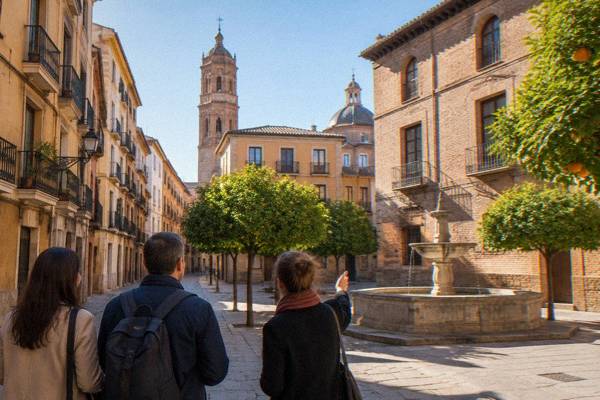
La Lonja Zaragoza: The Old Merchants' Exchange On Plaza Del Pilar
La Lonja is the old merchants' exchange of Zaragoza, Spain, standing on the Plaza del Pilar between the Basílica del Pilar and La Seo, and today it serves the city as an exhibition hall in the middle of its most visited square.
Short answer
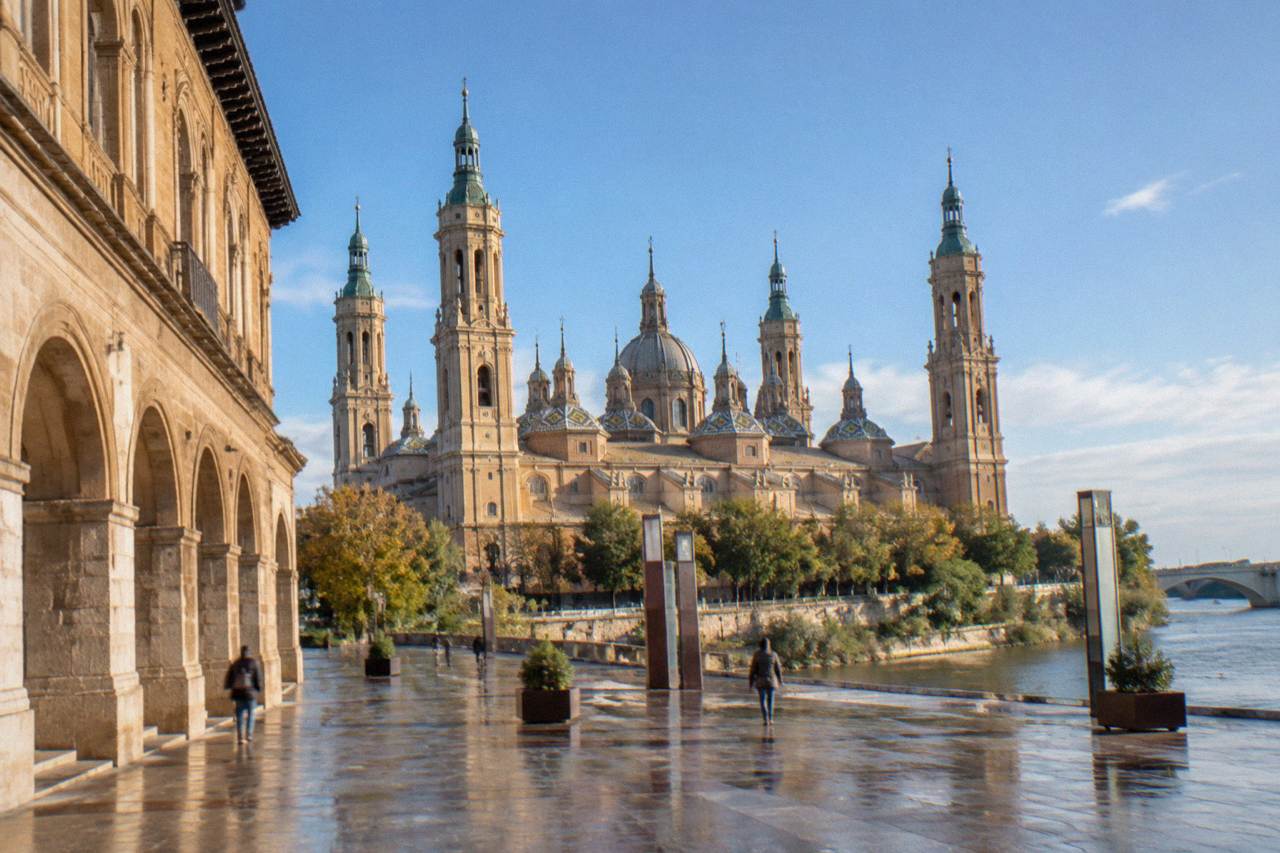
La Lonja is Zaragoza's historic merchants' exchange, a stone hall on the Plaza del Pilar a few steps from the Basílica del Pilar and La Seo. The city uses it today as an exhibition space, so the building is best folded into a visit to the square rather than treated as a standalone ticketed sight.
La Lonja is the old merchants' exchange of Zaragoza, Spain, the capital of Aragon, and it stands on the Plaza del Pilar in the very centre of the city, between the Basílica del Pilar and the cathedral of La Seo. Zaragoza is an inland city on the Ebro, not a coastal trading port, yet it grew rich enough at the height of Aragonese commerce to need a dedicated hall where merchants could meet, weigh, argue and sign. That hall is La Lonja, and while the trade has long gone, the building keeps its position on what is now the most visited square in the region. The city uses it today as an exhibition space, which makes it one of those rare sights whose exterior, setting and role matter more than a ticket.
What Is La Lonja De Zaragoza?
La Lonja is the historic merchants' exchange of Zaragoza, Spain, a stone hall built for the city's traders and now used by the municipality as an exhibition venue. It sits directly on the Plaza del Pilar, between the Basílica del Pilar and La Seo, so almost every visitor to Zaragoza walks past it whether or not they planned to. It is not a museum with a permanent collection, and it is best understood as one architectural stop within the square's larger ensemble.
The name tells you what the building was. A lonja, in Aragonese and Spanish urban history, is an exchange: the covered hall where a city's merchants gathered to do business under municipal rules rather than out in the open air. Cities across the old Crown of Aragon built them, and Zaragoza's version sits in the place where the city's commercial and religious life have always overlapped, on the edge of the square that also holds the Basílica del Pilar. The building belongs to the Renaissance tradition of Aragonese civil architecture, a style the region expresses more often in brick than in almost anywhere else in Spain.
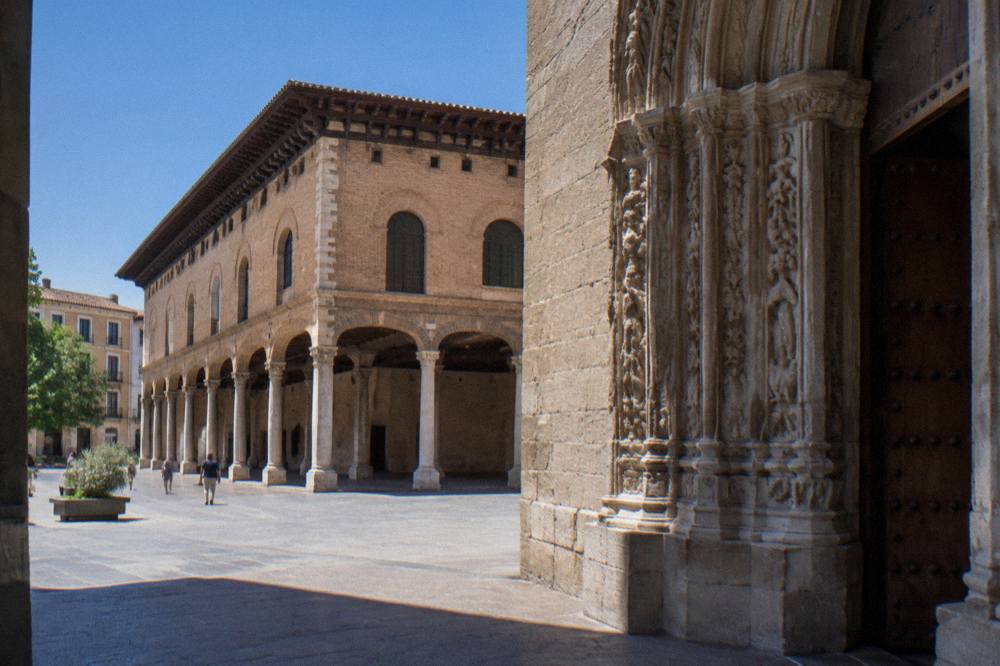
What the hall is now matters just as much as what it was. The municipality runs La Lonja as a venue for temporary exhibitions and cultural events rather than as a fixed-collection museum, so what you find inside depends on what the city is showing at the time of your visit. Check the municipal cultural listings before you go if an exhibition is the reason you would enter, because programmes change and there is no permanent display to fall back on. For most visitors the honest planning advice is simpler: come for the architecture and the square, enter if something is on.
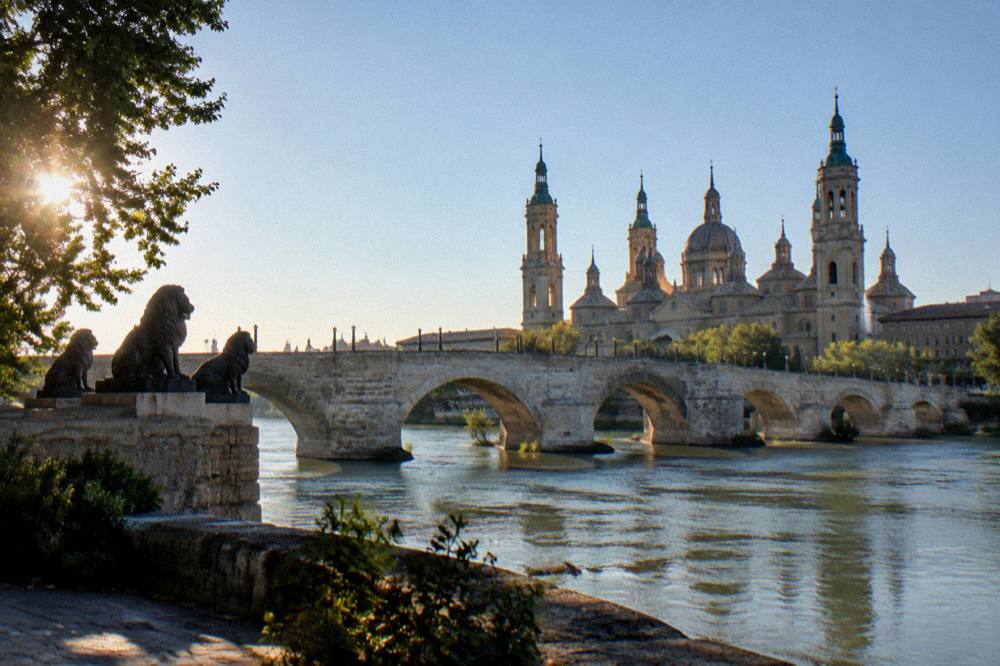
The setting does a lot of the work. The Plaza del Pilar is the stage on which the whole of Zaragoza's monumental core performs, and La Lonja occupies a corner of it within sight of the basilica's towers, the cathedral of La Seo and the Puente de Piedra down toward the river. The Basílica del Pilar and La Seo Cathedral each have their own pages here, and both are close enough that you will see La Lonja on any route between them.
Where Is La Lonja And How Do You Get There?
La Lonja stands on the Plaza del Pilar in central Zaragoza, Spain, a short level walk from every hotel district in the old town and from the Ebro riverside. An urban bus or tram single costs 1.70 EUR, or 0.55 EUR with a Tarjeta Bus, and the whole monumental core around the square is pedestrian-friendly enough that most visitors never need public transport to reach it.
The square is the navigational anchor of the city. If you are staying anywhere in the Casco Histórico, the old town, you are within a short stroll. If you are coming from the Delicias train station area or from further out, the tram and bus network feeds the centre, and the 2026 Avanza fare table lists the single at 1.70 EUR with no transfer, 0.55 EUR with the rechargeable Tarjeta Bus, and 1.00 EUR on night lines. The card itself costs 7 EUR and is valid on both bus and tram.
| Transport | Single fare | With Tarjeta Bus | Notes |
|---|---|---|---|
| Urban bus | 1.70 EUR | 0.55 EUR | No transfer included |
| Tram | 1.70 EUR | 0.55 EUR | Same fare as bus |
| Night lines | 1.00 EUR | 0.55 EUR | Late-evening services |
| Tourist bus | 10 EUR | Not applicable | 24 h hop-on hop-off, 16 stops, 90-minute loop, cash only on the bus |
One warning for drivers: the Casco Histórico is a low-emission zone. The ZBE rules apply Monday to Friday from 08:00 to 20:00, with sanctions in force since 12 December 2025, and vehicles without a DGT environmental label are restricted during those hours. There is a 15-minute grace period if you enter by mistake, but the cleaner plan is to leave the car outside the zone and walk in.
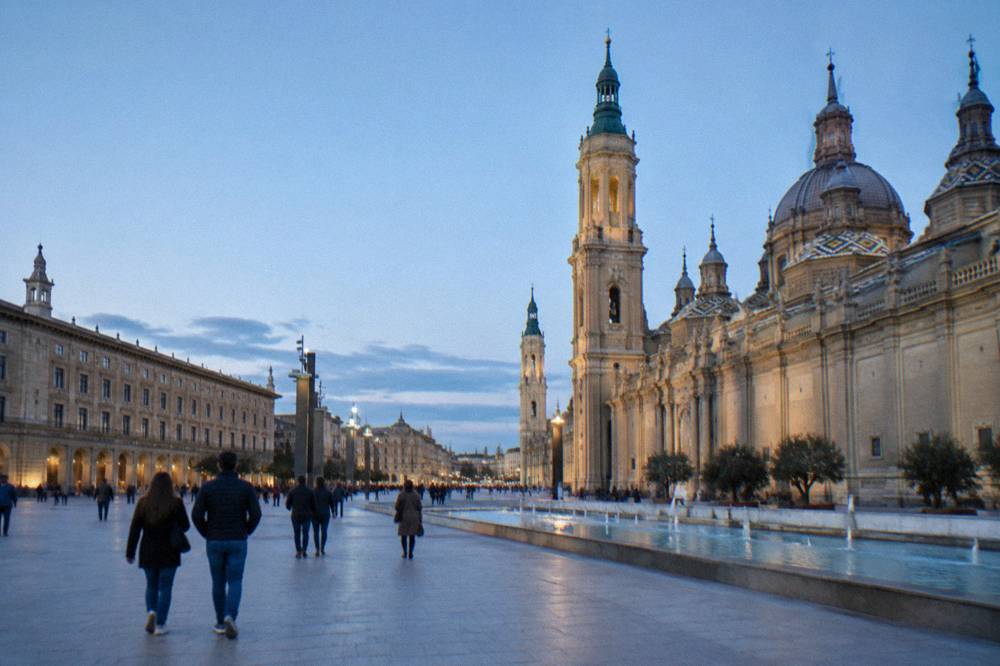
If you would rather have someone else handle the route, the guided options below all move through this part of the city, and a walk led by a local guide turns the square's cluster of buildings into a connected story instead of a list of facades.
What Can You See Inside La Lonja?
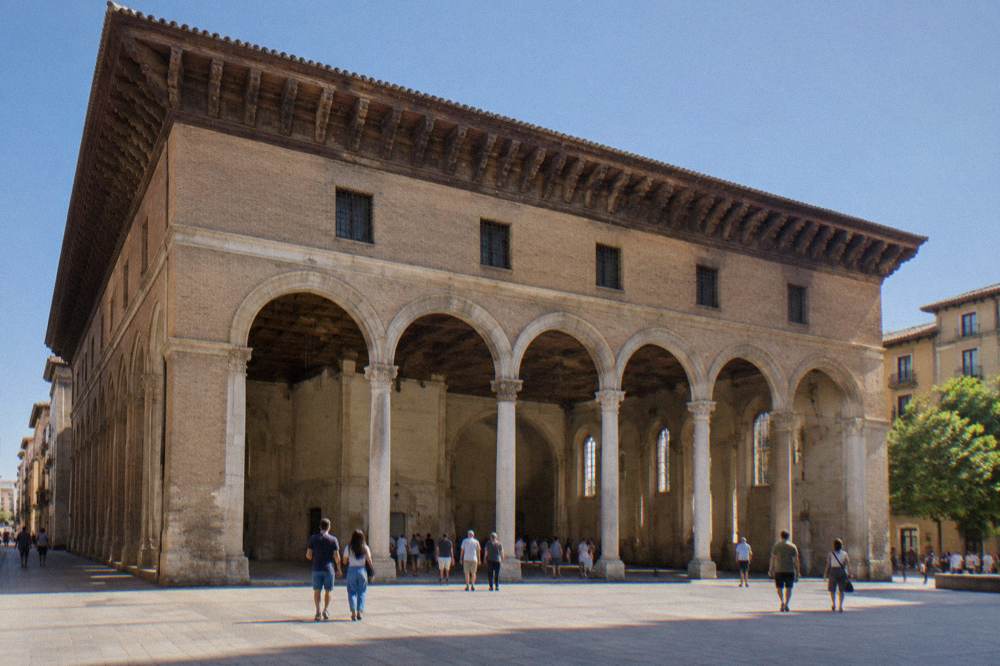
Inside, La Lonja works as an exhibition hall rather than a museum, so what you see depends on the municipal programme running during your visit. The hall itself is the constant: a single grand stone space built for commerce, with the proportions and light of Aragonese Renaissance civil architecture. Check the city's cultural listings before you go, because there is no permanent collection and no fixed display to guarantee.
That answer frustrates some visitors and liberates others. There is no entry ritual here, no route, no audioguide loop, no gift shop circuit in the way a purpose-built museum has. What there is, when the city programmes it well, is a serious exhibition venue in a building with genuine architectural character, a combination that many Spanish cities would envy. Zaragoza's cultural calendar uses the hall for temporary shows, and the Fiestas del Pilar period in October is exactly the kind of season when the venues around the Plaza del Pilar are at their busiest.
Treat the interior as a bonus and the square as the main event. The Basílica del Pilar is free to enter, with its Holy Chapel zone open 08:00 to 20:30 and its main altar zone running Monday to Saturday 07:30 to 13:30 and 16:30 to 20:15, Sunday 07:30 to 13:30 and 16:30 to 21:30. The basilica's tower viewpoint, the Torre Mirador, charges 6 EUR for an adult, 5 EUR for over-65s and residents, and 4 EUR for ages 13 to 18, students and groups of 20 or more, with under-12s free. La Seo charges 10 EUR general, and that ticket already includes the Museo de Tapices, the Museo Pilarista and the Rosario de Cristal.
| Sight on or beside Plaza del Pilar | Entry cost | Key hours (municipal October timetable) |
|---|---|---|
| Basílica del Pilar, temple entry | Free | Holy Chapel zone 08:00-20:30 daily |
| Basílica del Pilar, Torre Mirador | 6 EUR adult | Mon-Thu 10:30-14:30 and 16:00-20:00, Fri-Sun 10:00-20:00 |
| Museo Pilarista | Included with La Seo ticket | Daily 10:00-13:30 and 16:00-20:00 |
| La Seo and Museo de Tapices | 10 EUR general | Mon-Sat 10:00-14:30 and 16:00-20:00, Sun 10:00-12:00 and 16:00-20:00 |
| La Lonja | Exhibition-dependent | Check municipal cultural listings before a visit |
The pattern to notice is how much of the square is either free or bundled. The La Seo ticket is the one purchase that unlocks several spaces at once, and the basilica asks nothing at all for its main interior. A day built around the Plaza del Pilar can therefore be remarkably cheap, with La Lonja's programme the only variable.
Which Zaragoza Tours Include La Lonja?
The Zaragoza Must-See Attractions Walking Tour With A Guide is the most direct match, a guided walk priced from $44.72 per person and rated 5 from 3 reviews, covering the monumental core that La Lonja belongs to. A visit to La Seo runs from $22.51, and the Free Tour through the Historical Center of Zaragoza is tip-based, rated 4.15 from 122 reviews, for travellers who want the orientation without a fixed price.
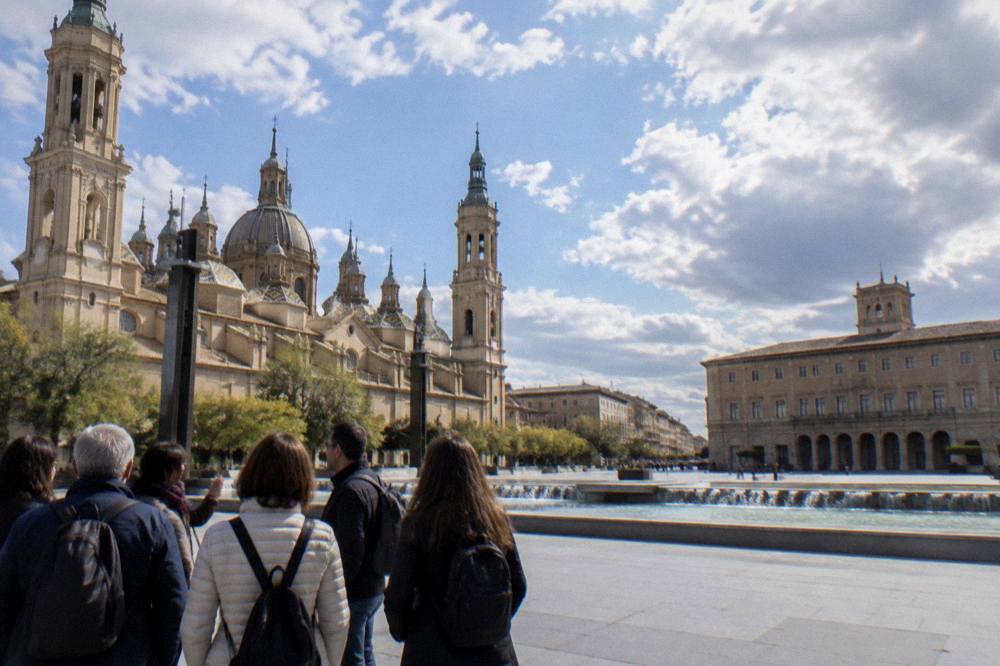
Guides matter on this square because the buildings explain each other. The basilica, the cathedral, the exchange and the Roman ruins underneath the surrounding streets are one layered story, Roman Caesaraugusta beneath, medieval and Renaissance Aragon above, and a guide stitches the layers together in a way a plaque cannot. The Roman Caesaraugusta sites have their own pages here, and they sit within the same walkable radius.
The Must-See Walk With a Guide is this site's featured tour for La Lonja because its route is exactly the territory the exchange sits in, and you can also Check availability for your dates before you travel.
| Guided option | Format | From price | Rating and reviews |
|---|---|---|---|
| Zaragoza Must-See Attractions Walking Tour With A Guide | Guided walk | $44.72 per person | 5 from 3 reviews |
| Visit to the Seo or Catedral del Salvador | Monument visit | $22.51 per person | 5 from 2 reviews |
| Free Tour through the Historical Center of Zaragoza | Tip-based walk | Free, tip based | 4.15 from 122 reviews |
| Historical Tour of the Old District with a Guide | Guided walk, 2.5 hours | $106.92 per person | 5 from 14 reviews |
| Zaragoza Monumental Sightseeing Tour | Guided intro, 105 minutes | $10.41 per person | 4.4 from 36 reviews |
Two of those deserve a special note. The Historical Tour of the Old District runs 2.5 hours and covers the district around the square at a slower pace, and the Monumental Sightseeing Tour is a 105-minute introduction that suits a first morning in the city, from $10.41 per person.
Language is worth checking on any listing before booking, since several of the city's monument tours run in Spanish only. A shorter first-morning orientation is the Monumental Sightseeing Tour, a 105-minute introduction from $10.41 per person rated 4.4 from 36 reviews.
Why Does Zaragoza Have A Merchants' Exchange On Its Main Square?
Zaragoza was the political and commercial capital of the Kingdom of Aragon's heartland, and a city of that standing needed a formal hall where trade could be conducted under municipal supervision rather than in the open street. La Lonja was that hall, placed deliberately beside the city's religious centre, because in Aragonese urban life the market and the church shared the same square. The placement is the point: commerce at the foot of the basilica, in plain view of the cathedral.
The logic of the location still shapes the square today. The Plaza del Pilar is not a museum precinct sealed off from the city; it is a working civic space that fills with residents, processions, festivals and, every October, the Ofrenda de Flores, whose route runs from the Paseo de la Independencia to the Plaza del Pilar itself. During the Fiestas del Pilar, which run 10 to 18 October 2026, the whole area around La Lonja becomes the densest crowd environment in Aragon, with hundreds of registered groups filing past the basilica on 12 October.
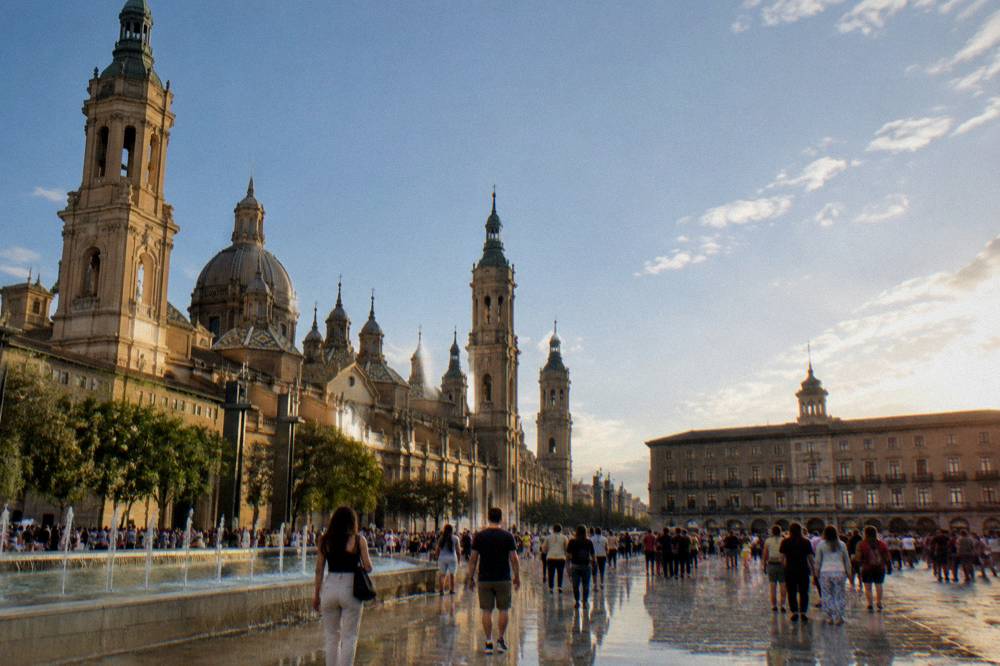
That festival context is the single best argument for timing a visit around October if you want the square at its most alive, and the single best argument for avoiding those exact days if you want it quiet. The municipal programme for the 2026 fiestas includes the pregón from the Ayuntamiento balcony on 10 October at 21:00, jota finals on 10 and 11 October, concerts on 10, 11 and 17 October, and fireworks after the pregón, at the Parque Pignatelli, and at the closing beside the Ebro on 18 October. Venezuela is the guest country for the 2026 edition.
Architecturally, the building belongs to the Renaissance current of Aragonese civil building, and it is worth looking at slowly. The stonework, the arched openings and the severe, dignified elevation were designed to communicate trustworthiness, the visual language a merchant city wanted around its contracts. Compare it with the Aljafería Palace, the Islamic-era palace complex a short ride away, and you see two halves of Aragonese building intelligence: the ornate palace tradition and the disciplined civic one.
What Else Sits Around La Lonja In Zaragoza?
Within a short walk of La Lonja you can reach the Basílica del Pilar, La Seo, the Puente de Piedra over the Ebro, the Roman Caesaraugusta museum sites and the Centro de Historias, several of them free, so the exchange sits at the centre of the densest sight cluster in Zaragoza. The Caesaraugusta four-museum bono costs 7 EUR, the Torreón de la Zuda viewpoint is free, and the Centro de Historias is free, which makes a full day around the square inexpensive.
The Roman layer is the surprise for many first-time visitors. Caesaraugusta, the Roman city under modern Zaragoza, left a forum, a river port, baths and a theatre, and the four museum sites are open Tuesday to Saturday 10:00 to 14:00 and 17:00 to 21:00, Sunday and holidays 10:00 to 14:30. The forum costs 4 EUR, the baths and river port 3 EUR each, and the four-museum bono is 7 EUR, or 5 EUR reduced. All four are free on the first Sunday of the month.
| Sight near Plaza del Pilar | Cost | Hours (October municipal timetable) |
|---|---|---|
| Centro de Historias | Free | Tue-Sat 10:00-14:00 and 17:00-21:00, Sun 10:00-14:30 |
| Torreón de la Zuda, fifth-floor mirador | Free | Mon-Sat 10:00-14:00 and 16:30-20:00, Sun 10:00-14:00 |
| Caesaraugusta Forum Museum | 4 EUR, bono 7 EUR | Tue-Sat 10:00-14:00 and 17:00-21:00, Sun 10:00-14:30 |
| Museo del Fuego y los Bomberos | 3 EUR | Tue-Sat 10:00-19:00, Sun 10:00-14:00 |
| Museo del Origami | 3 EUR | Free first Tuesday and Sunday of the month |
| Alma Mater Museum | 5 EUR | Check the museum's own page before a visit |
The free-entry days are worth building a budget around. The Caesaraugusta sites and the Museo del Fuego y los Bomberos are free on the first Sunday of the month, the Origami museum on the first Tuesday and Sunday, and the Aljafería on the first and third Sunday and Monday of each month. The IAACC Pablo Serrano, the city's contemporary art centre, is free in all its opening hours, Tuesday to Saturday 10:00 to 14:00 and 17:00 to 21:00, Sunday 10:00 to 14:00.
Two cautions from the verified October picture. The Museo de Zaragoza's central building on Plaza de los Sitios is closed for Ministry of Culture works, with no reopening date, so do not plan around it. The Palacio de Sastago is closed in October and the Museo Pablo Gargallo is temporarily closed. The Museo de Zaragoza page here covers that closure in full.
When Is The Best Time To Visit The Plaza Del Pilar Area?
October is the peak, because the Fiestas del Pilar run 10 to 18 October 2026 and the square is at its liveliest, but AEMET's 1981 to 2010 normals for the Zaragoza Aeropuerto station show a genuinely comfortable shoulder season, with an October mean of 16.2 C, a mean maximum of 21.4 C and 36 mm of rain over 5.4 rain days. May is statistically the wettest month at 44 mm, and July and August the driest at 17 mm each.
The climate table rewards reading closely. Zaragoza is inland on the Ebro with a dry continental semi-arid climate, so spring and autumn carry mild days and cool nights, summer runs hot with a July mean maximum of 32.4 C, and winter is crisp with a January mean minimum of 2.7 C. The same station series records 322 mm of rain across the whole year, 23.1 frost days and 81.6 clear days, which is a sunnier profile than most visitors expect from northern Europe's mental image of Spain's north.
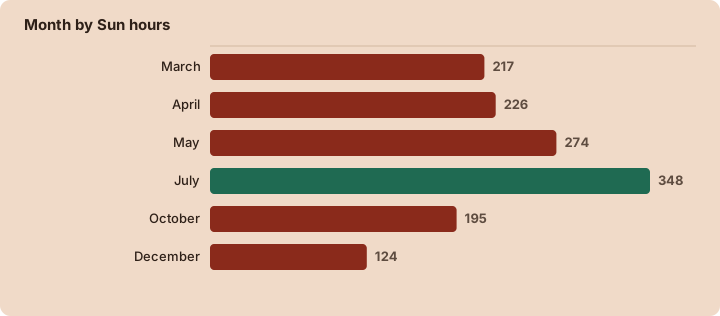
| Month | Mean C | Mean max C | Mean min C | Rain mm | Sun hours |
|---|---|---|---|---|---|
| March | 11.6 | 17.3 | 5.8 | 19 | 217 |
| April | 13.8 | 19.6 | 7.9 | 39 | 226 |
| May | 18.0 | 24.1 | 11.8 | 44 | 274 |
| July | 25.3 | 32.4 | 18.3 | 17 | 348 |
| October | 16.2 | 21.4 | 11.0 | 36 | 195 |
| December | 7.0 | 10.8 | 3.2 | 21 | 124 |
All figures above are AEMET 1981 to 2010 normals for the Zaragoza Aeropuerto station, the only window the station page publishes. The cierzo, the cold dry north-west wind of the Ebro valley, is a real presence in the city's weather, and a windy evening on the open Plaza del Pilar is the moment you feel it most, so carry a layer even in the shoulder months.
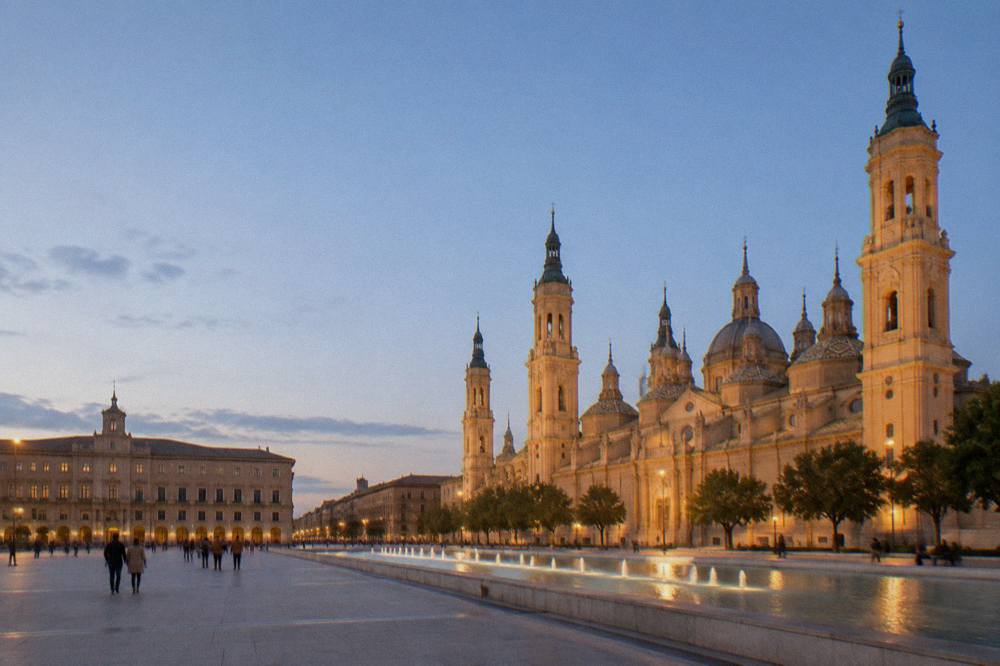
For a quiet visit, avoid the middle of October and aim for late spring or early autumn outside the festival window. For the full Zaragoza experience, do the opposite: the fiestas are the city at maximum volume, and the square around La Lonja is their stage. The best time to visit planning page and the Ebro river walk route both pair well with that decision.
How Should You Plan A Visit Around La Lonja?
Give the Plaza del Pilar cluster a half day: the basilica interior for free, the tower viewpoint at 6 EUR if you want the panorama, La Seo at 10 EUR with its included museums, and La Lonja as the exhibition wildcard in the middle. A single bus or tram ride in costs 1.70 EUR, and the tourist bus at 10 EUR for 24 hours of hop-on hop-off across 16 stops suits visitors who want the wider city without walking it.
The order matters less than the pacing. The square is compact, everything is within a few minutes on foot, and the temptation is to rush it. The basilica rewards a slow loop, the tower rewards a queue-tolerant visit, and La Seo rewards the most time of all, because its Museo de Tapices and its layered architecture are the most under-visited riches in the city. La Lonja slots in wherever an exhibition tempts you.
If you are eating around the square, the old town's tapas streets begin within a few blocks, and the El Tubo district's traditional bar zone has its own page here. Food and the square are the natural pairing of a Zaragoza evening.
For the wider picture of the city, Zaragoza Travel Guide covers everything from the Aljafería to the day-trip country of Aragon, and the guided options below are the ones that fit a Plaza del Pilar visit best.
Common Questions About La Lonja In Zaragoza
What is La Lonja in Zaragoza, Spain?
La Lonja is the city's historic merchants' exchange, a stone hall on the Plaza del Pilar between the Basílica del Pilar and La Seo, built for the conduct of trade under municipal supervision and used today as an exhibition venue by the city.
Is La Lonja free to enter?
Entry depends entirely on the municipal exhibition programme running at the time, because the building has no permanent collection. Check the city's cultural listings before your visit rather than assuming either a ticket or free access.
How far is La Lonja from the Basílica del Pilar?
La Lonja stands on the same square, the Plaza del Pilar, within sight of the basilica's towers and a short walk from La Seo, so no transport is needed between them.
Can you visit La Lonja during the Fiestas del Pilar?
The Fiestas del Pilar run 10 to 18 October 2026, and the square around La Lonja is the festival's main stage, with the Ofrenda de Flores arriving on 12 October. Expect dense crowds and a city at full volume, not a quiet sightseeing window.
Which tours include the Plaza del Pilar and La Lonja?
The Zaragoza Must-See Attractions Walking Tour With A Guide, from $44.72 per person, covers the monumental core, and the Free Tour through the Historical Center of Zaragoza is a tip-based alternative rated 4.15 from 122 reviews.
What else should you see near La Lonja in Zaragoza?
The Basílica del Pilar, free to enter, the Torre Mirador at 6 EUR, La Seo at 10 EUR including its Museo de Tapices, the Puente de Piedra over the Ebro, and the Caesaraugusta Roman museum sites, whose four-museum bono costs 7 EUR.
La Lonja earns its place in a Zaragoza itinerary not as a destination in itself but as the civic heart of the square that holds the city's two great churches, and a visit planned around it, with the basilica, the cathedral and the Roman layer folded in, is the most efficient way to understand what Aragon's capital built its wealth on.