Torre Nueva In Zaragoza: The Demolished Leaning Tower And The Mudejar City That Remains
Zaragoza, the capital of Aragon on the Ebro, once had a leaning brick tower that ranked among the most striking pieces of Mudejar architecture in the city. The Torre Nueva is gone now, demolished more than a century ago, but the Mudejar tradition it belonged to survives in three UNESCO listed components and a skyline of brick towers that still defines the city.
Short answer
The Torre Nueva was a leaning Mudejar brick tower in Zaragoza, Spain, demolished long ago after its pronounced lean made it a concern. It is not a UNESCO component and cannot be visited. The Mudejar heritage it represented survives in the Aljafería, the tower and church of San Pablo, and La Seo's apse, parroquieta and cimborio.
Zaragoza, the inland capital of Aragon on the Ebro, is a city of brick. Its most distinctive architectural tradition, Mudejar, was built by Muslim craftsmen working under Christian rule after the Reconquest, and it produced walls, towers and churches whose geometric brickwork, glazed tile and carved plaster have no real parallel elsewhere in Europe. Among the towers that once punctuated the Zaragoza skyline, one became famous for the wrong reason: the Torre Nueva, a brick tower that leaned, visibly and progressively, until the city took the decision to demolish it. The tower is gone, and this page explains what it was, why it came down, and what of Mudejar Zaragoza you can still stand in front of today, because the answer is more than most visitors expect.
What Was The Torre Nueva In Zaragoza?
The Torre Nueva was a Mudejar brick tower in Zaragoza, Spain, one of several that gave the medieval city its vertical silhouette, and it became notorious for a pronounced lean that worsened over the years until the tower was demolished. It no longer exists, it is not part of any UNESCO listing, and nothing on today's visitor route marks a monument you can enter. Its significance now is historical: it represents the Mudejar tower tradition whose surviving masterpieces still define Zaragoza.
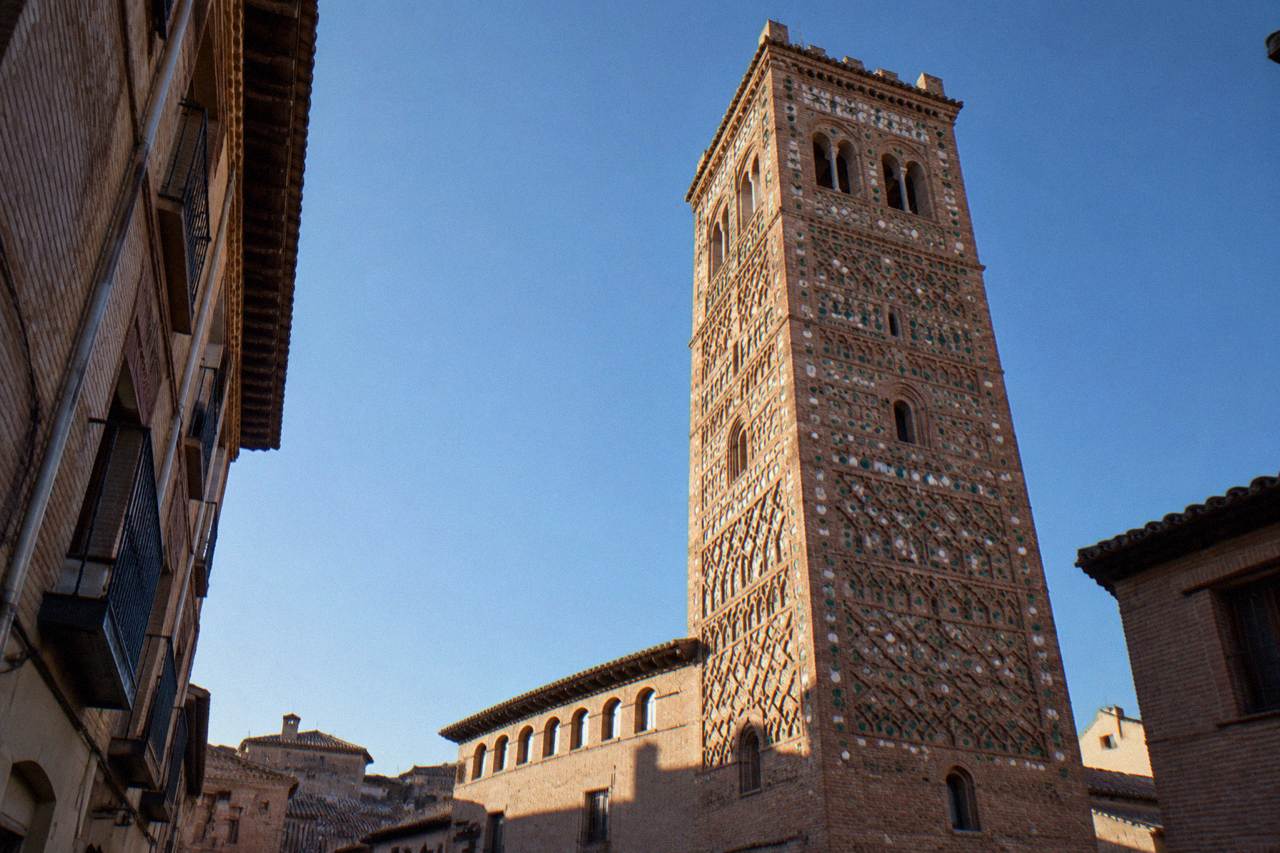
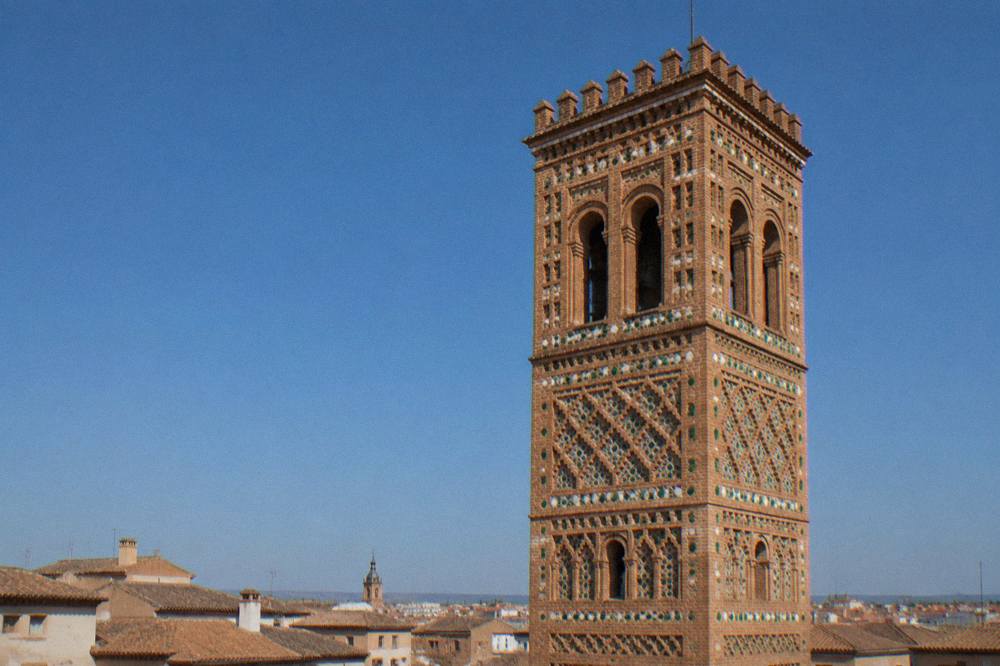
Mudejar is the label given to the work of Muslim artisans who stayed in Christian-ruled Aragon and continued building in their own idiom: brick laid in geometric patterns, ceramic inlay, wooden ceilings, and towers that borrowed the formal language of minarets for Christian parish churches. Zaragoza in the centuries after the Reconquest became one of the great centres of this style, and its towers were the most visible expression of it. The tradition produced a family of parish church towers across the old city, of which the Torre Nueva was one member.
The lean is what separated the Torre Nueva from its siblings. Towers of this kind were built of brick on foundations that were not always equal to their height, and the Torre Nueva's inclination grew to the point where it became the tower's defining feature, the thing people came to look at. In an era before modern underpinning, a leaning masonry structure in a built up street offered no good options, and the city eventually chose demolition over the risk of collapse. That choice, made well over a century ago, is why a page about the tower has to be a page about absence.
The useful way to think about the Torre Nueva today is as the missing piece of a set. The set is Zaragoza's Mudejar heritage, and it is far from missing: three of its components are inscribed on the UNESCO World Heritage List, and the best of the rest, the towers and brick churches of the old town, are standing, open and walkable. A visitor who arrives curious about the demolished leaning tower leaves, in practice, with a route through the finest medieval brick architecture in Spain.
Why Is The Torre Nueva No Longer Standing?
The tower was demolished because its lean had made it a danger to the streets around it, and the engineering of the period offered no realistic way to stabilise a tall brick structure that had already shifted. Once it came down, nothing rebuilt its silhouette, so Zaragoza's skyline lost one of its Mudejar towers permanently. Today no visitable monument occupies its place, and the tower survives only in old images and in the city's architectural memory.
A leaning tower is a slow emergency. The tilt that made the Torre Nueva a curiosity at one point made it a liability at the next, and municipal authorities of the period faced the same calculation their counterparts faced with other unstable medieval structures across Europe: shore it up at great cost and uncertain outcome, or remove it. Removal won. The demolition of a beloved if alarming landmark was contested at the time, as such demolitions usually are, but the decision was final and the tower came down piece by piece.
What makes the story worth retelling is what it says about how Zaragoza's heritage was treated before the modern conservation era. The same city that lost the Torre Nueva kept the Aljafería, La Seo's Mudejar apse and the tower of San Pablo, and in 1986 those survivals were inscribed by UNESCO as part of "Mudejar Architecture of Aragon", a listing extended in 2001. The Torre Nueva is not on that list and never can be. Demolished structures do not come back, and the listing recognises only what still stands.
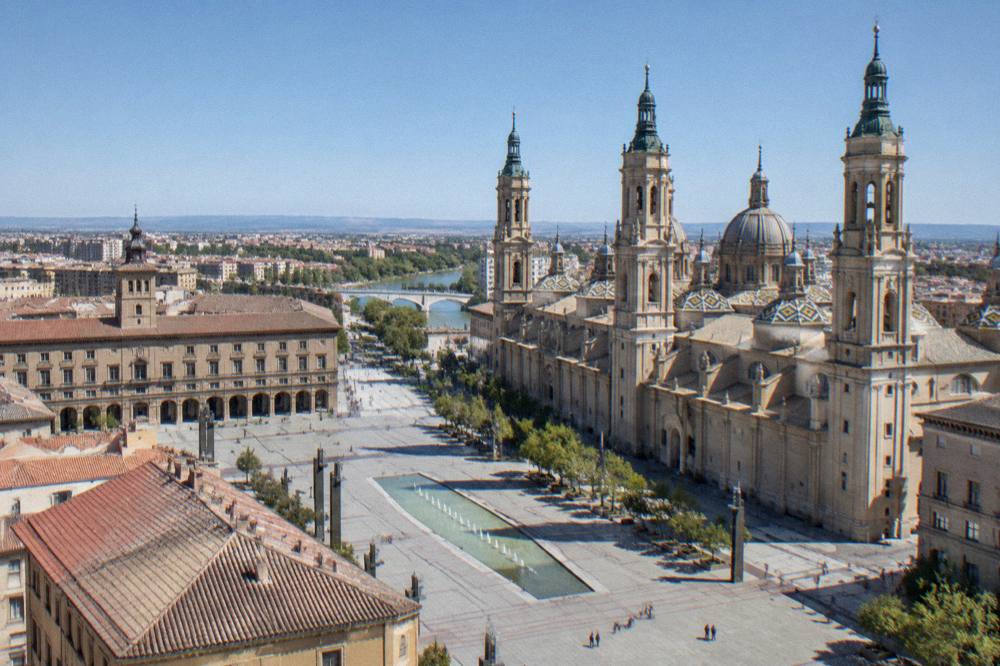
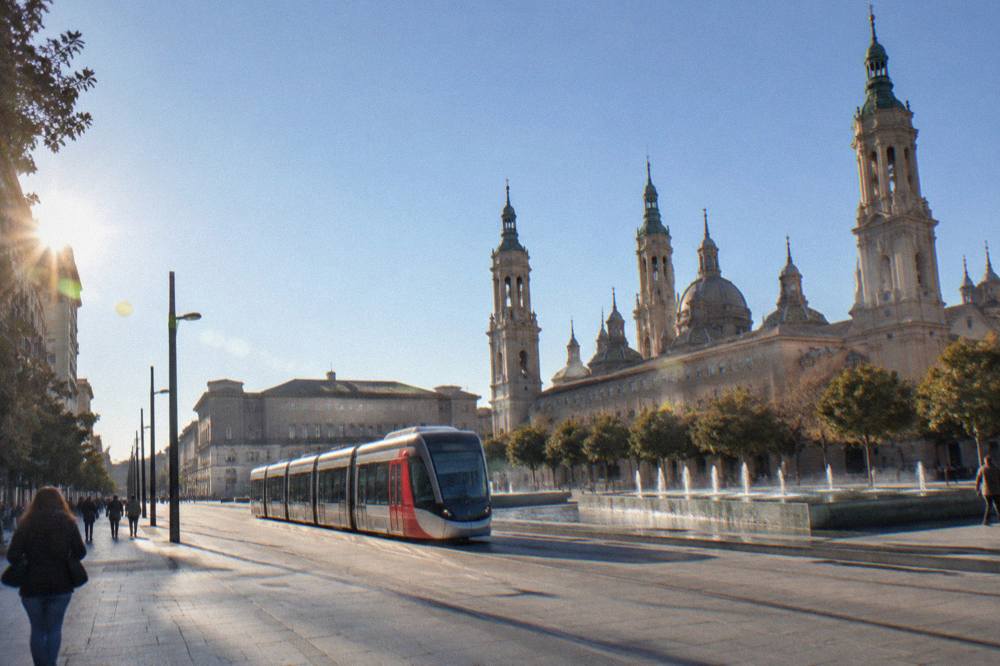
For a visitor, the practical consequence is simple: do not plan a visit to the Torre Nueva, because there is nothing to visit. Plan instead for the monuments that carry the same tradition, and treat the demolished tower as the reason to take the surviving ones seriously. The Basílica del Pilar and its own towers, the Aljafería Palace and La Seo Cathedral are all within the compact monumental core that the tower once shared.
Which Zaragoza Mudejar Monuments Are UNESCO Listed?
Zaragoza has exactly three components of the UNESCO World Heritage property "Mudejar Architecture of Aragon", inscribed in 1986 and extended in 2001: the surviving Mudejar features of the Aljafería Palace, the tower and parish church of San Pablo, and the apse, parroquieta and cimborio of La Seo. The Basilica del Pilar, La Magdalena and the Torre Nueva are not UNESCO components, and no other Zaragoza building belongs to the listing.
The listing, with the reference number 378 on the UNESCO World Heritage List, covers ten components in the provinces of Teruel and Zaragoza, and Zaragoza city holds three of them. The wording matters. For the Aljafería, it is the surviving Mudejar features of the palace that are listed, not the whole building, since much of the structure was heavily restored and extended in later centuries. For La Seo, it is the Mudejar apse, the parroquieta and the cimborio, the brick and tile work at the cathedral's east end, not the entire Gothic nave. San Pablo's tower and parish church are listed as a pair.
| UNESCO component in Zaragoza | What is listed, in UNESCO's wording | Where it stands |
|---|---|---|
| Aljafería Palace | The surviving Mudejar features of the Aljafería Palace | The palace, west of the old town |
| San Pablo | The tower and parish church of San Pablo | The San Pablo district, west of the centre |
| La Seo | The apse, parroquieta and cimborio of La Seo | The cathedral, beside Plaza del Pilar |
The Torre Nueva's absence from this list is not an oversight. UNESCO inscribes standing heritage, and the tower was demolished generations before the listing was drawn up. The same is true of the Basilica del Pilar, which is magnificent but is a baroque building, not Mudejar, and of La Magdalena, a genuine Mudejar church that simply is not among the ten listed components. Getting this right matters, because the three-component fact is one of the most useful pieces of information for planning a Zaragoza visit: these are the monuments with global recognition, and they form a natural two day circuit when combined with the rest of the old town.
What Can You See Of Mudejar Zaragoza Today?
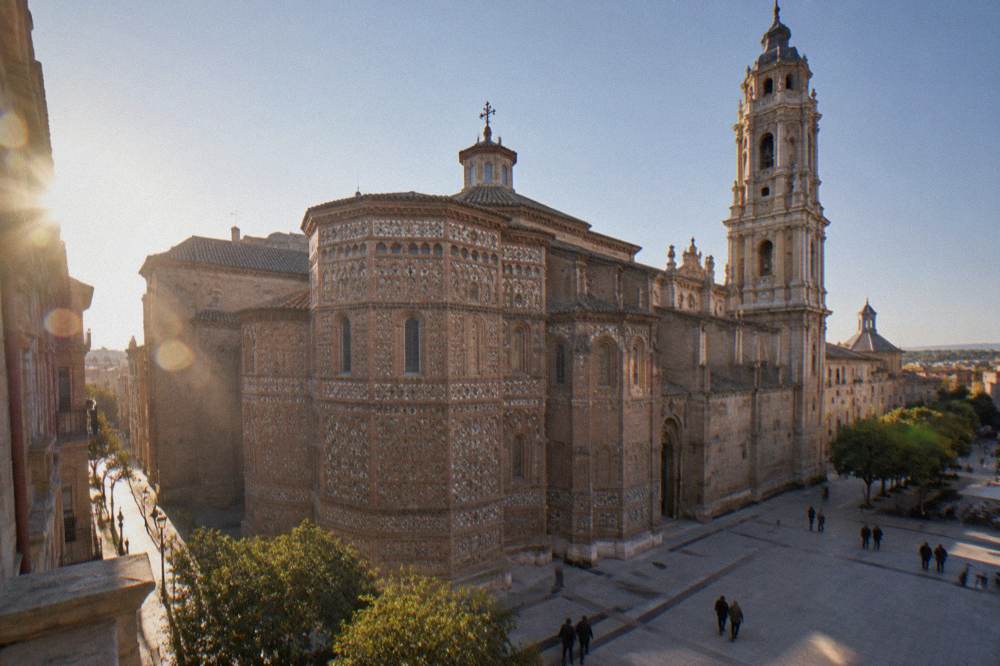
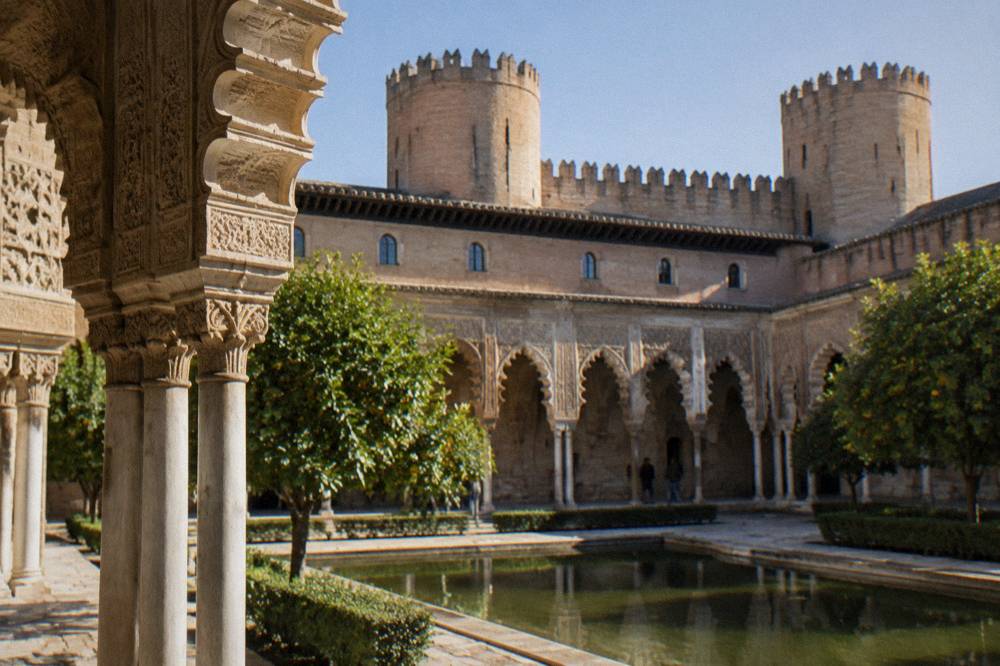
You can see a great deal: the Aljafería's Mudejar halls and courtyard are open daily, La Seo's Mudejar east end is visible from outside and included with a cathedral ticket, and San Pablo's tower stands in its own district, while brick Mudejar parish towers survive across the old town. The Aljafería is open in October from 10:00 to 18:00 with last access 45 minutes before closing, and general admission is 7 EUR.
Start with the Aljafería, because it is the most complete Mudejar interior in the city. The palace, an Islamic era taifa residence later taken over by Christian rulers, retains the courtyard, arcades and ornate plasterwork that made it the model the later Christian-era Mudejar craftsmen worked from. In October it opens daily from 10:00 to 18:00, with last access 45 minutes before closing. General admission is 7 EUR, a guided visit is 9 EUR, students, over 65s and Carnet Joven holders pay 2 EUR, under 12s enter free, and the palace is free on the first and third Sunday and Monday of each month. Spanish language guided tours run at 10:30, 12:30, 13:30, 15:00 and 16:00, and a tour of the exhibition "Goya, del Museo al Palacio" runs at 11:30. The wider set of guides lives on Zaragoza Travel Guide.
La Seo, the cathedral of San Salvador, carries the second listed component. The Mudejar apse, parroquieta and cimborio are on the outside walls, so even a visitor who does not go in sees them from the surrounding squares, and the brick and tile patterns are the clearest single illustration of what the Torre Nueva would have looked like in miniature. Inside, the cathedral opens Monday to Saturday from 10:00 to 14:30 and 16:00 to 20:00, and on Sundays from 10:00 to 12:00 and 16:00 to 20:00. General admission is 10 EUR and includes the Museo de Tapices, the Museo Pilarista and the Rosario de Cristal, with a combined general and tower ticket at 12 EUR, over 65s at 9 EUR, students and 13 to 18 year olds at 7 EUR, and under 12s free. Aragon residents enter free on the 6th, 12th, 23rd and 27th of each month.
| Monument | October opening hours | Admission |
|---|---|---|
| Aljafería Palace | Daily 10:00-18:00, last access 45 min before close | 7 EUR general, 9 EUR guided, 2 EUR reduced, under 12 free |
| La Seo Cathedral | Mon-Sat 10:00-14:30 and 16:00-20:00, Sun 10:00-12:00 and 16:00-20:00 | 10 EUR general, 12 EUR with tower, under 12 free |
| Basílica del Pilar | Main altar zone Mon-Sat 7:30-13:30 and 16:30-20:15 | Entering the temple is free |
| Torre Mirador (Pilar tower) | Mon-Thu 10:30-14:30 and 16:00-20:00, Fri-Sun 10:00-20:00 | 6 EUR adult, 4 EUR ages 13-18, free under 12 |
San Pablo, the third component, sits in its own district west of the centre, and its tower is the purest surviving expression of the Zaragoza parish tower type the Torre Nueva belonged to. Pair it with a walk past the other brick towers of the old town, and finish on the Ebro river walk or at the Puente de Piedra, from where the cathedral quarter's skyline, the skyline the demolished tower once shared, reads best at the end of the afternoon.
What To See In Zaragoza Instead Of The Torre Nueva?
The strongest substitutes are Zaragoza's standing towers and viewpoints: the Basílica del Pilar's Torre Mirador, reachable by lift and priced at 6 EUR for adults, the free fifth floor Mirador de las Cuatro Culturas in the Torreon de la Zuda, and the Mudejar tower of San Pablo, plus the Roman Caesaraugusta museums in the streets between them. Together they give a visitor more vertical perspective on Zaragoza than the demolished tower ever could.
The Pilar's tower viewpoint is the obvious first choice. The Torre Mirador charges 6 EUR for adults, 5 EUR for over 65s and residents, and 4 EUR for 13 to 18 year olds, students and groups of 20 or more, with under 12s free. It opens Monday to Thursday from 10:30 to 14:30 and 16:00 to 20:00, and Friday to Sunday from 10:00 to 20:00, with last access 30 minutes before closing. From the top, the whole monumental core, the Ebro and the brick roofs of the old town spread out in one view, which is precisely the panorama the Torre Nueva would have offered had it survived.
The Torreon de la Zuda is the free alternative. It opens Monday to Saturday from 10:00 to 14:00 and 16:30 to 20:00, and Sundays from 10:00 to 14:00, and its fifth floor houses the Mirador de las Cuatro Culturas, a viewpoint named for the Roman, Muslim, Jewish and Christian layers of the city's history. Between the two, the Roman Caesaraugusta sites, the Forum, the river port museum, the baths and the theatre, are all in the same walkable quarter, and the four museum ticket costs 7 EUR with the reduced rate at 5 EUR.
| Viewpoint or tower | Price | Hours |
|---|---|---|
| Torre Mirador, Basílica del Pilar | 6 EUR adult, 4 EUR reduced, free under 12 | Mon-Thu 10:30-14:30 and 16:00-20:00, Fri-Sun 10:00-20:00 |
| Torreon de la Zuda, Mirador de las Cuatro Culturas | Free | Mon-Sat 10:00-14:00 and 16:30-20:00, Sun 10:00-14:00 |
| Caesaraugusta four museum ticket | 7 EUR general, 5 EUR reduced, free 1st Sunday | Tue-Sat 10:00-14:00 and 17:00-21:00, Sun 10:00-14:30 |
Which Guided Tours Cover Zaragoza'S Mudejar And Monumental Sights?
A 105 minute monumental sightseeing tour gives the fastest structured introduction to Zaragoza's monuments, from 10.41 USD per person, while a two hour Aljafería guided tour with ticket, from 24.76 USD, covers the palace in depth, and free tip based walks including the Free Monumental Tour of Zaragoza cover the old town for whatever you choose to give. Between them they cover every standing monument in the demolished tower's tradition.
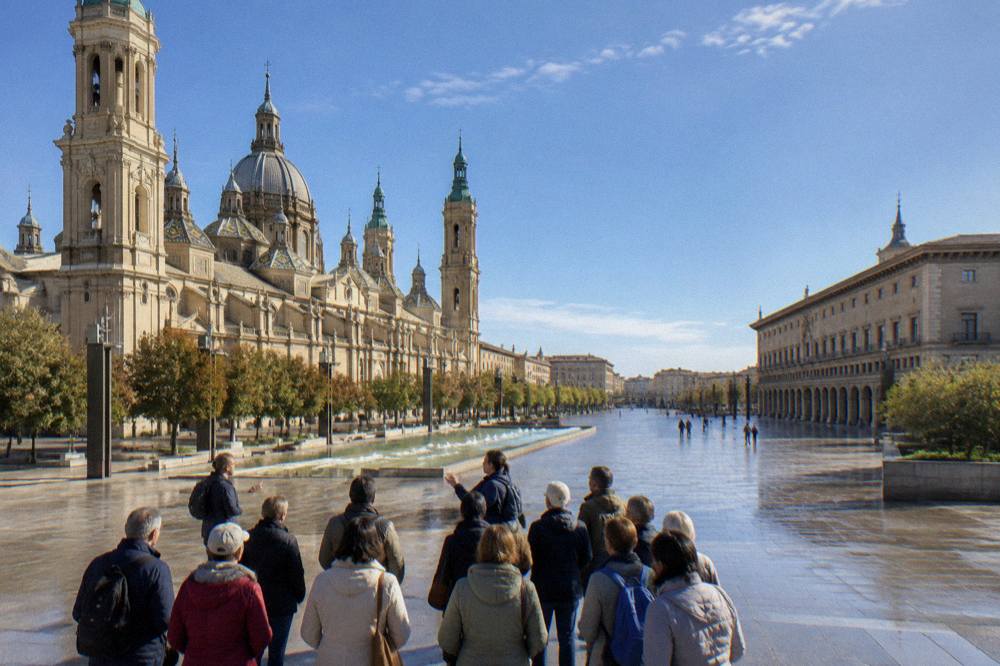
The Zaragoza Monumental Sightseeing Tour, a 105 minute guided walk, is built exactly for the visitor who wants the city's essential monuments explained in one loop, and it works well as a first morning in Zaragoza before you go deeper on individual buildings. Check availability on the operator's live listing, since departure times vary by season.
For the Aljafería specifically, a guided visit adds the detail that a walk through the palace alone will miss, from the Islamic era plan of the courtyard to the later Christian additions. The Aljafería Palace guided tour with ticket runs about two hours and starts from 24.76 USD per person, and the listing says it is rated 4.8 from 103 reviews. Spanish language versions run daily at fixed times, so check the listing for the slot that matches your day.
The free walks deserve a separate note, because they invert the usual booking arrangement. The Free Monumental Tour of Zaragoza is a GuruWalk tip based walk: the guru leads the tour for whatever participants choose to pay at the end, and the listing shows a 4.65 rating from 64 reviews. GuruWalk is the platform that hosts these walks, and the guru, not a fixed price, is what you are paying. Reserve a place the same way you would any tour, arrive on time, and tip what the walk was worth to you.
When Is The Best Time To See Zaragoza'S Old Town Sights?
October is one of the best months: AEMET's 1981 to 2010 normals for the Zaragoza Aeropuerto station average 21.4 C as the mean daily maximum in October against 11.0 C at night, with 36 mm of rain across 5.4 rain days, and the Fiestas del Pilar run from 10 to 18 October 2026, though festival crowds fill the old town around the 12 October Ofrenda de Flores. May to June and September are quieter alternatives with warm, dry weather.
The climate record for Zaragoza, an inland city with a dry continental semi arid climate, favours spring and autumn. May, the wettest month at 44 mm in the 1981 to 2010 normals, still averages a 24.1 C daily maximum, and September averages 27.1 C with only 30 mm of rain. July and August are the hot, dry months, at 32.4 C and 31.7 C mean maximum respectively and just 17 mm of rain each, and they carry the most sun, 348 hours in July. Winter is mild by northern European standards, with January averaging a 10.5 C maximum and 2.7 C minimum.
| Month | Mean daily max (C), 1981-2010 | Rain (mm) | Rain days (1 mm or more) |
|---|---|---|---|
| March | 17.3 | 19 | 3.7 |
| May | 24.1 | 44 | 6.4 |
| July | 32.4 | 17 | 2.6 |
| September | 27.1 | 30 | 3.2 |
| October | 21.4 | 36 | 5.4 |
Timing around the Fiestas del Pilar matters more than the weather. The 2026 festival runs from Saturday 10 to Sunday 18 October, with the pregón from the Ayuntamiento balcony on the opening Saturday at 21:00 and the Ofrenda de Flores on 12 October, when close to a thousand groups walk the route from Paseo de la Independencia to Plaza del Pilar. The Ofrenda de Frutos and the Rosario de Cristal are reported for 13 October, and the fireworks programme runs after the pregón, in Parque Pignatelli, at the closing on the Ebro on 18 October, and in Plaza San Francisco. If you want the festival, book early. If you want the monuments to yourself, come before 10 October or after 18 October, or pick a month outside festival season entirely.
How Do You Get Around The Monuments Of Zaragoza?
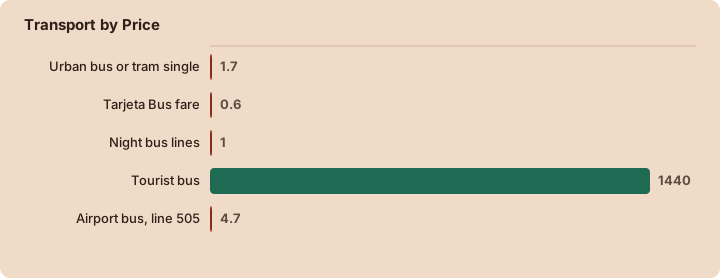
The monumental core is compact enough to walk end to end, and the tram and urban bus network covers the longer legs at 1.70 EUR for a single ticket, or 0.55 EUR with a Tarjeta Bus that costs 7 EUR to buy. The airport is served by line 505 at 4.65 EUR for a single journey timed to flights, and the tourist bus, at 10 EUR for 24 hours across 16 stops, links the Aljafería, the old town and the Expo sites.
The single fare of 1.70 EUR buys one journey with no transfer, so a card pays for itself quickly for a visitor making several trips; the 2026 Avanza fare table lists the 0.55 EUR card fare alongside it. The tram's line 1 runs through the centre and out toward the Delicias train station and the Expo area, which makes it the natural link between the Aljafería Palace, the old town and the riverside parks. Night lines cost 1.00 EUR.
| Transport | Price | Notes |
|---|---|---|
| Urban bus or tram single | 1.70 EUR | No transfer, 2026 fare |
| Tarjeta Bus fare | 0.55 EUR per trip | Card costs 7 EUR, valid on bus and tram |
| Night bus lines | 1.00 EUR | Urban night network |
| Tourist bus | 10 EUR for 24 h | 16 stops, 90 minute loop, cash only on the bus |
| Airport bus, line 505 | 4.65 EUR single | Timed to flights, about 25-35 minutes |
Two practical warnings apply to anyone driving in. The ZBE low emission zone in the Casco Histórico is active with sanctions since 12 December 2025, Monday to Friday from 08:00 to 20:00, and vehicles without a DGT environmental label are restricted, with a 15 minute grace period if you enter by mistake. And if you are arriving from Madrid or Barcelona by high speed train, both run into Zaragoza-Delicias in about 1.5 to 2 hours, which makes the city an easy stop on a Spanish rail itinerary, with the full arrival logistics covered in the things to do in Zaragoza planning pages.
Common Questions About The Torre Nueva In Zaragoza
Can you visit the Torre Nueva in Zaragoza?
No. The tower was demolished long ago after its lean made it unsafe, and no visitable monument stands in its place. Visitors interested in Zaragoza's Mudejar towers should head for the surviving examples, above all the UNESCO listed tower and parish church of San Pablo and the Mudejar work at the Aljafería and La Seo.
Is the Torre Nueva a UNESCO World Heritage Site?
No. The Torre Nueva is not a component of the UNESCO listing "Mudejar Architecture of Aragon", inscribed in 1986 and extended in 2001, because it no longer exists. Zaragoza's three components are the surviving Mudejar features of the Aljafería Palace, the tower and parish church of San Pablo, and the apse, parroquieta and cimborio of La Seo.
Why was the Torre Nueva demolished?
Because its pronounced lean had made it a danger to the streets and buildings around it, and the engineering of the period could not stabilise a tall brick tower that had already shifted. The city chose demolition over the risk of collapse, and the tower was taken down permanently.
Which Zaragoza towers can you climb instead?
The Basílica del Pilar's Torre Mirador, at 6 EUR for adults with reduced rates for over 65s, students and ages 13 to 18, and free entry for under 12s, plus the free fifth floor Mirador de las Cuatro Culturas in the Torreon de la Zuda. Both give elevated views over the old town and the Ebro.
What is Mudejar architecture?
It is the style created by Muslim craftsmen working under Christian rule in medieval Aragon, built from brick laid in geometric patterns with glazed tile and carved plaster. Zaragoza was one of its great centres, and its surviving towers and churches define the old city's appearance today.
The Torre Nueva is the one chapter of Zaragoza's Mudejar story you can only read about, and that is exactly why the rest of the city rewards the visit: the towers that stayed upright, from San Pablo to the Pilar's baroque giants and the Aljafería's courtyard arches, are all standing, open and within a short walk of one another, and they tell the same brick built story the leaning tower told before it came down.