Zaragoza Facts And History
Zaragoza is the capital of Aragon, an inland city on the Ebro in north-east Spain, founded on the bones of the Roman city of Caesaraugusta. This guide sets out its verified history, its monuments with real prices, its climate from AEMET's own normals, and the practical facts that shape a visit.
Short answer
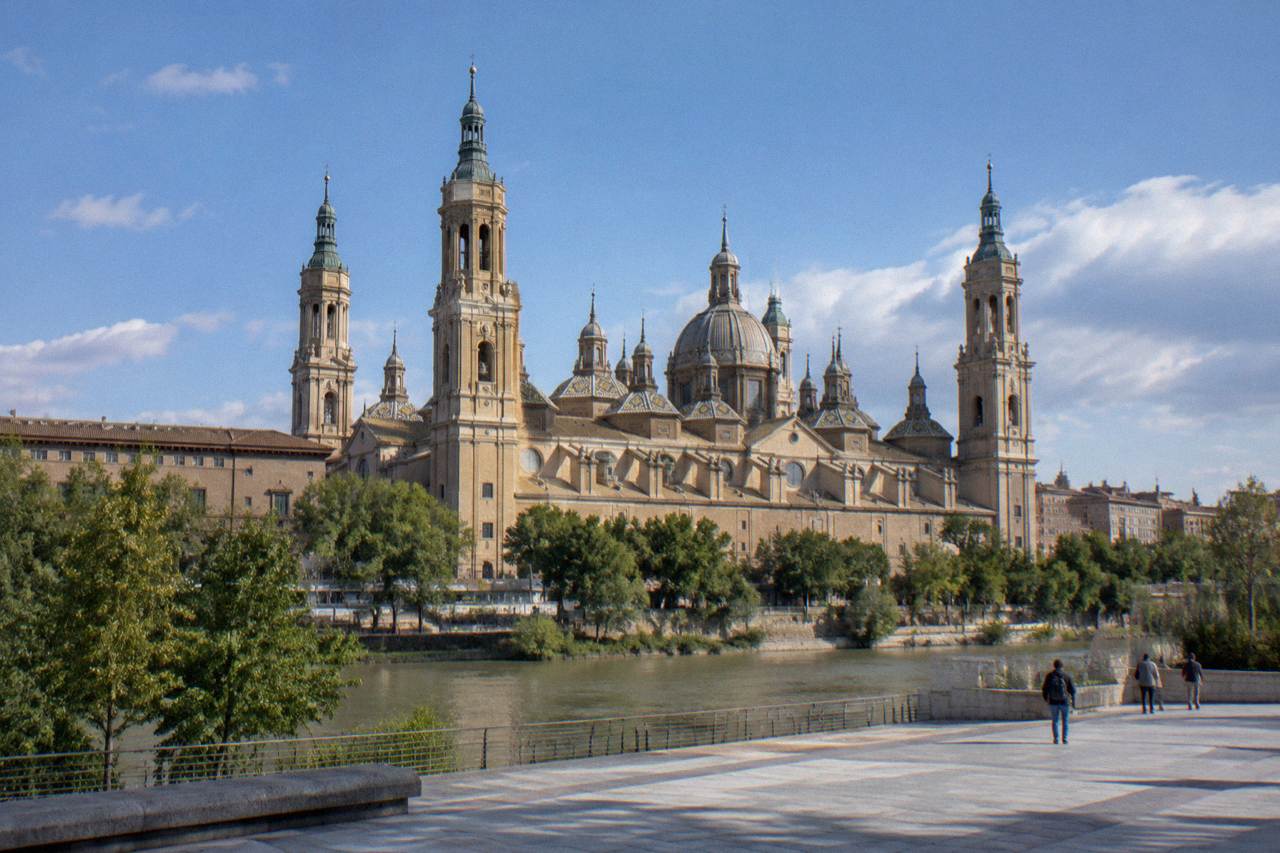
Zaragoza is the capital of Aragon in north-east Spain, an inland city on the Ebro river. Its history runs from the Roman colony of Caesaraugusta through Islamic rule, the Reconquista, the Napoleonic sieges and Expo 2008, and its headline sights are the Basílica del Pilar, La Seo, the Aljafería and the Roman Caesaraugusta museums.
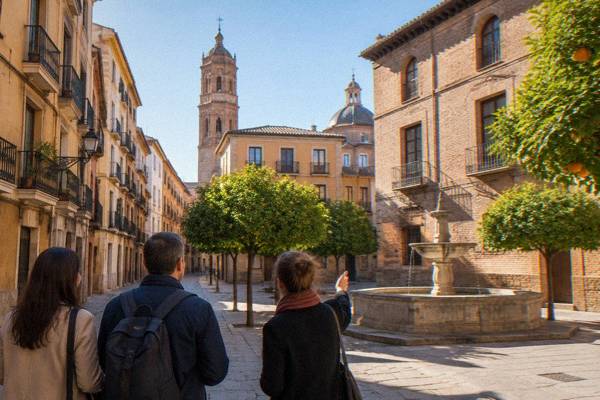
Zaragoza is the capital of the province of the same name and of the autonomous community of Aragon, an inland region in north-east Spain. It stands on the Ebro river, roughly midway between Madrid and Barcelona on the high-speed line, and it is a city whose whole identity is layered: a Roman colony beneath the streets, an Islamic palace at its western edge, a Gothic cathedral against a baroque basilica on the same square. Nothing here is padded with folklore: every figure comes from a primary source, and where a number is not published, it says so.
Where Is Zaragoza And What Is It The Capital Of?
Zaragoza is a city and a municipality, the capital of both its province and of Aragon, an inland autonomous community in north-east Spain. It sits on the Ebro river and has no coast: the nearest sea is hours away. It is not in Catalonia and it is not a Basque city, two confusions that surface often enough in search queries to be worth correcting plainly. Madrid and Barcelona are its two great neighbours, each about 1.5 to 2 hours away by high-speed train.
Aragon is the broad, dry triangle between the Pyrenees and the Iberian System, and Zaragoza sits near its centre on the Ebro, the river that defines the whole valley. The city's climate is dry continental semi-arid, with a cold north-west wind called the cierzo that funnels down the Ebro valley; the wind is real and constant in local conversation, though no speed or frequency figure is published on the climate sheet. The full geography and orientation guide covers the "where in Spain" question in more detail.
The city is also, unhelpfully, a homonym. Real Zaragoza is a football club, "Zaragoza" is a Mexican and Colombian surname and place name, and the Zaragoza International Bridge crosses between El Paso and Juarez in Texas. A search for "Zaragoza" can land on any of these, which is one reason this guide names the city, Spain, the capital of Aragon, in its first sentence and sticks to the travel city throughout.
For orientation on the ground, the historic core is compact. The Plaza del Pilar holds the Basílica del Pilar, La Seo and the Lonja within a couple of minutes' walk of one another; the Aljafería lies to the west; the Roman Caesaraugusta museum sites sit in the streets between the plaza and the Coso, the oval street that follows the line of the Roman wall. The old town guide maps it street by street.
What Is The History Of Zaragoza From Caesaraugusta To Today?
The city's history runs in five broad layers: a Roman colony called Caesaraugusta, whose forum, baths, theatre and river port survive as museum sites; then Islamic Saraqusta and its taifa court, which built the Aljafería palace; then the Christian medieval city under Aragon, which raised La Seo and, later, the Basílica del Pilar; then the Napoleonic sieges of the Peninsular War; and finally the modern city, reshaped by Expo 2008 on the Ebro's Ranillas meander. Each layer is still visible on the ground.
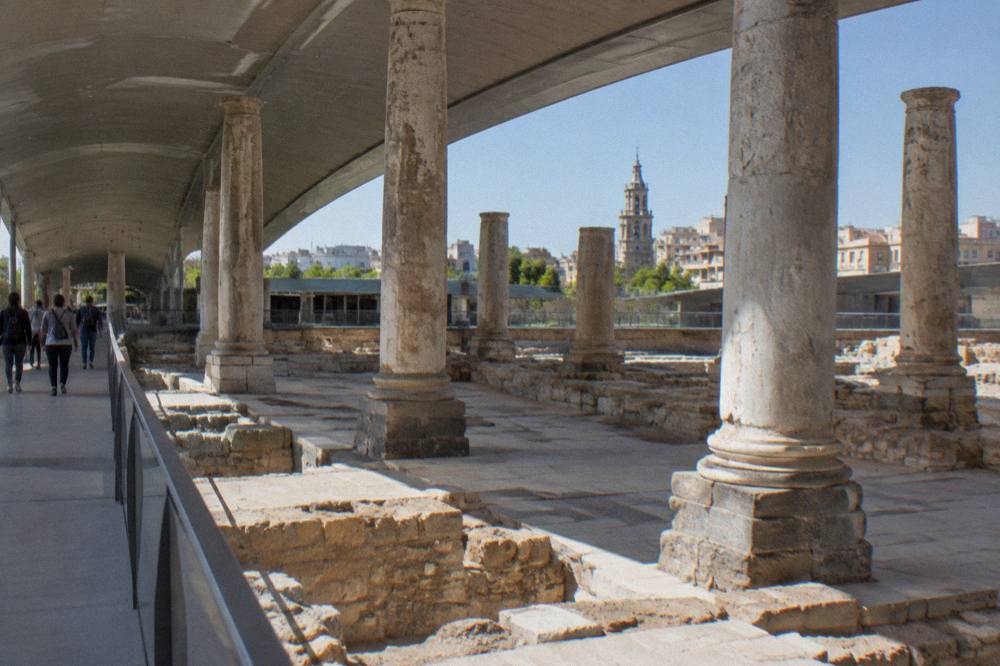
The Roman city of Caesaraugusta is the ancestor of the modern name, and that is as far as the etymology needs to go: no emperor, no founding date and no name chain is verified on the sources behind this page, so none is printed here. What is solid is the archaeology. The Roman forum, the river port, the public baths and the theatre are each visitable museum sites run by the city, and the Caesaraugusta museums guide covers what each one holds and what it costs.
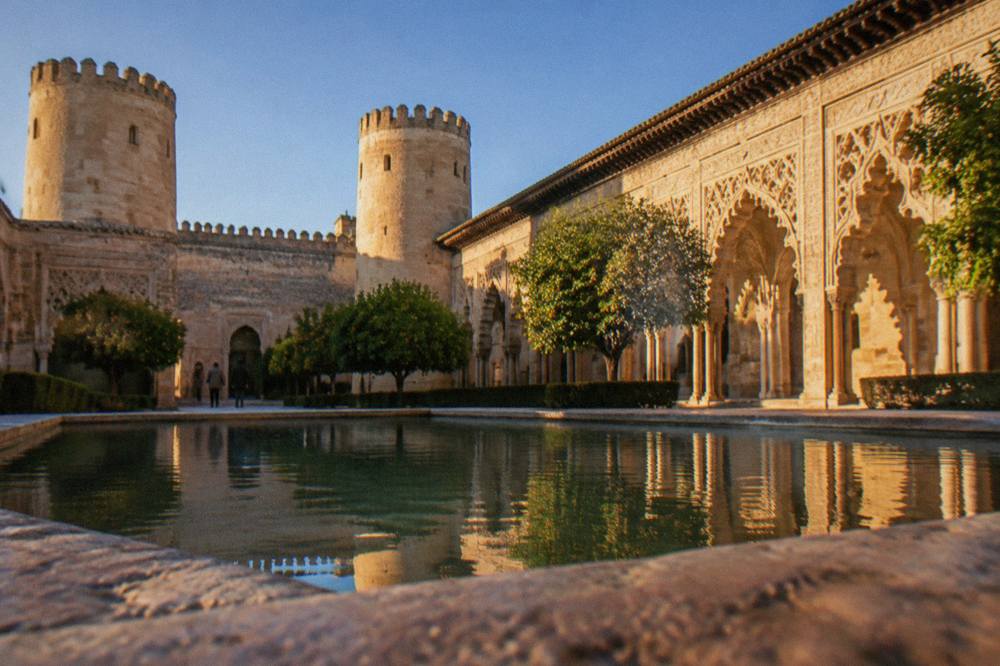
The Islamic period left the city its most striking single building. The Aljafería, the palace of the Banu Hud taifa rulers of Islamic Saraqusta, has oratory and courtyard plasterwork that are the reason it anchors most itineraries. After the Christian Reconquista of the city the palace became a royal residence of the kings of Aragon, then a barracks, then a restored monument; the Aljafería Palace guide and the history of the palace trace that arc in full.
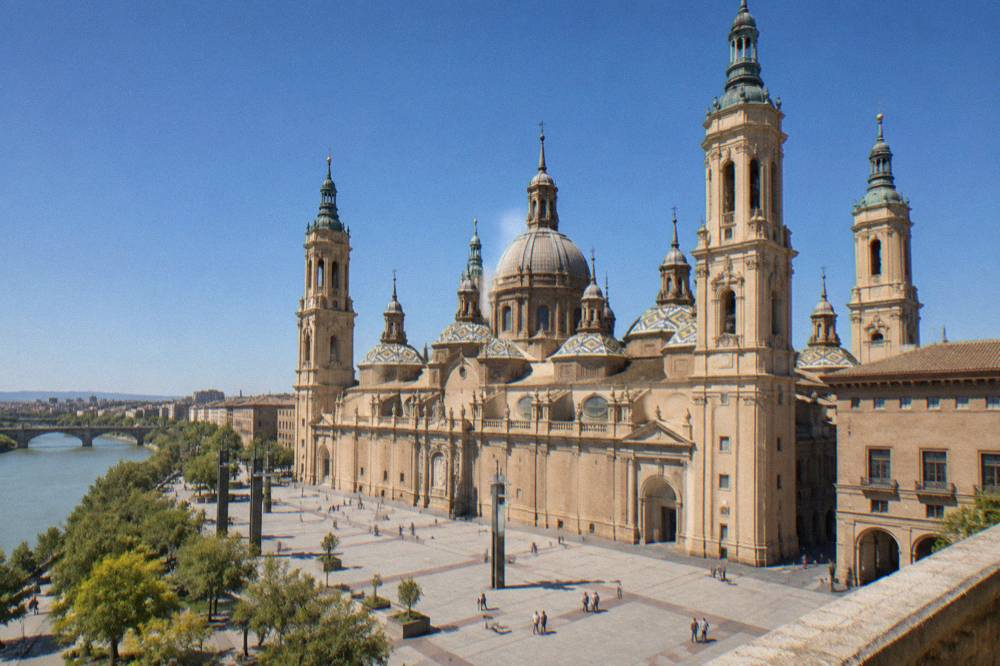
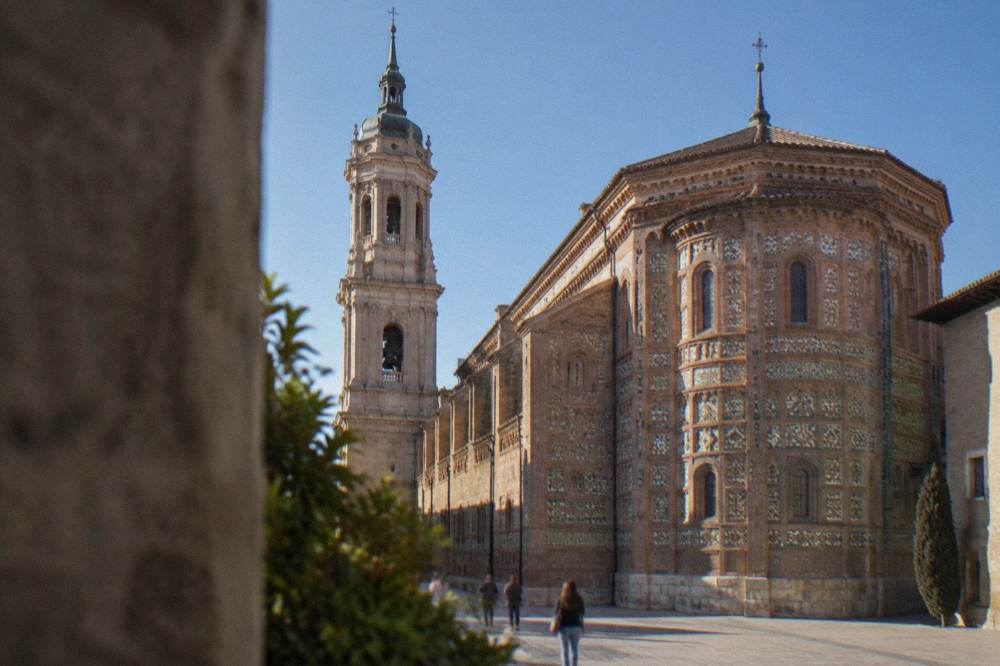
The Christian centuries gave the city its twin religious landmarks. La Seo, the cathedral of San Salvador, grew over the site of the main mosque, and its walls mix Gothic, Mudéjar and Renaissance work in a single building. The Basílica del Pilar, the baroque church beside it, is the centre of the city's religious identity and of the Fiestas del Pilar each October. The Mudéjar tradition itself, brickwork built by Muslim craftsmen for Christian patrons, is the region's contribution to world heritage: the UNESCO item is "Mudejar Architecture of Aragon", inscribed in 1986.
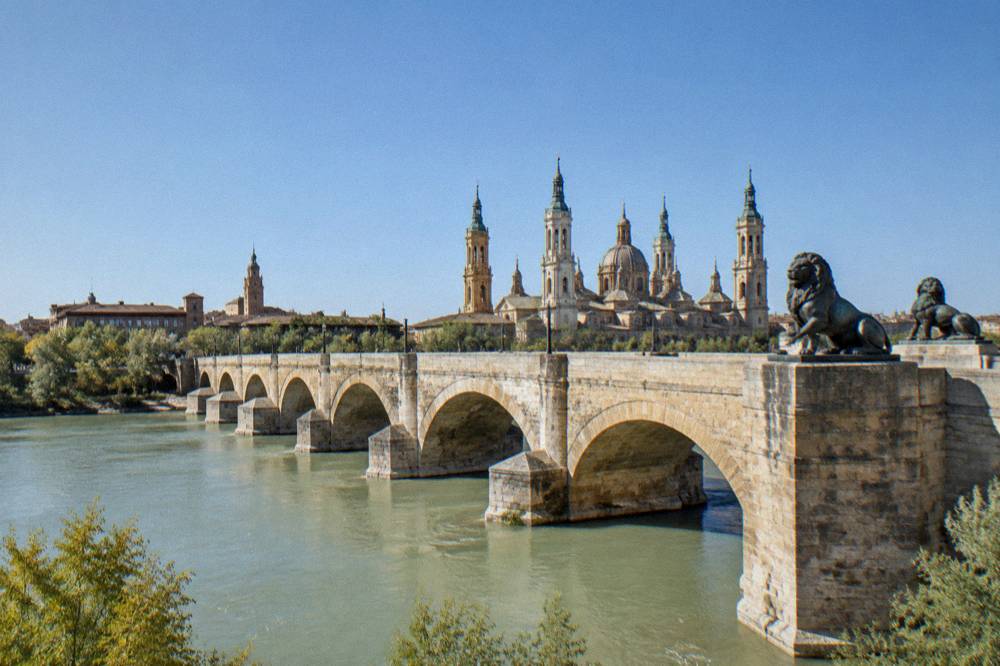
The modern era brought the two sieges of the Peninsular War, when Napoleonic troops besieged the city twice and blew up an arch of the Puente de Piedra in 1813, and then, two centuries later, Expo 2008, the water-themed world fair that left the city the Parque del Agua, the Torre del Agua and the Pabellón Puente in the Ranillas meander. The Expo 2008 site guide covers what remains.
For travellers who want the whole sweep in one walk, the Monumental Walking Tour in Old Town of Zaragoza is the natural fit: a guided route through the Casco Histórico that puts the Roman, Islamic and Christian layers in order, from $97.47 per person and rated 4.9 from 15 reviews on the operator's live listing. Read more about the guided walking options before choosing.
What Are The Must-See Monuments Of Zaragoza?
The four unmissable sights are the Basílica del Pilar, free to enter with a paid tower viewpoint at 6 EUR for an adult; La Seo, 10 EUR general including three further museums; the Aljafería, 7 EUR general or 9 EUR with a guided tour; and the four Caesaraugusta museum sites, from 3 EUR each or 7 EUR on a combined bono. Entering the Pilar temple itself costs nothing, which surprises most first-time visitors.
The Pilar is the emotional centre of the city and the cheapest of the great sights to see. The tower viewpoint, the Torre Mirador, charges 6 EUR for an adult, 5 EUR for over-65s and residents, 4 EUR for ages 13 to 18, students and groups of 20 or more, and nothing for under-12s; last access is 30 minutes before closing. The basilica's own page is the place to check current hours before a visit, and the Basilica del Pilar guide and the tower guide cover both zones in detail.
La Seo's 10 EUR general ticket is better value than it looks, because it includes the Museo de Tapices, the Museo Pilarista and the Rosario de Cristal. Over-65s pay 9 EUR, students and 13 to 18-year-olds 7 EUR, under-12s nothing, and a ticket combining the cathedral with the Pilar tower is 12 EUR. Aragon residents enter free on the 6th, 12th, 23rd and 27th of each month. The La Seo Cathedral guide explains what the Museo de Tapices holds.
| Monument | General ticket | Reduced | Free |
|---|---|---|---|
| Basílica del Pilar, temple entry | Free | Free | Free |
| Basílica del Pilar, Torre Mirador | 6 EUR | 5 EUR over 65 and residents, 4 EUR ages 13-18, students, groups 20+ | Under 12 |
| La Seo, includes Museo de Tapices, Museo Pilarista, Rosario de Cristal | 10 EUR | 9 EUR over 65, 7 EUR students and 13-18 | Under 12, Aragon residents on the 6th, 12th, 23rd, 27th |
| La Seo plus Pilar tower | 12 EUR | Under 12 | |
| Aljafería | 7 EUR | 2 EUR students, over 65, Carnet Joven | Under 12, 1st and 3rd Sunday and Monday of the month |
The Aljafería charges 7 EUR general, 9 EUR with a guided visit, 4 EUR with a tourist bus ticket and 2 EUR for students, over-65s and Carnet Joven holders, with under-12s free and free entry on the first and third Sunday and Monday of each month. Spanish guided tours run at 10:30, 12:30, 13:30, 15:00 and 16:00, with last access 45 minutes before closing. The Aljafería Palace guide lists the full October hours.
| Caesaraugusta museum site | Admission | Combined bono |
|---|---|---|
| Foro | 4 EUR | 7 EUR general, 5 EUR reduced |
| Termas | 3 EUR | 7 EUR general, 5 EUR reduced |
| Puerto Fluvial | 3 EUR | 7 EUR general, 5 EUR reduced |
| Teatro | On the museum site | 7 EUR general, 5 EUR reduced |
The four Caesaraugusta sites are open Tuesday to Saturday 10:00-14:00 and 17:00-21:00, and Sunday and festivos 10:00-14:30, with free entry on the first Sunday of the month. The 7 EUR bono covering all four is the sensible buy for anyone with a morning to spare; the Roman forum, theatre, river port and baths and walls each have their own page here.
One closure matters in October 2026: the Museo de Zaragoza's central building at Plaza de los Sitios 6 is shut for Ministry of Culture works, with no reopening date, and its Etnología and Cerámica sections in the Parque Grande are also closed at present. Do not plan around it; the Museo de Zaragoza page explains what is affected. The Museo Goya, by contrast, reopens on 9 October 2026 after renovation, open Tuesday to Saturday 10:00-20:00 and Sunday 10:00-14:00, closed Mondays, with its admission price not yet published; the Goya in Zaragoza guide covers the collection.
What Is The Fiestas Del Pilar?
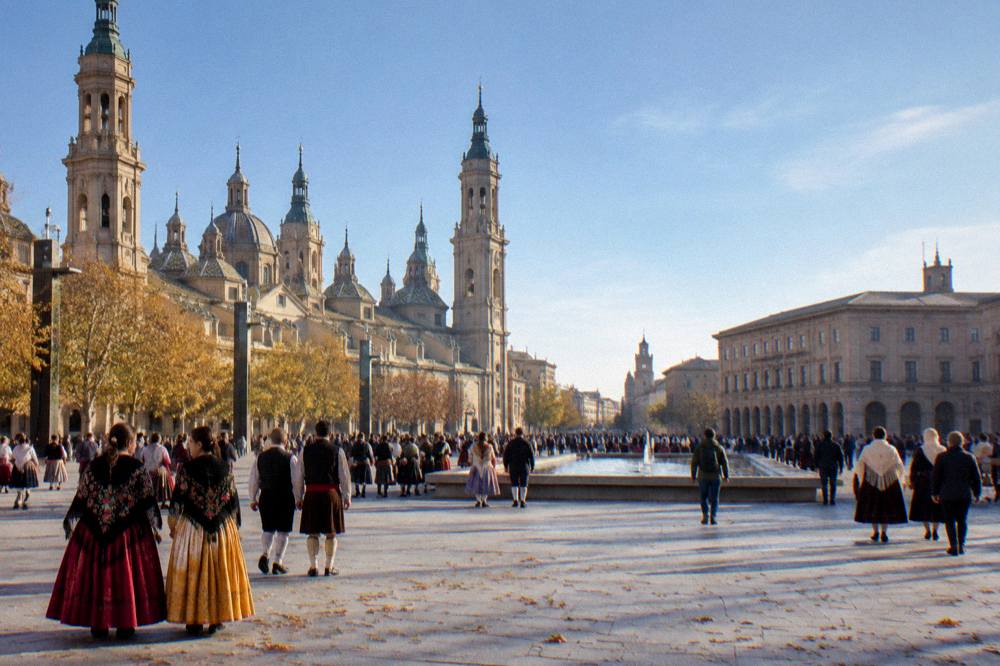
The Fiestas del Pilar 2026 run from Saturday 10 to Sunday 18 October, with the pregón opening the festival from the Ayuntamiento balcony at 21:00 on 10 October and the Ofrenda de Flores, the flower offering to the Virgin, on 12 October. The city's own festival page lists 994 registered groups for the Ofrenda, which is the single largest event in the Aragonese calendar.
The Ofrenda de Flores is the heart of it: a procession along the usual route from the Paseo de la Independencia to the Plaza del Pilar, in which groups in regional dress carry flowers that are built into a vast mantle on the basilica's facade. It begins around 06:30 and runs all day. The Ofrenda de Flores guide covers how to watch it well, and the Fiestas del Pilar guide covers the full programme.
| Event, Fiestas del Pilar 2026 | Date and time |
|---|---|
| Pregón from the Ayuntamiento balcony | Saturday 10 October, 21:00 |
| Jota contest finals | 10 to 11 October |
| Ofrenda de Flores | Monday 12 October, from about 06:30 |
| Ofrenda de Frutos and Rosario de Cristal | 13 October, reported by local press |
| Closing fireworks by the Ebro | Sunday 18 October |
The programme also includes concerts, Venezuela as guest country, new stages including one in the Plaza Salamero, and an expanded fireworks schedule with displays after the pregón, in the Parque Pignatelli, in the Plaza San Francisco and at the closing beside the Ebro. The Ofrenda de Frutos and the Rosario de Cristal on 13 October are reported by the local press rather than confirmed on the city's own pages, so treat those two as reported. If you are planning an October trip around all this, the best time to visit guide weighs the festival against the crowds.
What Is The Climate Like In Zaragoza?
AEMET's 1981 to 2010 normals for the Zaragoza Aeropuerto station show a dry continental semi-arid climate: a July mean maximum of 32.4 C, a January mean minimum of 2.7 C, just 322 mm of rain across the whole year, and 2,693 hours of sunshine. May is the wettest month at 44 mm, and July and August the driest at 17 mm each. Every figure here is that 1981 to 2010 average, not a forecast.
The practical reading of the table is that Zaragoza is hotter and drier than most visitors expect. July is the sunniest month at 348 hours and carries the highest mean maximum at 32.4 C; spring and autumn are the comfortable shoulders, with April at a 19.6 C mean maximum and October at 21.4 C. Frost is a real feature of winter, 23.1 frost days a year on the same normals, and fog occurs on 21.3 days, mostly in the cold months. The Zaragoza weather guide expands all of this month by month. The rest of the planning pages sit on Zaragoza Travel Guide.
| Month | Mean max C | Mean min C | Rain mm | Sun hours |
|---|---|---|---|---|
| January | 10.5 | 2.7 | 21 | 131 |
| April | 19.6 | 7.9 | 39 | 226 |
| July | 32.4 | 18.3 | 17 | 348 |
| October | 21.4 | 11.0 | 36 | 195 |
The full twelve-month table, with mean temperatures, rain days and every month's figures, sits in the weather guide linked above; the four rows here are the planning anchors. The cierzo, the cold dry wind off the north-west, is the qualitative fact about Zaragoza's climate that no table captures: it is constant in local conversation, and AEMET issues regional wind warnings when it strengthens, but no speed or frequency figure appears on the station's published normals, so none appears here.
How Do You Get To Zaragoza And Around It?
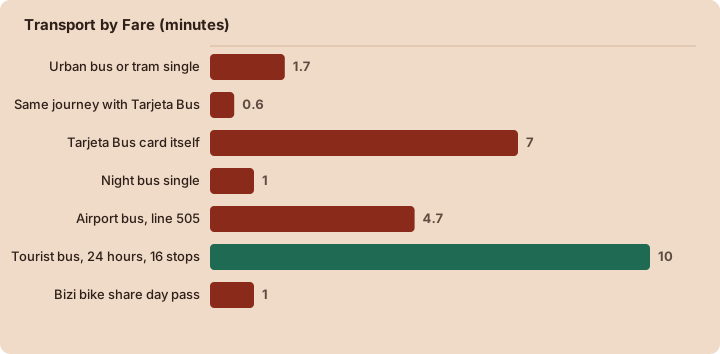
Zaragoza sits on the Madrid to Barcelona high-speed axis, with both cities about 1.5 to 2 hours away by train into Zaragoza-Delicias, and the city's own airport is served by Ryanair, Wizz Air, Binter, Volotea, Vueling and Alba Star across 13 destinations. Once in the city, a bus or tram single costs 1.70 EUR, or 0.55 EUR with the Tarjeta Bus, and the airport bus is line 505 at 4.65 EUR single.
The train is the reason Zaragoza works as a destination and as a base. Zaragoza-Delicias is the high-speed hub, and the Delicias station guide, the Madrid to Zaragoza and Barcelona to Zaragoza pages cover the routes; exact timetables and fares change constantly, so check the operator's live pages before booking. The how to get to Zaragoza guide compares plane, train and car.
| Transport | Fare |
|---|---|
| Urban bus or tram single | 1.70 EUR |
| Same journey with Tarjeta Bus | 0.55 EUR |
| Tarjeta Bus card itself | 7 EUR, valid on bus and tram |
| Night bus single | 1.00 EUR |
| Airport bus, line 505 | 4.65 EUR single, about 2.25 EUR with a Lazo card |
| Tourist bus, 24 hours, 16 stops | 10 EUR, cash only on the bus |
| Bizi bike share day pass | 1 EUR plus 0.50 EUR for the first 30 minutes |
On the ground, the city is walkable in its core, and the tram and bus network covers the rest; the getting around guide has the detail. One rule matters to drivers: the low-emission zone in the Casco Histórico carries sanctions from Monday to Friday 08:00-20:00 for vehicles without a DGT environmental label, with a 15-minute grace period if you enter by mistake. The car rental and parking guide explains the labels and where to park outside the zone.
What Free Things Can You See In Zaragoza?
Entry to the Basílica del Pilar's temple is free, the Centro de Historias is free, the IAACC Pablo Serrano is free, the Torreón de la Zuda viewpoint is free, and the Caesaraugusta museums, the Museo del Fuego y los Bomberos and the Aljafería all have free days: the Caesaraugusta sites and the fire museum on the first Sunday of the month, the Aljafería on the first and third Sunday and Monday.
The free layer of Zaragoza is unusually deep for a city with this much monument weight. The Pilar costs nothing to enter, and its museum, the Museo Pilarista, is open daily 10:00-13:30 and 16:00-20:00. The Centro de Historias, free, Tuesday to Saturday 10:00-14:00 and 17:00-21:00, holds the city's own story exhibitions, and the Torreón de la Zuda, free at the same pattern of hours, carries the "Mirador de las cuatro culturas" viewpoint on its fifth floor. The free things to do guide lists all of it with hours.
| Sight | Normal price | Free entry |
|---|---|---|
| Basílica del Pilar, temple | Free | Always |
| Centro de Historias | Free | Always |
| IAACC Pablo Serrano | Free | Always |
| Torreón de la Zuda | Free | Always |
| Caesaraugusta museums | 3 to 4 EUR each | 1st Sunday of the month |
| Museo del Fuego y los Bomberos | 3 EUR | 1st Sunday of the month |
| Museo del Origami | 3 EUR | 1st Tuesday and Sunday |
| Aljafería | 7 EUR | 1st and 3rd Sunday and Monday |
Two small museums round the list out: the Museo del Origami at 3 EUR, free on the first Tuesday and Sunday of the month, and the Alma Mater Museum at 5 EUR. In October 2026, note that the Palacio de Sástago is closed for the month and the Museo Pablo Gargallo is temporarily closed, so neither belongs on an itinerary right now.
How Should You Plan A First Visit To Zaragoza?
Plan on the Casco Histórico as your base, one full day for the Pilar, La Seo and the Roman sites, a half-day for the Aljafería and the western quarter, and, if the timing allows, the Fiestas del Pilar in October or a day trip to the Monasterio de Piedra, Albarracín or the Pyrenean valleys. A 24-hour tourist bus ticket at 10 EUR links the 16 main stops if you would rather not walk, and there is no tourist tax in Aragon to budget for.
Lodging splits between the old town itself, the Paseo de la Independencia corridor and the Delicias district near the station; the where to stay guide, the hotels guide and the budget stays guide break down the districts and price bands. For costs, the budget guide prices a realistic day, and the travel planning guide ties everything into a checklist.
Food deserves its own planning slot. Aragon's kitchen runs on ternasco lamb, migas aragonesas and the vegetable dishes of the Ebro valley, and the Zaragoza food guide covers where to eat it, from the Mercado Central to the tapas streets of the old centre. The tapas crawl guide turns the same ground into an evening route.
For the second half of a stay, the day-trip belt is one of the strongest of any Spanish city: Monasterio de Piedra's water gardens, the ruined town of Belchite, Albarracín, Tarazona, the Somontano wine country and the Pyrenean valleys of Ordesa, Jaca and Canfranc. The day-trip pages cover the mountain options, and guided products to Belchite, the olive-oil country and the Somontano wineries all run from the city.
If you prefer a private pace, the Private Walking Tour with a Local, from $54.02 per person and rated 4.7 from 86 reviews, runs two to six hours on a route shaped around your interests, and the Visit to the Seo or Catedral del Salvador, from $22.51 per person, pairs a cathedral visit with the Museo de Tapices. Both are worth checking against the free GuruWalk option too: the Indispensable Zaragoza Free Tour of the Old Town, a two-hour tip-based walk rated 4.97 from 576 reviews, is listed on GuruWalk with its guru, and it is a genuinely good first-evening orientation if a paid tour is not in the budget.
Common Questions About Zaragoza Facts And History
Is Zaragoza in Catalonia or the Basque Country?
No. Zaragoza is the capital of Aragon, an inland autonomous community in north-east Spain, and it sits on the Ebro river. It is neither a Catalan nor a Basque city, though both regions border Aragon's sphere of influence.
How old is Zaragoza?
The city's history begins with the Roman colony of Caesaraugusta, the ancestor of the modern name, whose forum, baths, theatre and river port survive as visitable museum sites. No founding year is printed here because none is verified on the sources behind this page.
What is Zaragoza famous for?
The Basílica del Pilar, La Seo cathedral, the Aljafería palace, the Roman Caesaraugusta sites, the Fiestas del Pilar each October and the Mudéjar brick tradition of Aragon. Expo 2008's riverside legacy, the Parque del Agua and the Pabellón Puente, is the modern layer.
Does Zaragoza have a beach?
No. Zaragoza is an inland city on the Ebro, in one of the driest parts of Spain. Its water landscape is the river itself, the Ranillas meander and the Parque del Agua, not a coast.
Is the Basílica del Pilar free to enter?
Yes, entering the temple is free. The tower viewpoint, the Torre Mirador, is paid, at 6 EUR for an adult with reductions for over-65s, residents, students and ages 13 to 18, and free entry for under-12s.
The short version of Zaragoza is a capital city with two thousand years of visible history, priced lower and walked easier than almost any city of its weight in Spain, and best understood in its own order: Roman first, Islamic second, Christian third, festival last.