Vegetarian And Vegan In Zaragoza: What To Eat, Where To Shop And How To Plan
Zaragoza, the capital of Aragon on the Ebro, is a city of roast lamb and cured ham, yet its markets, vegetable traditions and tapas culture make it far easier to eat meat-free than the guidebooks suggest.
Short answer
Yes, Zaragoza works for vegetarians and vegans. Aragonese cooking is built on vegetables, bread, oil and pulses, the city's markets and self-catering options are strong, and a tram and bus single costs 1.70 EUR, so reaching shops and green spaces is cheap.
Zaragoza, the capital of Aragon on the Ebro, is famous for ternasco de Aragon lamb and for a tapas culture that leans heavily on cured pork, which is exactly why vegetarian and vegan visitors often arrive expecting a difficult week. The reality is more interesting. Aragonese cooking grew out of poor inland kitchens where meat was a feast-day luxury, and its foundations, bread, olive oil, pulses, garden vegetables and fruit, are the foundations plant-based eaters already cook with. For the wider food picture, start with the Zaragoza food guide, and for trip framing see Zaragoza travel planning.
Is Zaragoza Good For Vegetarian And Vegan Travellers?
Yes, with the right expectations. Zaragoza is a mid-sized inland city where vegetable markets, pulse dishes and bread-and-oil traditions run deep, so vegetarians eat well almost anywhere and vegans manage comfortably with a little Spanish and a willingness to self-cater. It is not a plant-based destination in the way Barcelona is, and dedicated venues are fewer, but the raw ingredients, the market culture and the low cost of getting around all work in your favour.
The honest starting point is that Aragon's flagship dishes are not meat-free. Ternasco de Aragon lamb and long-cured ham dominate every festival menu, and during the Fiestas del Pilar, which the city's own programme lists for 10 to 18 October 2026, the streets smell overwhelmingly of grilling meat. A vegetarian visitor in mid-October is watching that spectacle rather than eating it.
But the same tradition that produced the lamb also produced a repertoire of dishes that never needed meat at all. Migas aragonesas, breadcrumbs fried with garlic and oil, sometimes with grapes, is shepherd food. Vegetable stews, lentils, chickpeas and white beans appear across the region's home cooking. And the default accompaniments everywhere, red peppers, tomatoes, olive oil and bread, are all plant-based before anyone touches them.
The practical difference between the vegetarian and the vegan experience is cheese and eggs. Vegetarians can order tapas freely in most bars and be confident something on the counter works. Vegans should expect to explain what they need, and to lean harder on markets and self-catering, which in Zaragoza is no hardship: the city is compact, the tram and bus single is 1.70 EUR, and a Tarjeta Bus brings that down to 0.55 EUR per trip.
What Can You Actually Eat In Zaragoza As A Vegetarian?
Vegetarians can eat migas aragonesas, vegetable stews, lentil and chickpea potajes, grilled vegetables, tomato and pepper salads, tortilla de patatas, cheese from the Pyrenean valleys and fruit that is a point of regional pride. Vegans can rely on migas made without the pork fat, bread with olive oil, gazpacho-style cold soups, roasted peppers, pulses cooked in water and oil, and the raw produce of the Central Market and neighbourhood shops. None of this requires a special venue, only a kitchen or a bar willing to adapt.
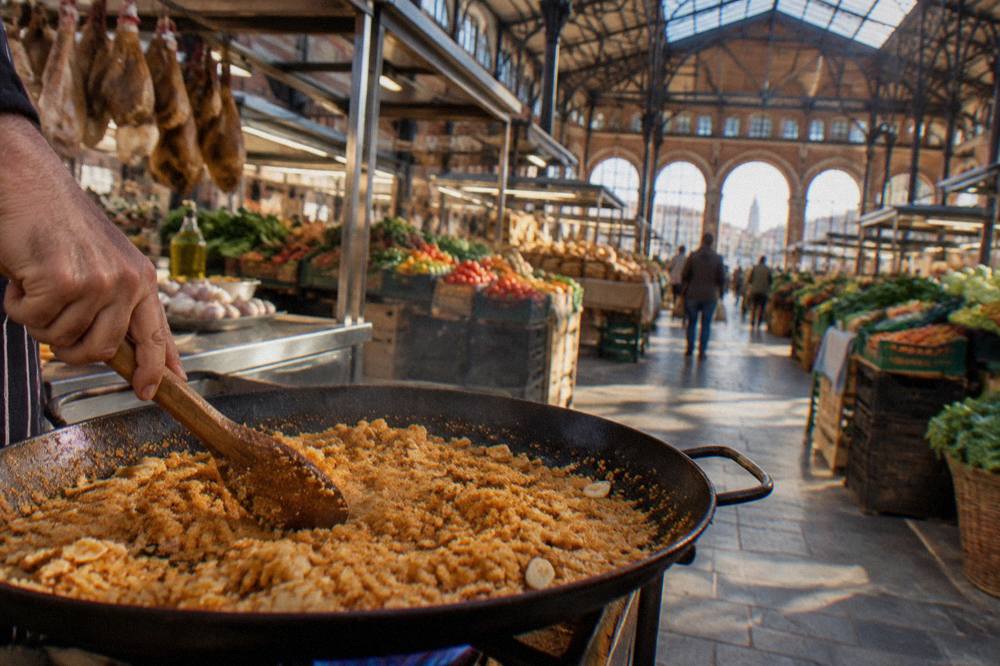
Migas aragonesas is the dish to know. It is fried breadcrumbs, worked in a pan with garlic and olive oil, and in its simplest form it contains no meat at all, though many bars add chorizo or bacon, so ask. It is heavy, warming, exactly right after a cold cierzo wind off the Ebro valley, and it is a living example of how Aragonese cuisine stretches cheap ingredients into a meal.
Alongside it sit the pulse dishes. Lentils, chickpeas and white beans are the inland staples, usually stewed with vegetables, and usually, in home versions, capable of being made without the meat that restaurant versions sometimes carry. Vegetable stews and roasted red peppers, the long sweet ones of the Ebro valley, appear everywhere. Tortilla de patatas, the potato omelette, is the universal vegetarian fallback in any bar in the old town.
For vegans the strategy is simpler than it looks. Spanish produce is the ally: tomatoes that taste of summer, peppers, artichokes, asparagus, stone fruit and melons in their seasons. Cold soups, salads, grilled vegetables and bread with good olive oil cover most needs, and a self-catering base turns the market into the best restaurant in the city. The Zaragoza food guide covers the broader traditions, including the sweets and pastries that vegetarians will find everywhere and vegans should check for eggs and butter.
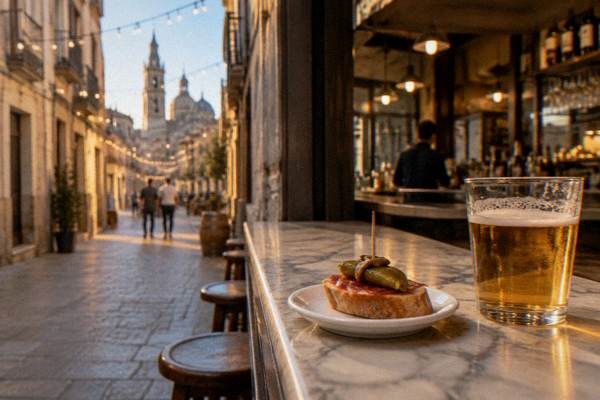
The tapas culture itself is worth understanding rather than avoiding. A tapas crawl is a series of small decisions, and small decisions are easy to steer meat-free: a plate of grilled vegetables here, a cheese plate there for vegetarians, tortilla for everyone. The guided tapas walks below are one way to have that culture explained while you eat.
How Do You Handle Tapas Bars And Restaurants As A Vegan In Zaragoza?
Say "soy vegano" early, ask whether the pan or the stew carries meat fat or broth, and expect the kitchen to adapt rather than to have a separate menu. Spanish kitchens understand dietary requests when they are stated plainly, and the dishes most likely to trip a vegan are the ones where animal fat is hidden, so the three phrases worth learning are "sin carne", "sin jamón" and "cocinado con aceite de oliva, no con manteca".
The hidden traps are consistent. Migas may be fried in pork fat. Lentils and beans may carry a ham bone or chorizo in the cooking water. Vegetable soups may start with a meat broth. None of this is hostility, it is default inland cooking, and every one of these problems disappears with one clear sentence at the counter.
What you get in return is kitchens that cook from raw ingredients rather than from packets. A bar that roasts its own peppers and fries its own breadcrumbs can leave the pork out without difficulty. Self-catering visitors have it even easier: olive oil, bread, vegetables and pulses from the market assemble into a meal with no negotiation at all.
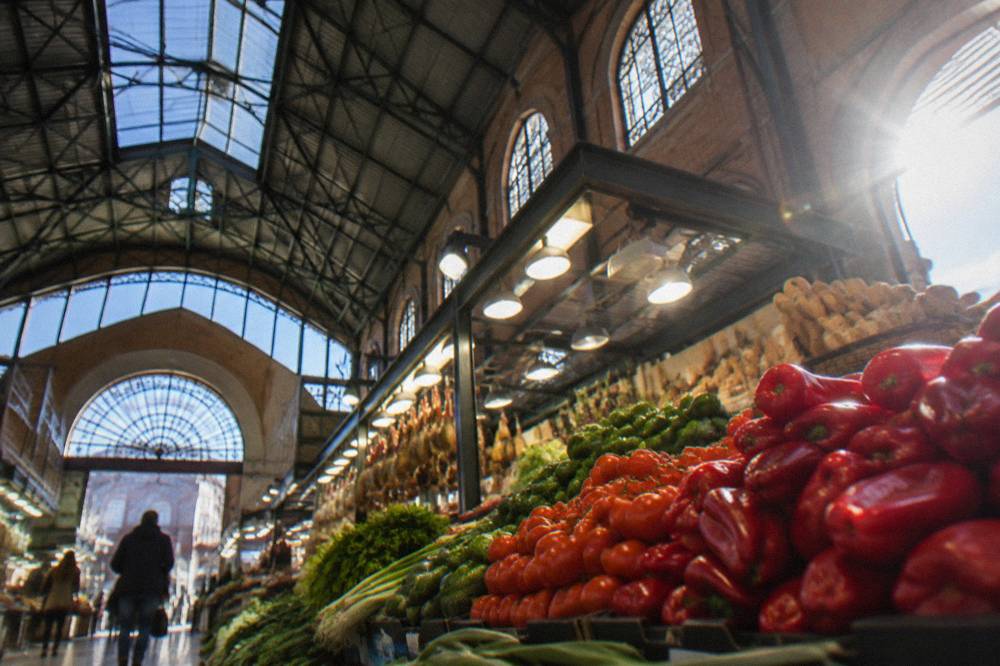
Timing matters as much as vocabulary. Lunch is the main meal of the day in Aragon and kitchens are at their fullest then, which means the daily vegetable dish, whatever it is, is most likely to be available. A late-evening visit finds a bar running on cold plates and fried things, fewer of which work for a vegan. Planning around the Spanish day is covered in detail in when to visit Zaragoza.
One planning fact works quietly in your favour: Aragon has no tourist tax. The regional government ruled one out in September 2026, so your accommodation price is your accommodation price, and the money saved is money for food. The cost side of a Zaragoza trip is laid out in the Zaragoza cost and budget guide.
Where Do You Shop And Self-Cater In Zaragoza?
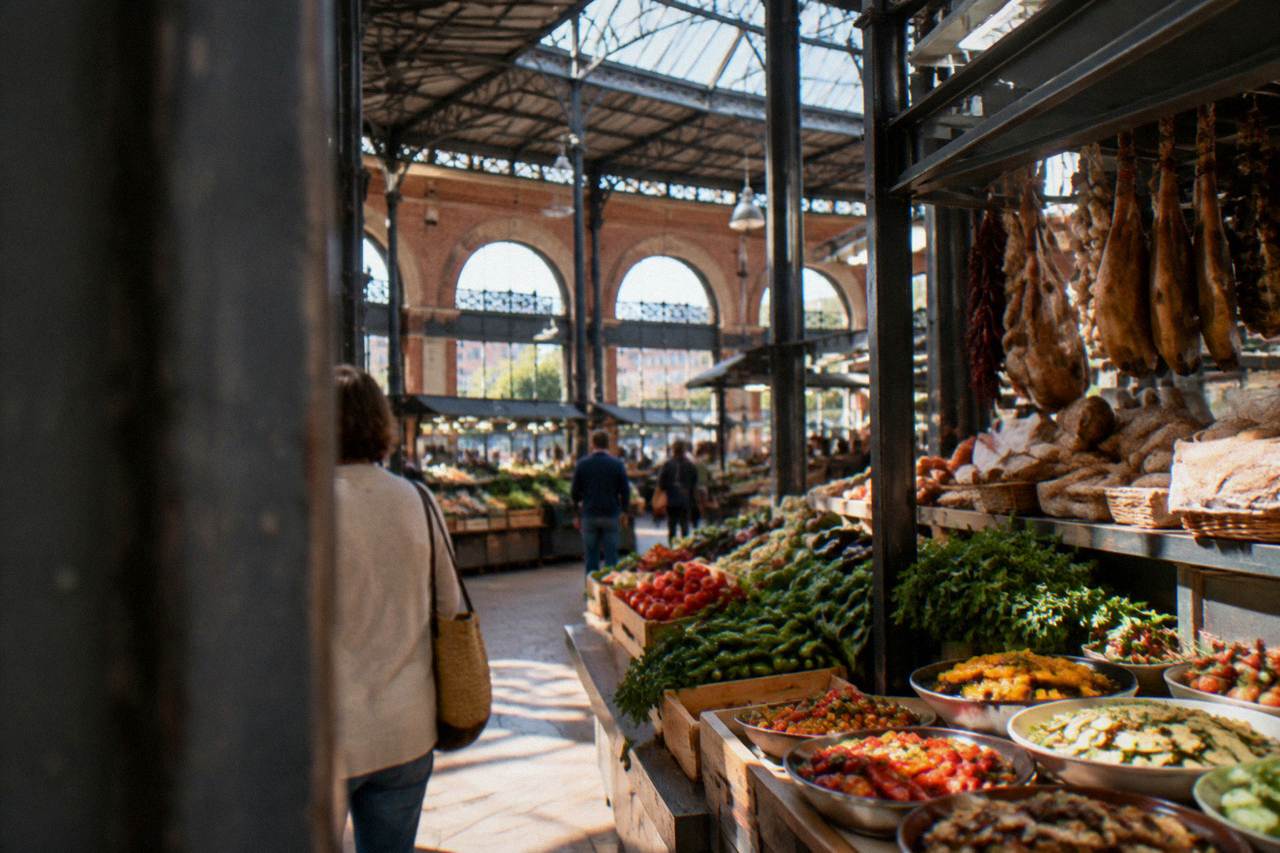
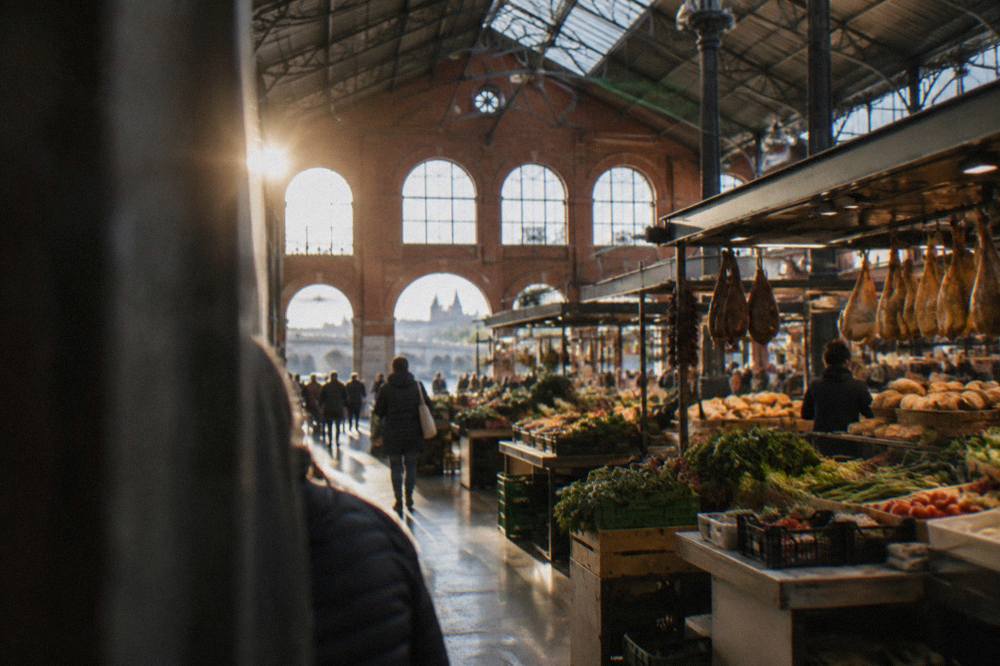
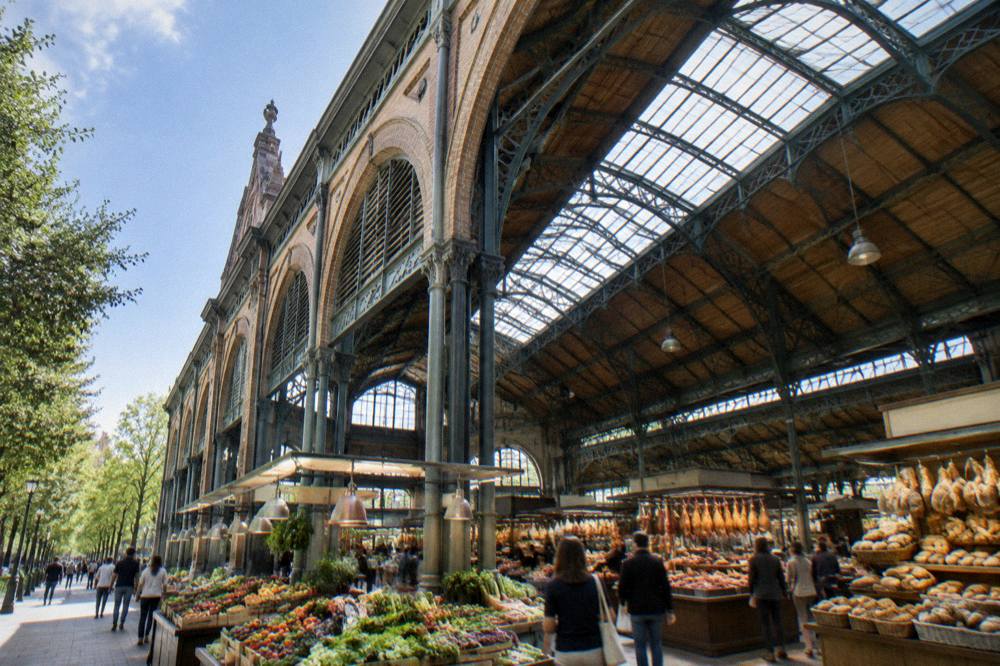
Shop the way the city shops: the Central Market for produce, neighbourhood greengrocers and bakers for daily needs, and the weekly rhythm of Spanish shopping, small quantities, bought often, rather than one weekly supermarket run. The tram and bus network makes hauling shopping painless, a single costs 1.70 EUR, the rechargeable Tarjeta Bus cuts each trip to 0.55 EUR, and the card itself costs 7 EUR and works on both bus and tram.
Self-catering is the vegan's best tool in Zaragoza, and the city is built for it. Spanish domestic shopping is still a several-times-a-week activity, and the shops reflect that: small, fresh, close to home. A visitor with an apartment or a hostel kitchen can eat better than many restaurants manage, because the raw material is exceptional and the cooking is simple.
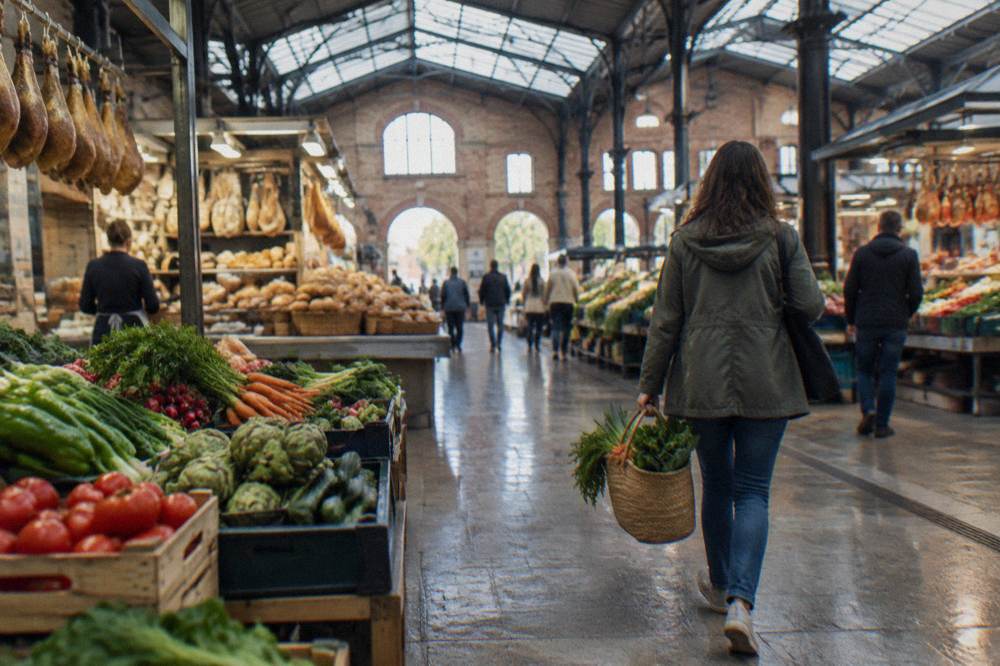
The table below sets out the verified transport prices that make this practical. These are the 2026 Avanza fares for urban bus and tram in Zaragoza.
| Ticket | Price | Notes |
|---|---|---|
| Bus or tram single | 1.70 EUR | No transfer included |
| Night bus single | 1.00 EUR | Night lines |
| Tarjeta Bus trip | 0.55 EUR | Rechargeable card |
| Tarjeta Bus itself | 7 EUR | Valid on bus and tram |
Beyond the market, the greengrocer and the bakery are the two shops that matter. Bread in Aragon is bought daily and eaten the same day, and a fresh loaf with olive oil, tomatoes and salt is a vegan lunch the region has been eating for centuries. Fruit follows the seasons hard: stone fruit and melons in the hot months, apples, pears and stored vegetables through the winter.
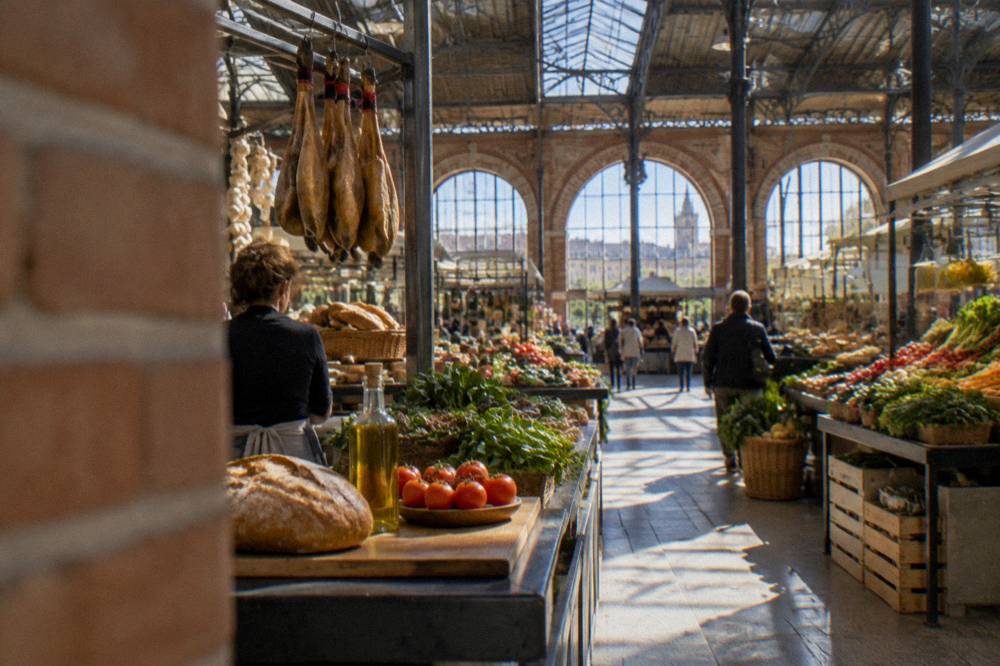
Getting around with shopping is where the low fares pay off. The getting around Zaragoza guide covers the tram and bus network in full, and the Bizi bike share is a cheap alternative for short hops: the 2026 day pass is 1 EUR plus 0.50 EUR for the first 30 minutes of each trip, with a 50 EUR card deposit held.
What Does The Rest Of A Zaragoza Trip Cost Beyond The Plate?
The big sights are cheap or free for vegetarians and vegans on any budget: the Basílica del Pilar is free to enter, the Caesaraugusta museum bono covering all four Roman sites is 7 EUR, La Seo cathedral entry including its textile museum is 10 EUR, and the Aljafería palace charges 7 EUR general admission or 2 EUR for students and over-65s, with free entry on the first and third Sunday and Monday of each month.
Food is only half of a budget, and Zaragoza's sightseeing costs are low enough that they should not eat into the food money. The table below gathers the verified October prices for the main monuments, so you can see at a glance how little of a daily budget the sightseeing takes. The rest of the planning pages sit on Zaragoza Travel Guide.
| Sight | Adult price | Reduced | Free options |
|---|---|---|---|
| Basílica del Pilar, entry | Free | Free | Always |
| Pilar tower viewpoint | 6 EUR | 4 EUR ages 13-18, students | Under 12 free |
| La Seo, with textile museums | 10 EUR | 7 EUR students, 13-18 | Aragon residents on set days |
| Aljafería palace | 7 EUR | 2 EUR students, over-65 | 1st and 3rd Sunday and Monday |
| Caesaraugusta 4-museum bono | 7 EUR | 5 EUR | 1st Sunday of month |
| IAACC Pablo Serrano | Free | Free | Always |
Two of the city's museums are also free and worth building into a food-free afternoon: the Centro de Historias and the Torreon de la Zuda, with its fifth-floor viewpoint over the four cultures of the city. The free things to do in Zaragoza guide collects the full set.
One closure to plan around: the Museo de Zaragoza's central building on Plaza de los Sitios is shut for Ministry of Culture works, with no reopening date, so do not build a day around it. The Museo Goya, by contrast, reopens on 9 October 2026 after renovation, open Tuesday to Saturday 10:00 to 20:00 and Sunday 10:00 to 14:00, closed Mondays, with its admission price not yet published.
When Is The Best Time To Visit Zaragoza For Fresh Produce?
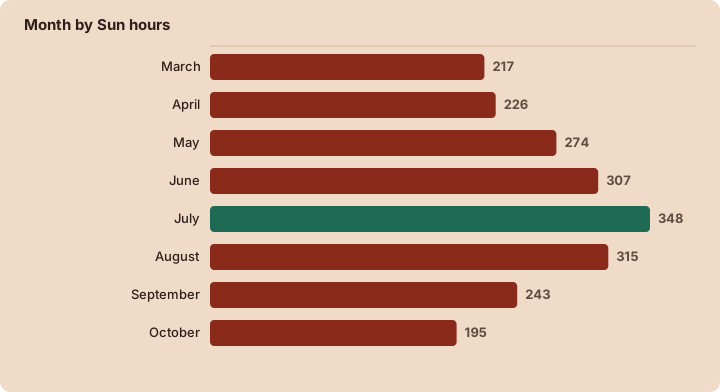
Late spring and early autumn are the best eating seasons: May brings the year's wettest weather, 44 mm on average, with a mean maximum of 24.1 C, while October, the Fiestas month, averages a 21.4 C mean maximum with 36 mm of rain. July and August are the driest and hottest months, 17 mm of rain each and mean maxima of 32.4 C and 31.7 C, so summer visits mean hot-weather eating, cold soups, melon and grilled vegetables.
These are AEMET's 1981-2010 climate normals for the Zaragoza Aeropuerto station, the only window the station publishes, and they describe an inland city with a dry continental regime: 322 mm of rain across the whole year, concentrated in spring and autumn, and a hot, almost rainless summer.
| Month | Mean max C | Mean C | Rain mm | Sun hours |
|---|---|---|---|---|
| March | 17.3 | 11.6 | 19 | 217 |
| April | 19.6 | 13.8 | 39 | 226 |
| May | 24.1 | 18.0 | 44 | 274 |
| June | 29.3 | 22.6 | 26 | 307 |
| July | 32.4 | 25.3 | 17 | 348 |
| August | 31.7 | 25.0 | 17 | 315 |
| September | 27.1 | 21.2 | 30 | 243 |
| October | 21.4 | 16.2 | 36 | 195 |
For a plant-based traveller the seasons translate directly onto the plate. Spring means artichokes, asparagus and green vegetables. Summer means tomatoes worth eating plain, peppers, courgettes, melon and stone fruit. Autumn brings the pepper harvest and the stored pulses. Winter is the season of the stews and the migas, which is when that pan of breadcrumbs earns its keep.
The cierzo, the cold dry wind that runs down the Ebro valley, is a fact of Aragonese life rather than a number: no wind figure is published in the climate normals, but every local knows it, and it is the reason winter dishes are as heavy as they are. The Zaragoza weather guide unpacks the full year, and the best time to visit guide weighs the festivals against the heat.
October deserves a special note for vegetarians. The Fiestas del Pilar fill the city from 10 to 18 October, and while the Ofrenda de Flores on 12 October is a flower parade rather than a food event, the whole city is out eating for nine days. Meat dominates the street grills, but the markets and bars are at their fullest too. The Fiestas del Pilar guide covers the programme in detail.
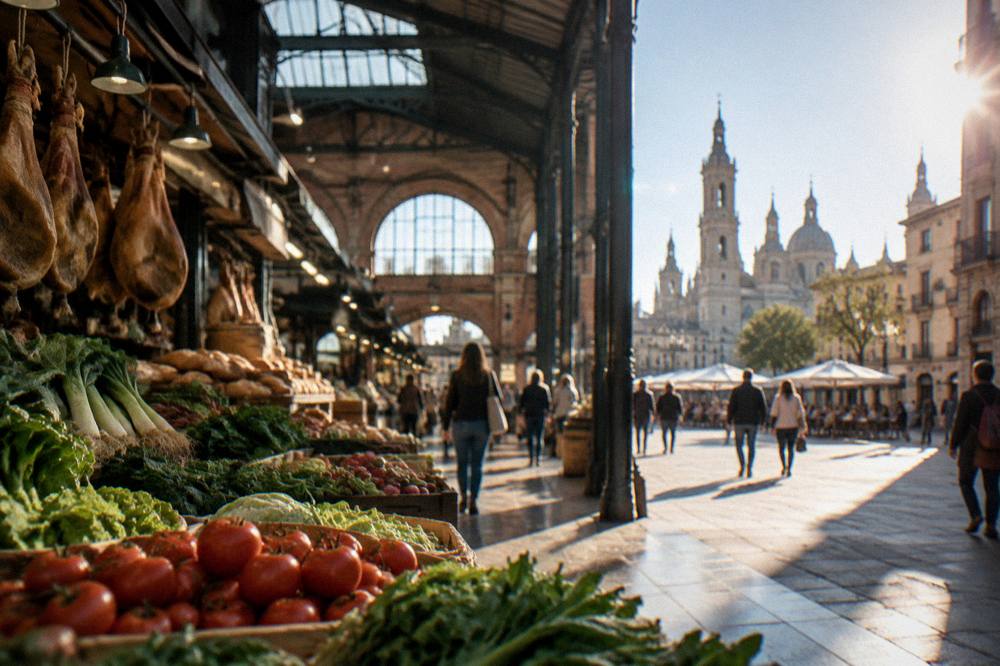
Which Guided Tours Work Well For Vegetarian And Vegan Visitors?
The walking and monumental tours work perfectly, because they burn sightseeing hours rather than menu choices, and the tapas and market walks are worth taking even for strict vegans, since a guide who knows the old town can steer you to kitchens that adapt. The 105-minute monumental sightseeing tour, from 10.41 USD per person and rated 4.4 from 36 reviews, is the cheapest structured introduction to the city, and it leaves the rest of the day for the market.
The logic is simple: in a meat-forward city, spend the guided hours on the city itself and the unguided hours on the food. Zaragoza's old town is compact and layered, Roman, Moorish, Mudéjar and baroque within a few streets, and a guide makes that layering legible in a way that a map does not.
The market and tapas walks are the food-specific options. The midday market and tapas tour, 3 hours from 106.92 USD per person and rated 5 from 9 reviews, walks the central market and the old town with tastings; a vegetarian can take it as written, and a vegan should message the operator first to see what the kitchen can adapt. The listing is the place to ask, and operators answer dietary questions before booking.
The tapas sightseeing tour, 3 hours from 50.65 USD per person and rated 5 from 7 reviews, splits the difference between a walk and a meal, pairing old-town sights with tapas stops. Vegetarians fit it easily. Vegans should expect to be eating less than the group and paying for the walk, so check with the operator before booking.
There is also a free option. The Indispensable Zaragoza Free Tour of the Old Town runs on GuruWalk, tip-based, rated 4.97 from 576 reviews over 2 hours, and a free walk is the most budget-friendly thing a vegan can do while the group eats elsewhere. Never pay for a GuruWalk in advance; you tip the guru at the end.
How Do You Build A Meat-Free Day In Zaragoza Around The City?
Start with the old town in the morning, when the Pilar is free to enter and the streets are cool, shop the market at midday, eat your main meal at Spanish lunchtime, and spend the afternoon in a free museum or along the Ebro, where the river walk and the Parque del Agua, more than 120 hectares of green space, cost nothing. Finish with a light evening, which is exactly how the city itself eats.
The shape of a Spanish day suits plant-based travellers. The big meal is lunch, and lunch is when kitchens are most flexible. The evening is small, a tapa and a drink, or bread and tomatoes back at the apartment, and that is not a compromise, it is how Zaragoza lives.
The green spaces are the quiet advantage of an inland city. The Parque del Agua Luis Bunuel, in the Ranillas meander beside the Expo 2008 site, holds two running circuits of 5 and 10 kilometres and was the first European green space to carry the Green Globe certification. The Ebro river walk connects the Puente de Piedra, the stone bridge whose current form was begun in 1401 and opened in 1440, with the modern bridges downstream.
Where you base yourself matters for the self-catering plan: an apartment or a hostel with a kitchen near the centre puts the market, the tram and the old town within one cheap trip of each other. The where to stay in Zaragoza guide maps the districts, and the hostels and budget stays guide covers the kitchen question specifically.
Common Questions About Vegetarian And Vegan Travel In Zaragoza
Is Zaragoza vegetarian friendly?
Yes. Vegetarians can eat well almost anywhere: tortilla, cheese, grilled vegetables, pulses and bread are constant presences in Aragonese bars and kitchens, and the market culture makes self-catering excellent.
Can vegans eat well in Zaragoza?
Yes, with more planning. Vegans should ask whether dishes are cooked with meat fat or broth, lean on markets and self-catering, and use a few Spanish phrases. The raw produce, olive oil and bread culture are all plant-based by default.
What traditional Aragonese dishes are vegetarian?
Migas aragonesas is often meat-free when made with oil and garlic, though ask, since some versions add pork. Vegetable stews, lentils, chickpeas, roasted peppers and tortilla de patatas are the reliable vegetarian staples of the region.
Is food expensive in Zaragoza for vegetarians?
No published price exists for any individual venue on this site, but the surrounding costs are low: no tourist tax in Aragon, a bus or tram single at 1.70 EUR, and free entry to the Basílica del Pilar and several museums, which leaves more of the budget for the market.
When is the best month to visit Zaragoza for fresh produce?
Per the AEMET 1981-2010 normals for the Zaragoza Aeropuerto station, May averages a 24.1 C mean maximum and October 21.4 C, and both are good eating seasons. Summer, with mean maxima above 31 C in July and August, is the season of tomatoes, peppers and melon.
Do guided food tours in Zaragoza work for vegans?
Some do, with advance notice. Message the operator through the listing before booking and ask what the kitchen can adapt; the tapas and market walks are flexible in a city that cooks from raw ingredients, but the vegan should confirm rather than assume.
Zaragoza rewards the plant-based traveller who arrives knowing that the region's cooking is built on bread, oil, pulses and vegetables, and who treats the lamb as the local spectacle rather than the local requirement. Plan around the Spanish meal rhythm, shop where the city shops, and use the cheap tram and the free basilica to keep the budget in the market, and the capital of Aragon turns out to be one of the easier inland cities in Spain to eat meat-free.