Migas Aragonesas
Migas aragonesas is the signature humble dish of Aragon, a fried pan of breadcrumbs, garlic and cured meat that shepherds once ate in the hills and that Zaragoza now serves in tapas bars, restaurants and food tours across the old town.
Short answer
Migas aragonesas is a traditional Aragonese dish of stale bread torn into crumbs, moistened overnight, then fried with olive oil, garlic and cured pork such as chorizo or torreznos. It is hearty winter food, eaten across Zaragoza and Aragon from late autumn through spring, and it appears on tapas menus and food tours in the city year-round.
Migas aragonesas is the humble signature dish of Zaragoza, the capital of Aragon, an inland city on the Ebro in north-east Spain. At its simplest it is stale bread, torn by hand into rough crumbs, dampened overnight, then fried in olive oil with garlic and cured pork until the crumbs turn golden and separate into soft, sandy grains. Shepherds and farm workers in rural Aragon ate it as a way of using up bread that had gone hard, and it has since moved from the hillsides into the tapas bars and restaurants of the city, where it now sits beside ternasco de Aragon as one of the two dishes every visitor to Zaragoza meets sooner or later. This guide covers what migas aragonesas is, how it is made, when the city eats it, what to drink with it, and how to taste it on a guided walk through the old town.
What Are Migas Aragonesas?
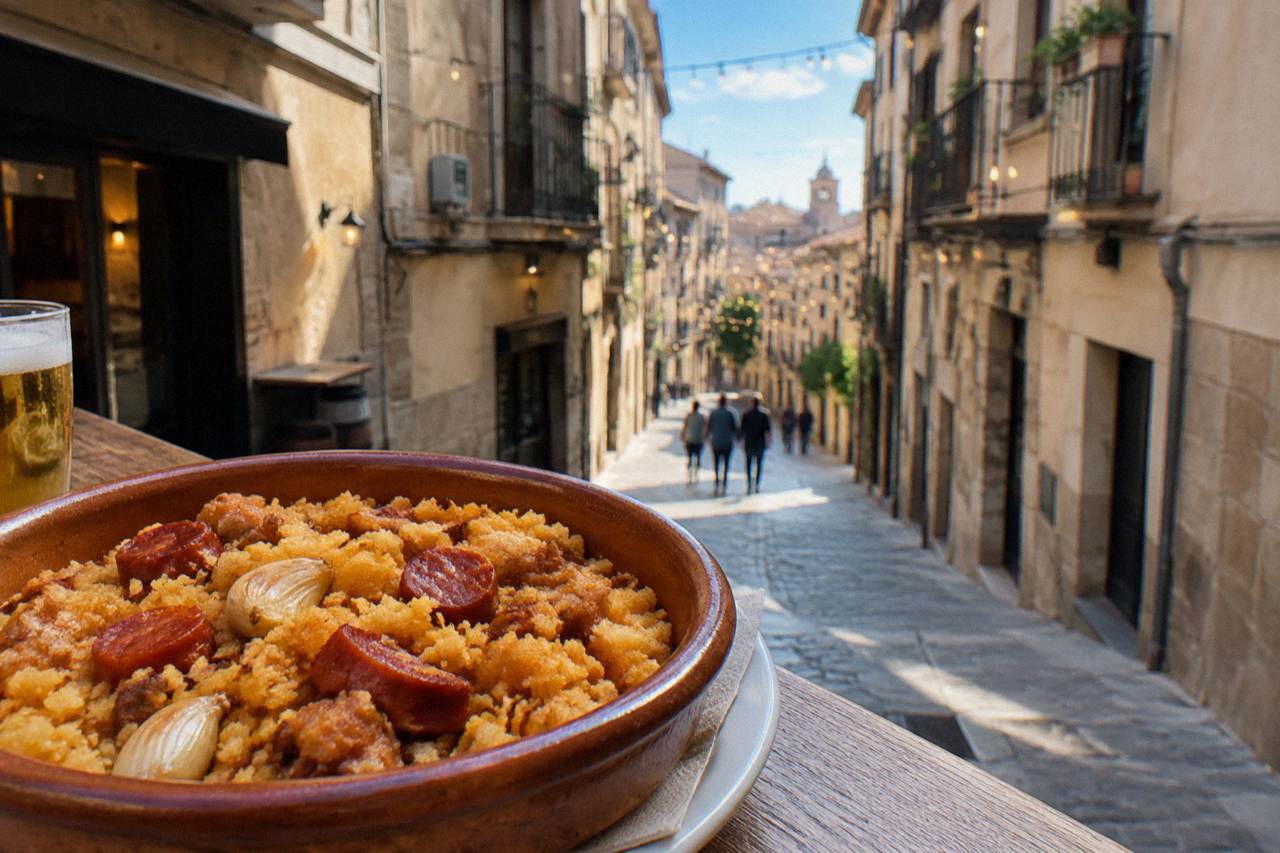
Migas aragonesas is a traditional dish of fried breadcrumbs from Aragon, the region whose capital is Zaragoza, made by moistening stale bread, tearing it into crumbs and frying it slowly in olive oil with garlic and cured meats such as chorizo, torreznos or panceta. It began as a way for shepherds and farm labourers to stretch leftover bread into a hot, filling meal, and it is now served in tapas bars and restaurants across the city as one of Aragon's defining foods.
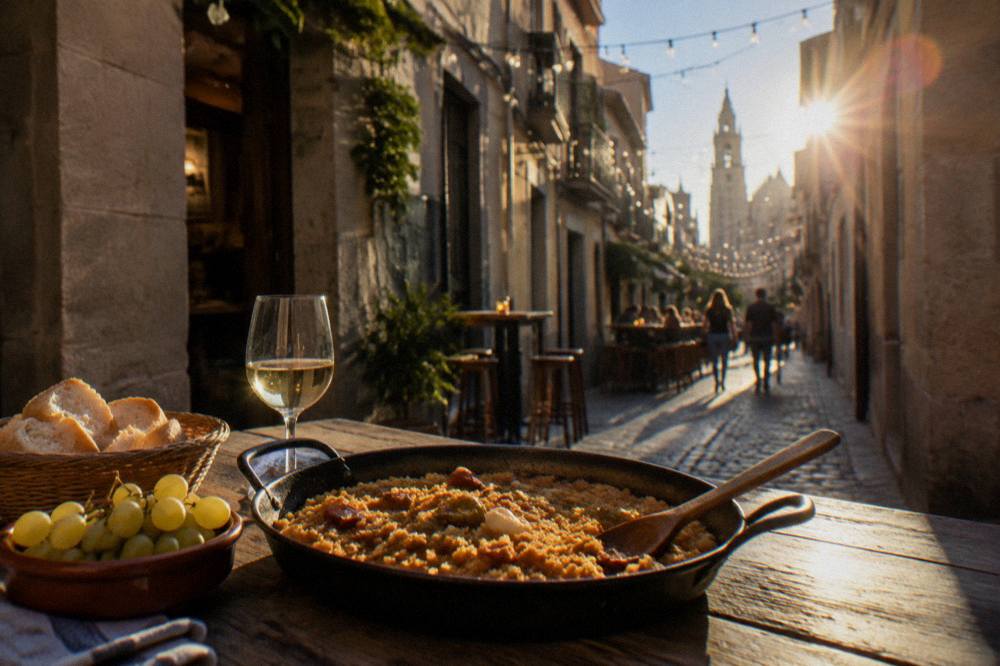
The word migas means crumbs, and that is genuinely all the dish is at its core: crumbs of yesterday's bread, transformed by patience and fat into something worth eating. The transformation is the point. Bread that would otherwise be thrown out is soaked or sprinkled with water, often salted and left to rest overnight under a cloth, so that the crumbs soften without collapsing into paste. The next day they go into a pan of hot olive oil with slivers of garlic, and the cook stirs and presses and breaks the mass apart until each crumb fries separately, dry and golden on the outside, soft within.
Cured pork is the classic addition. Chorizo, torreznos which are strips of cured pork belly or loin, and panceta all appear, usually fried first so that their fat flavours the oil before the crumbs go in. Grapes are the traditional accompaniment on the side, their sweetness cutting the richness of the fried bread and fat. Some versions fold in the grapes at the end of cooking, others serve them alongside.
The dish belongs to a family of migas found across the Iberian peninsula, and Aragon's version has its own character: coarser crumbs than the fine, almost couscous-like migas of the south, fried with more pork, and treated as a full plate of food rather than a garnish. In Zaragoza it appears as a tapa, a ración to share, and as a first course in traditional restaurants, and it anchors the city's broader food culture alongside lamb and river-fish dishes.
How Are Migas Aragonesas Made?
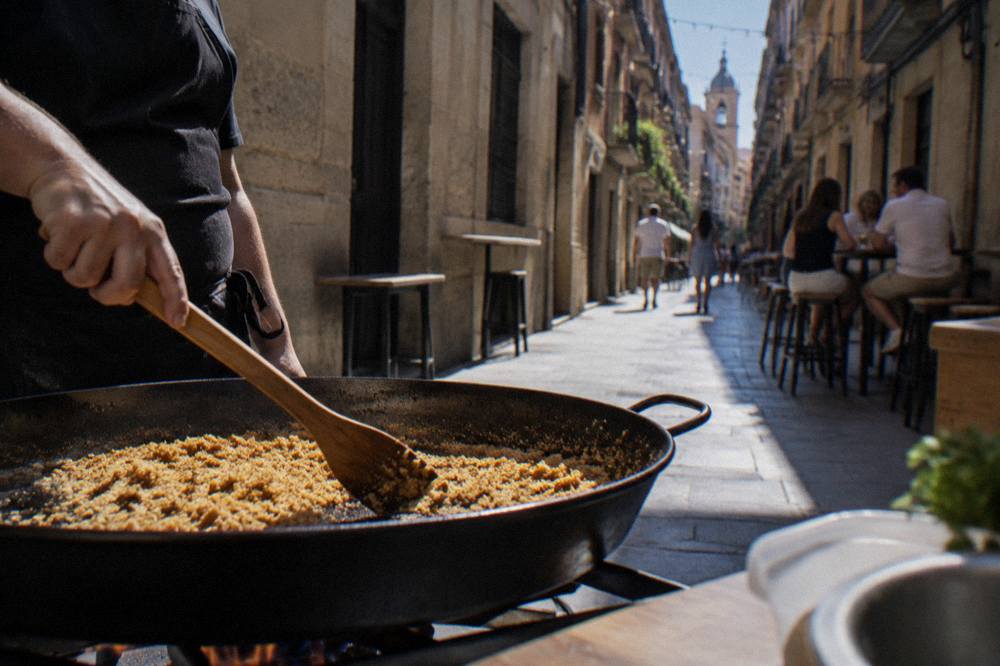
The traditional method has three stages: first the bread, a day old and torn by hand into crumbs the size of small peas, is moistened with salted water and left to rest overnight under a cloth; second, garlic and cured pork are fried in olive oil in a wide pan; third, the crumbs are added and stirred constantly over moderate heat, pressed and broken apart until they turn golden, separate grains that are crisp outside and soft inside. The whole process rewards patience more than skill.
The overnight rest is the step that separates good migas from bad. The crumbs need to be evenly damp, not soaked, so that they soften but keep their structure. A cloth over the bowl keeps them from drying out and lets the moisture travel through the crumb. Bread with a proper open crumb works best; sliced sandwich bread turns to mush.
The frying is slow work. The oil is heated gently, the garlic goes in first, then the cured meat, and only when the fat has taken on the flavour of both do the crumbs follow. From there the cook stirs almost without pause, pressing the mass flat with the spatula and turning it over, so that the crumbs fry as individuals rather than as a cake. Rushing the heat burns the garlic and leaves the inside raw. Done properly, the finished plate is loose and sandy, each crumb distinct.
| Stage | What Happens | Common Mistake |
|---|---|---|
| Tearing | Day-old bread torn by hand into pea-sized crumbs | Cutting with a knife, which makes uniform, pasty crumbs |
| Moistening | Salted water sprinkled over, cloth on top, overnight rest | Soaking instead of sprinkling, which turns crumbs to paste |
| Frying the fat | Garlic and cured pork fried gently in olive oil | High heat that burns the garlic before the crumbs go in |
| Frying the crumbs | Constant stirring and pressing over moderate heat | Walking away, which lets the mass set into a solid cake |
| Serving | Eaten at once, often with grapes on the side | Holding it warm, which softens the crisp surface |
Every family in Aragon has its own small variations on this skeleton. Some add a pinch of paprika to the oil, some use a splash of the water the chorizo was cooked in, some insist on a specific local bread. None of these are secrets so much as habits, and none of them change the fact that the dish is, at heart, a lesson in not wasting bread.
Reading about the technique is one thing; tasting the result in the company of someone who can explain it is another. The guided options below all include traditional food in the old town, and several stop at places that serve migas alongside other Aragonese classics.
Where Do You Eat Migas Aragonesas In Zaragoza?
Migas aragonesas appears across Zaragoza in three main settings: as a tapa in the bars of the old town and the streets around the Plaza del Pilar, as a first course in traditional Aragonese restaurants, and at food fairs and festival stalls during the colder months, particularly around the Fiestas del Pilar in October. No single venue is officially the best, and this site names no venue as a recommendation, but the dish is common enough that a tapas-focused guided walk is the most reliable way to meet it.
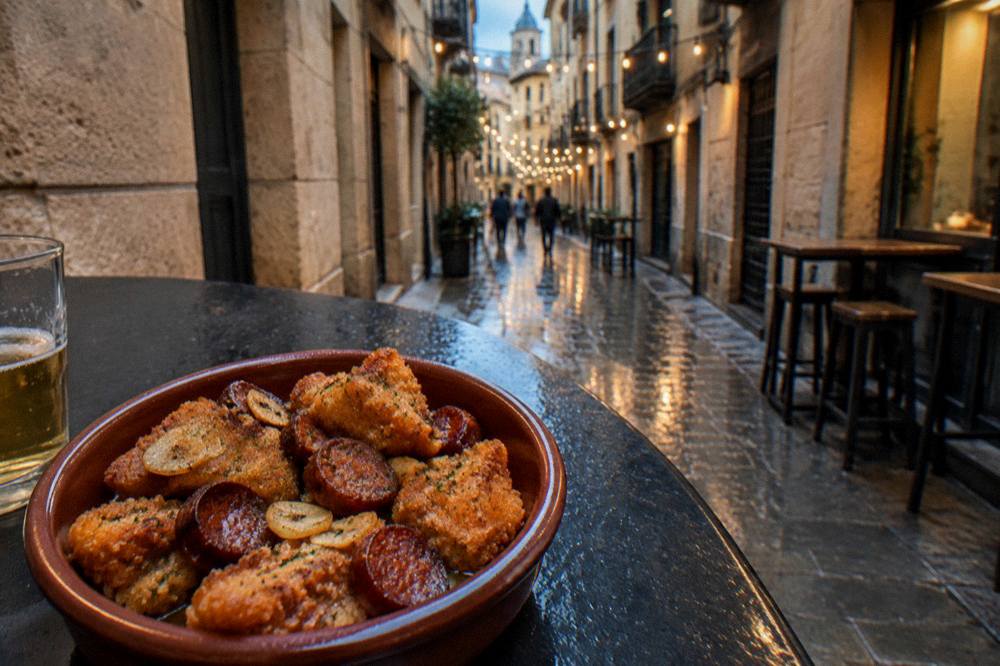
As a tapa, migas usually arrives in a small cazuela or on a plate with a couple of grapes and a slice of cured meat on top. It is winter food, so it appears on chalkboard menus from roughly November through early spring, though plenty of old-town bars keep it on the list all year because visitors ask for it. A tapas crawl through the historic centre, the district this site covers in its old town guide, is the natural way to hunt it: one bar, one tapa, move on.
In restaurants it comes larger, as a ración for the table or a first course before a lamb dish such as ternasco. The traditional Aragonese meal structure suits it: something fried and humble first, then roasted or grilled meat, then a sweet. Migas is also a fixture of the food stalls at the Fiestas del Pilar, the city's main festival, held from 10 to 18 October 2026, when the centre fills with street food and the evenings turn cool enough for a hot plate of fried crumbs. The festival has its own dedicated guide on this site.
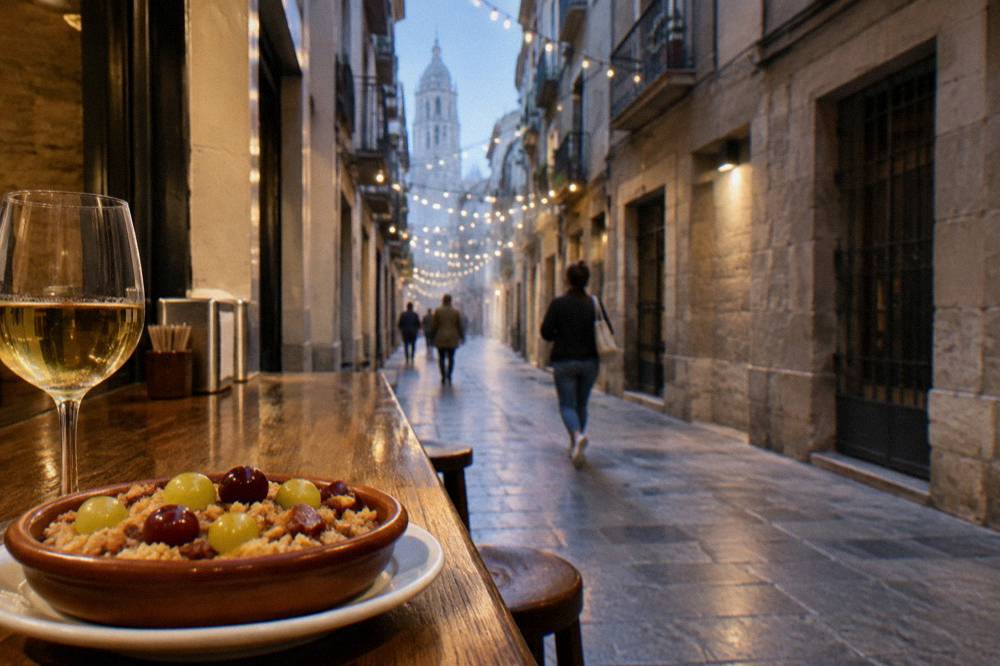
For a first evening in the city, a guided walk that combines the monuments with the food solves two problems at once: you see the Basílica del Pilar, La Seo and the Roman remains, and you eat your way through the traditional dishes with someone who can explain each one.
How Do Aragonese Migas Compare With Other Spanish Migas?
Aragon's migas are coarser and porkier than the southern Spanish versions: Andalusian migas are made from fine, almost sandy crumbs and often served with sardines or fried eggs, Extremaduran migas use a similar fine crumb with garlic and pork, and the Aragonese style keeps the crumbs large and distinct, fries them generously with chorizo or torreznos, and treats the plate as a complete cold-weather meal rather than an accompaniment.
The comparison matters because visitors often arrive in Zaragoza knowing only the southern dish. The Andalusian version, particularly the one from the Almería and Granada countryside, aims for a texture closer to damp couscous, with the bread worked down until it is almost granular. It is frequently paired with fried eggs, sardines, peppers or a fried herring. Extremadura's migas extremeñas sit somewhere between: fine crumbs, plenty of garlic, and pork, often with the same fried egg on top.
Aragon's version is the most rustic of the three. The crumb stays visibly a crumb, the pork is not a garnish but a substantial part of the dish, and the portion is meant to satisfy on its own. The cultural context differs too: in the south migas is often a breakfast or mid-morning dish for agricultural workers, while in Aragon it has settled into the evening and lunch table as a tapa or starter.
| Style | Crumb Size | Typical Additions | Usual Setting |
|---|---|---|---|
| Migas aragonesas | Large, distinct crumbs | Chorizo, torreznos, panceta, grapes | Tapas bars, traditional restaurants, festivals |
| Migas extremeñas | Fine, sandy crumbs | Garlic, pork, fried egg | Restaurant dish, rural tradition |
| Migas andaluzas | Very fine, near-couscous texture | Sardines, fried egg, peppers | Mid-morning or breakfast dish in the countryside |
All three share the same origin: poverty cooking that refused to waste bread. What differs is what each region had to fry it in and eat it with. Aragon, a land of sheep and pig farming, put its cured pork in the pan, and that choice defines the dish you meet in Zaragoza today.
When Is Migas Season In Zaragoza?
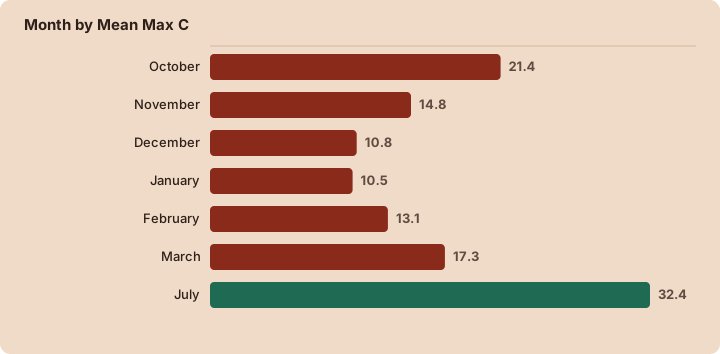
Migas is a cold-months dish in Zaragoza, eaten from roughly late October through early spring, because it is hot, fried, filling food built for shepherds standing outside in winter. The city's climate backs the instinct: AEMET's 1981 to 2010 averages for the Zaragoza Aeropuerto station show January with a mean maximum of 10.5 C and a mean minimum of 2.7 C, with the coldest months running from November through March, exactly the window when migas makes sense on a menu.
The seasonal logic is old but the climate data is modern. The AEMET 1981-2010 normals for the Zaragoza Aeropuerto station give the year a mean of 15.5 C, but that average hides the spread: July carries a mean maximum of 32.4 C, while January's mean minimum sits at 2.7 C and the station records 23.1 frost days a year. Nobody wants a plate of hot fried crumbs in a Zaragoza July. In November, when the mean maximum has fallen to 14.8 C and the evening air off the Ebro has bite, it is exactly the right food.
| Month | Mean Max C | Mean Min C | Migas Weather |
|---|---|---|---|
| October | 21.4 | 11.0 | Festival season, first cool evenings |
| November | 14.8 | 6.3 | Full migas season begins |
| December | 10.8 | 3.2 | Peak season, frost nights begin |
| January | 10.5 | 2.7 | Peak season, coldest month |
| February | 13.1 | 3.3 | Still firmly in season |
| March | 17.3 | 5.8 | Season tapers off |
| July | 32.4 | 18.3 | Off season; order it anyway if listed |
All temperature figures are the 1981-2010 averages for the Zaragoza Aeropuerto station, the only window the station publishes. The broader question of when to visit the city, weather included, has its own page: the best time to visit Zaragoza.
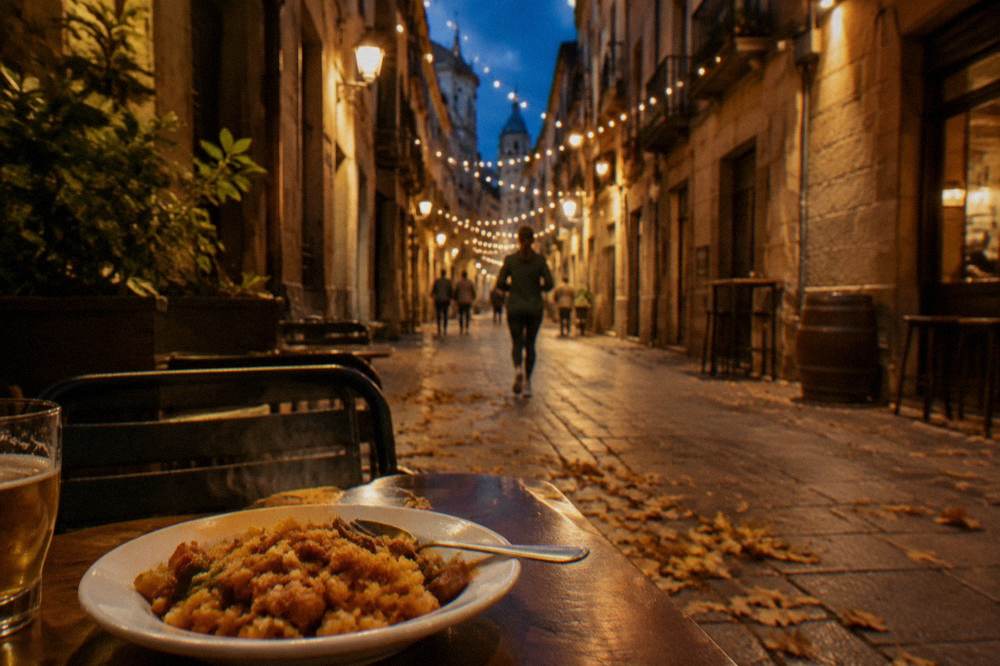
The Fiestas del Pilar, 10 to 18 October 2026, sit right at the hinge of the season. The festival's Ofrenda de Flores on 12 October fills the centre with flowers and crowds, and the street-food stalls that follow the festivities lean towards exactly this kind of hot, substantial food as the October evenings cool. A visitor timing a trip around the festival will find migas without looking for it.
What Do You Drink With Migas Aragonesas?
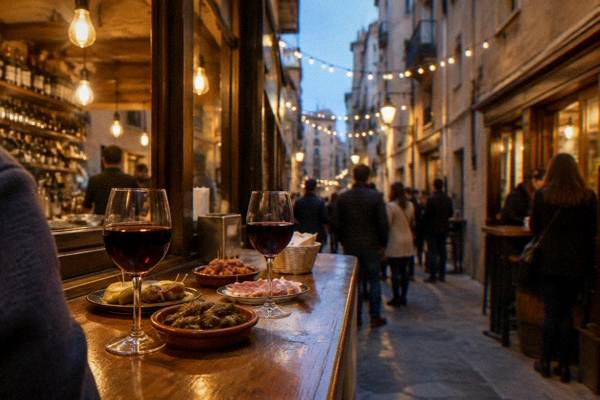
The traditional drinks with migas aragonesas are local red wine from the Carinena region south of Zaragoza, or a young fruity red served slightly cool, and for a softer pairing, water or a light beer, because the dish is already rich with olive oil and cured-pork fat. Sweet red Garnacha from the same region also works, as the fruit lifts the fried crumbs. No specific winery or vintage is the official pairing; the custom is simply local wine with local food.
The logic of the pairing is fat against acid and fruit. A plate of migas is mostly bread and rendered pork fat, and a red with enough acidity cuts through it rather than sitting on top. The Carinena region, which lies within day-trip range of the city and has its own guide on this site, has produced wine since long before the modern appellation system, and its Garnacha-based reds are the historical local match for Aragonese food generally.
Beer is the everyday alternative in tapas bars, where a small glass of draught beer is the default partner for almost any fried tapa. Neither choice is wrong; the bar you are standing in will pour what the people around you are drinking.
| Pairing | Why It Works | When to Choose It |
|---|---|---|
| Young local red, served cool | Acidity cuts the oil and pork fat | Restaurant portions, sit-down meals |
| Garnacha-based red | Fruit lifts the fried crumbs | Traditional Aragonese menus |
| Draught beer, small pour | Refreshing against the richness | Standing at a tapas bar |
| Water | Lets the dish speak for itself | Midday, before a heavier main |
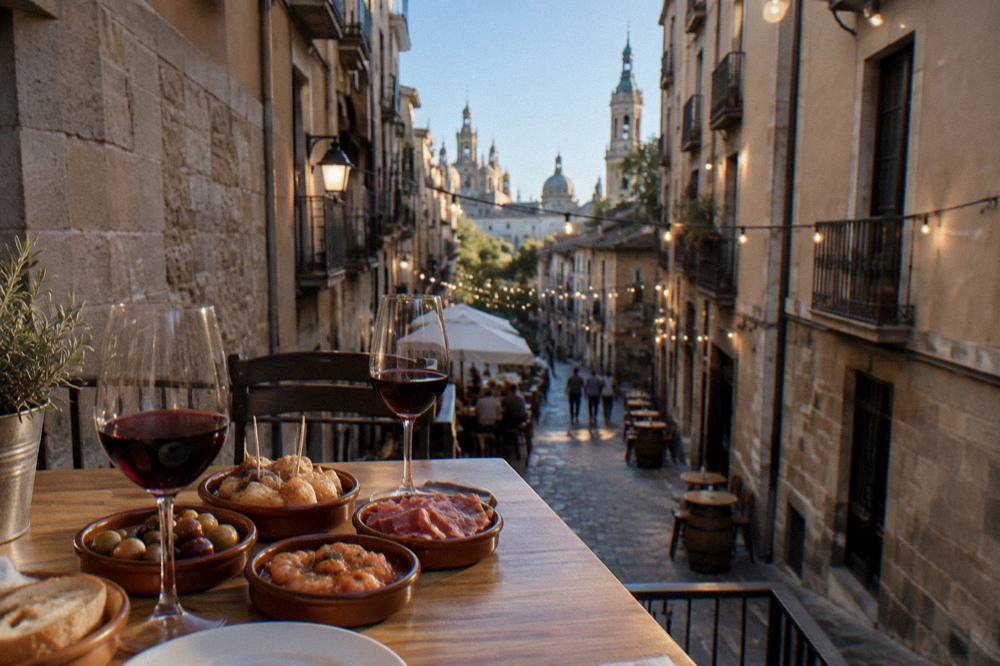
Wine and food together are the subject of several guided experiences in the city. The tapas walk below pairs old-town sights with traditional food, and there are wine-and-tapas options that sit you down for a guided tasting of Aragonese pours with the dishes that go with them.
Can You Learn To Cook Migas Aragonesas In Zaragoza?
Yes, several bookable experiences in Zaragoza teach Aragonese cooking directly, including a midday market tour followed by a Spanish cooking class, which takes you through the Central Market to buy ingredients and then into a kitchen to cook a full Spanish meal, and broader tapas and market walks that explain the dishes as you eat them. A guided cooking class is the most hands-on route, since you make the food rather than just tasting it.
The market-plus-class format suits migas well even though migas itself is simple, because the class covers the whole structure of a Spanish meal, and the market leg shows you what the raw materials look like before they become Aragonese food. The Central Market, which has its own dedicated page, is the city's main food market and the usual starting point for these experiences.
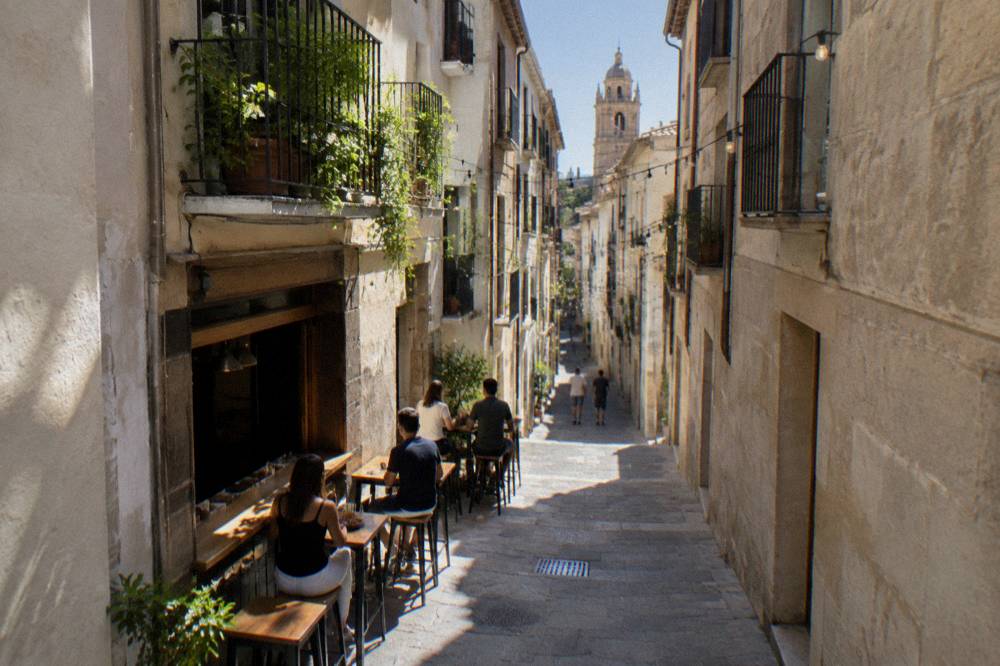
For visitors who would rather eat than cook, the guided tapas walks cover the same ground from the eating side. A guide who knows the old town can explain what is on the plate, where the tradition comes from, and which other Aragonese dishes to try next, which is more context than a menu will ever give you.
How Does Migas Fit Into A Day Of Eating In Zaragoza?
A classic eating day in Zaragoza runs from morning churros or toast with tomato, through a full Aragonese lunch with migas as a starter and ternasco de Aragon lamb as a main, an afternoon snack of coffee or a local sweet, and an evening tapas crawl through the old town bars where migas reappears alongside croquetas and cured meats. Migas slots in at lunch and at the tapas stage, and it is heavy enough that it rarely appears at breakfast.
The Spanish meal rhythm is generous, and Zaragoza follows it. Lunch is the big meal, eaten late, often from two in the afternoon onwards. Migas works as the first course of that meal: hot, savoury, substantial, but a starter's portion. The evening is for tapas, moving from bar to bar, and migas appears there in smaller portions, one cazuela between glasses of wine.
| Time of Day | Typical Food | Where Migas Fits |
|---|---|---|
| Morning | Churros, coffee, toast with tomato | Rarely served |
| Midday market walk | Olives, cheese, cured meat samples | Occasional bar tasting |
| Lunch, from mid-afternoon | Migas starter, ternasco main | First course |
| Merienda, late afternoon | Coffee, pastries, sweets | Not served |
| Evening tapas crawl | Migas, croquetas, cured meats, wine | One stop among several |
Planning a full eating itinerary through the city is easier with help. The site's three-day itinerary builds meals into each day, and the food guide covers the whole range of Aragonese dishes beyond migas: the lamb, the river fish, the sweets and the pastries that fill the bakery windows around the Paseo de la Independencia.
Is Migas Aragonesas The Same Dish Everywhere In Aragon?
Broadly yes, the same core dish of moistened breadcrumbs fried with garlic and cured pork runs through Aragon, but the details shift from north to south: mountain versions lean harder on the local cured pork and sometimes add longaniza sausage, southern versions around the Carinena wine country pair the crumbs with the local red wine, and city versions in Zaragoza tend to be lighter and served as tapas, while rural versions still arrive as a full plate for workers in the fields.
The geography explains the variations. Aragon runs from the high Pyrenees in the north, through the Ebro valley where Zaragoza sits, to the Iberian mountain ranges in the south. In the northern mountains the pigs and the sausages differ, so the pan tastes different. In the wine country south of the city, the dish travels with the vintage: it is the food of the grape harvest, eaten outdoors in October when the grapes come in, which is also the season of the Fiestas del Pilar in the capital.
The city version is the one most visitors meet, and it has adapted to the tapas format: smaller, more refined, often finished with a grape or a sliver of the best cured meat on top. The rural version is bigger, coarser and less apologetic about its origins as fuel for physical work. Both are the same dish in the way that a language is the same language across its dialects.
What Should You Know Before Ordering Migas In Zaragoza?
Order migas knowing three things: it is a sharing dish in most tapas bars, so one ración feeds two people comfortably; it is made from bread and pork fat, so it is not a light option and vegetarians should ask for a version made only with oil and garlic, which some kitchens will do; and it is at its best in the cold months from late October to early spring, so a summer menu listing it may be serving the tourist version rather than the seasonal one.
The vegetarian question is worth asking directly rather than assuming. The core technique, crumbs fried in olive oil with garlic, contains no meat, and some kitchens will happily make it that way. Others pre-fry everything together with the chorizo, so ask before ordering.
Portion size catches out first-time visitors. A ración of migas is dense and filling, and after a shared plate of it a full lamb main is ambitious. Order it as a tapa first, see what it does to your appetite, and scale up from there.
Common Questions About Migas Aragonesas
What is migas aragonesas?
Migas aragonesas is a traditional Aragonese dish of stale bread torn into crumbs, moistened overnight, then fried slowly in olive oil with garlic and cured pork such as chorizo or torreznos. It began as shepherd's food, a way to use up hard bread, and it is now a standard tapa and starter in Zaragoza.
What do you eat with migas aragonesas?
Grapes are the classic side, their sweetness cutting the fried richness. Cured meats are usually cooked into the dish itself. A local red wine, ideally from the Carinena region, or a small draught beer, is the usual drink alongside.
When is migas eaten in Zaragoza?
Mainly in the cold months, from late October through early spring. The AEMET 1981-2010 averages for the Zaragoza Aeropuerto station show the coldest stretch running from November to March, which is exactly when the dish dominates menus. Plenty of old-town bars serve it year-round for visitors who ask.
Can vegetarians eat migas aragonesas?
Sometimes. The base dish is only bread, water, salt, olive oil and garlic, so a kitchen can make it without pork. Some kitchens fry everything together with the chorizo, so ask before ordering rather than assuming.
Is migas aragonesas the same as migas in southern Spain?
No. Aragon's version keeps the crumbs large and distinct and fries them generously with cured pork, while Andalusian and Extremaduran versions use finer, sandier crumbs and often pair them with fried eggs or sardines. All three share the same origin as a way of using up stale bread.
Where can you try migas aragonesas in Zaragoza?
In the tapas bars of the old town, in traditional Aragonese restaurants as a first course, and at festival food stalls during the Fiestas del Pilar in October. A guided tapas walk is the most reliable way to find it on a first visit, since the guide knows which kitchens serve the traditional version.
Migas aragonesas rewards the visitor who treats it as the city does: honest food, eaten hot, in the cold half of the year, with a glass of local red and no ceremony. Whether you meet it as a tapa on a guided walk through the old town or as the first course of a long Aragonese lunch, it tells you more about how this city eats than any fancier dish on the same menu. For the wider story of eating in Zaragoza, from lamb to river fish to the sweets in the bakery windows, carry on with the Zaragoza food guide, and for the rest of what the city offers, start with Zaragoza Travel Guide.