Zaragoza Accessibility: Getting Around Aragon's Capital With Limited Mobility
Zaragoza, the capital of Aragon on the Ebro, is a compact, largely flat inland city whose monumental centre sits within easy reach of trams, buses and the Delicias train station. This guide sets out transport fares, monument visiting conditions and planning points for an accessible trip.
Short answer
Zaragoza's historic core is compact and mostly flat, the tram and bus network charges a flat 1.70 EUR single, and the main monuments cluster around Plaza del Pilar within a short walk of one another. Check specific ramp and lift details with each monument before you go.
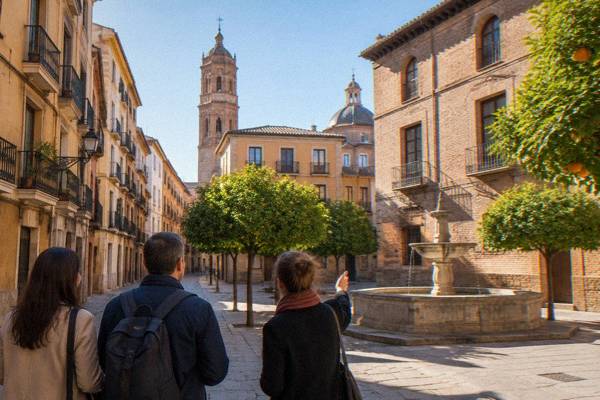
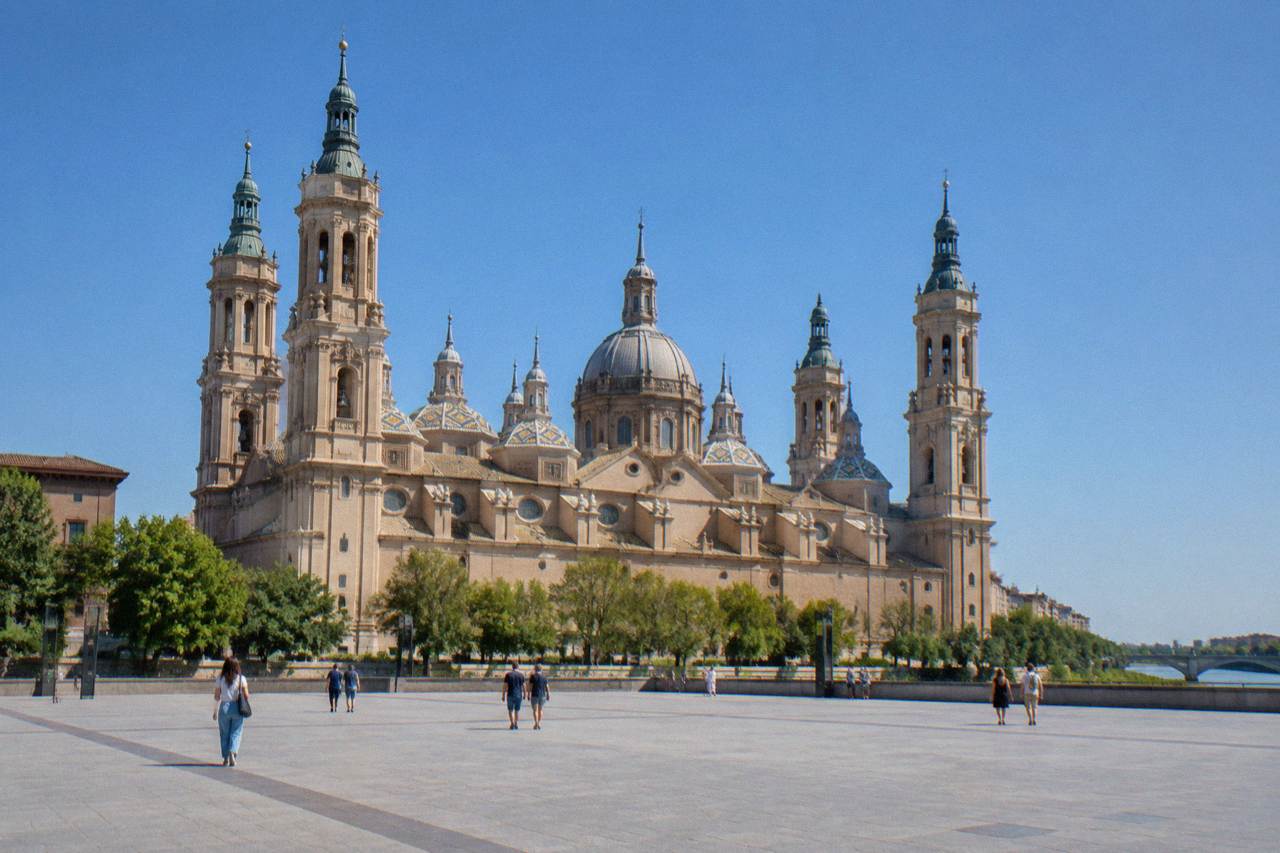
Zaragoza, the capital of Aragon on the Ebro in north-eastern Spain, is one of the country's easier large cities to visit at a slower pace. The monumental centre is compact, the ground between the Basílica del Pilar, La Seo and the Aljafería is mostly flat river-plain terrain, and the tram line that links the train station to the old town runs on a single, simple route.
Is Zaragoza An Accessible City For Visitors With Limited Mobility?
Zaragoza is a compact, largely flat inland city whose main monuments sit close together on the Ebro plain, which makes it a realistic destination for slow walkers and wheelchair users who plan ahead. The old town's squares and riverside are walkable in short stages, the tram connects the Delicias station with the centre on one line, and the city publishes an October monument timetable that lets visitors check hours and prices before setting out. Specific ramp, lift and step details at each building should be confirmed with the monument itself.
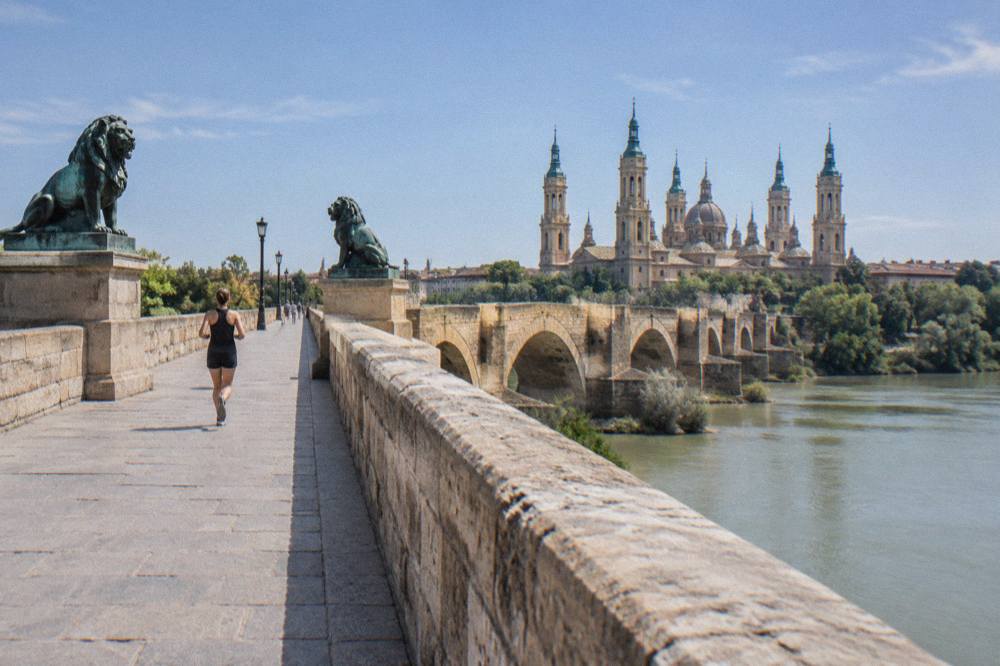
The single biggest advantage is geography. Zaragoza sits on flat river plain, and the distance between the three headline sights, the Basílica del Pilar, La Seo and the Roman Caesaraugusta museums, is a matter of a few minutes at an unhurried pace rather than a hike. The riverside path along the Ebro, past the Puente de Piedra, is level promenade walking with the bridge's four bronze lions as a turning point.
The second advantage is density of free and cheap entry. Entering the Basílica del Pilar is free, the IAACC Pablo Serrano is free, the Centro de Historias is free and the Torreón de la Zuda is free, so a visitor pacing a day around rest stops is not paying for monuments they may only manage briefly. The Zaragoza Travel Guide pages on individual monuments carry each building's verified hours and prices.
How Accessible Is Public Transport In Zaragoza?
The urban bus and tram charge a flat 1.70 EUR single, dropping to 0.55 EUR with a 7 EUR Tarjeta Bus that works on both, and the tram's single line links the Delicias station to the centre, which keeps journeys simple. The tourist bus costs 10 EUR for 24 hours of hop-on hop-off across 16 stops on a 90-minute loop, though it takes cash only on board. Night buses charge 1.00 EUR a single.
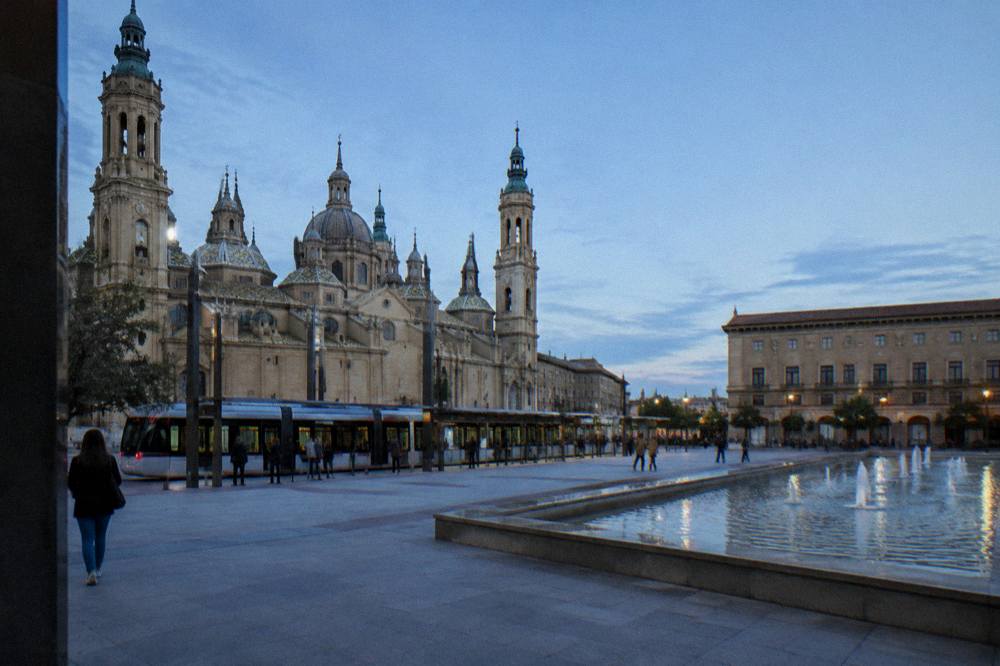
The tram is the backbone of an accessible visit. One line runs through the city, so there is no network map to decode: a visitor arriving at Zaragoza-Delicias boards one tram and rides it toward the old town. The Avanza fare table for 2026 lists the single at 1.70 EUR and the Tarjeta Bus fare at 0.55 EUR, with the card itself at 7 EUR and valid on both bus and tram.
| Ticket | Price | Notes |
|---|---|---|
| Bus or tram single | 1.70 EUR | Flat fare, no transfer |
| Night line single | 1.00 EUR | Night network |
| Tarjeta Bus fare | 0.55 EUR | Card costs 7 EUR, valid bus and tram |
| Tourist bus, 24 h | 10 EUR | 16 stops, 90-minute loop, cash only on board |
| Bizi day pass | 1 EUR + 0.50 EUR per first 30 min | 50 EUR card deposit held |
The Bizi bike share is listed for completeness rather than recommendation: the 2026 tariffs are a 1 EUR day pass plus 0.50 EUR for the first 30 minutes of each trip, with a 50 EUR card deposit held on day, monthly and single passes. For most visitors with mobility considerations the tram and bus are the practical options, and the flat fare means there is no zone system to worry about.
One driving-related point matters for visitors bringing a car. Zaragoza's Casco Histórico has a low-emission zone with sanctions active since 12 December 2025, Monday to Friday from 08:00 to 20:00, and a DGT environmental label is required, with a 15-minute grace period if the zone is entered by mistake. Anyone relying on a vehicle for mobility should confirm their label situation before driving into the centre, and the car rental and parking guide covers the wider parking picture.
Which Zaragoza Monuments Are Easiest To Visit At A Relaxed Pace?
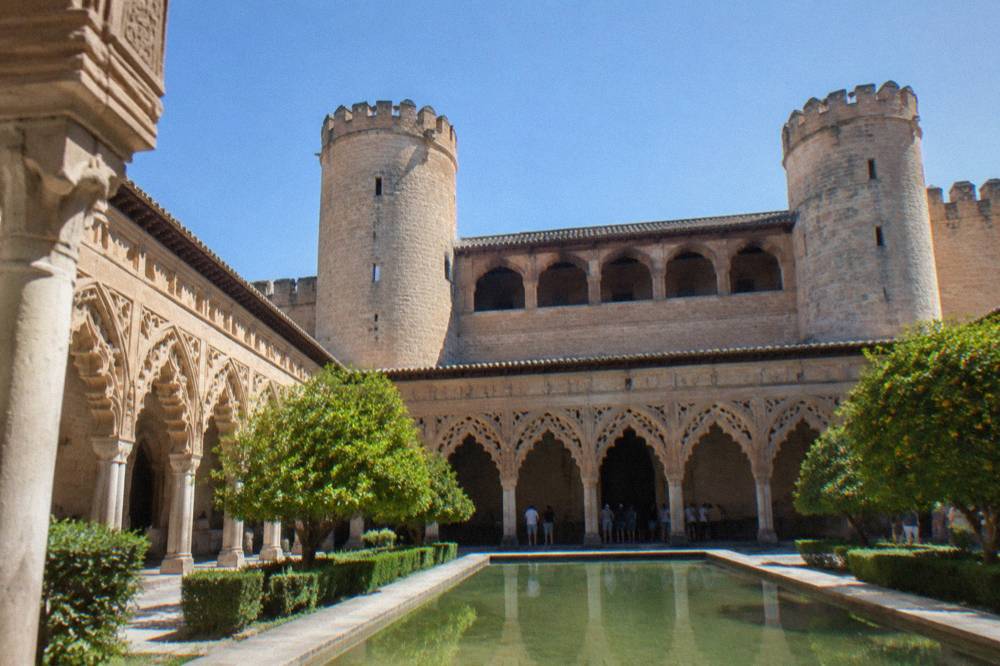
The Basílica del Pilar is free to enter and keeps long hours, with its main altar zone open Monday to Saturday from 7:30 to 13:30 and from 16:30 to 20:15, the Aljafería opens daily at 10:00 and charges 7 EUR general or 9 EUR with a guided visit, and La Seo charges 10 EUR including the Museo de Tapices. All three publish their October hours on the municipal monument timetable.
The Pilar is the natural anchor for a paced day. Entry to the temple costs nothing, so a visitor can enter, rest, and step out again without any sense of wasting a ticket. The tower viewpoint, the Torre Mirador, charges 6 EUR for an adult, with reduced rates for over-65s, residents, students and groups, and free entry under 12, but the climb to the viewpoint is a physical undertaking that the ticket prices alone do not describe; anyone with mobility constraints should treat the tower as optional and enjoy the basilica floor instead. La Seo also offers free entry for Aragon residents on the 6th, 12th, 23rd and 27th of the month.
| Monument | General price | Hours (October timetable) |
|---|---|---|
| Basílica del Pilar, temple | Free entry | Main altar zone Mon-Sat 7:30-13:30 / 16:30-20:15, Sun until 21:30 |
| Pilar tower viewpoint | 6 EUR adult | Mon-Thu 10:30-14:30 / 16:00-20:00, Fri-Sun 10:00-20:00 |
| La Seo + Museo de Tapices | 10 EUR | Mon-Sat 10:00-14:30 / 16:00-20:00, Sun from 16:00 |
| Aljafería | 7 EUR, guided 9 EUR | Daily 10:00-18:00 |
| Caesaraugusta museums | Foro 4 EUR, others 3 EUR, bono 7 EUR | Tue-Sat 10:00-14:00 / 17:00-21:00 |
| IAACC Pablo Serrano | Free | Tue-Sat 10-14 / 17-21, Sun 10-14 |
The Aljafería deserves a note on planning. Its last access is 45 minutes before closing, and its free days, the first and third Sunday and Monday of each month, are also its busiest, so a visitor who tires in crowds may prefer a paid weekday morning. The Caesaraugusta museums offer a four-museum bono at 7 EUR, or 5 EUR reduced, but splitting Roman sites across a single day is a lot of standing; the Roman Caesaraugusta guide helps pick one or two rather than all four.
A guided visit can carry the pacing decisions for you. The Historical Tour of the Old District with a Guide runs 2.5 hours at from $106.92 per person and is rated 5 from 14 reviews on its listing, and a private version of the same idea, the Private Custom Walking Tour with a Local Guide, runs 2 to 8 hours from $50.65 per person, rated 5 from 86 reviews, which lets a slower party set its own speed and rest stops. Check availability
Where Are The Flattest Walks In Zaragoza?
The flattest walking in Zaragoza is the Ebro riverside promenade around the Puente de Piedra and the stretch of Plaza del Pilar between the basilica and La Seo, all on level ground in the heart of the city, with the Parque del Agua Luis Buñuel offering more than 120 hectares of green space in the Ranillas meander that includes running circuits of 5 and 10 km on flat riverside land. None of these require a ticket.
The riverside is the city's natural easy walk. The Puente de Piedra itself, the current bridge begun in 1401 and opened in 1440 on the line of a Roman-era crossing, carries its four bronze lions at the western end, and the level promenade on either bank turns a short bridge crossing into a complete low-effort circuit. The Ebro river walk guide lays out the route in full.
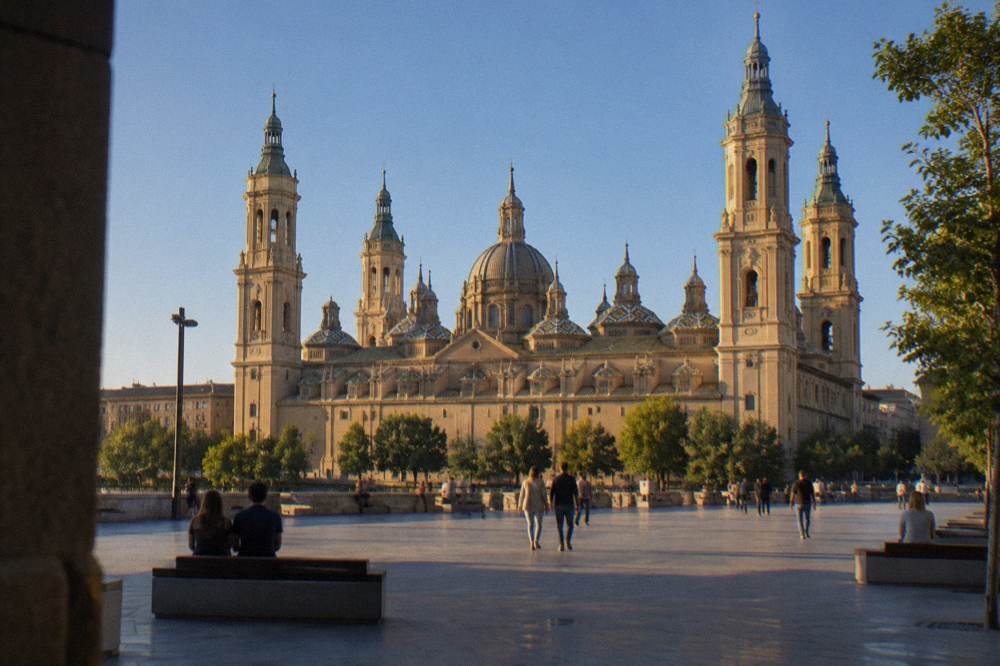
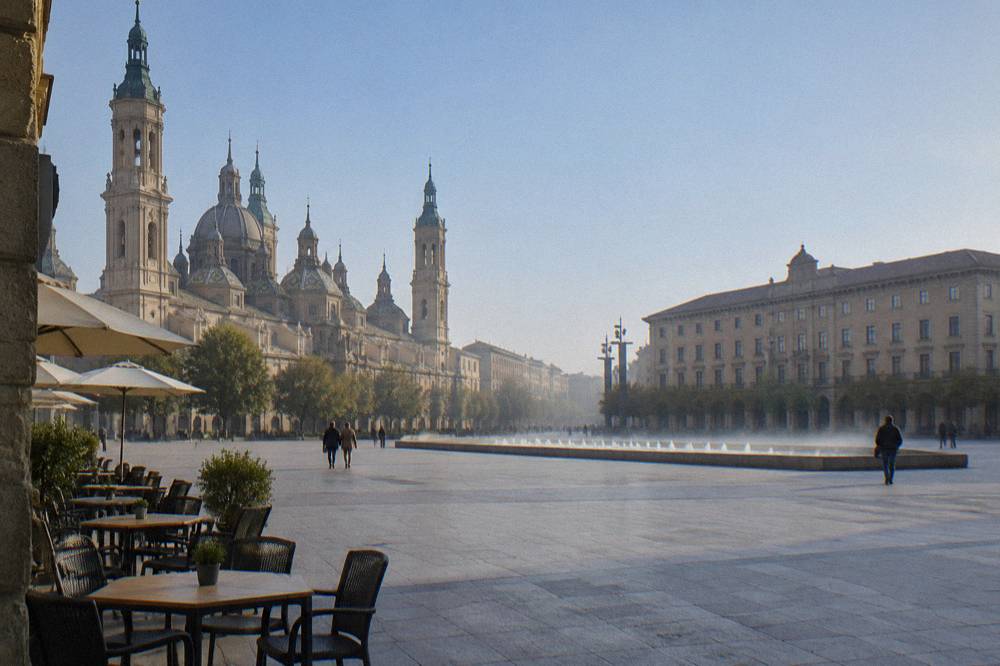
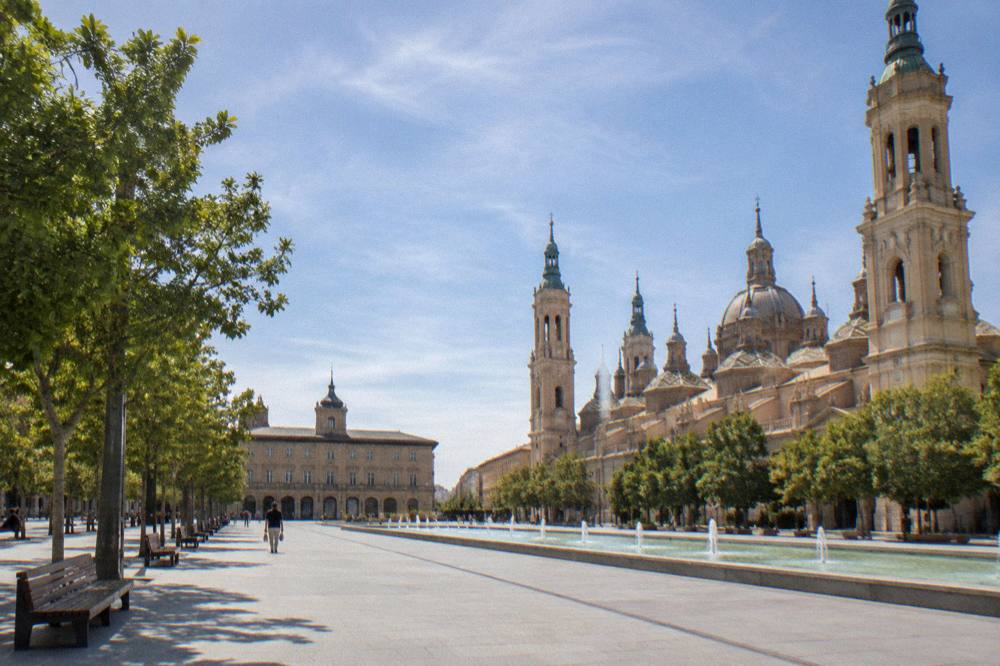
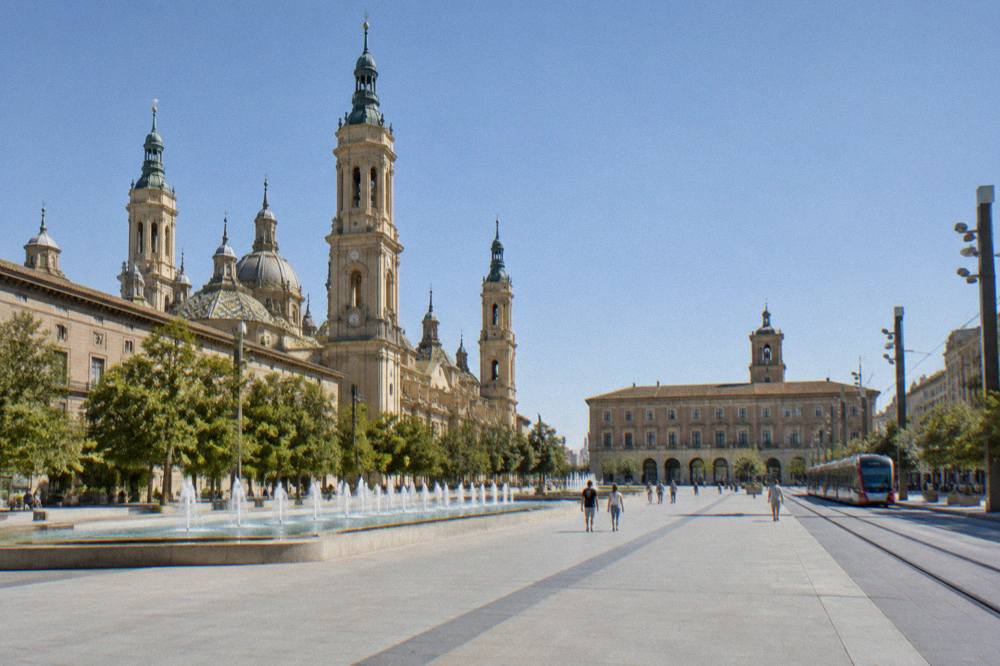
Plaza del Pilar works as a resting base rather than a walk. It is one of the largest open squares in Spain, which means plenty of benches, open paving and sightlines to the basilica, La Seo, the Lonja and the tourist landmarks all at once. A visitor who wants to see a lot while walking little can base here, make short out-and-back visits, and still cover the old town's essential sights.
The Parque del Agua, in the Ranillas meander beside the Expo 2008 site, is the largest flat green option. The city's own page describes it as the first European green space to hold the Green Globe certification, with two marked running circuits of 5 and 10 km; a slower visitor does not need the full circuit, just the level riverside paths and shade. The Parque del Agua guide covers how to get there by tram.
What Should Wheelchair Users Know Before Visiting Zaragoza?
Zaragoza's flat terrain, single tram line and free basilica entry make the city workable for wheelchair users, but the verified public sources do not publish ramp, lift or step-free inventories for individual monuments, so each building's own staff are the authority to ask before a visit. The municipal monument timetable lists hours and prices but not physical access details, and tour listings do not describe wheelchair provisions, so confirm directly with the operator or monument before booking.
This is an honest gap rather than a hidden problem. What the sources do establish: the old town's paving is largely stone-flagged square and riverside promenade rather than steep medieval lanes, the Pilar's temple floor is at plaza level, and the tram's one-line design means a wheelchair user boards the same vehicle at Delicias that serves the centre. What they do not establish: whether every museum lift is working on a given day, which Aljafería rooms are step-free, or the exact gradient of any particular street.
Practical steps follow from that. Contact the basilica, La Seo and the Aljafería through their own published contact channels and ask about the specific visit planned. For guided tours, ask the operator before booking whether the pace, stops and surfaces suit the party; the free monumental tour of Zaragoza, tip-based and rated 4.65 from 64 reviews on its listing, is a low-commitment way to test the old town's surfaces, since a tip-based walk carries no sunk ticket if the route proves too much.
Can You Take A Guided Tour In Zaragoza At Your Own Pace?
Yes, and the private options fit best: the Private Custom Walking Tour with a Local Guide runs 2 to 8 hours from $50.65 per person, rated 5 from 86 reviews, and the Private Walking Tour with a Local runs 2 to 6 hours from $54.02, rated 4.7 from 86 reviews, both letting the party set the route, speed and rest stops. Group walks start from $10.41 for a 105-minute introduction rated 4.4 from 36 reviews.
A private walk is not a luxury on this route, it is the accessibility decision. A custom private tour means the guide adapts to the visitor rather than the reverse: shorter distance, longer café stops, a taxi between the Aljafería and the Pilar if the party prefers, and no pressure to keep up with a group.
| Tour | Length | From (per person) | Rating on listing |
|---|---|---|---|
| Private Custom Walking Tour with a Local Guide | 2-8 h | $50.65 | 5 from 86 reviews |
| Private Walking Tour with a Local | 2-6 h | $54.02 | 4.7 from 86 reviews |
| Monumental Sightseeing Tour intro | 105 min | $10.41 | 4.4 from 36 reviews |
| Historical Tour of the Old District | 2.5 h | $106.92 | 5 from 14 reviews |
| Free Monumental Tour | tip-based | free | 4.65 from 64 reviews |
For a first day, the 105-minute monumental introduction is a sensible low-risk opener: it is short, cheap and covers the headline sights, after which a visitor knows which areas deserve a slower second pass. The Zaragoza tours overview compares the full set of guided options, including the self-guided scavenger hunt at $5.73 and the app-guided Roman walls walk at $7.99, both of which let a visitor progress entirely at their own pace.
When Is The Best Time Of Year For Easy Walking In Zaragoza?
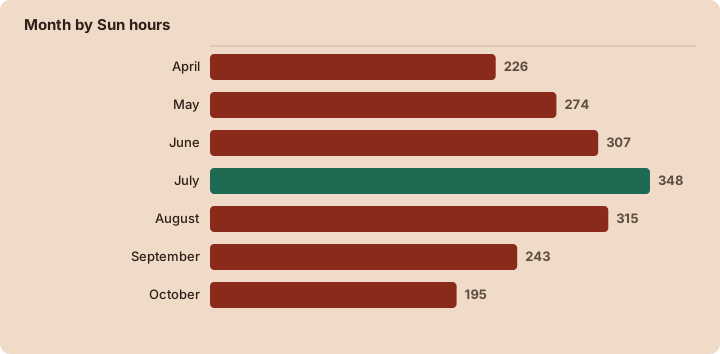
AEMET's 1981-2010 normals for the Zaragoza Aeropuerto station show the mildest walking months are April, May and October, with mean maximums of 19.6, 24.1 and 21.4 C respectively, while July and August average 32.4 and 31.7 C, making midsummer the hardest season for anyone who tires in heat. May is the wettest month at 44 mm and July and August the driest at 17 mm, and the year averages just 322 mm of rain over 51.1 days of 1 mm or more.
The heat point matters more in Zaragoza than in coastal Spanish cities, because this is a dry continental inland climate with no sea breeze to relieve an August afternoon. The same normals show July as the sunniest month at 348 hours, which is a pleasure on a shaded bench and an obstacle on a long unshaded stretch. For a slow-walking itinerary, the shoulder months give comfortable midday temperatures and enough daylight to split the day into short outings.
| Month | Mean max C | Mean min C | Rain mm | Sun hours |
|---|---|---|---|---|
| April | 19.6 | 7.9 | 39 | 226 |
| May | 24.1 | 11.8 | 44 | 274 |
| June | 29.3 | 15.8 | 26 | 307 |
| July | 32.4 | 18.3 | 17 | 348 |
| August | 31.7 | 18.3 | 17 | 315 |
| September | 27.1 | 15.2 | 30 | 243 |
| October | 21.4 | 11.0 | 36 | 195 |
Figures are 1981-2010 averages for the Zaragoza Aeropuerto station, the only window the station page publishes. The best time to visit guide and the Zaragoza weather guide work through the full year, including the cold, dry north-westerly cierzo wind that the region monitors qualitatively and that can make a winter riverside walk feel sharper than the thermometer suggests.
One event timing note cuts the other way. The Fiestas del Pilar run from 10 to 18 October, with the Ofrenda de Flores on 12 October, and the city's own page records 994 registered groups for the flower offering. That is a spectacular sight and a dense crowd; a visitor who struggles in packed streets should either plan around the peak days or plan for them deliberately, as the Fiestas del Pilar guide explains.
Where Should You Stay In Zaragoza To Minimise Walking?
The area around Paseo de la Independencia and Plaza del Pilar puts the basilica, La Seo and the old town within a few minutes' flat walk of the door, and the Centro district around the Paseo sits on the tram line, so a hotel there removes both long walks and complicated transit. The Delicias district around the station suits rail arrivals who want to avoid a transfer altogether.
Location does more accessibility work in Zaragoza than any other single decision. The distance from a Centro hotel to the Pilar is short enough that a slow walker can return to the room to rest at midday and go back out in the evening, which turns one hard day into two easy ones. The where to stay guide breaks the districts down, and the best hotels guide covers specific properties; the budget stays guide does the same for cheaper end.
Getting there follows the same logic. High-speed trains from Madrid and Barcelona take about 1.5 to 2 hours to Zaragoza-Delicias, and the station connects to the centre by the single tram line, so the transfer is one vehicle rather than a navigation exercise. The Delicias station guide, the Madrid to Zaragoza and Barcelona to Zaragoza pages cover the rail options, and the getting around guide covers the tram and bus network in full.
Which Day Trips From Zaragoza Suit A Slower Pace?
The guided day trips that start from Zaragoza are coach-based, which removes the driving and navigation burden: the excursion to Canfranc, Jaca and Sallent de Gállego runs 11 hours from $66.40 per person rated 4.7 from 10 reviews, and the Ordesa day tour to Aínsa, Torla and the Sorrosal waterfall runs 11 hours from $66.40 rated 5 from 3 reviews. Both are long days with mountain walking at the destinations, so they suit visitors who can manage uneven ground at stops.
Honesty matters here more than optimism. The Pyrenees excursions deliver spectacular scenery and a comfortable coach ride, but the destinations are mountain villages and viewpoints, and the itineraries involve standing and uneven pavement at each stop. The Pyrenees day trip page and the Canfranc station guide describe what the day actually holds.
Closer to town, the olive oil tours that visit Belchite's old town run 5 hours from $106.92 per person, rated 5 from 35 reviews on one listing. Belchite is a preserved Civil War ruin, and the visit is a sober walk through damaged streets rather than a conventional sightseeing stop; the Belchite guide explains the history respectfully. For a slower alternative that stays in the city, the one day itinerary can be split across two days using the rest-based planning above.
How Do You Plan An Accessible Trip To Zaragoza Step By Step?
Plan the trip around four anchors: book accommodation in the Centro district on the tram line, use the 7 EUR Tarjeta Bus to cut every tram and bus ride to 0.55 EUR, split the monuments across short sessions using the free basilica and the free-entry days at the Caesaraugusta museums and Aljafería, and confirm ramp and lift details directly with each monument and tour operator before booking, because the published timetables list hours and prices but not physical access inventories.
The free-entry rhythm is worth building a week around. The Caesaraugusta museums are free on the first Sunday of the month, the Museo del Fuego y los Bomberos on the first Sunday, the Aljafería on the first and third Sunday and Monday, and the Museo del Origami on the first Tuesday and Sunday. A visitor staying several days can place paid visits on quiet weekdays and free days where they fall, and the free things to do guide collects the full list.
| Planning step | What to do | Where the fact comes from |
|---|---|---|
| Transport | Buy a 7 EUR Tarjeta Bus, pay 0.55 EUR a ride | Avanza 2026 fare table |
| Base | Stay in Centro near Paseo de la Independencia | Where to stay guide |
| Monuments | Free days: Caesaraugusta 1st Sunday, Aljafería 1st and 3rd Sunday and Monday | Municipal monument timetable |
| Museums | Visit Caesaraugusta sites, IAACC Pablo Serrano, Centro de Historias; the Museo de Zaragoza is closed | Museum closure notice |
| Tours | Ask the operator about pace and surfaces before booking | Tour listings |
| Emergency | 112 is the EU emergency number | EU standard |
Budget the trip with the cost and budget guide, which prices a Zaragoza visit against the figures verified here, from the 1.70 EUR tram single to the 10 EUR tourist bus. And for the wider framing of the city before committing, the travel planning guide and the where is Zaragoza guide set out the geography: an inland capital on the Ebro, in Aragon, not Catalonia and not the Basque Country, about 1.5 to 2 hours by high-speed train from both Madrid and Barcelona.
Common Questions About Zaragoza Accessibility
Is Zaragoza accessible for wheelchair users?
Zaragoza's flat terrain, single tram line and free basilica entry make it workable, but no verified public source publishes a ramp or lift inventory for each monument, so confirm physical access details directly with each building before visiting.
How much does public transport cost in Zaragoza?
The 2026 Avanza fare table lists a flat 1.70 EUR single on bus and tram, 1.00 EUR on night lines, and 0.55 EUR with a Tarjeta Bus that costs 7 EUR and works on both networks.
Is the Basílica del Pilar free to enter?
Yes, entering the temple is free. The tower viewpoint charges 6 EUR for an adult, with reduced rates for over-65s, residents, students and groups, and free entry for children under 12.
Which museums in Zaragoza are free?
The IAACC Pablo Serrano, the Torreón de la Zuda and the Centro de Historias are free, and the Caesaraugusta museums, the Museo del Fuego y los Bomberos and the Museo del Origami have free days, while the Museo de Zaragoza's central building is closed for works with no reopening date.
Can you take a private guided tour in Zaragoza?
Yes. The Private Custom Walking Tour with a Local Guide runs 2 to 8 hours from $50.65 per person, rated 5 from 86 reviews on its listing, and lets the party set its own pace, route and rest stops.
When is the best time to visit Zaragoza for easy walking?
AEMET's 1981-2010 normals for the Zaragoza Aeropuerto station show April, May and October as the mildest walking months, with mean maximums of 19.6, 24.1 and 21.4 C, while July and August average 32.4 and 31.7 C.
Zaragoza rewards the visitor who plans around its flat centre, its one-line tram and its free basilica, and asks only one thing in return: a quick check with each monument and operator before the day begins.