Luggage Storage And ESIM In Zaragoza
Zaragoza, the capital of Aragon on the Ebro, is a compact walking city, and the single best upgrade to any day there is travelling light. This guide sets out what is verified about luggage storage and mobile data, and pairs it with the fares, hours and weather figures that shape a hands-free day.
Short answer
Zaragoza has no verified municipal luggage-locker network. Options are station-based and third-party storage services, hotel desks and the willingness of individual venues, and prices sit on each operator's live listing. For mobile data, Spain is in the EU, so EU roaming applies, and eSIM plans from the major providers cover Zaragoza; plan details and prices sit on each operator's listing.
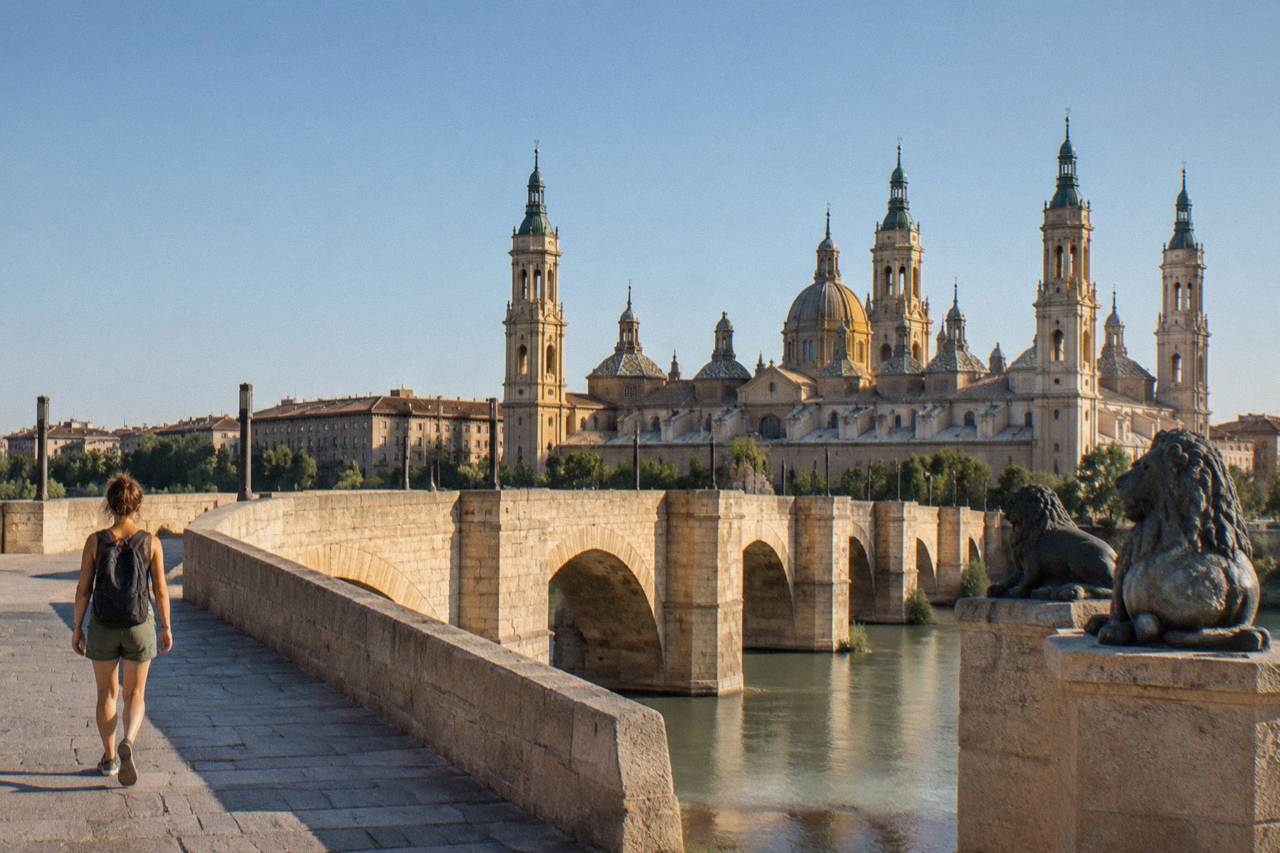
Zaragoza, the capital of Aragon in north-eastern Spain, rewards travellers who move on foot: the Basílica del Pilar, La Seo, the Aljafería and the Roman museums of Caesaraugusta all sit within an easy walk of one another along the Ebro. None of that is pleasant with a rolling suitcase on the cobblestones of the Casco Histórico, and the low-emission zone that now covers the old town makes driving in to drop bags a worse idea than it used to be. This guide covers what is actually verified about storing luggage in the city, how mobile data and eSIMs work for visitors, and the fares, opening hours and weather numbers that turn a stowed bag into a full day of sightseeing.
Where Can You Store Luggage In Zaragoza?
Zaragoza has no municipal locker network that any official source publishes, so the realistic options are three: a staffed storage service booked through an operator's live listing, the front desk of your own hotel before or after check-out, and the goodwill of individual venues for small items. No storage price for the city is verified on an official page, so treat any figure as what the listing says on the day you book.
The first option is the one most visitors now use. Third-party luggage storage services operate across Spanish cities, and the ones covering Zaragoza work through booked slots rather than walk-in coin lockers: you reserve a time window online, drop the bag at a partner shop or desk, and collect it later with a booking reference. The price appears only on the operator's live listing, and it varies by bag size and by how long you keep it. Check the listing's cancellation terms before booking, because the flexible ones let you rebook if your train times shift.
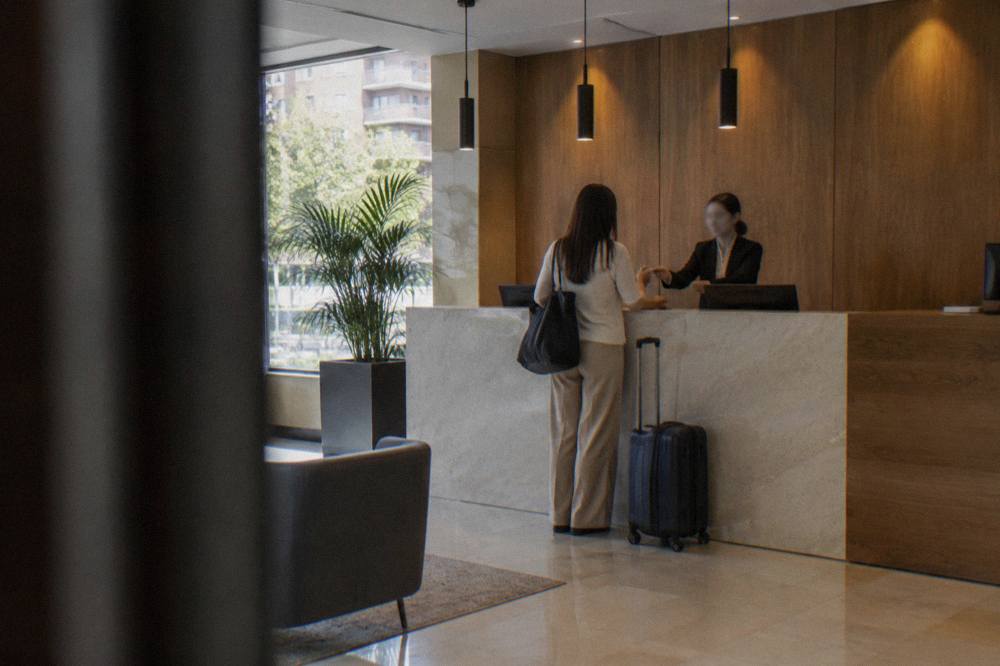
The second option costs nothing and is often overlooked. Hotels in Zaragoza, like hotels everywhere in Spain, will normally hold bags on the final day after check-out, and most will also hold them on arrival before check-in. If your plan is a morning arrival into Zaragoza-Delicias, a fast high-speed connection from Madrid or Barcelona takes about 1.5 to 2 hours, so an early start is realistic and a hotel desk is the cheapest storage in the city. The trade-off is geography: you carry the bags to the hotel first, then return for them.
The third option is venue-by-venue goodwill. The large museums and monuments do not publish locker policies on their official pages, so assume nothing. A small day bag is always fine; a full suitcase at the Aljafería's security screening is a different matter. If in doubt, travel with the bag stowed elsewhere and only a day pack on your shoulder.
Does Zaragoza-Delicias Station Have Left Luggage?
Zaragoza-Delicias is the city's only high-speed rail station and its main interchange, so it is the natural place to want a locker, but no official page publishes a left-luggage facility or locker price for the station. What is verified is the station's role: AVE and equivalent services connect it to Madrid and Barcelona in about 1.5 to 2 hours, and the urban bus and tram network meets it. Treat any locker claim as unconfirmed and check at the station or on an operator's listing.
The station's importance is not in doubt. Zaragoza-Delicias handles the high-speed services that make the city a realistic day trip or short break from both of Spain's two biggest cities, and the guides on getting to Zaragoza and the Madrid to Zaragoza route cover those connections in detail. The Barcelona direction is covered on the Barcelona to Zaragoza page. The gap in all of it is the last thing a day tripper wants to know: where the bags go.
The honest position is this. If a locker facility exists at Delicias, no official source publishes its price, size or hours, and a sentence asserting one would be a guess dressed as a fact. The practical move for a day trip from Madrid or Barcelona is to travel with a day pack only, or to book a staffed storage service near the station or the centre in advance through the operator's listing, timed to your arrival and departure windows. Booked storage has one advantage over a locker anyway: a human being can usually flex an hour either side if your train is late.
Once the bags are handled, Delicias connects to the centre on the urban network. The 2026 Avanza fare table lists the bus and tram single at 1.70 EUR, or 0.55 EUR with the Tarjeta Bus, and the card itself costs 7 EUR and works on both bus and tram. That fare table is the verified backbone of every getting-around decision in this guide, and the guide to getting around Zaragoza builds on it.
Is There Luggage Storage Near The Basílica Del Pilar And The Old Town?
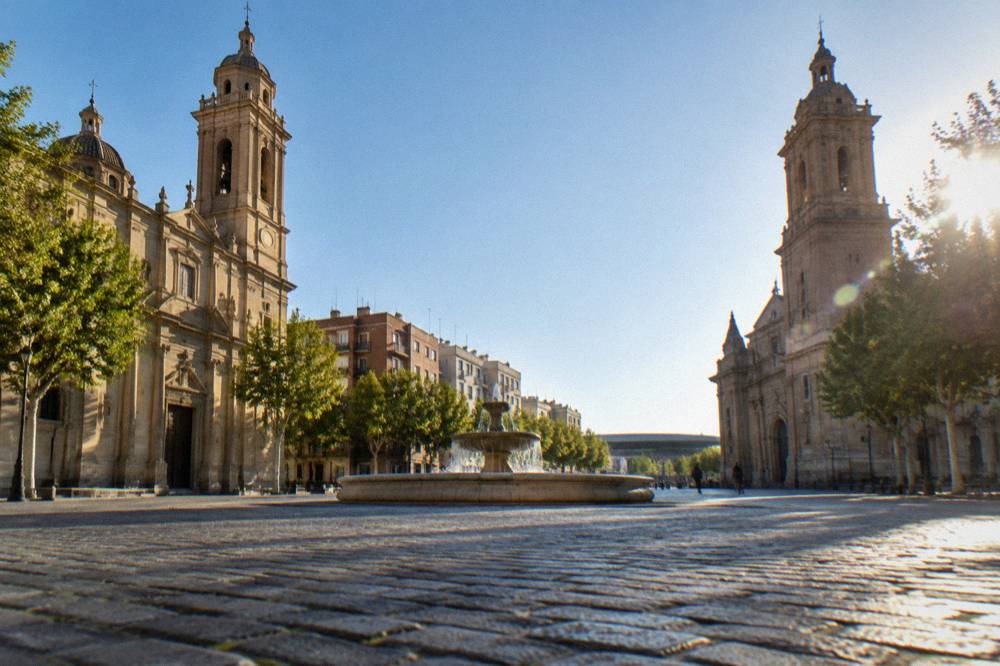
The Plaza del Pilar and the surrounding Casco Histórico are where almost every visitor spends their bag-free hours, and the storage logic is the same as at the station: no official locker facility is published for the old town, so you are choosing between a booked staffed service with a desk in the centre, your hotel, and travelling with a day pack only. The old town is compact and walkable, so once a bag is stowed anywhere central, nothing is far.
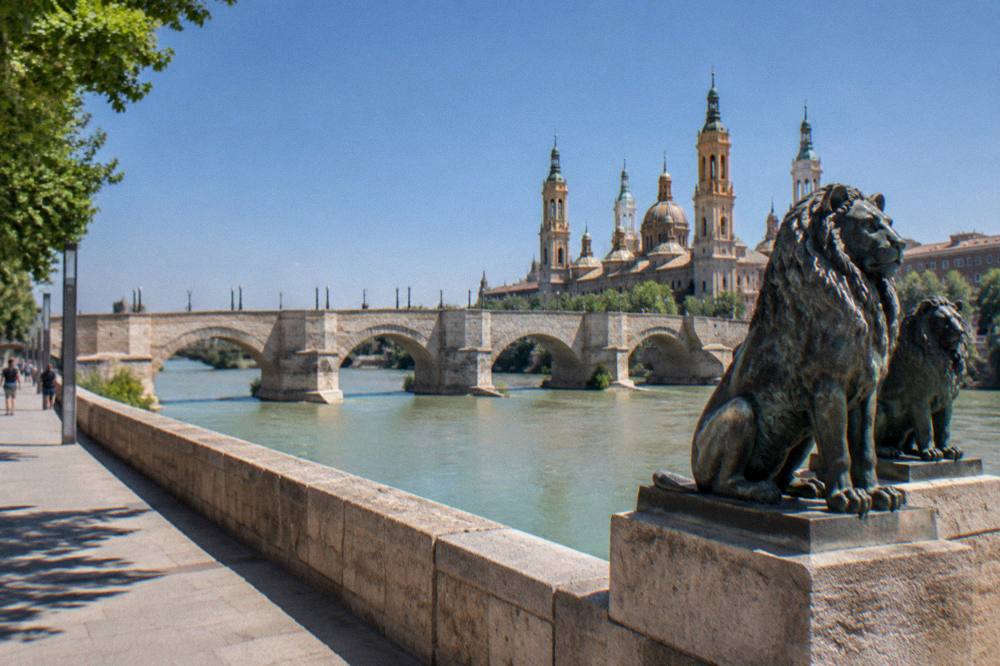
The centre is small in the way that matters. The Basílica del Pilar, La Seo, the Puente de Piedra and the Caesaraugusta museum sites sit within a few minutes of one another, and the whole stretch from the Paseo de la Independencia to the Ebro is pedestrian-friendly. The old town guide and the Plaza del Pilar page map this out. A storage desk anywhere in this triangle covers the entire monumental core.
One wrinkle is new and worth knowing before you drive in with bags: the ZBE low-emission zone now covers the Casco Histórico, with sanctions active since 12 December 2025, operating Monday to Friday from 08:00 to 20:00. Vehicles without a DGT environmental label are restricted, and the municipal FAQ notes a 15-minute grace period if you enter by mistake. If your plan was to park near the basilica and leave luggage in the boot, the car rental and parking guide is the page to read first, and stowing the bags at a booked desk is safer than a boot in a zone you cannot legally idle in.
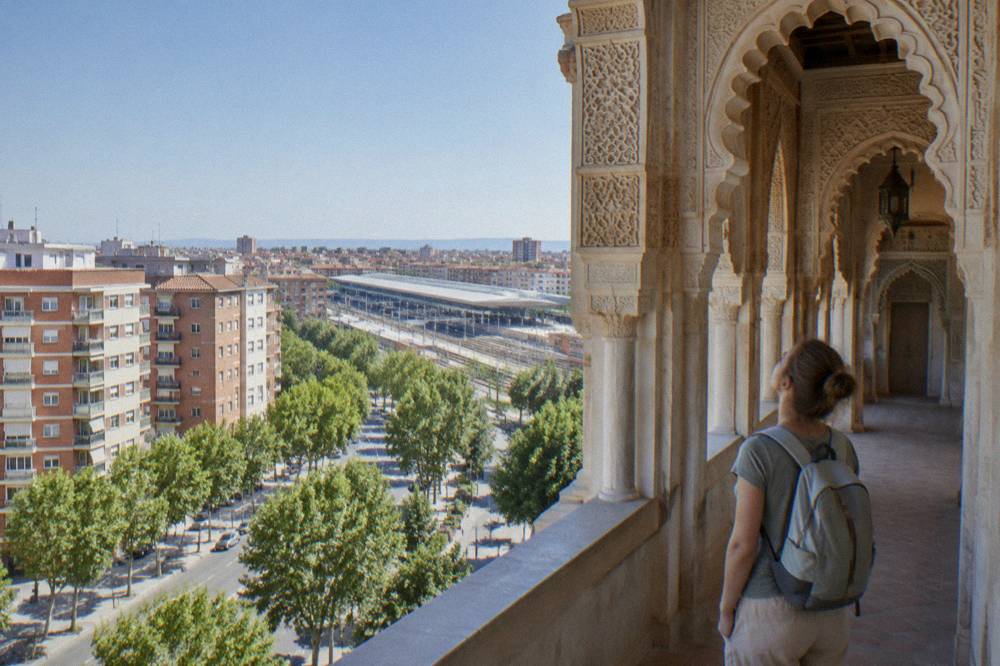
The sightseeing case for going hands-free here is strong. The Basílica del Pilar is free to enter, with the tower viewpoint at 6 EUR for an adult, and La Seo charges 10 EUR general admission including the Museo de Tapices. The Aljafería, a tram or bus ride to the west, is 7 EUR general or 9 EUR with a guided tour. None of these are places where a suitcase improves the experience, and the basilica's own October timetable shows the tower's last access 30 minutes before closing, so a late-afternoon bag retrieval needs to be planned against real hours, not vibes.
What Are Your ESIM And Mobile Data Options In Zaragoza?
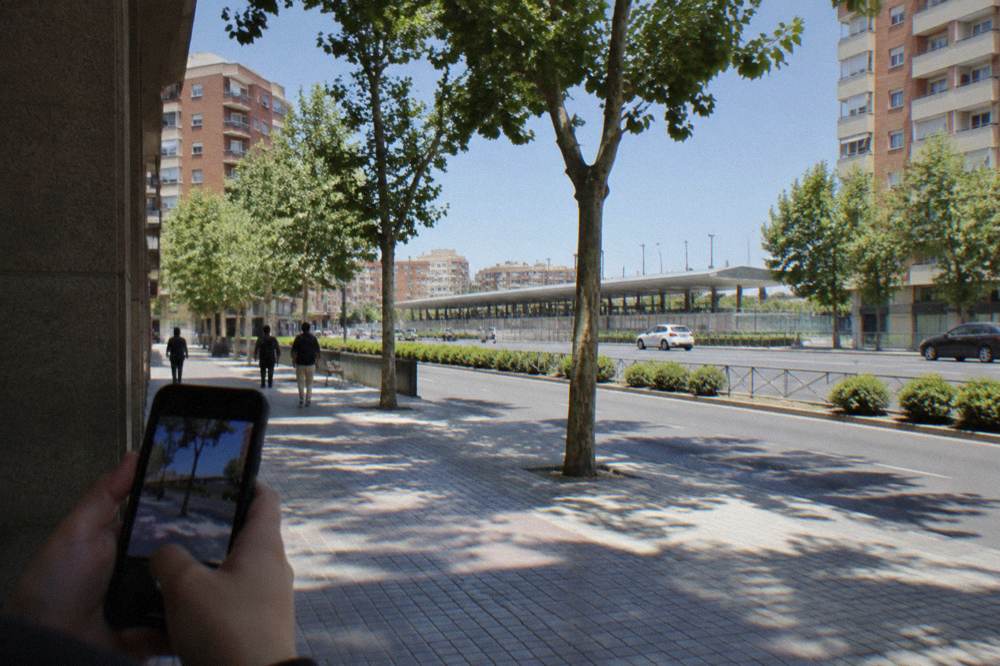
Spain is in the EU and the eurozone, so visitors from EU countries roam on their home plans at domestic rates, and visitors from elsewhere buy either a local SIM, a travel eSIM from one of the major international providers, or data through their home carrier's roaming package. No specific eSIM plan price for Zaragoza is verified on an official page, so compare plans on each operator's live listing before you fly, and check whether your phone supports eSIM at all.
The eSIM question matters in Zaragoza more than in some Spanish cities, because the city's attractions are spread across official pages rather than one aggregated app, and live information, the Aljafería's ticketing site, the municipal monument timetables, the Avanza fare pages, is genuinely useful on the ground. A data connection is how you check the tower's last-access time or rebook a storage slot when a train runs late.
Three practical layers, all checkable before departure. First, if your phone supports eSIM, the international travel eSIM providers cover Spain with plans you install before you land; the plans and prices sit on each provider's listing, and coverage in Zaragoza rides on the national Spanish networks. Second, a physical Spanish SIM from a domestic operator works everywhere in the country, and prepaid options exist, though their prices are not part of this verified set. Third, EU visitors should simply check their home plan's roaming terms, because EU regulation keeps roaming at domestic rates within the bloc.
Two cautions worth the words. The airport is a weak place to make your first data decision, because Zaragoza Airport is small, with 13 destinations across Ryanair, Wizz Air, Binter, Volotea, Vueling and Alba Star per Aena's September 2026 listing, and the airport guide and the airport to city centre page cover what is actually there. And a paper backup still beats a dead phone: the municipal monument timetable is published as a PDF, and downloading it on hotel wifi before you leave costs nothing.
How Much Does Getting Around Zaragoza Cost Once You Are Hands-Free?
The 2026 Avanza fare table lists the urban bus and tram single at 1.70 EUR, or 0.55 EUR with a Tarjeta Bus that costs 7 EUR, with night buses at 1.00 EUR. The airport bus, line 505, is 4.65 EUR single or 2.25 EUR with a Lazo card, the Bizi day pass is 1 EUR plus 0.50 EUR for the first 30 minutes of each trip, and the hop-on hop-off tourist bus is 10 EUR for 24 hours.
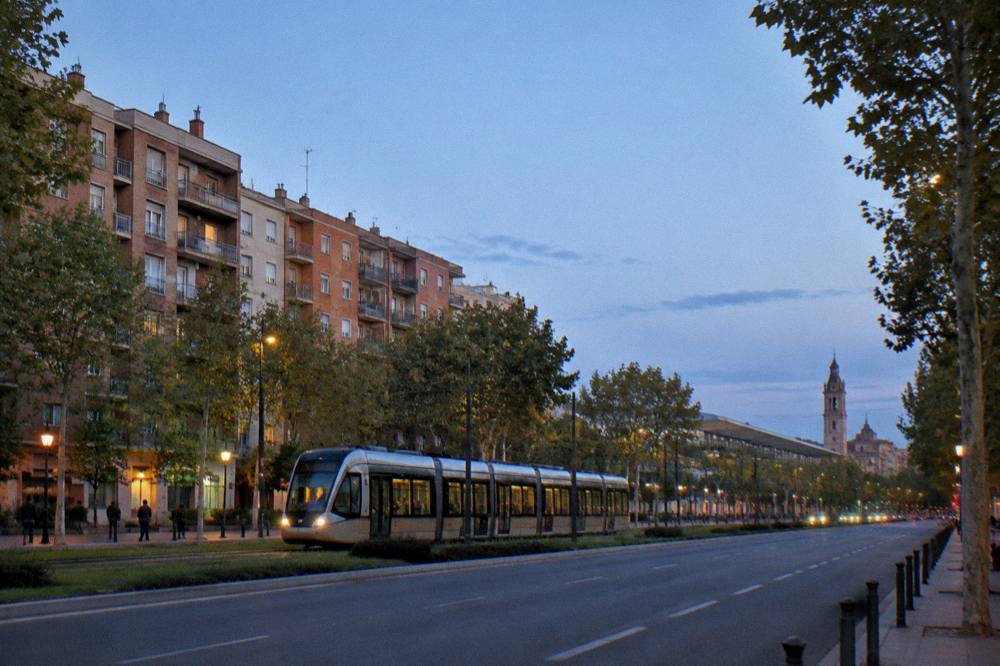
The tram is the backbone for a visitor staying anywhere along Line 1, and the bus covers the rest. The Tarjeta Bus pays for itself after a handful of journeys: at 0.55 EUR a ride against 1.70 EUR cash, the 7 EUR card is recovered within about six trips, and it works on both networks. For a two-day stay doing normal sightseeing, the arithmetic usually favours the card, but a single-day visitor making three or four rides can reasonably stay on single tickets. Other pages covering the same trip are gathered on Zaragoza Travel Guide.
The airport bus deserves its precision because the number circulates wrongly. The service is line 505, not the urban 44, at 4.65 EUR single or 2.25 EUR with a Lazo card, timed to flights, with a journey of roughly 25 to 35 minutes. That figure comes from a private transport site rather than an official operator page, so confirm the timetable on the operator's notice before relying on a specific departure.
| Mode | Single fare | With card | Notes |
|---|---|---|---|
| Urban bus | 1.70 EUR | 0.55 EUR | Tarjeta Bus, 2026 Avanza table |
| Tram Line 1 | 1.70 EUR | 0.55 EUR | Same ticket as bus |
| Night bus | 1.00 EUR | 0.55 EUR | Night lines per Avanza table |
| Tarjeta Bus | 7.00 EUR | - | Valid on bus and tram |
| Airport bus, line 505 | 4.65 EUR | 2.25 EUR | Lazo card, timed to flights |
| Bizi day pass | 1.00 EUR | - | Plus 0.50 EUR per trip up to 30 min |
| Tourist bus | 10.00 EUR | - | 24 h hop-on hop-off, 16 stops |
The Bizi bike share deserves a look for the riverside. The day pass at 1 EUR plus 0.50 EUR for the first 30 minutes of each trip suits the flat run along the Ebro between the Puente de Piedra and the Parque del Agua, and the Ebro river walk guide maps that stretch. The 50 EUR card deposit on the day pass is held, not spent, which matters if you are doing the mental arithmetic on a short stay.
Which Sights Can You Visit With Just A Day Bag?
With a day pack, the whole monumental core is open to you: the Basílica del Pilar is free to enter with its tower viewpoint at 6 EUR, La Seo is 10 EUR including the Museo de Tapices, the Aljafería is 7 EUR or 9 EUR guided, and the four Caesaraugusta museums run a 7 EUR combined ticket, with the Foro at 4 EUR and the Termas and Puerto Fluvial at 3 EUR each. The October municipal timetable gives every opening window, and three sights are currently closed.
The closures matter, so they come first. The Museo de Zaragoza's central building at Plaza de los Sitios 6 is closed for Ministry of Culture works with no reopening date, and its Etnología and Cerámica sections in the Parque Grande are also shut at present. The Palacio de Sastago is closed in October, and the Museo Pablo Gargallo is temporarily closed. On the good side of the ledger, the Museo Goya reopens on 9 October 2026 after its renovation, open Tuesday to Saturday 10:00 to 20:00 and Sundays 10:00 to 14:00, with its admission price not published.
| Sight | General price | Hours (October timetable) | Free entry |
|---|---|---|---|
| Basílica del Pilar | Free | Holy Chapel 08:00-20:30 | Always, temple entry |
| Pilar tower viewpoint | 6 EUR | Mon-Thu 10:30-14:30, 16:00-20:00; Fri-Sun 10:00-20:00 | Under 12 |
| La Seo + Museo de Tapices | 10 EUR | Mon-Sat 10:00-14:30, 16:00-20:00 | Aragon residents, set days |
| Aljafería | 7 EUR, 9 EUR guided | Daily 10:00-18:00 | 1st and 3rd Sunday and Monday |
| Caesaraugusta Foro | 4 EUR | Tue-Sat 10:00-14:00, 17:00-21:00 | 1st Sunday of month |
| Caesaraugusta bono, 4 museums | 7 EUR | Same as above | 1st Sunday of month |
| Museo Goya | Not published | Tue-Sat 10:00-20:00, Sun 10:00-14:00 | Not published |
A day bag changes what is comfortable here. The Pilar tower's last access is 30 minutes before closing, and the Aljafería's is 45 minutes before closing, so a bag stowed centrally buys you the late slots rather than the crowded midday ones. The free-entry days are worth building a flexible itinerary around: the Caesaraugusta museums are free the first Sunday of the month, the Museo del Fuego y los Bomberos the first Sunday, the Aljafería the first and third Sunday and Monday. The free things to do guide collects these, and the one-day itinerary sequences the walkable core for exactly this hands-free style of day.
The guided options suit a bag-free day particularly well, because a guide keeps a pace and a suitcase cannot. The Must-See Attractions Walking Tour covers the core in two hours from 78.78 USD per person, rated 4.6 from 9 reviews, and a private custom walk with a local guide, rated 4.9 from 70 reviews with the price on the operator's live listing, lets you set the route yourself; Check availability on the operator's live listing.
What Should You Know About Weather And Packing For Zaragoza?
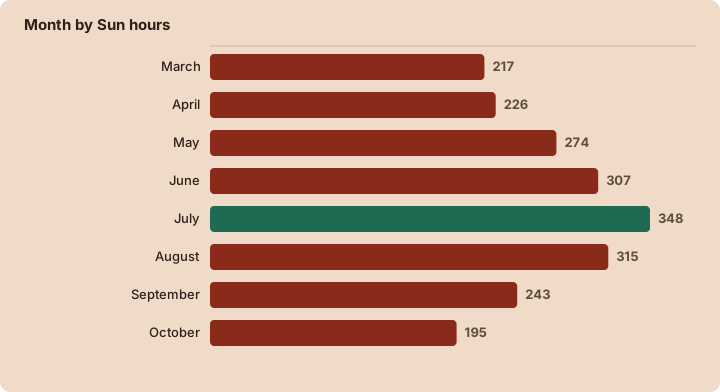
AEMET's 1981 to 2010 normals for the Zaragoza Aeropuerto station show a dry continental climate: July is the hottest month at a 32.4 C mean maximum and the sunniest at 348 hours, May is the wettest at 44 mm, July and August the driest at 17 mm each, and the year totals just 322 mm of rain over 51.1 days of 1 mm or more. Pack for heat and dryness from June to September, and for cool nights from November to March.
The packing consequence for a bag-free day is mostly about water and layers. Summer afternoons in the 30s make the middle of the day the wrong time for the unshaded Paseo de la Independencia, and the municipal climate data supports the standard local rhythm of sightseeing early, a long lunch, and the evening back outside. Autumn, which is when the Fiestas del Pilar fill the city from 10 to 18 October, averages a 21.4 C mean maximum in October with 36 mm of rain across 5.4 rain days, so a light rain layer earns its place in a day pack then.
| Month | Mean max C | Mean min C | Rain mm | Sun hours |
|---|---|---|---|---|
| March | 17.3 | 5.8 | 19 | 217 |
| April | 19.6 | 7.9 | 39 | 226 |
| May | 24.1 | 11.8 | 44 | 274 |
| June | 29.3 | 15.8 | 26 | 307 |
| July | 32.4 | 18.3 | 17 | 348 |
| August | 31.7 | 18.3 | 17 | 315 |
| September | 27.1 | 15.2 | 30 | 243 |
| October | 21.4 | 11.0 | 36 | 195 |
All figures are 1981 to 2010 averages from the Zaragoza Aeropuerto station, the only window the station publishes. The Zaragoza weather guide and the best time to visit guide expand on this, and the travel planning page folds it into a full trip. One local constant the table cannot show: the cierzo, the cold, dry north-westerly wind of the Ebro valley, blows qualitatively and appears in no published speed figure, but every packing list for the cooler half of the year should assume it can arrive.
How Does A Stowed Bag Change A Fiestas Del Pilar Day?
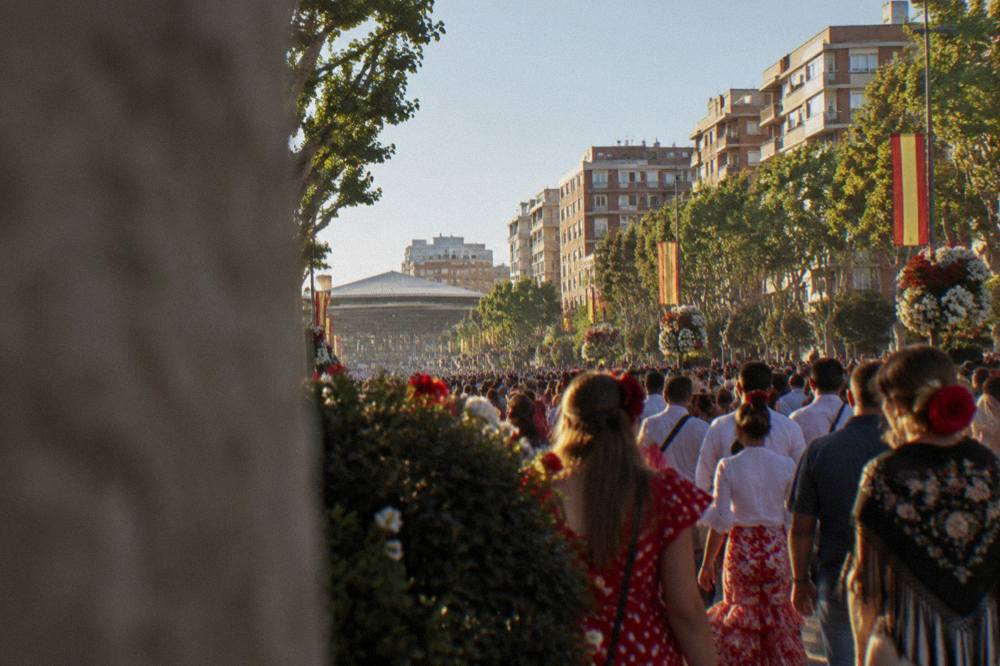
The Fiestas del Pilar run from 10 to 18 October 2026, with the Ofrenda de Flores on 12 October drawing hundreds of thousands of participants and spectators along the route from the Paseo de la Independencia to the Plaza del Pilar, and the pregón opening the fiesta from the Ayuntamiento balcony at 21:00 on 10 October. On those days a stowed bag is not a convenience but a necessity, because the centre is dense with crowds, and the free-entry rhythm of the fiesta rewards moving light.
The Ofrenda is the single most crowded event of the Zaragoza year, with 994 registered groups filling the central route for most of the day. Walking that route with a suitcase is close to impossible, and leaving one in a parked car inside the Casco Histórico runs into the low-emission zone's weekday restrictions. The Fiestas del Pilar guide and the Ofrenda de Flores page cover the event in depth.
The practical plan is the same as any other day, only more so: book a staffed storage slot in advance for the hours you will be in the centre, carry only a small day pack, and check the operator's listing for extended hours during the fiesta, because event-day demand is exactly when a booked desk fills. The fireworks programme, after the pregón on 10 October, at the Parque Pignatelli, and at the closing night by the Ebro on 18 October, makes for late finishes, so plan the bag retrieval window against the evening rather than the afternoon.
One budget note that pairs well with a fiesta trip: Aragon has no tourist tax, and the regional government explicitly ruled one out in September 2026, so the accommodation price you see is the price you pay. The cost and budget guide builds the rest of the arithmetic.
Where Should You Stay To Make Storage Simple?
Staying inside or beside the Casco Histórico, or close to a tram stop on Line 1, makes every storage decision easier, because the hotel desk becomes your locker and the 1.70 EUR single fare, 0.55 EUR with a Tarjeta Bus, covers the rest. The Paseo de la Independencia corridor puts you between the shopping street and the monumental core, and the Delicias district keeps you beside the station if an early train shapes your trip.
The geography here is forgiving. The where to stay guide breaks the districts down, the best hotels page covers the comfortable end, and the hostels and budget stays page the cheap end. For this article's purpose, the test is simple: can you drop bags at the desk and be at the Basílica del Pilar within a short walk or one tram ride?
| Area | Storage advantage | Getting to the centre |
|---|---|---|
| Casco Histórico | Walk to everything, hotel desk as locker | On foot |
| Paseo de la Independencia | Between shops and monuments | On foot |
| Delicias district | Beside the station, early trains easy | Bus or tram, 1.70 EUR single |
| Centro-Independencia fringe | Hotel desks, tram stops nearby | Walk or tram, 0.55 EUR with card |
A station-side stay in Delicias suits the day-trip-in, evening-out pattern, and the Delicias station guide covers the district around it. A centre stay suits everyone else. Either way, the storage question dissolves into the hotel desk, and the only thing left to book is what you will actually do, which is where the guided options below come in.
For a first visit with the bags already stowed, a short introductory walk is often the best use of the first hour: the Monumental Sightseeing Tour runs 105 minutes from 10.41 USD per person, rated 4.4 from 36 reviews, and covers the monumental core in one loop. It pairs naturally with a storage slot booked for the whole afternoon, since the route stays inside the walkable centre the whole way.
Common Questions About Luggage Storage And ESIM In Zaragoza
Does Zaragoza have public luggage lockers?
No official source publishes a municipal or station locker network for Zaragoza. The working options are a staffed storage service booked through an operator's live listing, your hotel's front desk, and travelling with a day pack only. Any price you see quoted should be read as what that listing says on the day.
Can I store luggage at Zaragoza-Delicias station?
No left-luggage facility, locker price or opening hours for Zaragoza-Delicias is published on an official page, so treat any claim as unconfirmed. For a day trip, travel with a day pack, or book a staffed storage slot near the station or the centre in advance and time it to your arrival and departure.
Do hotels in Zaragoza hold bags before check-in and after check-out?
Yes, as is normal across Spain, hotels will typically hold luggage at the desk on arrival before check-in and on the final day after check-out. It costs nothing and is the simplest storage in the city; the trade-off is carrying the bags to the hotel first.
Does an eSIM work in Zaragoza?
Yes, if your phone supports eSIM, the international travel eSIM providers cover Spain and ride on the national Spanish networks. Plan details and prices sit on each operator's listing. Visitors from EU countries roam on their home plans at domestic rates under EU regulation.
How much does public transport cost in Zaragoza?
The 2026 Avanza fare table lists the urban bus and tram single at 1.70 EUR, or 0.55 EUR with a Tarjeta Bus that costs 7 EUR and works on both. Night buses are 1.00 EUR, the airport bus, line 505, is 4.65 EUR or 2.25 EUR with a Lazo card, and the hop-on hop-off tourist bus is 10 EUR for 24 hours.
Can I visit the Basílica del Pilar with a small day bag?
Yes, temple entry is free and a small day bag is normal there. The tower viewpoint costs 6 EUR for an adult with last access 30 minutes before closing per the October timetable. A full suitcase is a different matter at any monument, so stow it at a booked desk or your hotel before sightseeing.
A stowed bag and a working data connection are the two small logistics that turn a good Zaragoza day into an easy one, and both are solvable before you arrive: book the storage slot against your train times, install the eSIM before you land, and spend the day itself on the verified pleasures of the Ebro, the Pilar and the Aljafería.