Is Zaragoza Safe
Zaragoza, the capital of Aragon on the Ebro, is a calm inland city by the standards of Spain's big tourist centres. This guide covers what actually matters for a safe visit: where to stay, how the transport works, what the weather does, and what to do if something goes wrong.
Short answer
Zaragoza is generally considered a safe, relaxed city for visitors. The real planning points are practical ones: the low-emission zone if you drive, summer heat, the cierzo wind, and big crowds during the Fiestas del Pilar. Call 112 in any emergency.
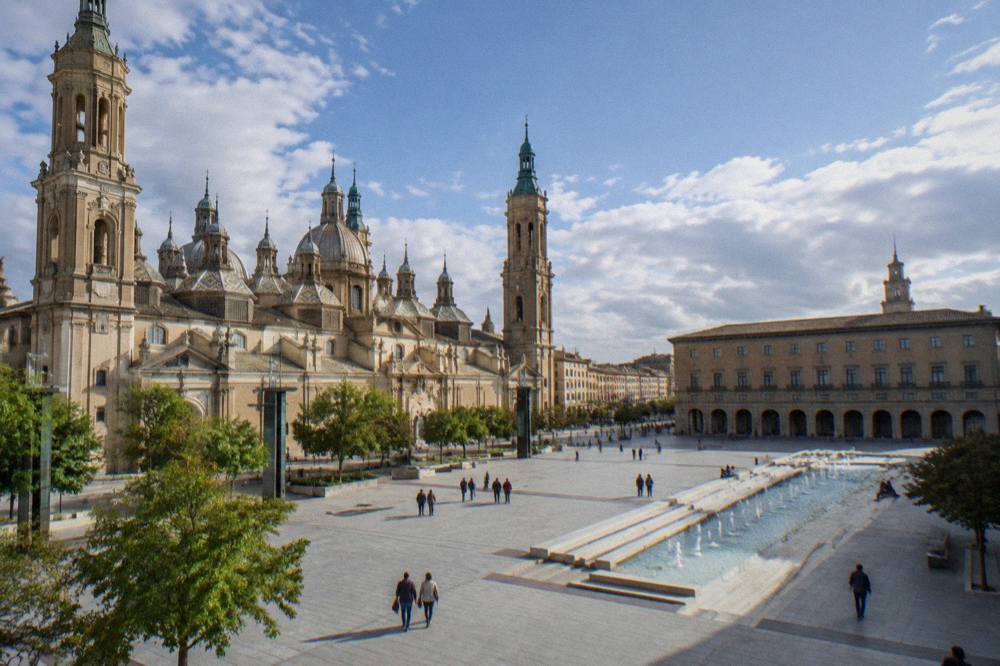
Zaragoza, the capital of Aragon, sits inland on the Ebro roughly halfway between Madrid and Barcelona, and it has none of the pressure that mass tourism brings to Spain's coastal capitals. The city centre is compact and walkable, the streets around the Basílica del Pilar and La Seo stay busy into the evening, and the issues that face a visitor here are mostly practical rather than threatening. This guide works through them one by one: which parts of the city you will actually spend time in, how the transport and the low-emission zone work, what the climate does across the year, whether the tap water is drinkable, and what to do if something goes wrong. It also covers the one week when the city changes character completely, the Fiestas del Pilar.
Is Zaragoza Safe For Tourists?
Yes, Zaragoza is generally considered a safe city for tourists, and it is a relaxed one by the standards of Spain's largest visitor centres. No official neighbourhood crime statistics were verified for this page, so none are quoted. The practical risks a visitor actually faces here are ordinary city ones: pickpocketing in crowded spots, summer heat, and the disorientation of a new city, not violent crime.
The honest position on any safety question about a city is that numbers matter and vibes do not. What can be said is structural: the historic centre where nearly all visitors stay and walk is small, well-lit and busy, the main squares are active late into the evening in the Spanish style, and the city has no district that tourists need for their itinerary. The areas a visitor crosses are the Casco Histórico around the Basílica del Pilar and La Seo, the Centro along Paseo de la Independencia, and the riverside walks on both banks of the Ebro.
The ordinary precautions that apply in any Spanish city apply here. Keep a hand on your bag in the tightest crowds, which in Zaragoza means the Fiestas del Pilar in October and the Christmas shopping rush, not a normal Tuesday. Do not leave valuables visible in a parked car, anywhere in Spain. And if you are walking the Ebro banks late at night, stay on the lit paths near the Puente de Piedra rather than the quieter stretches upstream. The Zaragoza Travel Guide planning page covers how these areas fit together if you are building a first itinerary.
A guided walk is a good way to get your bearings in the first hours, and the guided options include a Must-See Walk With a Guide that covers the monumental core with a local at your side.
Which Areas Of Zaragoza Will You Actually Spend Time In?
Almost every visitor spends their entire stay inside three contiguous central areas: the Casco Histórico around the Basílica del Pilar, La Seo and the Puente de Piedra; the Centro along Paseo de la Independencia and Plaza de España; and the riverside of the Ebro connecting them. The Aljafería sits a short walk west of the centre, and the Delicias train station lies south of the river. None of these requires crossing a district a visitor should worry about.
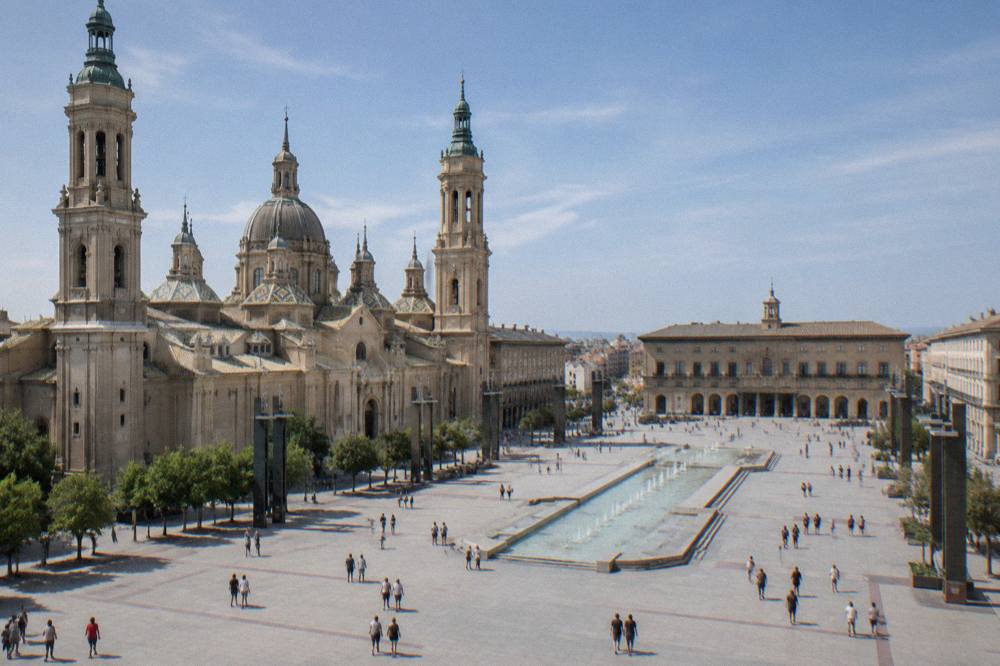
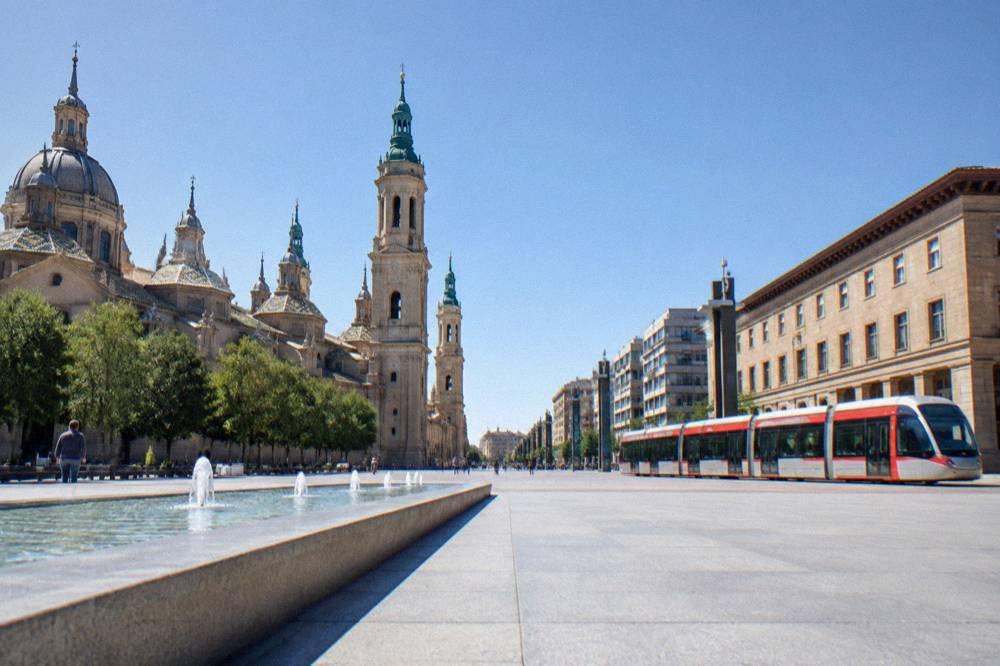
The Casco Histórico is the dense, stone-built old town where the two cathedrals face each other across Plaza del Pilar. It stays populated in the evening because people live and eat there, which is the single best feature a city centre can have for evening walking. The Centro, stretching south along Paseo de la Independencia, is the commercial axis, wide, lit and busy with shoppers until the shops close. Between and around them, the Ebro's banks give the city its longest and pleasantest walks, from the Puente de Piedra east toward the Expo 2008 site and Parque del Agua.
The Aljafería, the Islamic palace that is the city's most striking monument after the two cathedrals, stands just west of the centre, a straightforward walk along ordinary city streets. The Zaragoza-Delicias station, where the high-speed trains from Madrid and Barcelona arrive, sits south of the river and connects to the centre by tram in a few stops. For choosing where to sleep, the where to stay in Zaragoza guide compares the central neighbourhoods in detail.
A free, tip-based walk is another low-cost way to learn the layout. The Free Tour through the Historical Center of Zaragoza runs on the GuruWalk platform, is free with tips for the guru, and is rated 4.15 from 122 reviews. Because it costs nothing up front, it suits a first evening in the city, when you want to learn which square is which before committing to anything else.
For visitors who prefer a private pace, the Private Walk With a Local starts from $54.02 per person and is rated 4.7 from 86 reviews, running 2 to 6 hours depending on the option chosen. Between the guided, free and private formats, the old town is easy to cover with someone who knows it.
How Safe And Simple Is Getting Around Zaragoza?
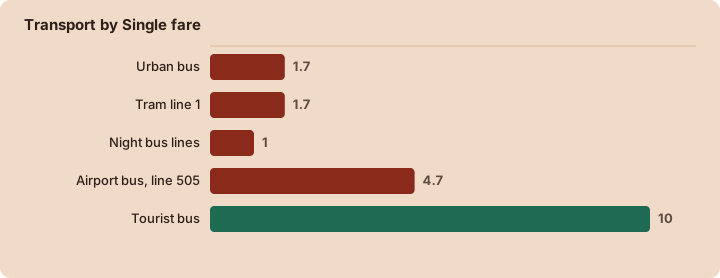
Zaragoza's public transport is safe, cheap and simple: a single bus or tram ticket costs 1.70 EUR, or 0.55 EUR with a rechargeable Tarjeta Bus, and the tram links the Delicias station to the centre in a few stops. The one rule that genuinely costs visitors money is the low-emission zone: the ZBE Casco Histórico is enforced Monday to Friday from 08:00 to 20:00, with sanctions active since 12 December 2025.
The tram is the backbone for visitors. Line 1 runs from Delicias through the centre, and the fare is the same as the urban bus: 1.70 EUR for a single with no transfer, 0.55 EUR with the Tarjeta Bus, which itself costs 7 EUR and works on both bus and tram. Night lines cost 1.00 EUR. The airport bus is line 505, not 44 or 501, at 4.65 EUR single or about 2.25 EUR with a Lazo card, timed to flights and taking roughly 25 to 35 minutes. The getting around Zaragoza guide has the full picture.
The low-emission zone is the detail that catches drivers. The ZBE Casco Histórico restricts vehicles without a DGT environmental label on weekdays from 08:00 to 20:00, and sanctions have been live since 12 December 2025, with a 15-minute grace period if you enter by mistake. If you are hiring a car, confirm its label before you drive into the centre, or use one of the car parks outside the zone. The car rental and parking page covers the options.
| Transport | Single fare | With card | Notes |
|---|---|---|---|
| Urban bus | 1.70 EUR | 0.55 EUR | No transfer included |
| Tram line 1 | 1.70 EUR | 0.55 EUR | Delicias to the centre |
| Night bus lines | 1.00 EUR | 0.55 EUR | Late-evening network |
| Airport bus, line 505 | 4.65 EUR | about 2.25 EUR with Lazo | Timed to flights, 25 to 35 min |
| Tourist bus | 10 EUR | discounts available | 24 h hop-on hop-off, 16 stops, cash only on board |
Taxis and the bike-share system complete the picture. Bizi, the municipal bike share, charges a 1 EUR day pass plus 0.50 EUR for the first 30 minutes of each trip, with a 50 EUR card deposit held, which makes it a cheap way to cover the riverside as long as you dock the bike inside each half hour. For arrivals from Madrid or Barcelona, high-speed trains take about 1.5 to 2 hours, and the Delicias station guide explains the layout before you land there at night.
What Weather Should You Take Seriously In Zaragoza?
Zaragoza's weather risks are heat and wind, not storms. AEMET's 1981 to 2010 normals for the Zaragoza Aeropuerto station put July's mean maximum at 32.4 C and August's at 31.7 C, with only 17 mm of rain in each, and the cierzo, the cold dry north-west wind of the Ebro valley, can make a winter day feel much sharper than the thermometer suggests.
Summer is the season that needs actual planning. The 1981 to 2010 averages show June at a 29.3 C mean maximum, July at 32.4 C and August at 31.7 C, and those are means, not peaks: a July afternoon can run well above them. The Spanish rhythm helps you, because the sensible pattern is exactly the local one, out early, indoors or in the shade over the middle of the day, and back out after eight in the evening. Carry water, which you can fill from the tap, and treat the middle hours as museum time. The IAACC Pablo Serrano, the Centro de Historias and the Caesaraugusta museums are all air-conditioned indoor options, and several are free.
Winter is cold rather than dangerous. January's mean minimum on the same 1981 to 2010 series is 2.7 C, with 23.1 frost days across the year at the airport station, and the cierzo can drop the felt temperature sharply on an otherwise clear day. It is qualitative: no wind speed figure is published in the normals, so none is quoted here, but AEMET issues Aragon wind warnings and you should check the forecast if you plan a long riverside walk.
| Month | Mean max C (1981-2010) | Mean min C (1981-2010) | Rain mm | Sun hours |
|---|---|---|---|---|
| January | 10.5 | 2.7 | 21 | 131 |
| April | 19.6 | 7.9 | 39 | 226 |
| July | 32.4 | 18.3 | 17 | 348 |
| October | 21.4 | 11.0 | 36 | 195 |
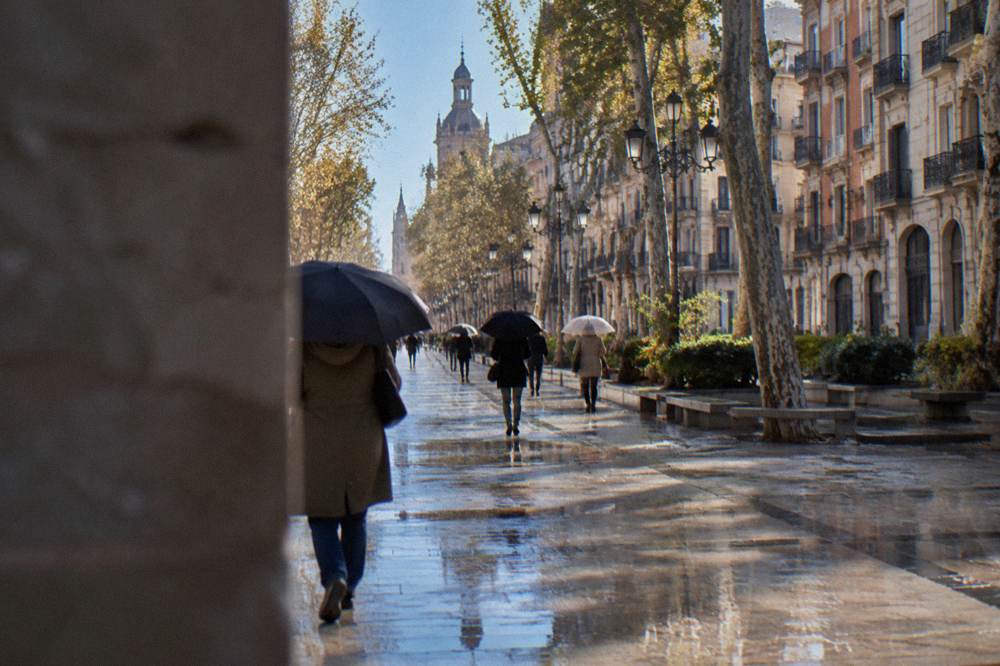
One counterintuitive fact from the same station series: May is the wettest month at 44 mm, wetter than any autumn month, while July and August tie as the driest at 17 mm each. October, the Fiestas month, averages 36 mm over 5.4 rain days, so a light waterproof is a reasonable thing to pack for the Ofrenda de Flores. The Zaragoza weather and best time to visit guides carry the month-by-month detail.
Can You Drink The Tap Water In Zaragoza?
Yes, the tap water in Zaragoza is treated municipal supply and is drinkable, and this site's dedicated water guide answers the question in full. For a visitor the practical point is simple: filling a bottle from the tap is normal, cheap and saves both money and plastic, and no verified advisory suggests otherwise for the city.
Spanish cities run treated, tested municipal water, and Zaragoza is no exception. The taste varies, and some locals filter for taste rather than safety, which is a preference rather than a warning. Carrying a refillable bottle matters more here than in most Spanish cities because of the summer heat described above: a walk across the exposed Plaza del Pilar in July without water is a mistake you make once.
This matters for budget as much as safety. With a bus or tram single at 1.70 EUR and a bottle of water costing comparable money in the tourist zone, the tap pays for a fare every couple of refills. The same logic runs through the cost and budget guide: Zaragoza is one of Spain's more affordable large cities, and the free-entry days at its monuments make a cheap day cheaper still.
| Monument | Normal adult price | Free-entry day |
|---|---|---|
| Aljafería | 7 EUR general, 9 EUR guided | 1st and 3rd Sunday and Monday of each month |
| Caesaraugusta museums (Foro, Termas, Puerto, Teatro) | 4 EUR Foro, 3 EUR Termas and Puerto, 7 EUR bono | 1st Sunday of the month |
| Basílica del Pilar, temple entry | Free | Free daily |
| Museo del Fuego y los Bomberos | 3 EUR | 1st Sunday of the month |
| Museo del Origami | 3 EUR | 1st Tuesday and Sunday |
| IAACC Pablo Serrano | Free | Free at all opening times |
Note one standing closure when you plan indoor days: the Museo de Zaragoza's central building at Plaza de los Sitios 6 is closed for Ministry of Culture works, with no reopening date published, so it belongs on no itinerary for now. The Museo Goya, by contrast, reopens on 9 October 2026, open Tuesday to Saturday 10:00 to 20:00 and Sundays 10:00 to 14:00, closed Mondays, with its admission price not yet published.
Is Zaragoza Safe For Solo Travellers And Women?
Zaragoza is a comfortable city for solo travel, including for women travelling alone, and no verified source reports a pattern of visitor-targeted crime here. The old town stays social and populated late, the centre is small enough to learn in a day, and the standard Spanish-late dinner hour means you are rarely the only person walking home at midnight.
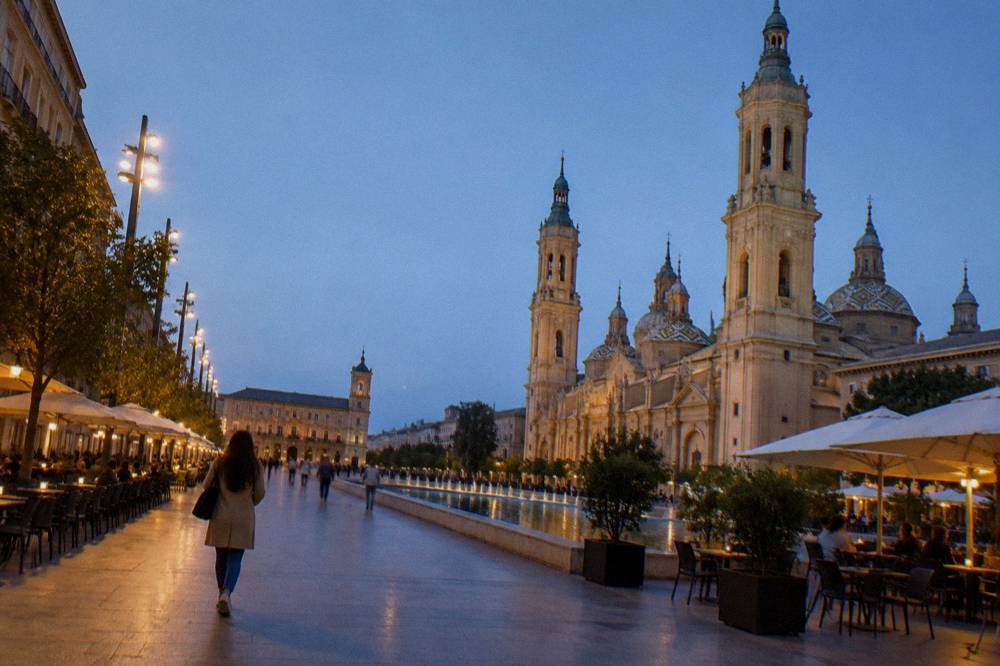
The structural reasons are worth spelling out. Spanish cities keep their centres alive in the evening: dinner starts late, terraces fill the squares, and the walk back to a hotel at midnight is a walk through people, not through emptiness. Zaragoza's centre is compact, so the distance from a restaurant to a bed is usually a few minutes, and the tram runs late enough to cover the longer legs. The solo travel angle, joining group activities, works well here: a tapas walk or a guided tour is an easy way to spend an evening with company without committing to anything.
A private guide is the most flexible option for a solo visitor who wants a local's read on the city in one block of time. The Private Walk With a Local runs from $54.02 per person, is rated 4.7 from 86 reviews, and lasts 2 to 6 hours depending on the option chosen.
The evening food walks deserve a mention for solo travellers specifically. The 3-Hour Evening Tapas Walk, from $106.92 per person and rated 4.9 from 62 reviews, moves through the old town's bars in a group, which turns dinner from a solitary affair into a social one. The Zaragoza food guide and the tapas crawl page cover the same ground for independent eating.
Is Zaragoza Safe During The Fiestas Del Pilar?
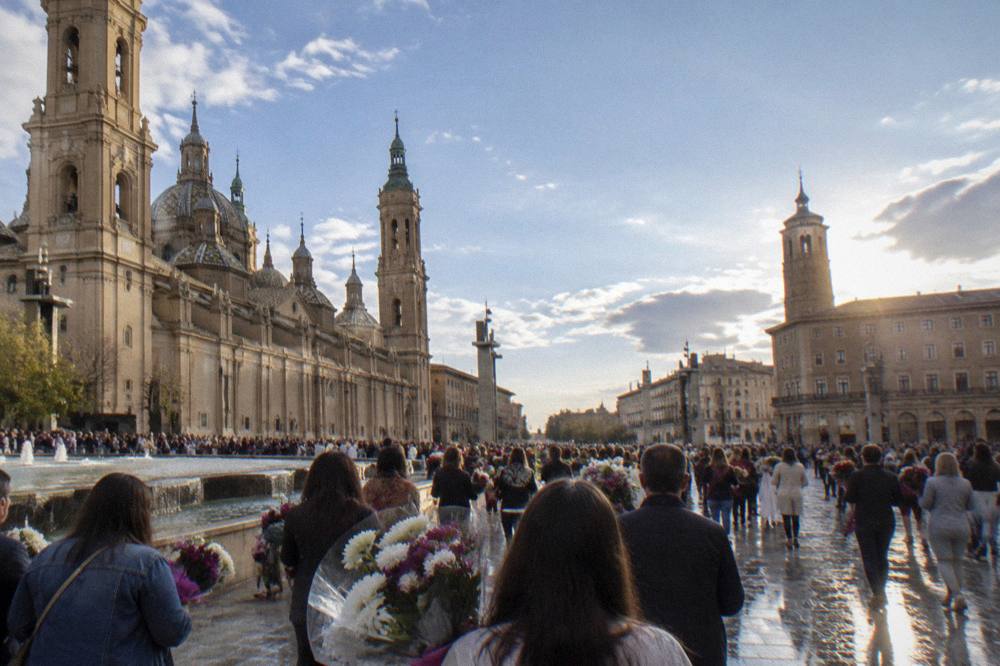
The Fiestas del Pilar, from 10 to 18 October 2026, are the one period when Zaragoza's normal calm changes: the Ofrenda de Flores on 12 October drew 994 registered groups and about 99,980 participants in the city's own figures, and the crowds are dense, good-humoured and pickpocket-shaped. The risks are lost children, lost phones and a very late night, not violence.
The Ofrenda de Flores starts around 06:30 and fills the route from Paseo de la Independencia to Plaza del Pilar with hours of flower-carrying groups. In a crowd that size the ordinary rules apply with force: keep your phone in a front pocket, agree a meeting point with your group before you enter the crush, and keep small children physically held rather than merely watched. The fireworks schedule for 2026 runs after the pregón on 10 October, in Parque Pignatelli, at the closing by the Ebro on 18 October, and at a new show in Plaza San Francisco, so the loud bangs have specific nights and places you can plan around.
Away from the peak days, the fiestas are mostly a reason to visit rather than a hazard: jota contests, free concerts, and Venezuela as the guest country for 2026. The Fiestas del Pilar and Ofrenda de Flores guides carry the full programme detail.
Two closures to note if your October visit is museum-shaped: the Palacio de Sastago is closed in October, and the Museo Pablo Gargallo is temporarily closed. The Aljafería, La Seo, the Basílica del Pilar and the Caesaraugusta museums all operate on their normal October timetables, and the Aljafería's free-entry Mondays and first and third Sundays fall inside the fiesta window, which means longer queues on those days.
| Fiestas del Pilar 2026 event | Date | Crowd level |
|---|---|---|
| Pregón from the Ayuntamiento balcony | 10 October, 21:00 | Very high in Plaza del Pilar area |
| Ofrenda de Flores | 12 October, from about 06:30 | Extremely high on the route |
| Ofrenda de Frutos and Rosario de Cristal | 13 October, reported | High in the evening |
| Free concerts | 10, 11 and 17 October | High at the stages |
| Closing fireworks by the Ebro | 18 October | High on the riverbank |
What Should You Do In An Emergency In Zaragoza?
In any emergency in Zaragoza, call 112, the EU-wide emergency number, which connects police, fire and medical services anywhere in Spain. Aragon has no tourist tax and no special visitor registration requirement, and the EU Entry/Exit System has been fully live since 10 April 2026, so non-EU visitors have their biometrics recorded at the border on arrival.
The number to memorise is 112, and it is the only emergency number this page states as fact, because no official source for local police station addresses, pharmacy rotas or hospital details was verified for it. Ask at your hotel or at the tourist office for the nearest specific services when you arrive, without assuming any address printed anywhere online. For minor medical needs, Spanish pharmacies are the first stop in local practice, and a pharmacist will tell you whether something needs a doctor.
Two border facts matter for non-EU visitors. The Entry/Exit System, EES, has been fully operational since 10 April 2026 and records biometrics for non-EU short stays at external borders. ETIAS, the travel authorisation system, has not started, and no start date or fee should be trusted until the EU agencies announce one. Neither affects day-to-day safety inside the city; both affect whether your arrival goes smoothly.
For lost or stolen documents, your own consulate is the route for replacements, and your travel insurance is the route for anything with a cost attached. Report thefts to the police both for the insurance claim and because a report is required for a passport replacement. Keep photographs of your passport and cards somewhere accessible, which is the single cheapest piece of travel insurance that costs nothing.
| Situation | What to do | Where |
|---|---|---|
| Any emergency | Call 112 | Anywhere in Spain |
| Minor illness or injury | Ask at a pharmacy first | Any pharmacy, green cross signage |
| Theft or lost documents | File a police report, then contact your consulate | Police station, ask at your hotel or the tourist office |
| Passport or card loss | Use stored copies, cancel cards, call your bank | Your bank's phone line |
| Arrival problems at the border | EES biometrics apply to non-EU short stays; ETIAS has not started | Zaragoza Airport or your entry point |
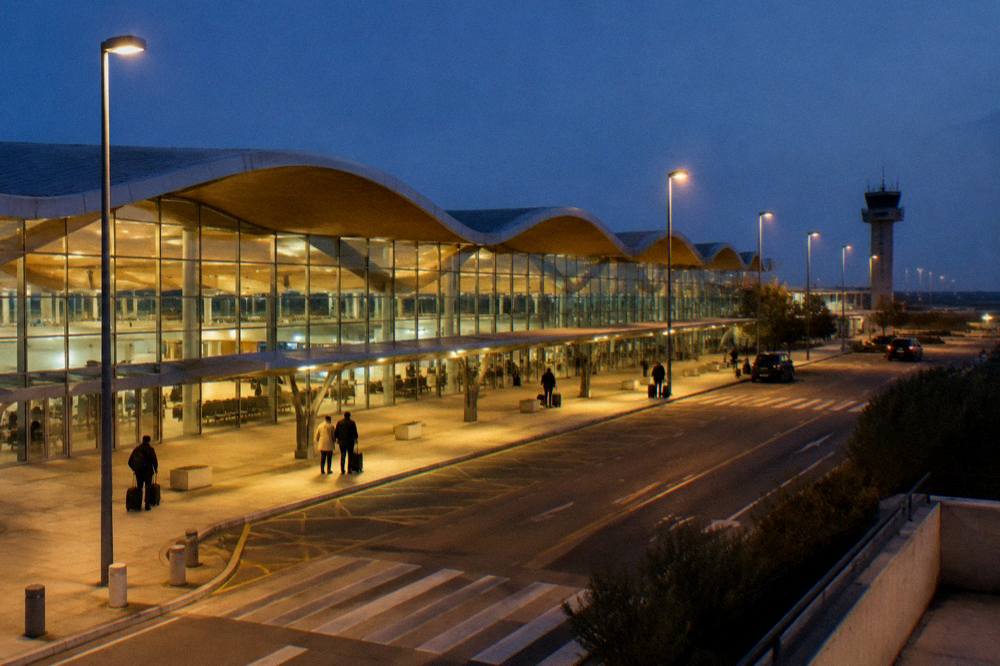
The airport itself is small and simple, served by Ryanair, Wizz Air, Volotea, Vueling and others, and the Zaragoza airport and airport to city centre guides cover the arrival end in detail.
Common Questions About Safety In Zaragoza
Is Zaragoza safe at night?
The city centre stays populated late in the Spanish style, with terraces and diners out past midnight, and the walk between the old town and central hotels is short and busy. No verified crime statistics for Zaragoza's neighbourhoods exist on this page, so none are quoted, but the ordinary city rules, awareness in crowds and a hand on your bag, cover the normal evening.
Is Zaragoza safe for solo female travellers?
Yes, by the same structural reasons that make it comfortable for any solo traveller: a compact, late-active centre, cheap and frequent public transport with a 1.70 EUR single fare, and group activities such as tapas walks that provide company without commitment.
Is the tap water in Zaragoza safe to drink?
Yes. Zaragoza runs treated municipal water and filling a bottle from the tap is normal practice. Some residents filter for taste, which is preference rather than a safety warning.
Is Zaragoza safe during the Fiestas del Pilar?
Yes, but the crowds change the arithmetic. The Ofrenda de Flores on 12 October 2026 brings 994 registered groups and about 99,980 participants to one route, so guard your phone, fix meeting points in advance and hold small children by hand in the crush.
What is the emergency number in Zaragoza?
112, the EU-wide emergency number, connects police, fire and medical services across Spain. For non-emergency needs, ask at your hotel or the tourist office for the nearest pharmacy, clinic or police station.
Is it safe to drive in Zaragoza?
Driving is safe, but the low-emission zone is expensive to get wrong: the ZBE Casco Histórico is enforced Monday to Friday from 08:00 to 20:00 with sanctions live since 12 December 2025, and vehicles without a DGT environmental label are restricted, with a 15-minute grace period for accidental entry.
The overall picture is that Zaragoza rewards the same ordinary good sense as any Spanish city, and its genuine planning points, the summer heat, the cierzo, the ZBE rules and the October crowds, are all things you can prepare for in ten minutes before you go.