San Pablo Barrio In Zaragoza: What To See, Do And Know Before You Go
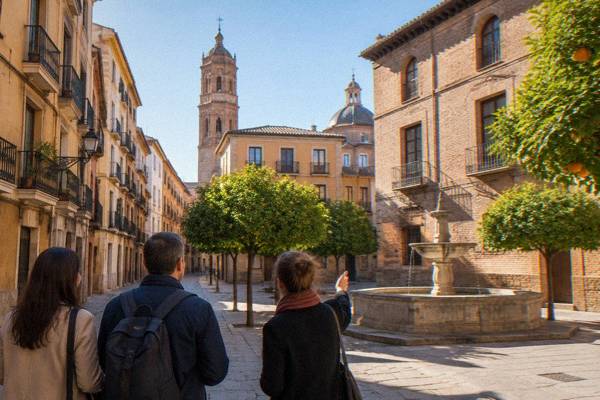
San Pablo is the quiet quarter just south of Zaragoza's old town, a grid of low brick streets anchored by its parish church and sitting within easy walking distance of the Basílica del Pilar, La Seo and the Aljafería.
Short answer
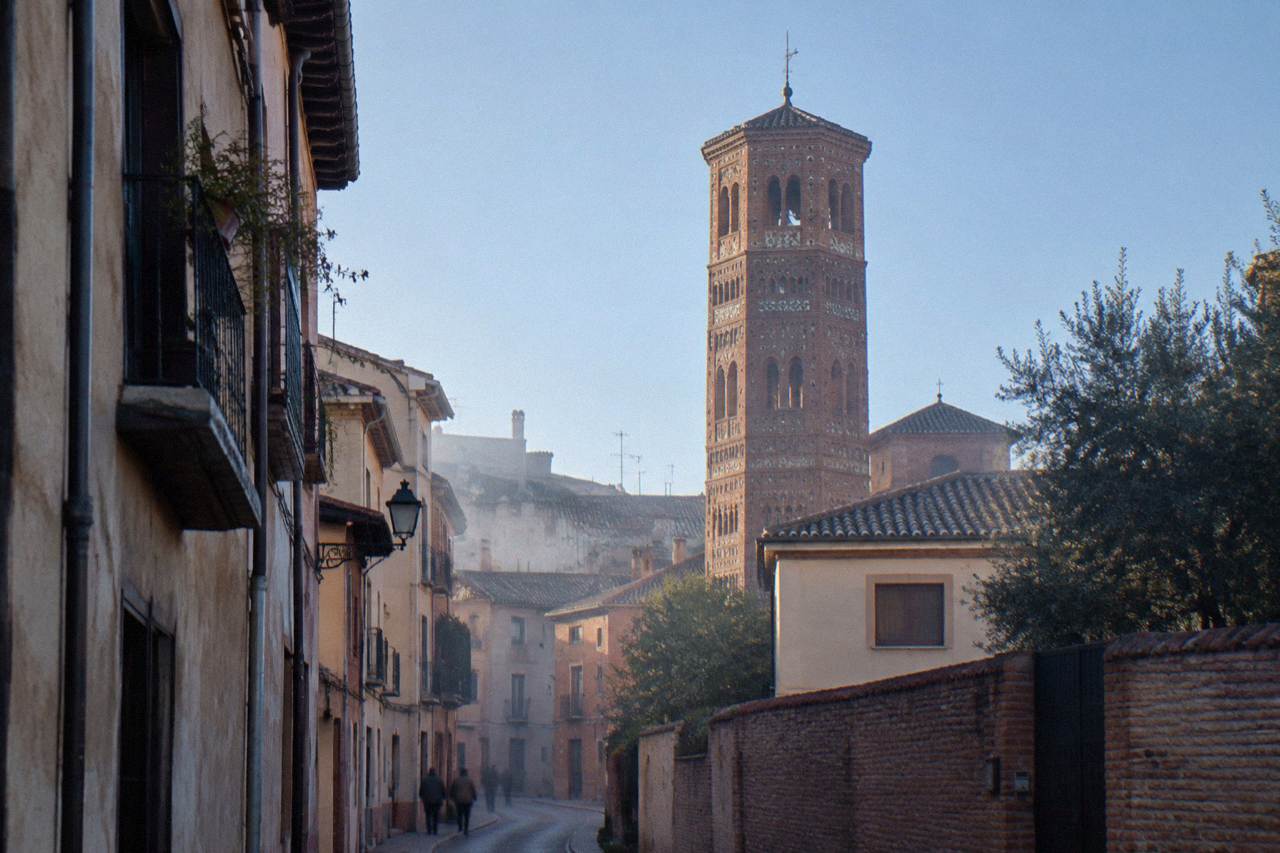
San Pablo is a residential barrio immediately south of Zaragoza's Casco Histórico, known for the Iglesia de San Pablo and its Mudéjar-style brick tower. It is a five-to-ten minute walk from Plaza del Pilar, holds the Museo Pablo Gargallo on its edge, and works best as a half-day add-on to the old town rather than a destination on its own.
San Pablo is a barrio of Zaragoza, the capital of Aragon in Spain, lying immediately south of the Casco Histórico and within a short walk of the Basílica del Pilar. It is a low, brick-built residential quarter whose parish church and tower give the district its name and its skyline, and it is one of the parts of the city where the everyday life of Zaragoza, bakeries, schools, small squares, sits right against the monumental core. Visitors tend to arrive from Plaza del Pilar, drift down through the church square, and continue toward the Ebro or back up into the old town. This guide covers what the barrio holds, which guided options cover it, what transport costs, and how to fold it into a day in the city.
What Is The San Pablo Barrio In Zaragoza?
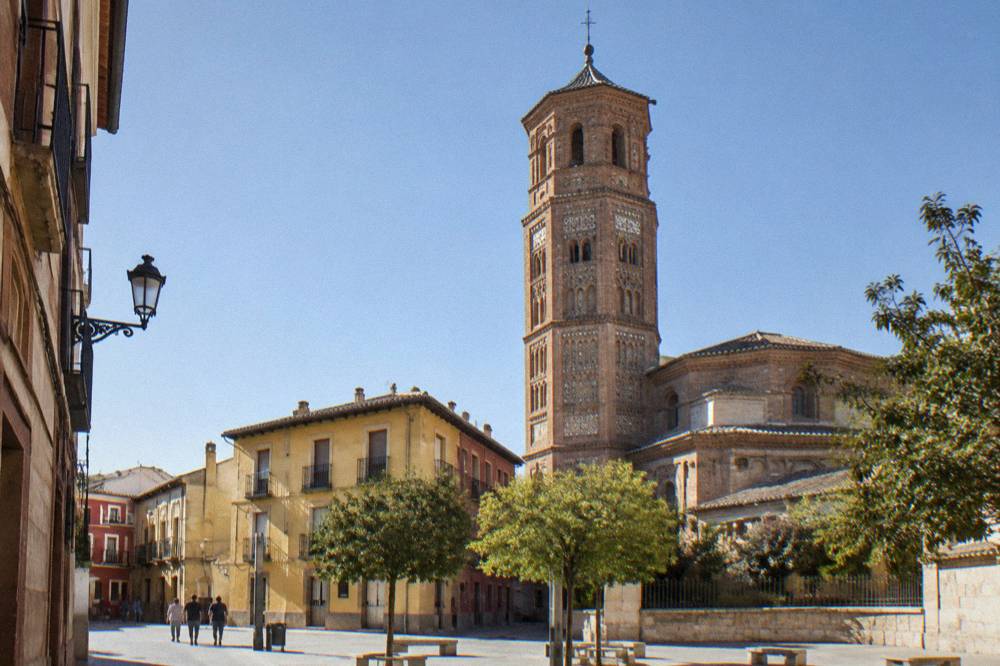
San Pablo is a residential and parish quarter immediately south of Zaragoza's old town, named for the Iglesia de San Pablo, whose brick tower in the Mudéjar tradition is the district's landmark. It is not a monument district in itself: its value to a visitor is proximity, atmosphere and a handful of small museums and churches on its edges, all within a short walk of Plaza del Pilar and the Ebro. Most of what a guidebook groups under "Zaragoza" sits north and west of it, which is exactly why the barrio rewards a detour. The streets are narrower and quieter than the Paseo de la Independencia a few blocks away, the building stock is brick rather than stone, and the church square acts as the neighbourhood's living room rather than as a tourist attraction. Zaragoza Travel Guide treats it as a half-day quarter, and the sections below set out how to spend that half day well.
The barrio sits beside the old town of Zaragoza, and the boundary between the two is a matter of feel rather than a line on a map. Walk south from La Seo or the Roman forum ruins and the streets gradually lose their monument density and gain ordinary commerce. That transition is the point. The Magdalena quarter west of the centre works the same way, a parish nucleus with a Mudéjar tower that most visitors reach on foot without ever noticing they have left the monumental city.
What Can You Actually See And Do In San Pablo Barrio?
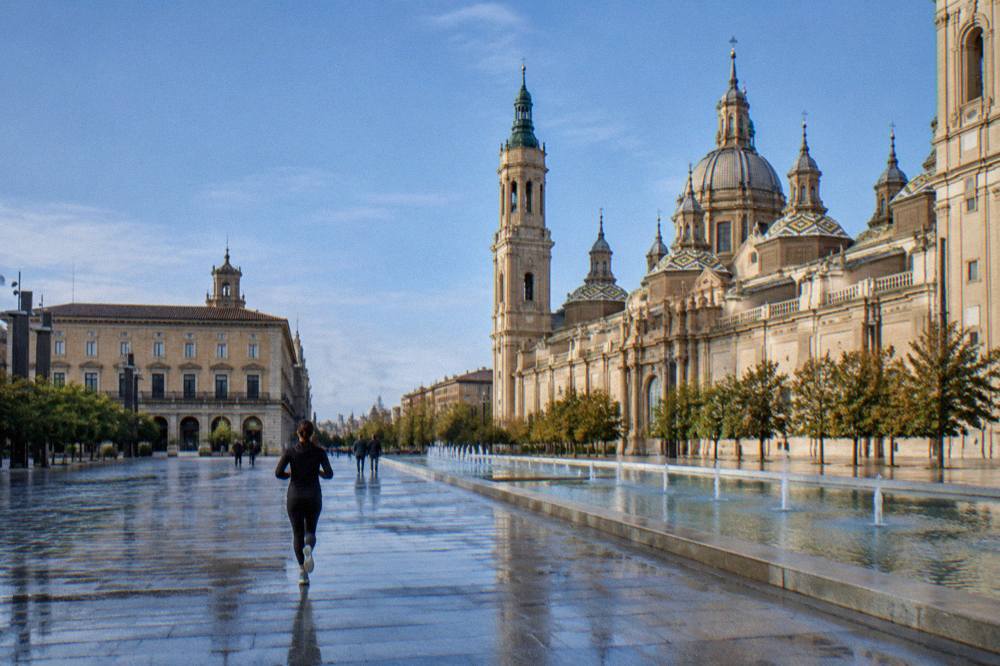
The barrio's sights are the Iglesia de San Pablo with its brick tower, the small squares and streets around it, and, on its edges, the Museo Pablo Gargallo and the museums of the Roman Caesaraugusta complex. The church is a living parish church rather than a ticketed monument, so the visit is short and informal, and the surrounding quarter is walked rather than toured. Entering the church is the main act. The tower is the visual anchor, brickwork laid in the Mudéjar manner that runs through so much of Aragon's building, and the interior rewards ten unhurried minutes rather than an hour. The San Pablo church itself has its own page with what to look at inside. Note one standing closure before planning: the Museo Pablo Gargallo is temporarily closed, so check its current status on the municipal museums page before counting on it.
Beyond the church, the barrio's practical value is its position. The Basílica del Pilar and La Seo cathedral are both a short walk away, the Roman Caesaraugusta sites sit between them, and the dense old-town street grid of tapas bars known as El Tubo is close enough to end an evening walk there. The table below gathers the ticketed and free museums within realistic walking range of the church square, with the admission figures the municipal timetable publishes.
| Museum or site | Admission | Notes from the municipal timetable |
|---|---|---|
| Caesaraugusta Forum Museum | EUR 4 | Tue-Sat 10:00-14:00 / 17:00-21:00, Sun 10:00-14:30 |
| Caesaraugusta River Port Museum | EUR 3 | Same opening pattern as the Forum |
| Caesaraugusta Baths Museum | EUR 3 | Same opening pattern as the Forum |
| Four-museum Caesaraugusta bono | EUR 7 (EUR 5 reduced) | Covers all four Roman-site museums |
| IAACC Pablo Serrano | Free | Tue-Sat 10:00-14:00 / 17:00-21:00, Sun 10:00-14:00 |
| Centro de Historias | Free | Tue-Sat 10:00-14:00 / 17:00-21:00, Sun 10:00-14:30 |
| Museo del Origami | EUR 3 | Free the 1st Tuesday and 1st Sunday of the month |
| Alma Mater Museum | EUR 5 | Diocesan museum near the Pilar |
| Museo del Fuego y los Bomberos | EUR 3 | Free the 1st Sunday of the month |
Two standing facts shape any museum plan in the city this season. The Museo de Zaragoza's central building on Plaza de los Sitios is closed for Ministry of Culture works, with no reopening date published, so it appears on no itinerary. And the Museo Goya, the Fundación Ibercaja collection, reopens on 9 October 2026 with Tuesday-to-Saturday hours of 10:00 to 20:00 and Sunday hours of 10:00 to 14:00, closed Mondays; its admission price has not been published, so ask at the desk or check the foundation's own page before going.
Which Guided Tours Cover San Pablo And The Old District?
The guided option built for this part of the city is the Zaragoza Historical Tour of the Old District with a Guide, a 2.5-hour walk from $106.92 per person, rated 5.0 from 14 reviews, which routes through the historic districts south and east of the Pilar. Around it sit a free, tip-based historical-centre walk and a self-guided scavenger hunt from $5.73, so a visitor can cover the same ground at three very different price points. The historical tour is the one to pick if the barrio's churches and street layers are the reason for the visit, because a guided walk is where the district's ordinary-looking brick stops being ordinary. The full details of each option, with the prices and ratings the listings carry, are in the table below.
| Tour | Kind | From (per person) | Rating | Length |
|---|---|---|---|---|
| Zaragoza Historical Tour of the Old District with a Guide | Guided walk | $106.92 | 5.0 from 14 reviews | 2.5 hours |
| Free Tour through the Historical Center of Zaragoza | Free, tip-based | Free | 4.15 from 122 reviews | Not stated |
| Zaragoza Self-Guided City Walking Tour and Scavenger Hunt | Self-guided | $5.73 | 4.5 from 37 reviews | Not stated |
| Zaragoza Monumental Sightseeing Tour | Guided intro walk | $10.41 | 4.4 from 36 reviews | 105 minutes |
| The Best of Zaragoza Sightseeing Tour: Mysteries, Photos, Stories, and Surprises | Guided walk | $22.28 | 4.6 from 41 reviews | 2.5 hours |
| Zaragoza Must-See Attractions Walking Tour With A Guide | Guided walk | $44.72 | 5.0 from 3 reviews | Not stated |
The 2.5-hour historical walk is the natural fit for this page's subject: its route is the old district, which is the territory San Pablo belongs to. The guided tour has its own page here with the meeting point and what the listing includes, and you can also Check availability directly with the operator.
For a first day in the city, a different sequence often works better: a broad one-day Zaragoza itinerary that takes in the Pilar, La Seo and the Aljafería first, with San Pablo folded in on the walk between them. Visitors with more time can spread the same set across the two-day itinerary or the three-day version, both of which leave room for the quieter quarters.
Where Is San Pablo Barrio And How Do You Get There?
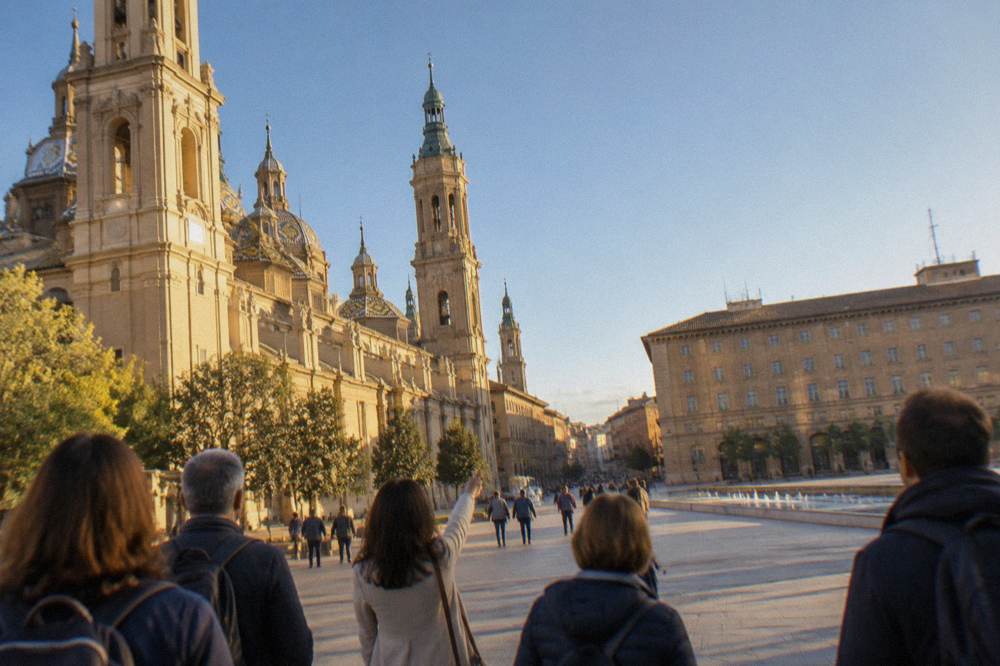
San Pablo lies directly south of Zaragoza's Casco Histórico, close enough to Plaza del Pilar that almost every visitor arrives on foot, and the city's flat terrain makes that the sensible choice. For arrivals from further out, the urban bus and tram single fare is 1.70 EUR, or 0.55 EUR with the rechargeable Tarjeta Bus, and a day of hopping between the barrio, the centre and the Expo riverside costs very little at those rates. The quarter needs no special transport plan. If you are staying in the centre around the Paseo de la Independencia, you will likely walk into the barrio without deciding to. If you are coming from the riverside parks in Actur and the Expo ribera, the tram is the practical link into the centre, and the walk down from its stops is short.
The fare table below collects the 2026 figures the operators publish, so a day's moving around the city can be budgeted before arrival.
| Transport | Fare | Notes |
|---|---|---|
| Urban bus or tram, single | 1.70 EUR | No transfer included |
| Urban bus or tram with Tarjeta Bus | 0.55 EUR | Card itself costs 7 EUR, valid on bus and tram |
| Night bus lines, single | 1.00 EUR | Night network |
| Zaragoza Bus Turístico | 10 EUR | 24-hour hop-on hop-off, 16 stops, 90-minute loop, cash only on the bus |
| Airport bus, line 505 | 4.65 EUR | About 2.25 EUR with a Lazo or Ciudadana card, 25 to 35 minutes, timed to flights |
| Bizi bike share, day pass | 1 EUR plus 0.50 EUR per trip | First 30 minutes per trip at that rate, 50 EUR deposit held |
The Bizi figures deserve a note because they surprise people: the day pass is a fixed 1 EUR, but each trip is charged on top, 0.50 EUR for the first 30 minutes, and a 50 EUR card deposit is held while you use it. For the distances involved in seeing San Pablo and the old town together, walking beats every one of these options on both cost and speed.
When Is The Best Time To Visit San Pablo Barrio?
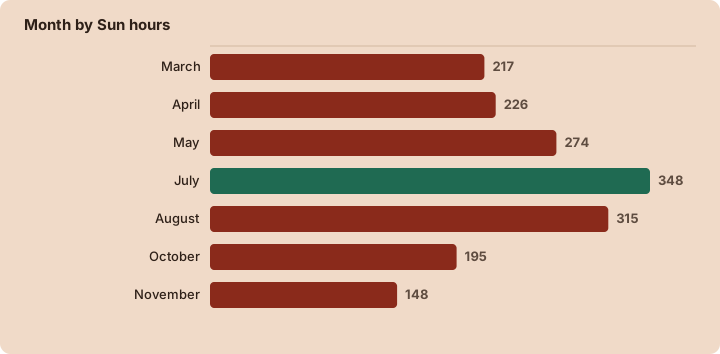
The best months to walk San Pablo and the surrounding old town are April, May, October and early November, when AEMET's 1981-2010 averages for the Zaragoza Aeropuerto station show mean maximum temperatures between 19.6 C and 24.1 C in spring and around 21.4 C in October, with manageable rainfall. July and August are the hardest months for street walking, with mean maxima of 32.4 C and 31.7 C respectively, and winter mornings dip to mean minima below 3 C. Those figures are the 1981-2010 climate normals, the only series the station page publishes, and they describe the airport station's long-term averages rather than any individual week. The practical reading is simple: this is a dry, continental city, and a barrio best seen on foot is best seen in the shoulder months. The full weather breakdown and the season-by-season guide carry the detail.
| Month | Mean max C | Mean min C | Rain, mm | Sun hours |
|---|---|---|---|---|
| March | 17.3 | 5.8 | 19 | 217 |
| April | 19.6 | 7.9 | 39 | 226 |
| May | 24.1 | 11.8 | 44 | 274 |
| July | 32.4 | 18.3 | 17 | 348 |
| August | 31.7 | 18.3 | 17 | 315 |
| October | 21.4 | 11.0 | 36 | 195 |
| November | 14.8 | 6.3 | 30 | 148 |
One timing fact matters more than the climate table if your visit lands in mid-October: the Fiestas del Pilar run from 10 to 18 October 2026, with the Ofrenda de Flores on 12 October filling the route from the Paseo de la Independencia to Plaza del Pilar with tens of thousands of participants. The barrio itself stays residential through the fiestas, but every street between it and the Pilar will be crowded, and the Palacio de Sastago is closed in October. Other pages covering the same trip are gathered on Zaragoza Travel Guide.
What Can You Do In San Pablo Barrio For Free?
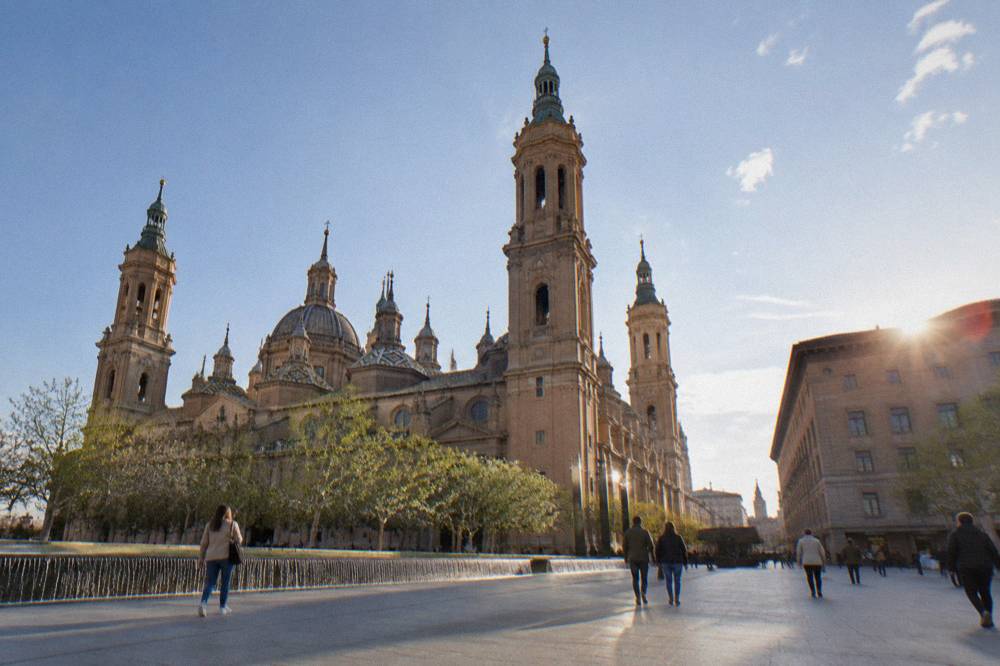
A lot of the barrio costs nothing: the Iglesia de San Pablo is a parish church with free entry, the IAACC Pablo Serrano and the Centro de Historias are free museums within walking distance, and several ticketed museums in the centre open free on set days, including the Caesaraugusta sites on the first Sunday of the month and the Aljafería on the first and third Sunday and Monday. The free-entry rhythm is worth building a low-budget day around, and the table below lists the days the municipal timetable actually publishes. Combine it with the guide to free things to do in Zaragoza and a day in and around San Pablo can be close to costless beyond food.
| Site | Free-entry terms |
|---|---|
| Iglesia de San Pablo | Free entry, a living parish church |
| IAACC Pablo Serrano | Free at all openings, Tue-Sat 10:00-14:00 / 17:00-21:00 |
| Centro de Historias | Free at all openings |
| Caesaraugusta museums | Free the 1st Sunday of the month |
| Museo del Fuego y los Bomberos | Free the 1st Sunday of the month |
| Museo del Origami | Free the 1st Tuesday and 1st Sunday |
| Aljafería | Free the 1st and 3rd Sunday and Monday of each month |
The Aljafería deserves its line here even though it sits beyond the barrio, because the free days turn it into the anchor of a zero-spend Monday or Sunday: general admission is 7 EUR, 9 EUR with a guided tour, and 2 EUR for students, over-65s and Carnet Joven holders, with under-12s free. The Aljafería palace guide covers what is inside.
The free walking option also belongs in this section. The Free Tour through the Historical Center of Zaragoza is a tip-based walk rated 4.15 from 122 reviews, and it costs nothing upfront.
How Do You Fit San Pablo Into A Half-Day Walking Route?
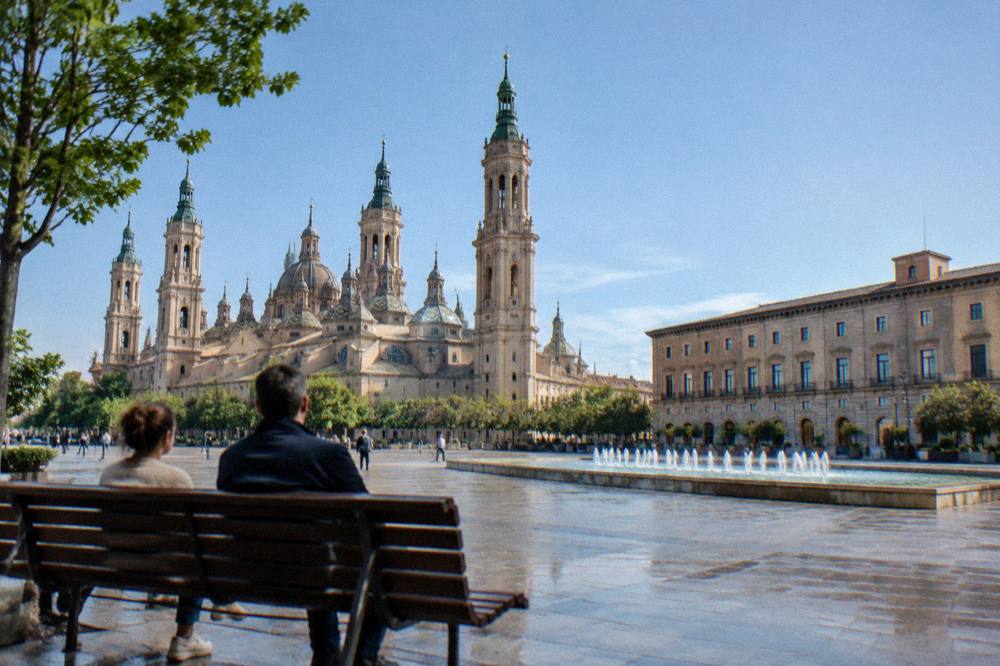
The clean half-day route is: start at Plaza del Pilar, walk down through the San Pablo church square, loop through the barrio's streets, return north past the Caesaraugusta sites to La Seo, and finish along the Ebro by the Puente de Piedra, with the whole circuit on foot and no transport needed. The order matters less than the direction: coming from the Pilar, the barrio reads as a descent from monument city into neighbourhood, and returning along the Roman sites gives the walk a second act. A version of this shape, with timings and food stops, is built out in the city itineraries, including the one-day itinerary and the family-oriented variant.
A workable shape, in sequence:
- Plaza del Pilar first, early. The basilica's main altar zone opens on the municipal timetable, and the square is at its calmest in the morning. Entering the temple is free.
- South into San Pablo. Walk to the church square, go inside the church, and give the tower a slow look from the street. This is the heart of the barrio and the quietest part of the route.
- Loop the side streets. The blocks around the church are the quarter itself: brick facades, small commerce, neighbourhood bars. There is no ticket and no queue, just streets.
- Return via the Caesaraugusta sites. The Forum museum at 4 EUR, or the four-museum bono at 7 EUR, breaks up the walk with something enclosed.
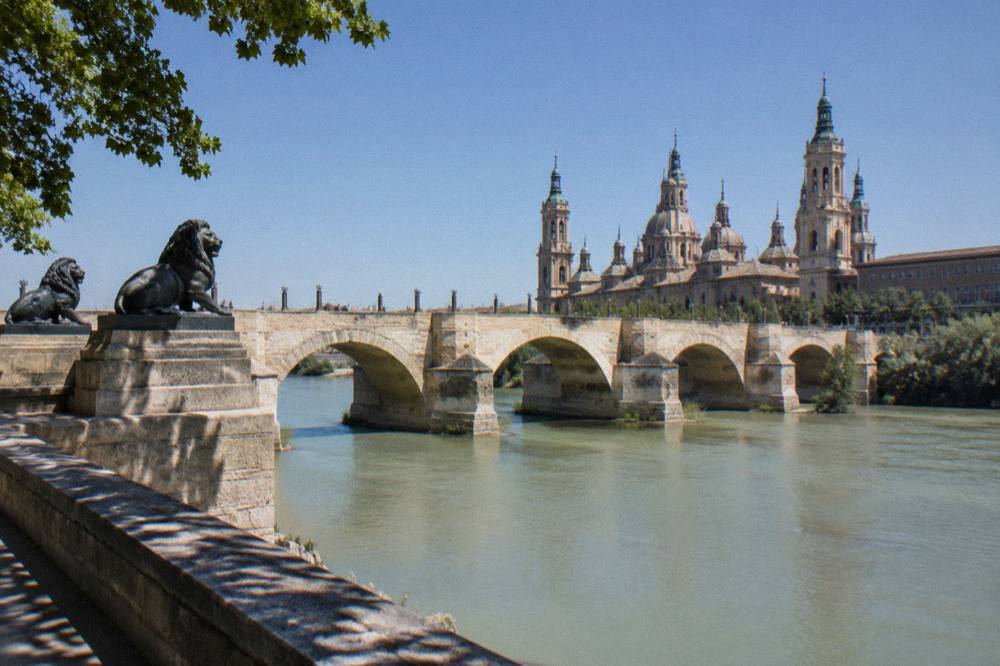
- La Seo and the Ebro. The cathedral's general ticket at 10 EUR includes the Museo de Tapices, the Museo Pilarista and the Rosario de Cristal. End at the Puente de Piedra, the stone bridge whose current version was begun in 1401 and opened in 1440, guarded by four bronze lions added in 1991.
For visitors who would rather have the route narrated than self-directed, the self-guided scavenger hunt turns the same territory into a game: from $5.73 per person, rated 4.5 from 37 reviews, with the city's streets as the board.
The full historical tour of the old district remains the guided version of the same idea, and the operator's live listing shows the next available dates.
Where Do You Eat Near San Pablo Barrio?
Eating near the barrio means neighbourhood bars inside San Pablo itself and the dense old-town street grid of tapas bars just north of it, where an evening crawl is the standard way to eat. There is no single named restaurant to aim for: the pattern is a drink and a small plate in each of several places, moving on foot, with prices read from the chalkboard rather than assumed. The old-town grid, known as El Tubo, is exactly that, a lattice of narrow streets packed with tapas bars, and it sits between the Pilar and the Coso. No single bar needs naming here: the pattern is to take a drink and a small plate in each of several places, moving on foot. The El Tubo page covers the geography, and the food traditions to order across the city, ternasco lamb, Aragonese migas, the local sweets, have their own entries. Prices vary by bar, so read the chalkboard or the menu card before committing, and treat any figure quoted online as one bar's price on one day rather than the district's.
A tapas walk with a guide is the shortcut for visitors who want the district decoded rather than discovered alone. The 3-Hour Evening Tapas Walking Tour in the Old Town runs from $106.92 per person, rated 4.9 from 62 reviews, and the midday market-and-tapas version carries the same price with a 5.0 rating from 9 reviews. Both have their own pages in the food section of the tour listings.
What Should You Know Before Visiting San Pablo Barrio?
Three practical facts carry most of the weight: the Museo Pablo Gargallo is temporarily closed, the Museo de Zaragoza's central building is closed for works with no reopening date, and there is no tourist tax anywhere in Aragon, so the room price you book is the price you pay. Beyond those, the quarter asks for very little planning. The church keeps parish hours rather than museum hours, so a visit can coincide with a service, and the respectful move is to keep quiet, stay at the back, and come back later if a mass is in progress. Driving in is the one thing genuinely worth thinking about: the Casco Histórico's low-emission zone has been enforced with sanctions since 12 December 2025, operating Monday to Friday from 08:00 to 20:00, and vehicles without a DGT environmental label are restricted in that window. Arrive by tram, bus, bike or on foot and the question never arises.
For visitors pairing the barrio with a wider Aragon trip, the day-trip pages cover the monasteries, castles and mountain parks that sit within reach of the city, and the San Juan de la Peña day trip in particular pairs well with a second car-free day spent in town. San Pablo itself, though, is a morning or an afternoon: a church, a tower, some brick streets, and the shortest possible walk back to the biggest monuments in Aragon.
Common Questions About San Pablo Barrio In Zaragoza
What is the San Pablo barrio in Zaragoza?
It is a residential and parish quarter immediately south of Zaragoza's old town, named for the Iglesia de San Pablo and its brick Mudéjar-style tower. It is visited for its atmosphere and its church rather than for ticketed monuments.
How far is San Pablo from the Basílica del Pilar?
The barrio sits directly south of the old town, and the walk from Plaza del Pilar to the San Pablo church square is short enough that nearly every visitor arrives on foot as part of an old-town walk.
Is the Museo Pablo Gargallo open?
No. The Museo Pablo Gargallo is temporarily closed. Check the municipal museums page for its current status before planning a visit around it.
What does public transport cost in Zaragoza?
A single urban bus or tram ticket is 1.70 EUR, or 0.55 EUR with the Tarjeta Bus, which itself costs 7 EUR and works on both networks. Night lines are 1.00 EUR per single.
When is the best time of year to visit?
Per AEMET's 1981-2010 averages for the Zaragoza Aeropuerto station, spring and October offer the most comfortable walking temperatures, with mean maxima between about 19 and 24 C. July and August average mean maxima above 31 C, which makes long street walks harder.
Can you visit San Pablo barrio for free?
Yes. The church is free to enter, the IAACC Pablo Serrano and Centro de Historias are free museums nearby, and the Caesaraugusta sites and Aljafería open free on set days each month, listed in the table above.