San Pablo Church In Zaragoza: The Mudéjar Tower And UNESCO Guide
The Church of San Pablo in Zaragoza, Spain, holds one of the three UNESCO inscriptions inside the city, a Mudéjar brick tower that has defined its barrio for centuries. This guide covers what the listing actually protects, what to look at when you stand in the square, and how to fold the visit into a day in the old town.
Short answer
The Church of San Pablo in Zaragoza is one of exactly three components of the UNESCO property Mudéjar Architecture of Aragon located in the city, inscribed in 1986 and extended in 2001. Its brick tower and parish church sit in the San Pablo barrio a short walk east of Plaza del Pilar, and the tower's geometric brickwork is the reason to bring a camera.
The Church of San Pablo in Zaragoza, the capital of Aragon on the Ebro, is one of the quietest UNESCO World Heritage experiences in Spain. Most visitors walk straight past its barrio between the Basílica del Pilar and the Aljafería, yet the tower and parish church of San Pablo are, in UNESCO's own wording, one of exactly three components of the inscribed property "Mudejar Architecture of Aragon" that stand inside the city. The listing, inscribed in 1986 and extended in 2001, protects the Mudéjar brickwork of the tower and the church it crowns, a style built by Muslim craftsmen working under Christian rule, and in Zaragoza that story is written in geometric patterns of fired clay.
This page from Zaragoza Travel Guide covers what the UNESCO listing actually protects, what to look at from the square and inside the church, how to reach the barrio by tram or bus, and how the guided options in the old town fold San Pablo into a single loop with La Seo and the Aljafería. Nothing here is padded with invented opening hours: where a detail is not published, the guide says what to check and where.
What Is The Church Of San Pablo In Zaragoza?
The Church of San Pablo is a parish church in the San Pablo barrio east of Zaragoza's old centre, whose Mudéjar tower and church body form one of the three Zaragoza components of the UNESCO World Heritage property "Mudejar Architecture of Aragon". The property was inscribed in 1986 and extended in 2001, and UNESCO's component list names "the tower and parish church of San Pablo de Zaragoza" explicitly, alongside the surviving Mudéjar features of the Aljafería Palace and La Seo's apse, parroquieta and cimborio.
That is the headline, and it is worth pausing on, because it surprises people. Zaragoza's most famous building, the Basílica del Pilar, is not a UNESCO site. Neither is the Puente de Piedra, the Torre Nueva (long demolished) or La Magdalena. The city's World Heritage presence rests on three Mudéjar ensembles, and San Pablo is the one furthest from the tourist core, which is exactly why it rewards the twenty-minute detour.
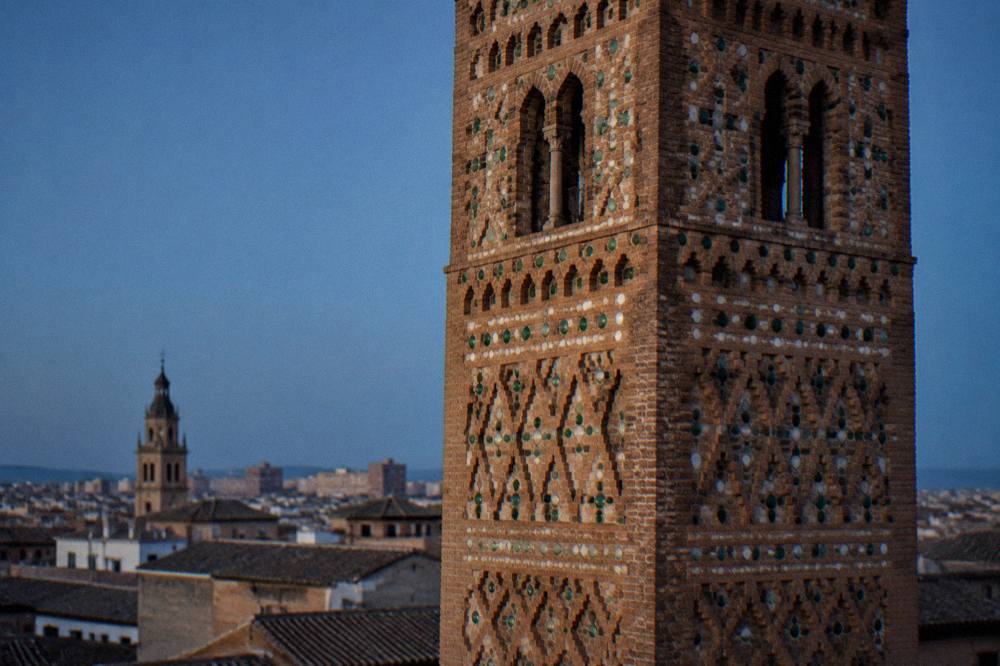
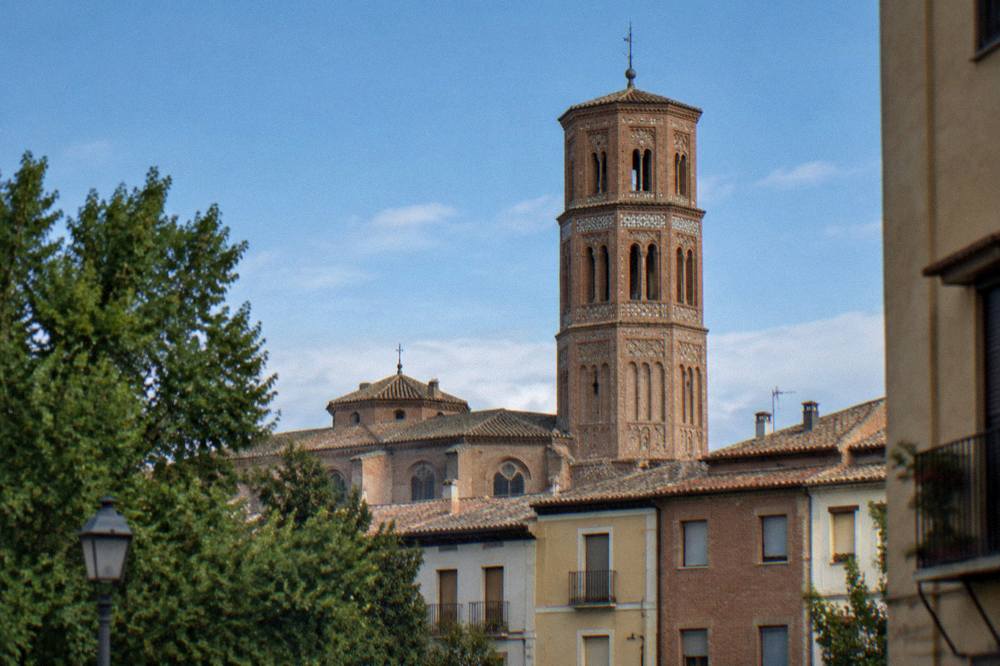
The church is a living parish rather than a museum piece. It anchors a working neighbourhood of low-rise streets, small bars and squares that sits between the Ebro to the north and the grand Paseo de Sagasta axis. The Mudéjar tower, built of brick laid in interlacing geometric patterns, is the visual signature: diamond friezes, stepped arches in blind recesses, and corner turrets that thin as they climb, all achieved with nothing but fired clay and lime.
Why Is San Pablo A UNESCO World Heritage Site?
UNESCO inscribed "Mudejar Architecture of Aragon" in 1986 and extended it in 2001 under criterion (iv), covering ten components in the provinces of Teruel and Zaragoza. Exactly three are in Zaragoza city: the surviving Mudéjar features of the Aljafería Palace, the tower and parish church of San Pablo, and the apse, parroquieta and cimborio of La Seo. San Pablo's tower and church are listed in their own right, not as an annex to a bigger monument.
The listing's logic is stylistic and historical at once. Mudéjar is the name given to the work of Muslim craftsmen who stayed in Christian-ruled Aragon after the reconquest, and their idiom, brick geometry, glazed tile, carved plaster and timber ceilings, became one of Aragon's defining artistic languages. UNESCO's criterion (iv) recognises the style as an exceptional testimony to that coexistence, and the ten components together show its range across palaces, churches and towers.
| Zaragoza component (UNESCO wording) | Reference | What is actually listed |
|---|---|---|
| The surviving Mudejar features of the Aljaferia Palace | 378ter-008 | Only the palace's Mudéjar elements, not the whole building |
| The tower and parish church of San Pablo | 378ter-009 | The Mudéjar tower and the parish church it crowns |
| The apse, parroquieta and cimborio of La Seo | 378ter-010 | Those three Mudéjar parts of the cathedral, not the whole fabric |
The other seven components sit elsewhere in the two provinces, in Teruel, Calatayud, Cervera de la Cañada and Tobed. For a visitor basing themselves in Zaragoza, the practical point is simpler: you can see all three city components in one day on foot, and the Mudéjar thread ties them together. The old town monumental walking tour covers this circuit with a guide, and you can Check availability for your dates before you plan the loop.
The Aljafería's Mudéjar parts are the palace's oldest surviving layer, and the Aljafería Palace page on this site details what else awaits inside, from the oratory arches to the October exhibition calendar. La Seo's contribution, its apse, parroquieta and cimborio, is covered on the La Seo Cathedral page alongside the museum ticket that bundles the Museo de Tapices and the Museo Pilarista.
What Should You Look At Inside And Outside San Pablo?
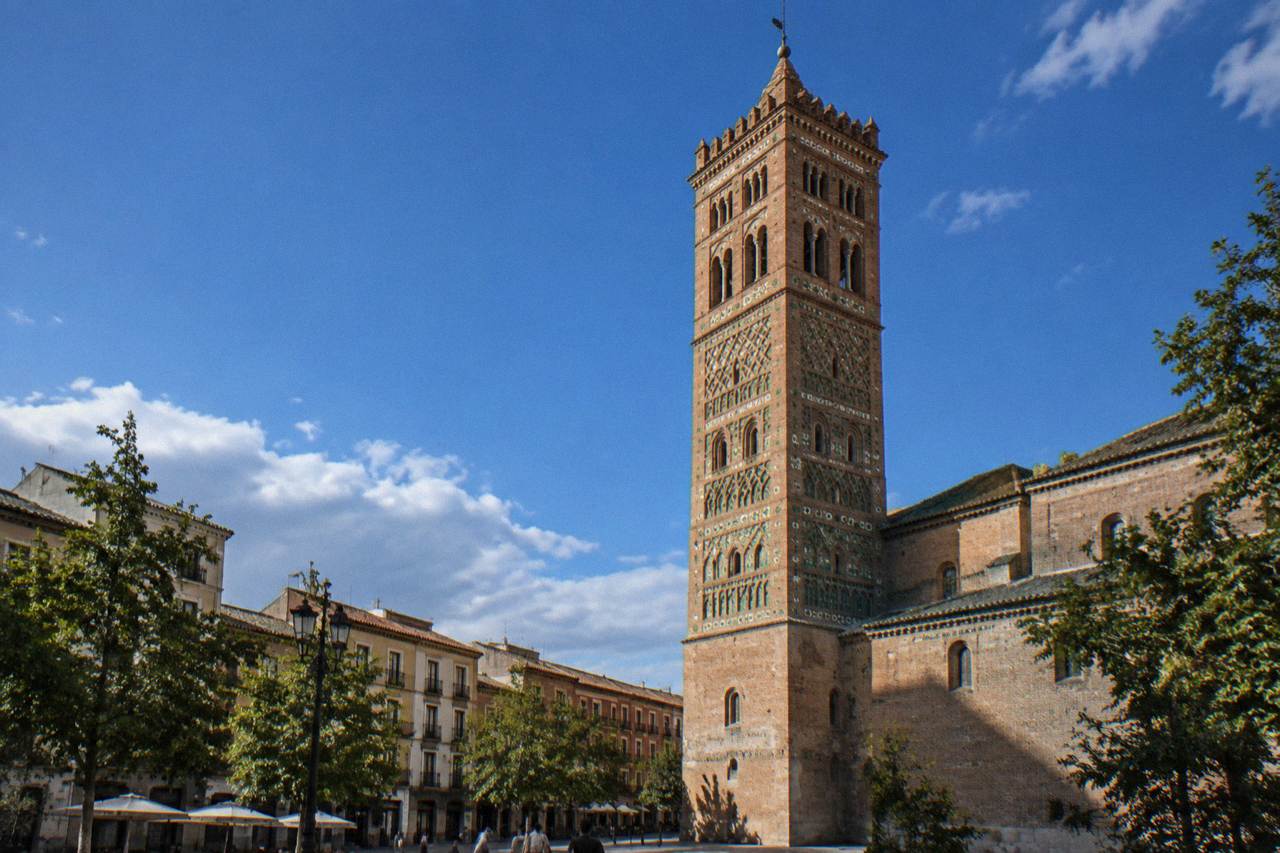
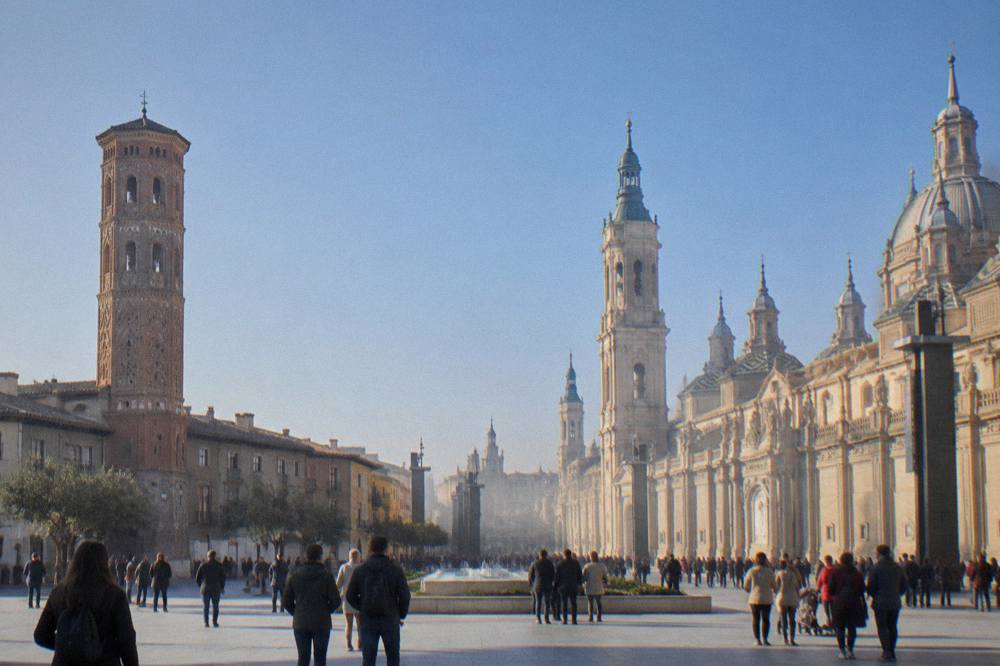
Stand in the Plaza de San Pablo and work upward: the tower's lower stages carry broad brick diamonds and interlace, the middle stages add stepped blind arches in paired recesses, and the upper stages open into bell chambers with ceramic-inlaid borders. Inside, the church holds a single Gothic-Mudéjar space with a coffered timber ceiling tradition, side chapels and a high altar, and the apse masonry shows the same brick craft as the tower.
The tower is the reason photographers come. Its face changes with the light: flat at noon, deeply modelled in the low sun of early morning or late afternoon, when every recessed arch throws its own shadow. The geometric bands are laid in glazed and unglazed brick, and the corners carry turrets that step in as the tower rises, a signature of Aragonese Mudéjar that you will recognise again instantly on La Seo's cimborio once you have seen it here.
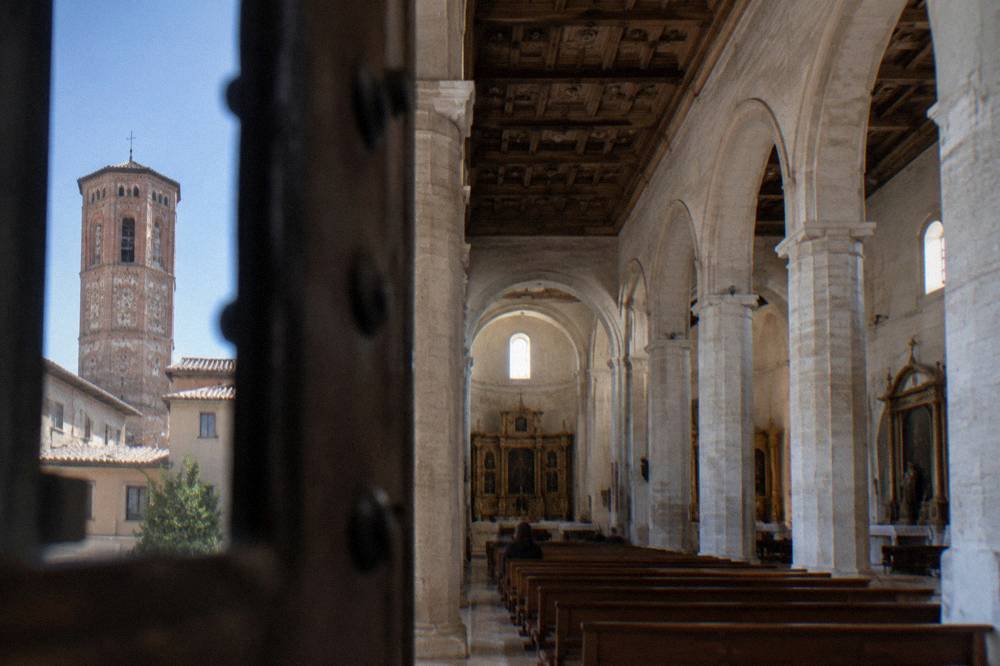
Inside, the plan reads as one broad nave with chapels between structural pierces, a layout typical of Aragonese parish churches of the period. Look for the contrast between the brick shell and the later altarpieces and stonework inside, and for the way daylight from the clerestory picks out the apse. Because San Pablo is an active parish, the interior can be in use for worship at any time; if a service is on, wait or return later rather than walk through, and check the parish notice board or the diocesan listing for visiting arrangements before making a special trip.
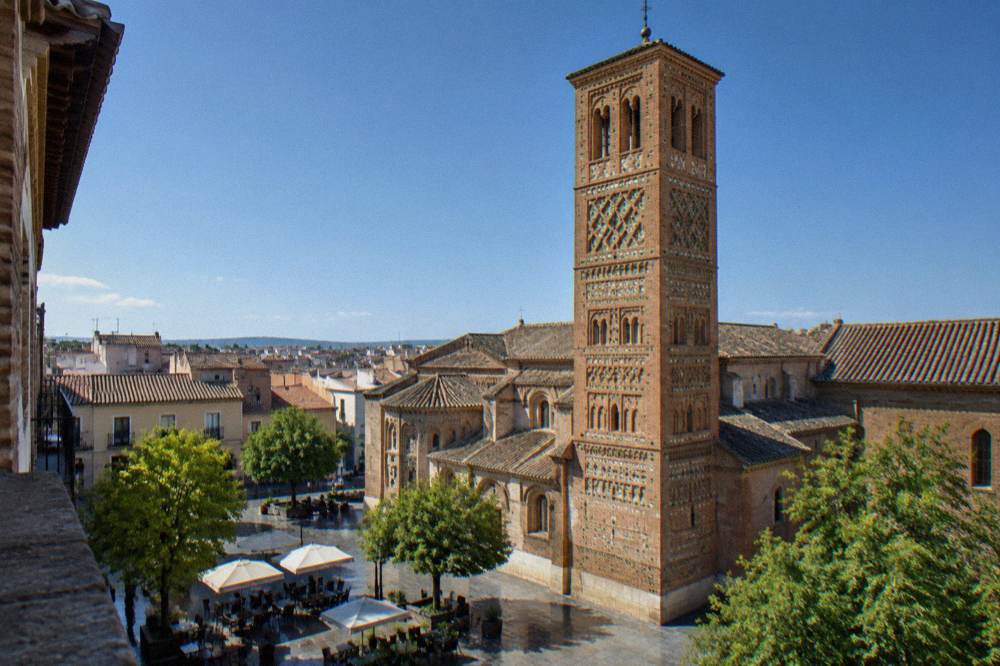
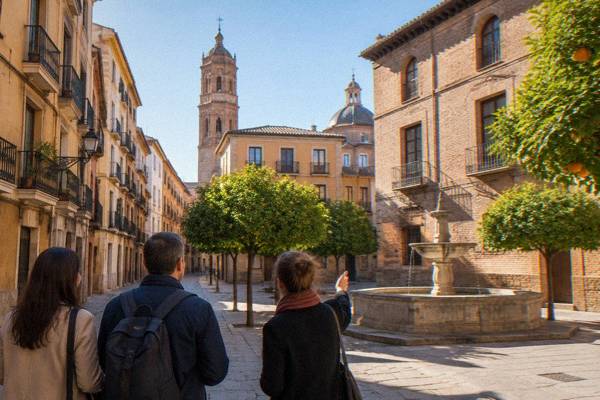
The square outside is as much the sight as the church. Café tables, plane trees and a low-rise street grid give the plaza a lived-in feel that Plaza del Pilar, for all its grandeur, cannot match. For a longer account of the neighbourhood's character, bars and street pattern, see the San Pablo barrio area guide.
How Do You Get To The Church Of San Pablo?
Zaragoza's urban tram and bus network reaches the San Pablo barrio with a single fare of 1.70 EUR, or 0.55 EUR with the rechargeable Tarjeta Bus, which costs 7 EUR and works on both bus and tram. The barrio sits east of the old centre, a short ride or a comfortable walk from Plaza del Pilar, and the city's tourist bus runs a 16-stop, 90-minute loop with a 10 EUR hop-on hop-off ticket valid for 24 hours.
The fare table comes from the 2026 Avanza tariff page for the Zaragoza network, and the tourist bus details from the municipality's own tourism post. Night buses cost 1.70 EUR as well, and the Tarjeta Bus cuts each ride to 0.55 EUR, so a couple making four rides a day saves real money within a single day of sightseeing.
| Transport option | 2026 fare | Notes |
|---|---|---|
| Urban bus or tram, single | 1.70 EUR | No transfer included |
| Same ride with Tarjeta Bus | 0.55 EUR | Card itself 7 EUR, valid on bus and tram |
| Night line single | 1.70 EUR | Night network |
| Tourist bus day ticket | 10 EUR | 24 hours, 16 stops, 90-minute loop, cash only on the bus |
| Bizi day pass | 1 EUR fixed | Plus 0.50 EUR for the first 30 minutes of each trip |
If you are driving, note that Zaragoza operates a low-emission zone in the Casco Histórico: restrictions with sanctions have applied since 12 December 2025, on weekdays from 08:00 to 20:00, and vehicles without a DGT environmental label are the ones affected. There is a 15-minute grace provision if you enter by mistake, per the municipal FAQ, but the simpler answer is to leave the car and use the tram.
On foot, the walk from Plaza del Pilar runs through the eastern old town and takes in streets that most visitors never see, which is a recommendation in itself. The Ebro river walk and the Puente de Piedra lie to the north, so a loop that pairs the river bank with the barrio is easy to draw.
What Is The San Pablo Barrio Like Around The Church?
The San Pablo barrio is a low-rise residential quarter east of Zaragoza's old centre, built around the church and its square, with small bars, local shops and a street grid that feels lived-in rather than staged for visitors. It sits between the Ebro and the Paseo de Sagasta axis, and its character is closer to a working neighbourhood with one world-famous tower than to a museum district.
That character is the barrio's selling point. You come for the UNESCO brickwork, but you stay for a vermouth at a square-side table while children play around the plane trees. The tapas action that most visitors associate with Zaragoza concentrates in the dense old-town street grid of tapas bars behind the Pilar, described without embellishment on the El Tubo page, but San Pablo holds its own smaller, more local equivalent in the streets off the plaza.
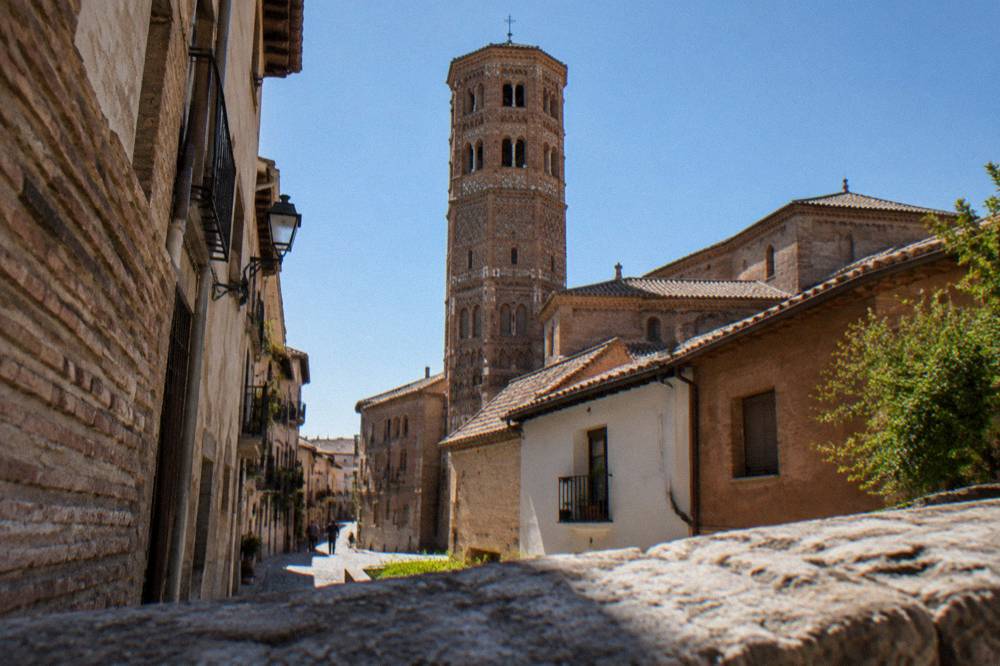
The barrio also sits conveniently for several of the city's less-visited sights. The Museo Pablo Gargallo is nearby but temporarily closed, so check the municipality's museum notice before walking there specifically. The IAACC Pablo Serrano, open Tuesday to Saturday from 10:00 to 14:00 and 17:00 to 21:00 and on Sundays from 10:00 to 14:00, is free, and the Centro de Historias, also free, runs the same late-afternoon rhythm.
| Nearby sight | Admission | Current status (October 2026) |
|---|---|---|
| IAACC Pablo Serrano | Free | Open Tue-Sat 10:00-14:00 and 17:00-21:00, Sun 10:00-14:00 |
| Centro de Historias | Free | Open Tue-Sat 10:00-14:00 and 17:00-21:00, Sun 10:00-14:30 |
| Museo Pablo Gargallo | Not stated | Temporarily closed |
| Museo del Origami | 3 EUR | Free the 1st Tuesday and 1st Sunday of the month |
| Museo del Fuego y los Bomberos | 3 EUR | Open Tue-Sat 10:00-19:00, Sun 10:00-14:00 |
How Does San Pablo Compare With La Seo And The Aljafería?
All three Zaragoza components of the UNESCO property are Mudéjar, but they show three different faces of the style: the Aljafería's are palace survivals from the taifa period, La Seo's are cathedral parts, an apse, the parroquieta and the cimborio, and San Pablo's are a parish church and tower built for a neighbourhood. San Pablo is the freestanding, most photogenic of the three and the only one whose listing is visible in full from a public square.
The comparison matters for planning. The Aljafería's Mudéjar features sit inside a palace complex that also holds regional parliament functions and a Goya exhibition, and its October hours run daily from 10:00 to 18:00 with general admission at 7 EUR and guided visits at 9 EUR, free on the first and third Sunday and Monday of each month. La Seo charges 10 EUR general, a ticket that includes the Museo de Tapices, the Museo Pilarista and the Rosario de Cristal, with a combined tower option at 12 EUR. San Pablo, as a parish church, does not run a monument box office; treat it as a street-and-square visit and check the parish's own notices for interior access times.
| UNESCO component | Where to see it from | Ticket situation |
|---|---|---|
| San Pablo tower and church | Plaza de San Pablo, open street | Parish church, no monument box office; check parish notices |
| Aljafería Mudéjar features | Palace interior, daily 10:00-18:00 in October | 7 EUR general, 9 EUR guided, free 1st and 3rd Sunday and Monday |
| La Seo apse, parroquieta, cimborio | Cathedral interior, Mon-Sat 10:00-14:30 and 16:00-20:00 | 10 EUR general including three museums, 12 EUR with tower |
A reasonable day pairs all three. Start at the Basílica del Pilar, whose tower viewpoint costs 6 EUR for an adult if you want the panorama, cross to La Seo for the cathedral's Mudéjar core, then walk east to San Pablo before finishing at the Aljafería before its 18:00 October close, remembering that last access there is 45 minutes before closing.
Can You See San Pablo On A Guided Tour In Zaragoza?
Yes, several guided options in Zaragoza include the San Pablo area or the Mudéjar theme, from a free, tip-based GuruWalk of the historical centre to paid historical walks of the old district and a 105-minute monumental introduction. The old town monumental walking tour is the most direct fit, covering the classic monumental circuit with a licensed local guide, from $97.47 per person and rated 4.9 from 15 reviews.
The free option deserves its own sentence, because it is the honest exception to this site's usual booking language. The Free Tour through the Historical Center of Zaragoza runs on GuruWalk, is free and tip-based, and is rated 4.15 from 122 reviews; the guru who leads it is named on the platform's listing, and you tip what you want at the end. It is not this site's product and carries no price.
For visitors who prefer a fixed itinerary, the paid historical walk of the old district runs 2.5 hours from $106.92 per person, rated 5 from 14 reviews, and the monumental introduction tour runs 105 minutes from $10.41 per person, rated 4.4 from 36 reviews, a good low-commitment orientation before you strike out to the barrio on your own.
If Spanish is your language, a Spanish-language guided visit to the Basílica del Pilar, from $12.38 per person and rated 4.7 from 46 reviews, pairs naturally with the Aljafería's Spanish guided tours at 10:30, 12:30, 13:30, 15:00 and 16:00, giving a full Mudéjar-and-monuments day with local guides. Book the basilica visit ahead if the Fiestas del Pilar week falls inside your dates, because the whole monumental core runs busy from 10 to 18 October.
Whichever of these you choose, the guided options all start in the city centre, so the practical plan is to take a walk first and return to the barrio on your own afterwards for the photography, when the tour groups have moved on and the light on the brick is at its best.
When Is The Best Time To Visit And Photograph The Tower?
AEMET's 1981 to 2010 normals for the Zaragoza Aeropuerto station show the most comfortable months for a walking-heavy visit are April, May, October and into early November, with mean maxima of 19.6 C in April, 24.1 C in May and 21.4 C in October, while July and August average 32.4 C and 31.7 C respectively. For photography, the tower's brick geometry photographs best in low morning or late-afternoon sun, when the recessed arches cast shadow.
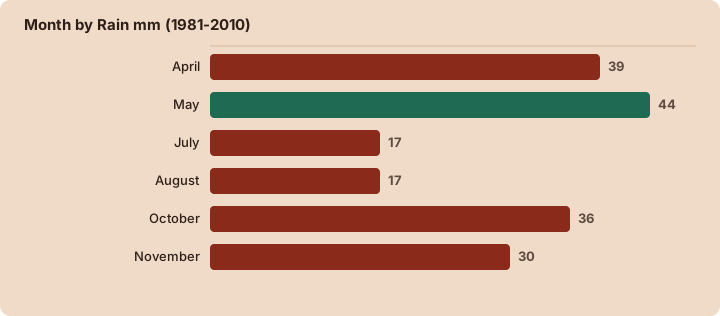
The climate table deserves reading rather than generalising. May is actually the wettest month at 44 mm on the 1981-2010 normals, while July and August are the driest at 17 mm each, and the year totals just 322 mm of rain over 51.1 days of 1 mm or more, which is what a dry continental semi-arid climate looks like on paper. July is the sunniest month at 348 hours, and October, the month of the Fiestas del Pilar, still averages 195 hours of sun against 36 mm of rain.
| Month | Mean max C (1981-2010) | Rain mm (1981-2010) | Verdict for a San Pablo visit |
|---|---|---|---|
| April | 19.6 | 39 | Comfortable, green light |
| May | 24.1 | 44 | Warm, the wettest month of the year |
| July | 32.4 | 17 | Hot at midday, go early |
| August | 31.7 | 17 | Hot, dry, evening visits |
| October | 21.4 | 36 | Mild, plus the Fiestas del Pilar |
| November | 14.8 | 30 | Cool, soft light on brick |
One timing note cuts across all seasons: if your visit falls between 10 and 18 October 2026, the Fiestas del Pilar fill the city, with the Ofrenda de Flores on 12 October following its usual route from Paseo de la Independencia to Plaza del Pilar. The barrio will be busier and livelier, and the Ofrenda de Frutos and Rosario de Cristal are reported for 13 October, though the city's own page confirms only the headline dates, so treat the 13 October events as reported rather than scheduled until you check the programme.
What Else Should You Combine With San Pablo In One Day?
The natural San Pablo loop takes in the Basílica del Pilar, whose temple entry is free, La Seo with its 10 EUR combined ticket, the Roman Caesaraugusta museum sites from 3 to 4 EUR each or 7 EUR for the four-museum bono, and the Aljafería before its 18:00 October close. Add the Ebro bank and the Puente de Piedra for the river perspective, and the day covers two millennia and three UNESCO components on foot.
The Roman layer is the surprise many visitors miss. Zaragoza was Caesaraugusta, and the Roman Caesaraugusta ensemble, the forum museum, the river port museum, the theatre museum and the baths and walls, runs on a shared ticket of 7 EUR for all four museums, 5 EUR reduced, with free entry on the first Sunday of the month and Tuesday-to-Saturday hours of 10:00-14:00 and 17:00-21:00.
For Goya, note the October 2026 landscape carefully: the Museo Goya reopens on 9 October 2026 with Tuesday-to-Saturday hours of 10:00-20:00 and Sunday hours of 10:00-14:00, closed Mondays, and no published admission price, while the Museo de Zaragoza's central building at Plaza de los Sitios 6 is closed for Ministry of Culture works with no reopening date, so do not plan around it. The Goya in Zaragoza page tracks the painter's city.
Common Questions About The Church Of San Pablo In Zaragoza
Is the Church of San Pablo in Zaragoza a UNESCO World Heritage Site?
Yes. UNESCO's component list for "Mudejar Architecture of Aragon" names "the tower and parish church of San Pablo de Zaragoza" as one of the three Zaragoza components of the property, which was inscribed in 1986 and extended in 2001. The Basilica del Pilar and the Puente de Piedra are not part of the listing.
How far is San Pablo from the Basílica del Pilar?
San Pablo sits east of the old centre in its own barrio, a comfortable walk from Plaza del Pilar through the eastern old-town streets, or a short tram or bus ride at 1.70 EUR for a single, or 0.55 EUR with the Tarjeta Bus. The barrio lies between the Ebro and the Paseo de Sagasta axis.
What should I look at on the tower of San Pablo?
Work upward from the base: broad brick diamond and interlace bands, stepped blind arches in paired recesses on the middle stages, and open bell chambers with ceramic-inlaid borders and corner turrets above. The patterns are laid in glazed and unglazed brick, and low morning or late-afternoon sun brings the geometry out best.
Can you go inside the Church of San Pablo?
San Pablo is an active parish church rather than a ticketed monument, so there is no monument box office. Check the parish notice board or the diocesan listing for visiting arrangements before making a special trip, and if a service is under way, wait or return rather than walk through.
Which tours in Zaragoza include San Pablo?
The old town monumental walking tour covers the classic monumental circuit with a local guide, from $97.47 per person and rated 4.9 from 15 reviews. The Free Tour through the Historical Center of Zaragoza, a free, tip-based walk on GuruWalk rated 4.15 from 122 reviews, is the budget alternative, and a 2.5-hour historical tour of the old district, from $106.92, goes deeper on the district's past.
When is the best month to visit Zaragoza for the Mudéjar sights?
AEMET's 1981 to 2010 normals for the Zaragoza Aeropuerto station put April at a 19.6 C mean maximum, May at 24.1 C and October at 21.4 C, against 32.4 C in July, so spring and October suit a walking-heavy itinerary. October adds the Fiestas del Pilar, running 10 to 18 October 2026.
The tower of San Pablo rewards the walk east better than almost anything else in Zaragoza: a UNESCO-listed parish church, in a lived-in square, that most of the crowd at Plaza del Pilar never reaches.