Zaragoza Hidden Gems
Zaragoza, the capital of Aragon on the Ebro, hides far more than its two famous landmarks suggest. This guide collects the overlooked museums, quiet corners and local viewpoints that most visitors walk straight past, with the verified prices and free-entry days that make them easy to plan.
Short answer
Zaragoza's best hidden gems are the free Torreón de la Zuda viewpoint, the four Caesaraugusta Roman museums, the Museo del Origami and Museo del Fuego y los Bomberos, the far bank of the Ebro around the Puente de Piedra, and the Parque del Agua, more than 120 hectares of green space most visitors never reach.
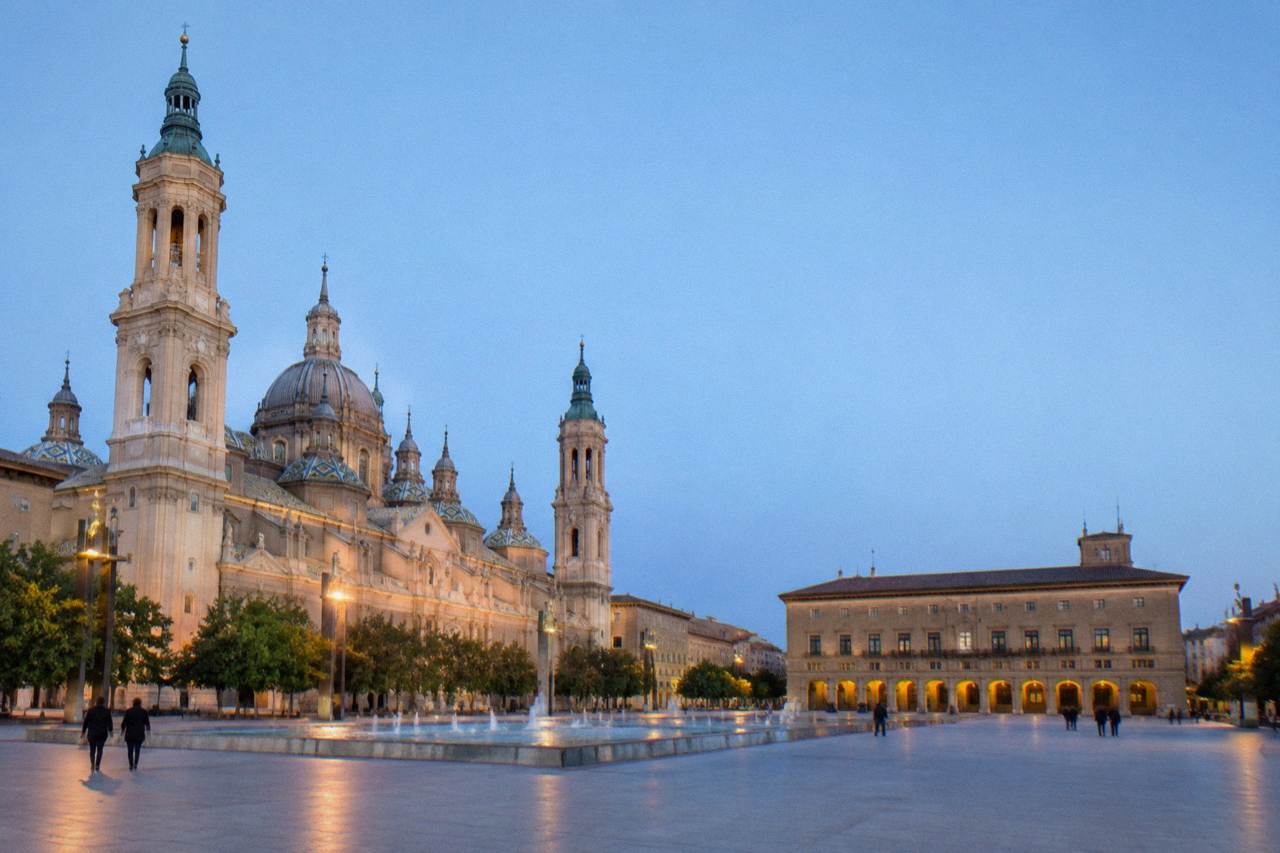
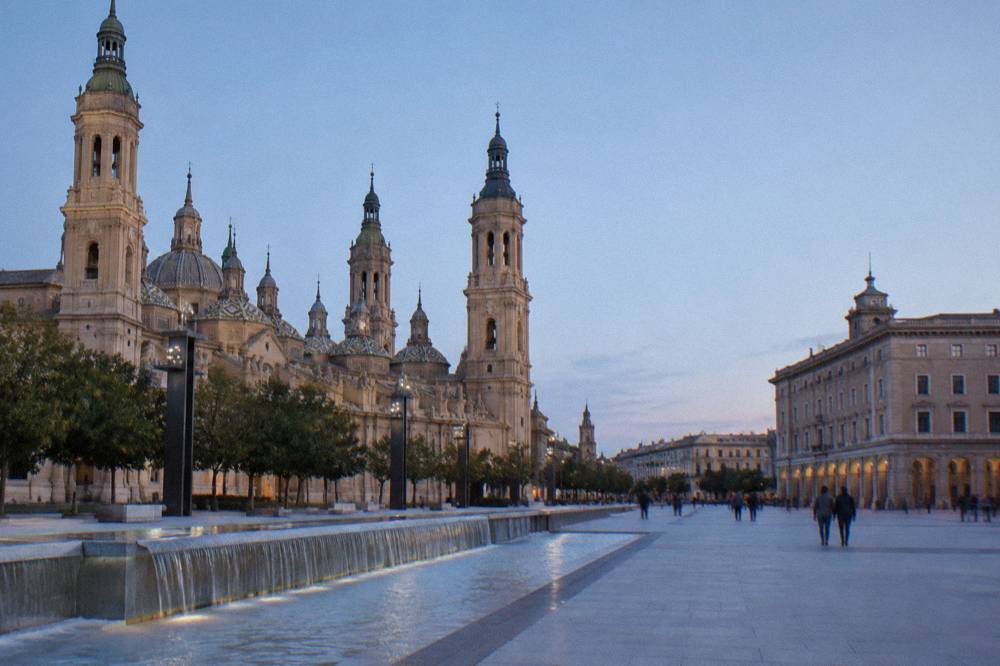
Zaragoza, the capital of Aragon on the Ebro, is the city most travellers sum up in a single photograph: the Basílica del Pilar reflected in the river. That photograph is honest, but it is incomplete. Behind the Plaza del Pilar sits a Roman forum under the pavement, a museum dedicated to origami, a free observation floor looking over four cultures, and a 1401 stone bridge guarded by bronze lions. The crowds thin out one block from the basilica, and everything behind that line belongs to the visitor willing to keep walking. This guide collects the quiet places, with the entry prices and free-entry days that the municipal monument timetable publishes for October.
What Are Zaragoza'S Hidden Gems Beyond The Basílica Del Pilar?
Zaragoza's hidden gems cluster into four groups: the free municipal viewpoints and museums, the four Caesaraugusta Roman sites, the quiet stretches of the Ebro away from the Puente de Piedra, and the green spaces of the Parque del Agua. The Torreón de la Zuda, the Centro de Historias, the Museo del Origami and the Museo del Fuego y los Bomberos are all verified open in the October timetable, and the Torreón and Centro de Historias cost nothing to enter.
The pattern across the whole city is that the famous buildings charge and the small ones do not. The municipal monument timetable lists the IAACC Pablo Serrano as free, the Centro de Historias as free, and the Torreón de la Zuda as free, while the big cathedral and palace carry paid tickets. A visitor building a day around the free layer sees a completely different Zaragoza from the one on the postcards.
The other pattern is depth. Zaragoza was Caesaraugusta, a Roman colony, and the city has excavated and roofed four separate Roman sites within a few streets of the Plaza del Pilar. Most visitors see none of them, because nothing about the modern shopfronts announces what is underneath. The free things to do in Zaragoza guide covers the no-cost layer in detail, and the general things to do in Zaragoza page places the gems in context with the headline sights.
Which Quiet Corners Of The Old Town Are Worth Finding?
The quiet corners worth finding are the Torreón de la Zuda's fifth-floor Mirador de las Cuatro Culturas, the Museo del Origami, the Centro de Historias, and the small squares behind La Seo where the Roman forum excavations sit beneath modern streets. The Torreón is open Monday to Saturday 10:00 to 14:00 and 16:30 to 20:00 and Sunday 10:00 to 14:00, free, and the Origami museum charges EUR 3 with free entry the first Tuesday and Sunday of each month.
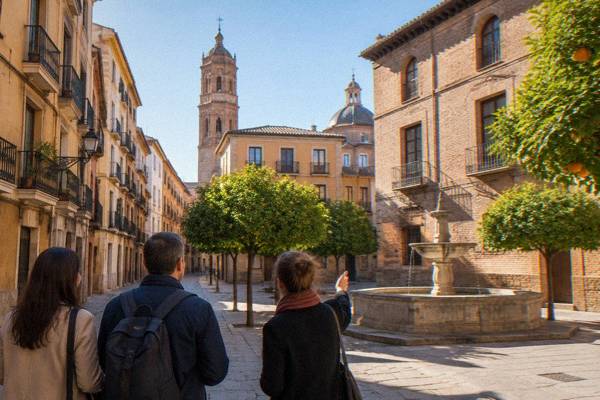
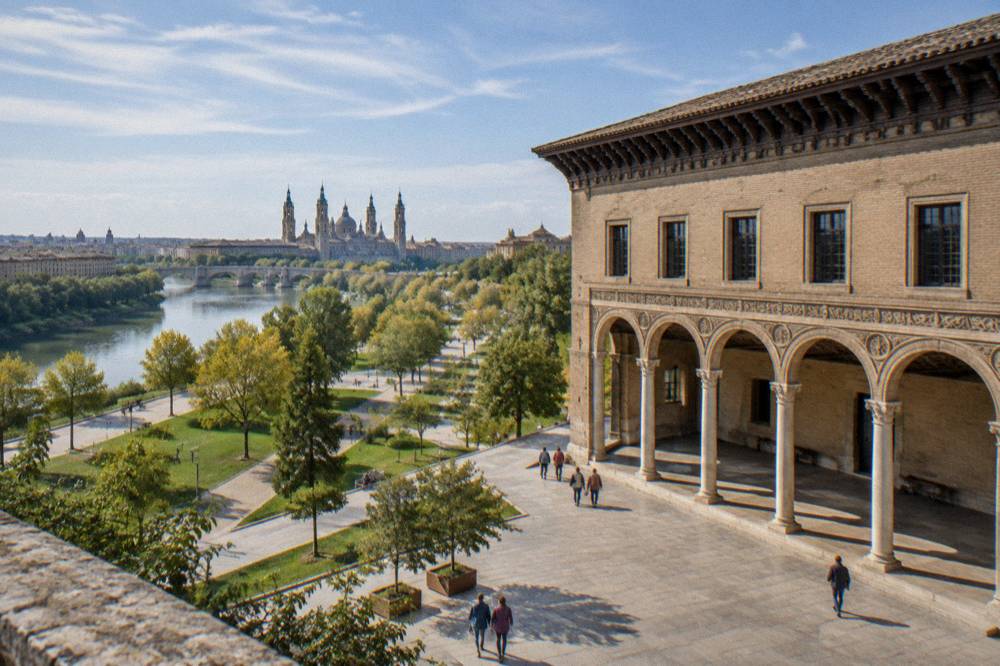
The Torreón de la Zuda is the easiest gem to overlook because it looks like an ordinary building on the Calle Don Jaime I, the main spine of the old town. The fifth floor carries the "Mirador de las cuatro culturas", a viewpoint named for the four peoples, Roman, Muslim, Jewish and Christian, whose layers make up the city. It costs nothing, and the municipal timetable confirms the hours above.
The Museo del Origami is stranger and better than it sounds. Paper folding has a genuine following in Zaragoza, and the museum charges EUR 3, free on the first Tuesday and first Sunday of the month. The Museo del Fuego y los Bomberos, the fire and firefighters museum, also charges EUR 3, open Tuesday to Saturday 10:00 to 19:00 and Sunday 10:00 to 14:00, free the first Sunday. The Centro de Historias, free, rounds out the set with the city's own story told in its own building.
| Hidden gem | What it is | Entry | Hours (municipal October timetable) |
|---|---|---|---|
| Torreón de la Zuda | Fifth-floor Mirador de las Cuatro Culturas viewpoint | Free | Mon-Sat 10:00-14:00 / 16:30-20:00, Sun 10:00-14:00 |
| Centro de Historias | City history museum | Free | Tue-Sat 10:00-14:00 / 17:00-21:00, Sun 10:00-14:30 |
| Museo del Origami | Paper-folding museum | EUR 3, free 1st Tue and Sun | Listed in the municipal timetable |
| Museo del Fuego y los Bomberos | Firefighting museum | EUR 3, free 1st Sunday | Tue-Sat 10:00-19:00, Sun 10:00-14:00 |
| IAACC Pablo Serrano | Contemporary art centre | Free | Tue-Sat 10:00-14:00 / 17:00-21:00, Sun 10:00-14:00 |
| Alma Mater Museum | Diocesan museum | EUR 5 | Listed in the municipal timetable |
A guided walk reaches several of these corners in one pass, which matters because they are scattered and unsigned. The Most Complete Tour of Zaragoza: Mysteries, Photos & Surprise builds its route around hidden gems rather than the postcard stops, from $25.23 per person and rated 4.9 from 14 reviews on the operator's live listing. Check availability if that route suits your dates.
What Are The Least-Visited Museums In Zaragoza?
The least-visited museums are the four Caesaraugusta Roman sites: the Foro at EUR 4, the Termas and the Puerto Fluvial at EUR 3 each, and the Teatro, with a four-museum bono at EUR 7 and a reduced EUR 5. All four are open Tuesday to Saturday 10:00 to 14:00 and 17:00 to 21:00 and Sunday and holidays 10:00 to 14:30, and entry is free on the first Sunday of the month.
The Caesaraugusta museums are the clearest hidden gems in the city because they sit directly under the tourist spine. The Foro preserves the forum of the Roman colony beneath the Plaza de la Seo. The Puerto Fluvial shows the Roman river port, a reminder that the Ebro was a working commercial artery. The Termas are the baths. The Teatro is the Roman theatre. Each is small, each is genuinely underground, and together they explain why Zaragoza exists where it does.
The bono makes the set cheap. At EUR 7 for all four, or EUR 5 reduced, the combined ticket undercuts buying the Foro and the two EUR 3 sites separately, and the first Sunday of the month makes the whole set free. Tickets are sold through the municipal culture ticketing site, and the timetable above comes from the municipal monument schedule for October.
| Caesaraugusta museum | What it preserves | Entry | Notes |
|---|---|---|---|
| Foro | The Roman forum beneath Plaza de la Seo | EUR 4 | Included in the EUR 7 bono |
| Puerto Fluvial | The Roman river port on the Ebro | EUR 3 | Included in the EUR 7 bono |
| Termas | Roman baths | EUR 3 | Included in the EUR 7 bono |
| Teatro | The Roman theatre | Included in bono pricing | Bono covers all four sites |
| Four-museum bono | All four sites | EUR 7, EUR 5 reduced | Free for all on the 1st Sunday of the month |
The Historical Tour of the Old District with a Guide, from $106.92 per person and rated 5 from 14 reviews, spends two and a half hours in exactly this layer of the city, the streets above and the excavations below, and its live listing carries the current calendar.
Where Does The Ebro Hide Zaragoza'S Quiet Sides?
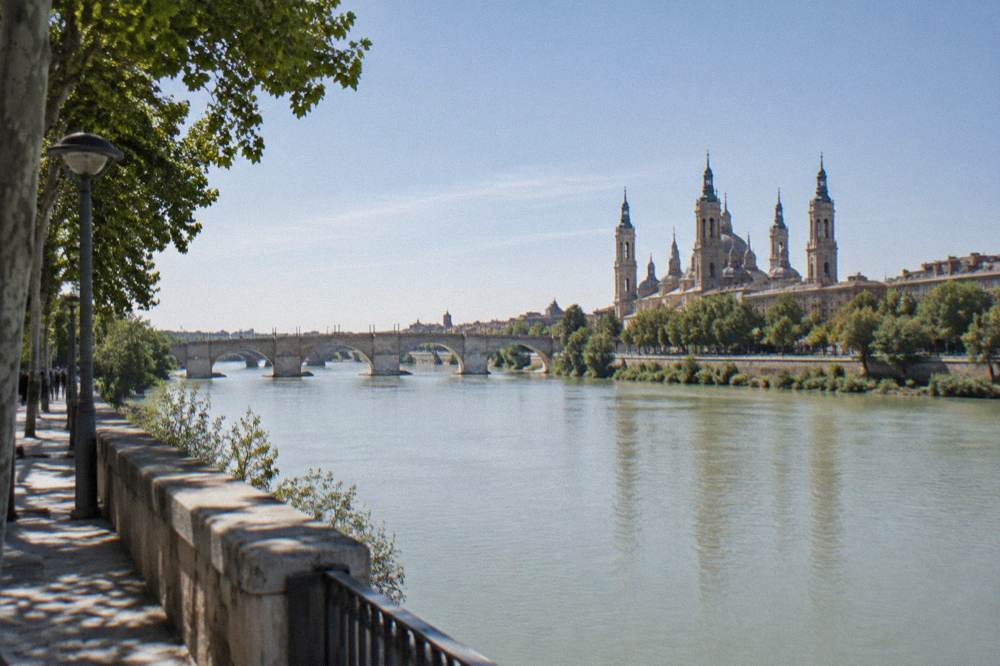
The Ebro hides its quiet sides on the far bank opposite the Basílica del Pilar, along the walk to the Puente de Piedra, and in the Ranillas meander where the Parque del Agua covers more than 120 hectares beside the Expo 2008 site. The Puente de Piedra itself is a hidden gem in plain sight: the current bridge was built from 1401 and opened in 1440, on the line of a Roman-era crossing, with its four bronze lions dating from 1991.
Most visitors photograph the Puente de Piedra from one spot and leave. The bridge rewards slower attention. The municipal heritage page records that Napoleonic troops blew up one of its arches in 1813, and that the lions, cast in bronze, took their place in 1991. Standing on the bridge at the end of the day, with the basilica upstream and the Ebro moving underneath, is the single best free view in the city.
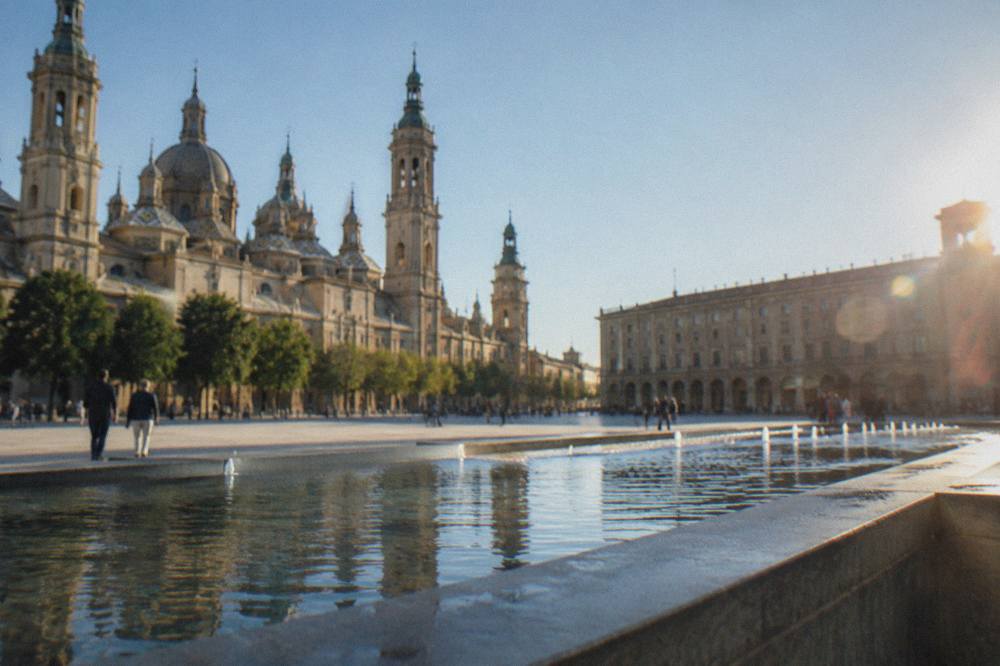
The far bank is where the quiet really starts. From the opposite shore the whole monumental skyline, the basilica, La Seo's tower and the stone bridge, reads as one composition, and the crowds stay on the other side. The Ebro river walk guide traces the full route along both banks.
Further downstream, the Parque del Agua Luis Buñuel occupies the Ranillas meander next to the ground laid out for Expo 2008. The municipal page describes it as more than 120 hectares, with two marked running circuits of 5 and 10 kilometres, and notes that it floods safely in big Ebro rises, which is part of its design. It was the first European green space to hold the Green Globe certification, according to the same page. It is a park, not a monument, and that is precisely why it stays empty of visitors.
Which Parks And Viewpoints Do Locals Keep To Themselves?
Locals keep the Parque del Agua, the Parque Grande and the fifth floor of the Torreón de la Zuda to themselves, and all three are free. The Parque del Agua's two running circuits measure 5 and 10 kilometres, the Torreón's Mirador de las Cuatro Culturas is open Monday to Saturday 10:00 to 14:00 and 16:30 to 20:00, and the municipal timetable lists no charge at any of the three.
The Parque Grande, the city's historic main park, sits south of the centre and serves the neighbourhoods around it rather than the visitor stream. It is a local park in the true sense: families, runners, shade. The Parque Grande guide covers its layout and its museum buildings.
What makes these places genuinely hidden is the distance from the Plaza del Pilar, which is short in kilometres and long in tourist psychology. Visitors budget their hours for the basilica tower and the Aljafería and never cross the river or walk south. A traveller with a spare afternoon and a bus ticket, EUR 1.70 single or EUR 0.55 with the Tarjeta Bus, has both parks almost to themselves on a weekday. More of these guides are collected on Zaragoza Travel Guide.
The transport layer is cheap enough to make spontaneity realistic. The 2026 Avanza fare table lists the urban bus and tram single at EUR 1.70, the Tarjeta Bus trip at EUR 0.55, and the card itself at EUR 7, valid on bus and tram. The tourist bus, a 24-hour hop-on hop-off with 16 stops on a 90-minute loop, costs EUR 10 and is cash only on the bus.
| Way of getting to the quiet places | Cost | Source |
|---|---|---|
| Urban bus or tram single | EUR 1.70 | 2026 Avanza fare table |
| Trip with Tarjeta Bus | EUR 0.55 | 2026 Avanza fare table |
| Tarjeta Bus card | EUR 7, valid bus and tram | 2026 Avanza fare table |
| Tourist bus, 24 h hop-on hop-off | EUR 10, 16 stops, cash on the bus | Municipal tourism page |
| Bizi day pass | EUR 1 fixed plus EUR 0.50 per trip up to 30 min | 2026 Bizi tariff page |
What Hidden Gems Sit Within Day-Trip Reach Of Zaragoza?
The hidden gems within day-trip reach are the ruined old town of Belchite, preserved as it was left by the Civil War, the olive-oil country around it, the Moncayo massif, and the small Aragonese towns of Tarazona, Sos del Rey Católico and Fuendetodos, Goya's birthplace. Guided day trips from the city cover Belchite with an olive-oil visit from $106.92 per person, and the operator's listings carry the current dates and pickups.
Belchite deserves sober words. Its old town was destroyed during the Civil War and left standing as a ruin, and a visit is a history lesson rather than a photo stop. The guided options pair the site with an olive-oil mill visit in the surrounding countryside, which is one of Aragon's quiet food traditions. The listing for the Midday Olive Oil Tour and Visit to Old Town of Belchite shows a five-hour trip from $106.92 per person, rated 5 from 35 reviews.
Fuendetodos, the village where Goya was born, is the art-lover's day trip, and the Moncayo natural park is the mountain one. The Fuendetodos and Moncayo natural park guides cover both. For a single overview of everything outside the city limits, the Pyrenees day trip guide and the individual day-trip pages collect the rest.
How Do You See Zaragoza'S Hidden Gems On A Budget?
You see Zaragoza's hidden gems on a budget by timing the free-entry days: the Caesaraugusta museums are free the first Sunday of the month, the Aljafería the first and third Sunday and Monday, and the Museo del Fuego y los Bomberos the first Sunday. The Torreón de la Zuda, the Centro de Historias and the IAACC Pablo Serrano are free every day they are open, and the 2026 Avanza fare table puts a bus or tram trip at EUR 0.55 with a Tarjeta Bus.
The free layer is generous enough that a whole weekend can be built on it. The table below collects every free-entry rule the municipal timetable publishes. The one rule to remember is that "first Sunday" and "first and third Sunday and Monday" are calendar-dependent, so a trip planned around them needs the dates checked before booking anything else.
| Site or museum | Standard entry | Free-entry rule |
|---|---|---|
| Torreón de la Zuda | Free | Free at all times |
| Centro de Historias | Free | Free at all times |
| IAACC Pablo Serrano | Free | Free at all times |
| Caesaraugusta museums | EUR 3-4, bono EUR 7 | Free the 1st Sunday of the month |
| Museo del Fuego y los Bomberos | EUR 3 | Free the 1st Sunday of the month |
| Museo del Origami | EUR 3 | Free the 1st Tuesday and Sunday |
| Aljafería | EUR 7 general, EUR 9 guided | Free the 1st and 3rd Sunday and Monday of each month |
A caution that saves disappointment: the municipal timetable lists the Palacio de Sastago as closed in October and the Museo Pablo Gargallo as temporarily closed, so neither belongs on an itinerary this month. The Zaragoza cost and budget guide works through the full daily maths, and the where to stay in Zaragoza guide places the budget neighbourhoods.
When Is The Best Time To See Zaragoza Without The Crowds?
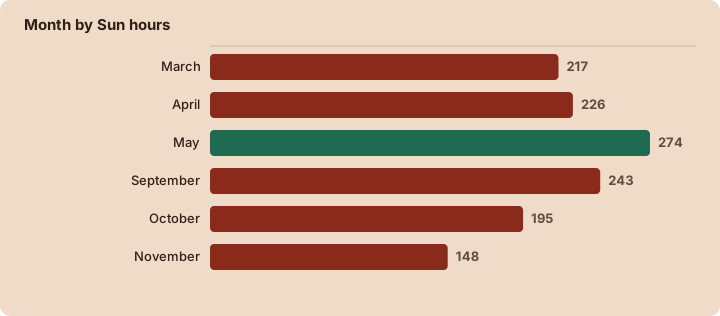
The best time to see Zaragoza without the crowds is late September to early October or March to April, when the 1981 to 2010 AEMET normals for the Zaragoza Aeropuerto station show mean temperatures of 21.2 C and 11.6 C respectively and the Fiestas del Pilar have not yet arrived. The fiestas run 10 to 18 October 2026 and fill the centre, so any quiet-focused visit should sit either side of that week.
The climate table matters here because Zaragoza's seasons are sharp. AEMET's 1981 to 2010 normals for the Zaragoza Aeropuerto station put July's mean maximum at 32.4 C with only 17 mm of rain, and January's mean minimum at 2.7 C. May, not a winter month, is the wettest month at 44 mm, and July and August tie as the driest at 17 mm. Summer afternoons are for shade, and spring and autumn are for walking.
| Month | Mean max C (1981-2010) | Mean min C (1981-2010) | Rain mm | Sun hours |
|---|---|---|---|---|
| March | 17.3 | 5.8 | 19 | 217 |
| April | 19.6 | 7.9 | 39 | 226 |
| May | 24.1 | 11.8 | 44 | 274 |
| September | 27.1 | 15.2 | 30 | 243 |
| October | 21.4 | 11.0 | 36 | 195 |
| November | 14.8 | 6.3 | 30 | 148 |
The full seasonal picture, including the summer heat and the frost days, sits in the Zaragoza weather guide, and the month-by-month trade-offs are worked through in the best time to visit Zaragoza. If the trip lands in the fiesta week anyway, the Fiestas del Pilar guide turns the crowds from a problem into the point.
How Do You Fit The Hidden Gems Into A Short Visit?
You fit the hidden gems into a short visit by anchoring on the old town, where the Torreón de la Zuda, the Caesaraugusta Foro, the Museo del Origami and the Ebro banks all sit within a short walk of the Plaza del Pilar, then giving a second block of time to the Parque del Agua. The Monumental Walking Tour in Old Town of Zaragoza, from $97.47 per person and rated 4.9 from 15 reviews, covers the old-town layer in one guided pass.
The logic is geographic. Everything in the first group is inside the Casco Histórico, so a single morning clears the Torreón viewpoint, the Foro and one or two small museums without any transport at all. The Parque del Agua needs the tram or a bus, so it becomes the second half of a day, paired with the Expo 2008 riverside around it.
For a fuller plan, the one day itinerary and the two day itinerary sequence the famous and the hidden together, and the Zaragoza travel planning guide handles the arrival logistics from Zaragoza-Delicias and the airport. The Monumental Walking Tour's live listing carries the current departure calendar for your dates.
Common Questions About Zaragoza'S Hidden Gems
What are the best hidden gems in Zaragoza, Spain?
The Torreón de la Zuda's free fifth-floor Mirador de las Cuatro Culturas, the four Caesaraugusta Roman museums, the Museo del Origami, the Museo del Fuego y los Bomberos, the far bank of the Ebro around the Puente de Piedra, and the Parque del Agua are the city's best hidden gems, all verified open in the municipal October timetable.
Are Zaragoza's hidden gems free?
Many are. The Torreón de la Zuda, the Centro de Historias and the IAACC Pablo Serrano are free at all times, the Caesaraugusta museums and the Museo del Fuego y los Bomberos are free the first Sunday of the month, the Museo del Origami is free the first Tuesday and Sunday, and the Aljafería is free the first and third Sunday and Monday of each month.
How much do the Caesaraugusta Roman museums cost?
The Foro costs EUR 4, the Termas and the Puerto Fluvial EUR 3 each, and a four-museum bono costs EUR 7, or EUR 5 reduced, with free entry for everyone on the first Sunday of the month, according to the municipal monument timetable.
Is the Parque del Agua worth visiting?
Yes, for anyone who wants green space rather than monuments. The municipal page describes more than 120 hectares in the Ranillas meander beside the Expo 2008 site, with running circuits of 5 and 10 kilometres, and it is usually quiet on weekdays.
What is the quietest time to visit Zaragoza's hidden gems?
Weekday mornings outside the Fiestas del Pilar, which run 10 to 18 October 2026. Spring and autumn suit walking best: AEMET's 1981 to 2010 normals for the Zaragoza Aeropuerto station show October means of 21.4 C maximum and 11.0 C minimum.
Can a guided tour show me Zaragoza's hidden side?
Yes. The Most Complete Tour of Zaragoza: Mysteries, Photos & Surprise, from $25.23 per person and rated 4.9 from 14 reviews, and the Historical Tour of the Old District with a Guide, from $106.92 per person and rated 5 from 14 reviews, both build their routes around the overlooked corners rather than the postcard stops.
The hidden layer of Zaragoza is not locked away or hard to reach; it is simply one street behind the basilica, one floor up a tower, and one bridge crossing further along the Ebro, waiting for anyone who walks past the first photograph.