Best Restaurants In Zaragoza
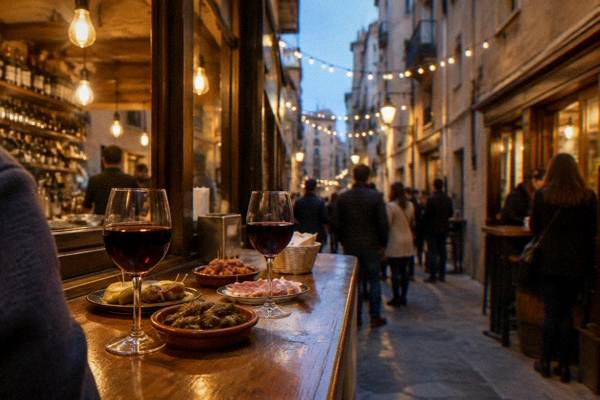
Zaragoza, the capital of Aragon on the Ebro, eats well and quietly: roast lamb, breadcrumb dishes, river fish and a tapas culture that runs from market stalls at midday to old-town counters at night. Here is how to find the best restaurants in Zaragoza without falling into a tourist trap.
Short answer
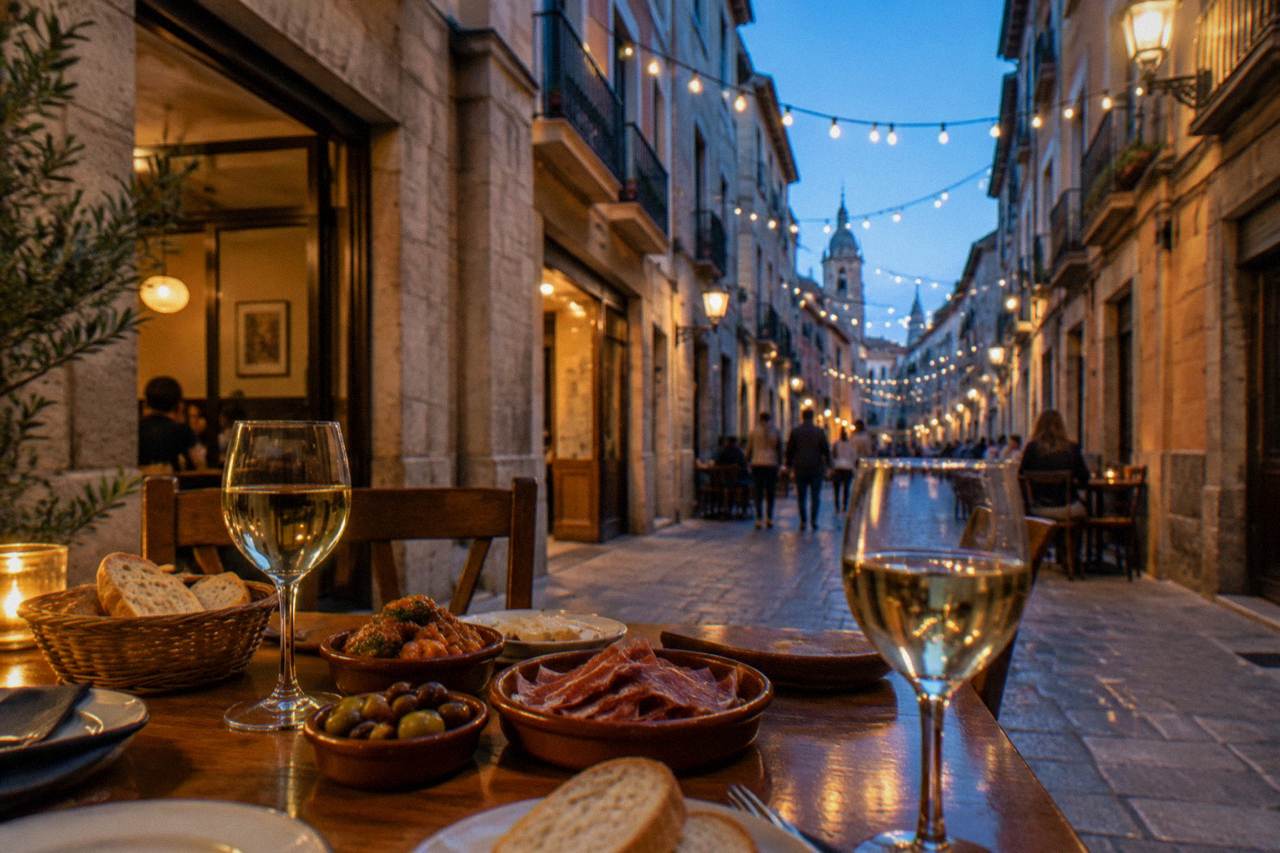
Zaragoza's best food is Aragonese home cooking: ternasco lamb, migas aragonesas, borage and thistle greens, D.O. Calatayud and Cariñena wines, and a tapas scene centred on the old town. No individual venue could be verified for this page, so it covers the dishes, the districts and the bookable food tours instead.
Zaragoza, the capital of Aragon on the Ebro, is one of Spain's great eating cities, and almost nobody plans a trip around its restaurants. That is the whole opportunity. The city sits in a region that produces lamb, olive oil, stone fruit and wine, it has a university population that keeps prices honest, and its old town packs tapas bars, historic dining rooms and market stalls into a walkable grid between the Basílica del Pilar and the Coso. This page is a guide to eating there well: which dishes define Aragonese cooking, how the tapas and market culture actually works, which districts to eat in, and which guided food experiences are worth your money.
One thing this page will not do is rank named venues. No individual restaurant, bar or market stall in Zaragoza could be verified to a primary source for this article, so instead of a top-ten list that might be out of date the moment it publishes, you get the durable layer: the food itself, the geography, and the bookable tours whose prices, ratings and durations come straight from their live listings. Pair it with the Zaragoza food guide for the dishes in depth and the best time to visit Zaragoza for when the eating is at its liveliest.
What Food Is Zaragoza Famous For?
Zaragoza's table is Aragonese cooking: ternasco de Aragón roast lamb, migas aragonesas breadcrumbs with grapes and pork, borage and thistle vegetable dishes, Ebro fish such as trout and eel, sweets like trenza de Almudevar and guirlache nougat, and red wines from the Cariñena and Calatayud denominations that surround the city. None of it is fussy, most of it is built for cold winters and hot summers, and the best versions sit on ordinary neighbourhood menus rather than destination-restaurant tasting cards.
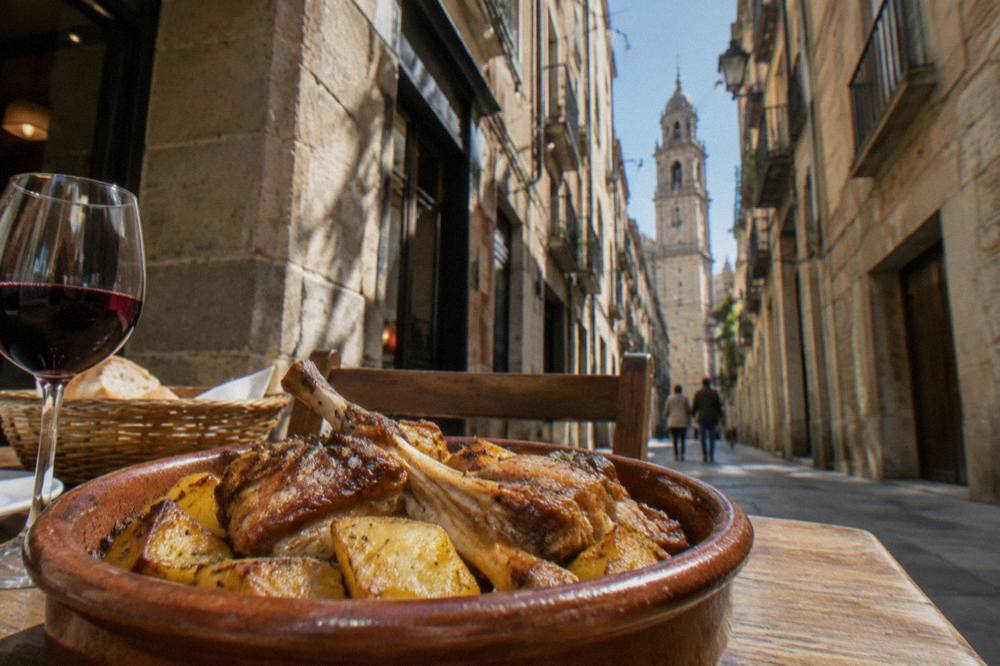
That plainness is the point. Aragon is a high, dry, inland region, and its cooking grew out of shepherding, river fishing and market gardening rather than court cuisine. The lamb is the headline: ternasco de Aragón is a young, milk-fed lamb with protected status, traditionally roasted with potatoes in a clay dish, and it appears on menus across the city from the old town to the suburbs. Migas aragonesas, fried breadcrumbs with garlic, chorizo and grapes, began as a shepherd's breakfast and now works as a hearty starter or a cold-evening main. If a menu offers both, order the migas to share and the lamb as your plate.
The vegetable side is quieter but just as distinctive. Borraja, borage, is a hairy-stemmed green that Aragonese cooks boil and dress with oil or white beans and chestnuts, and cardo, thistle, turns up in gratins at Christmas. Neither travels well, so Zaragoza is one of the few cities where eating them is normal. For sweets, look for a trenza de Almudevar, a braided brioche-like pastry, and guirlache, a hard almond-and-sugar nougat that is an Aragonese speciality. The full dish-by-dish breakdown, with the traditions behind each one, is in the site's Zaragoza food guide, and the sweets get their own page in the guide to Zaragoza sweets and pastries.
Which Traditional Aragonese Dishes Should You Order First?
Order ternasco de Aragón lamb, migas aragonesas, borage with beans or oil, and huevos al sartén con longaniza, and if the season is right, trout from the regional rivers. Those five dishes cover the shepherd, the garden, the river and the pig, which is the whole of traditional Aragonese cooking in one meal. Add a glass of Cariñena or Calatayud red, and a trenza pastry with coffee afterwards, and you have eaten Zaragoza.
The list below is a menu decoder, not a ranking. Each dish is described in general terms because no venue-specific details were verified for this page; what is stable is the dish itself and where it sits in an Aragonese meal.
| Dish | What It Is | Where It Fits |
|---|---|---|
| Ternasco de Aragón | Young milk-fed lamb, protected regional status, roasted with potatoes | The Sunday main, and the dish to order if you eat meat |
| Migas aragonesas | Fried breadcrumbs with garlic, chorizo, bacon and grapes | Starter or sharing plate, best in cold months |
| Borraja | Boiled borage greens dressed with oil, or with white beans | The vegetable Zaragoza eats and almost nowhere else does |
| Cardo en gratén | Thistle stalks baked in a cheese or béchamel gratin | Festive-season side, rich and warming |
| Huevos al sartén | Eggs fried with longaniza sausage and often peppers | Hearty old-town lunch plate |
| Trucha a la aragonesa | River trout, often with jamón | Lighter main, a nod to the region's rivers |
| Trenza de Almudevar | Braided sweet enriched dough | Breakfast or dessert with coffee |
| Guirlache | Hard almond-and-caramel nougat | With coffee, or a gift to take home |
Two practical notes. First, portions in traditional Aragonese places run large: a first course of migas plus a lamb main is a full day's eating, so a tapas approach, one dish per bar, suits the style of the city better than a single sit-down dinner. Second, the wine list is the region's quiet advantage. Cariñena and Calatayud are both Denominaciones de Origen within easy reach of the city, and their garnacha-based reds appear on local lists at far friendlier prices than the famous coastal names. The site's guide to the Cariñena wine region covers the wine country if you want to go to the source.
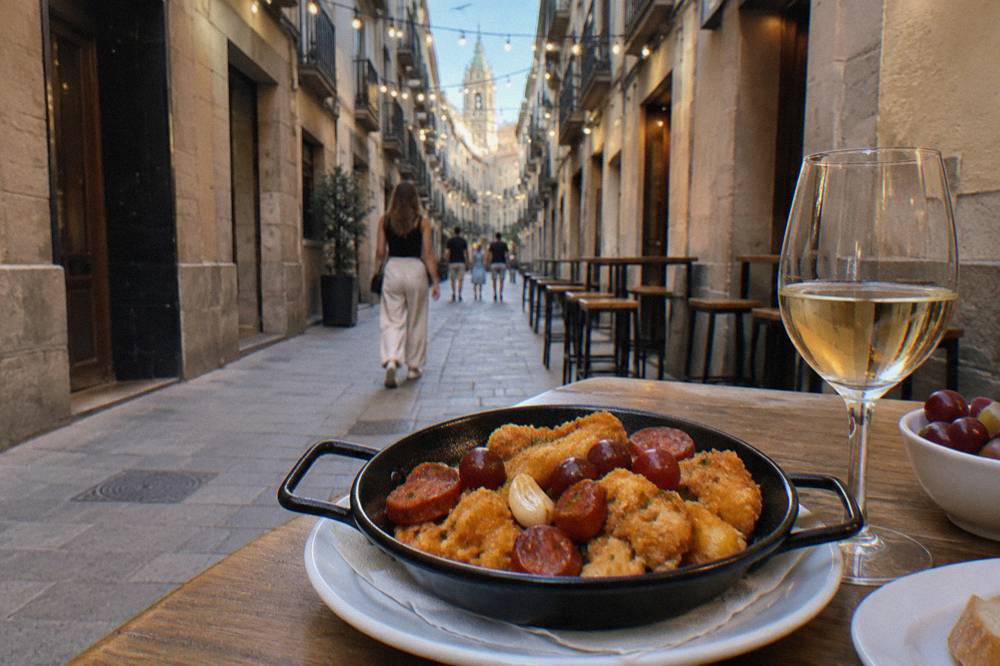
If you would rather have someone who knows the stalls and the kitchens make the introductions, the guided options below are the food experiences whose details are published on their live listings, from a market-and-tapas walk to a full cooking class. The related tour for this page is the Midday Market and Tapas Tour of Zaragoza, a food-tapas experience that moves from the market at midday into the old town's counters; you can also Check availability for it directly.
How Do You Pick A Good Restaurant In Zaragoza Without A Guidebook?
Judge a Zaragoza dining room by four signs: a short menu written in Spanish with the regional dishes on it, locals eating at the bar rather than at tables, a chalkboard or handwritten sheet for the day's dishes, and a location one or two streets off Plaza del Pilar rather than on it. A place with photographs of food on the menu, a host outside and a card of paella and sangria is aimed at turnover, not at Aragonese cooking.
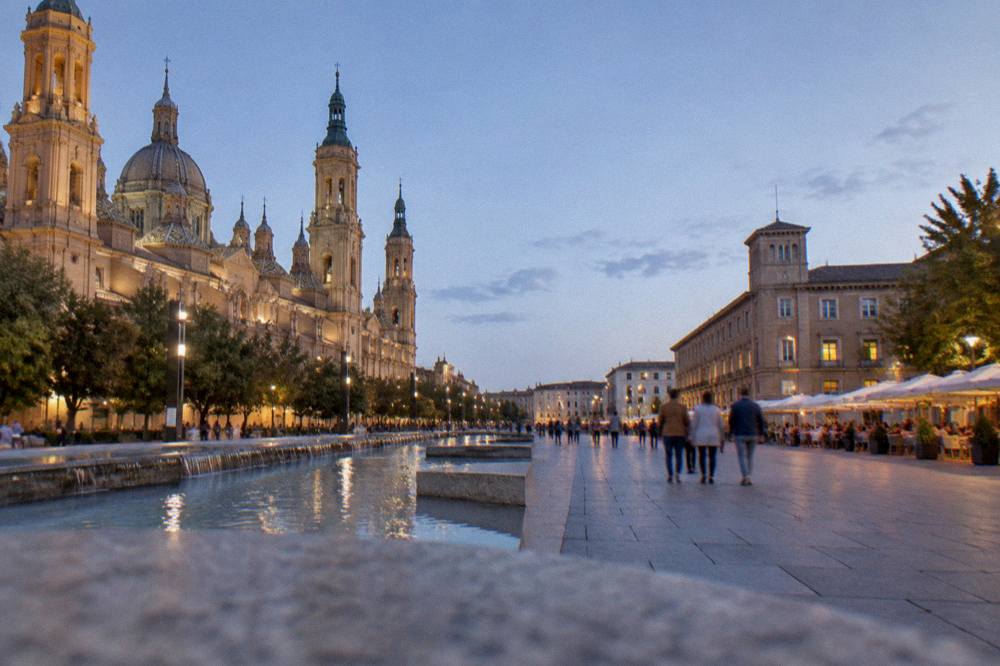
The geography helps you. The old town, the Casco Histórico, is where the tapas bars and the historic dining rooms concentrate, and its back streets, around the San Pablo district and the lanes between the Basílica del Pilar and La Seo, are where the neighbourhood places sit. The site's guides to the old town, San Pablo and La Magdalena describe the districts street by street. Further out, the Centro and Paseo de Independencia area carries more conventional sit-down restaurants, and the Delicias district and the Actur and Expo ribera are where the city eats on ordinary evenings, which is itself a good sign. The best meals in this city are rarely more than a five-minute walk from the famous squares, so there is no reason to settle for a place that fails the four-sign test.
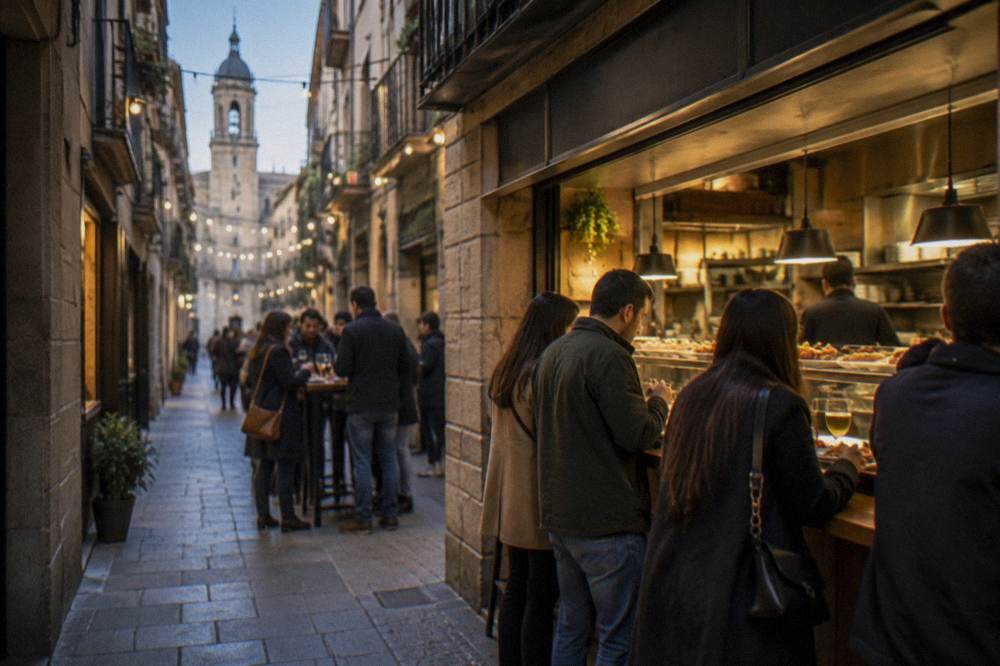
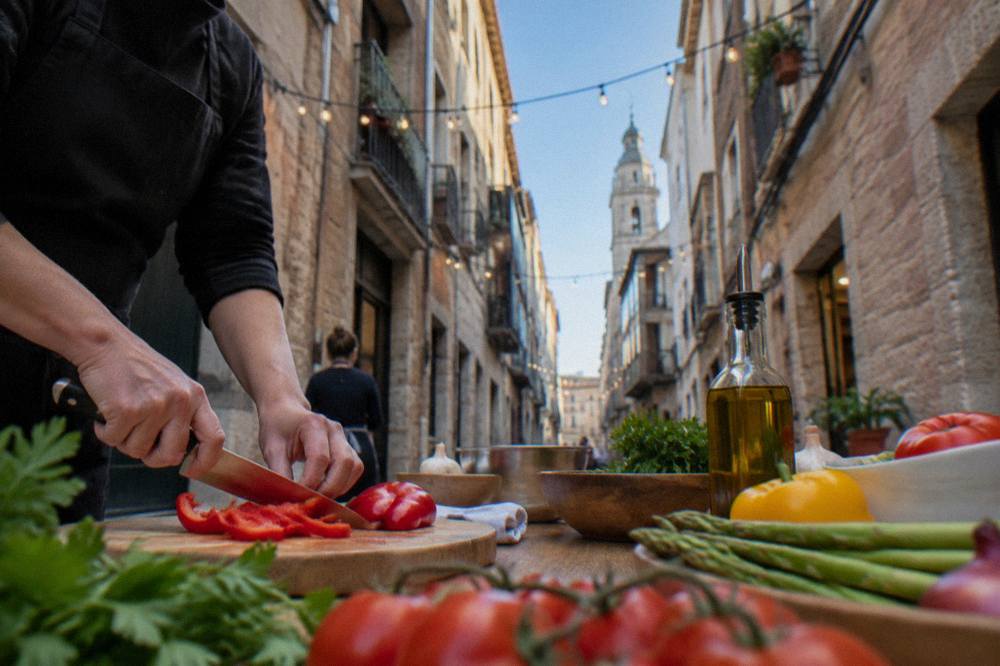
A market is the other reliable filter. Zaragoza's Mercado Central is the city's grand food hall and the place where restaurants and households buy, so what looks good there is what the kitchens are cooking this week; the site's Mercado Central guide covers it. A morning walk through the market, followed by a short guided tapas circuit, is the fastest way to calibrate your eye before you choose a restaurant on your own, and the tour card below does exactly that circuit with a local guide who knows the stallholders.
Timing matters as much as location. Zaragoza is an inland city with a dry continental climate, and AEMET's 1981 to 2010 normals for the Zaragoza Aeropuerto station put July's mean maximum at 32.4 C and January's at 10.5 C, so the eating rhythm shifts with the seasons: shaded interior tables and cold dishes in high summer, and long slow roasts when the cierzo wind makes the streets cold. The site's Zaragoza weather page carries the full climate picture.
| Month | Mean Max (C), 1981-2010 | Rain (mm) | What It Means For Eating Out |
|---|---|---|---|
| January | 10.5 | 21 | Roast-lamb weather, indoor bars |
| April | 19.6 | 39 | Spring produce, terrace season begins |
| July | 32.4 | 17 | Tapas and cold drinks, evening-only eating outdoors |
| October | 21.4 | 36 | Fiestas del Pilar month, everything busy |
| December | 10.8 | 21 | Cardo gratins, Christmas sweets |
What Does A Tapas Evening In Zaragoza Actually Look Like?
A tapas evening in Zaragoza is a moving meal: you take one or two small dishes and a drink at each bar, standing or perched at the counter, and walk to the next one, usually through the old town's lanes between Plaza del Pilar and the San Pablo district. The pattern is called a tapeo, the order is rarely written down, and the bill arrives as a chalked total or a slip at the end.
Two or three bars is a normal evening; five is a marathon, and the city's evening tapas tours are built around exactly this bar-hopping rhythm. The etiquette is simpler than it looks. Ask for the tapa, the small dish, rather than the ración, the full plate, if you want to keep moving; point at what is on display in the glass counter rather than asking for a menu; and eat standing at the bar, which is cheaper and faster than taking a table almost everywhere in Spain. Zaragoza's version of this culture leans on Aragonese ingredients, so expect lamb in small formats, local cheeses, vegetables such as borage when in season, and garnacha by the glass. Other pages covering the same trip are gathered on Zaragoza Travel Guide.
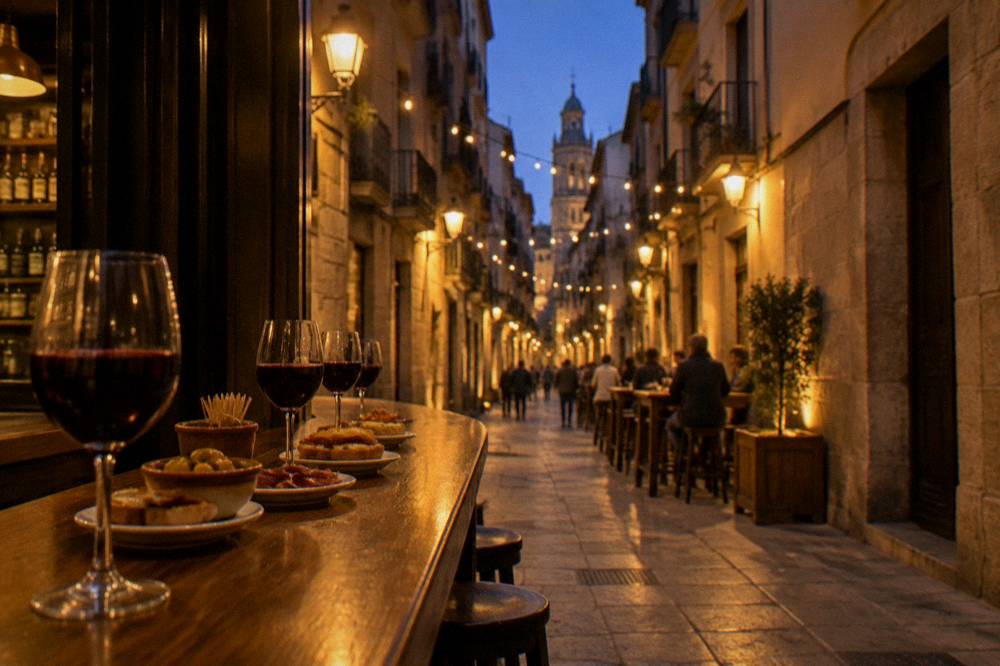
If you want the evening version led by someone who knows which counter to lean on, the guided options below are the food-tapas and wine experiences whose prices and ratings come from their live listings. The Evening Tapas Walking Tour in the Old Town runs three hours through the old town, and there is a wine-and-tapas variant for visitors who want the Cariñena and Calatayud glasses explained as they go.
Which Food And Wine Tours In Zaragoza Are Worth Booking?
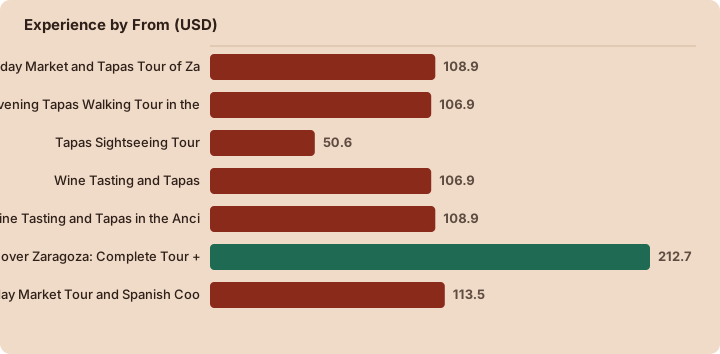
The food and wine experiences worth booking in Zaragoza split into three kinds: city tapas and market walks from 50.65 USD per person, wine tastings and winery day trips from 106.92 USD, and cooking classes and olive-oil day trips in the 108.94 to 280.95 USD band, with every figure taken from the operator's live listing.
The tapas walks suit a first evening, the winery trips suit a second day, and the cooking class suits anyone who wants to take the recipes home rather than just eat them.
The table below is the full food-and-drink selection from the guided options on this site, with each tour's published starting price, rating and duration exactly as its listing states them. Nothing else about any venue or operator was verified for this page, so treat the listing as the source of truth for what is included.
| Experience | Kind | From (USD) | Rating | Duration |
|---|---|---|---|---|
| Midday Market and Tapas Tour of Zaragoza | Market and tapas walk | 108.94 | 5 from 25 reviews | 3 hours |
| Evening Tapas Walking Tour in the Old Town | Evening tapas walk | 106.92 | 4.9 from 62 reviews | 3 hours |
| Tapas Sightseeing Tour | Tapas plus sights | 50.65 | 5 from 7 reviews | 3 hours |
| Wine Tasting and Tapas | City wine tasting | 106.92 | 5 from 21 reviews | 3 hours |
| Wine Tasting and Tapas in the Ancient Town | Old-town wine tasting | 108.94 | 5 from 75 reviews | 3 hours |
| Discover Zaragoza: Complete Tour + Wine and Tapas | Full city plus food | 212.71 | 4.9 from 7 reviews | 5 hours |
| Midday Market Tour and Spanish Cooking Class | Market plus cooking | 113.53 | 5 from 41 reviews | 3 hours |
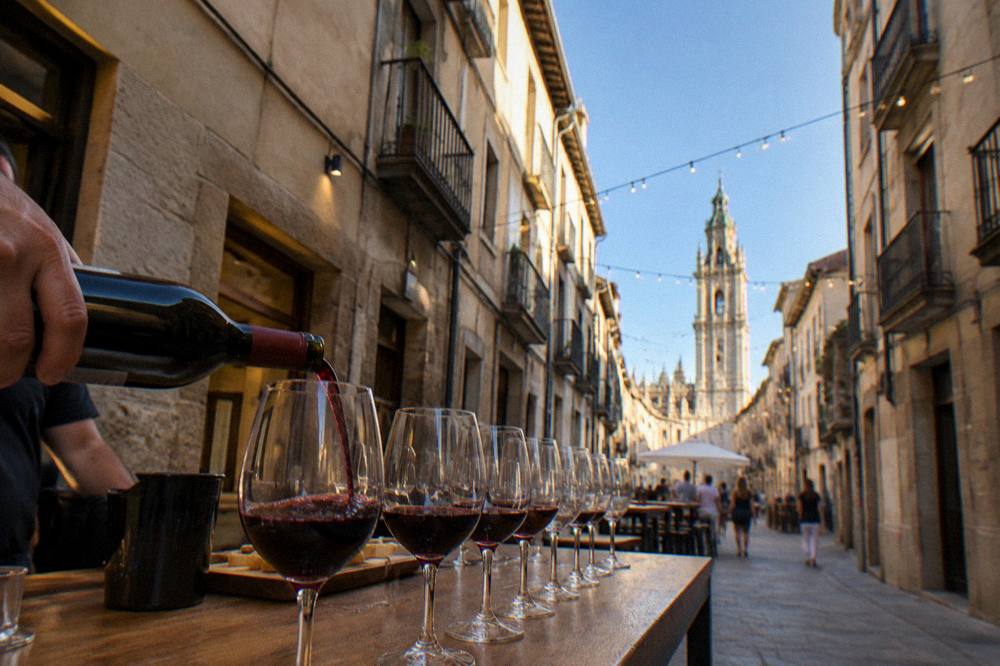
The wine country is the other half of the offer. Aragon's wineries sit outside the city, so the wine experiences are day trips by design, and their listings carry the details. The half-day winery trip runs from 166.28 USD, the olive-oil-and-winery combination from 172.01 USD, and the full-day Somontano excursion with a visit to Alquézar, one of Aragon's most beautiful villages, from 280.95 USD, all with a 5 rating on their listings. If your trip has room for one big day out, that Somontano day is the one that combines the wine, the mountains and a village in a single circuit.
Can You Cook Aragonese Food Yourself, Or Taste It At The Source?
Yes, and a cooking class is the most durable souvenir Zaragoza offers: the Midday Market Tour and Spanish Cooking Class pairs a market shop with a hands-on lesson for 113.53 USD per person, rated 5 from 41 reviews, and the olive-oil day trips take you to the mills and groves where the region's oil is pressed, from 106.92 USD. Both are bookable experiences with published prices on their listings, and both end with the only thing a restaurant cannot give you: the recipe in your hands.
The cooking class follows a logic that Aragonese households have used for generations: you buy what the market has that morning, and you cook it. A guided version compresses years of that instinct into one midday, and the market tour half doubles as the orientation walk that this page recommended earlier. The Midday Olive Oil Tour and Visit to Old Town of Belchite, from 106.92 USD and rated 5 from 35 reviews, adds the region's other liquid gold and a sobering walk through the Civil War ruins of Belchite, which the site's Belchite guide covers in full.
Where Should You Stay To Be Near The Best Eating?
Stay in the old town or the Centro and Paseo de Independencia area if eating out is the main purpose of your trip, because both put the tapas lanes, the Mercado Central and the traditional dining rooms within a short walk, and the tram and bus network covers everything else at 1.70 EUR a single. The Delicias district, by the train station, is a quieter, more local alternative with honest neighbourhood cooking and a fast connection into the centre.
The trade-offs are simple. The old town is where the evening tapeo happens, so staying there means you can walk home from the last bar; the site's where to stay in Zaragoza guide breaks the districts down, and the best hotels in Zaragoza and hostels and budget stays pages cover the beds. The transport arithmetic matters on a food trip because you will be moving at night: a single bus or tram fare is 1.70 EUR, or 0.55 EUR with the Tarjeta Bus per the 2026 Avanza fare table, so even the outer districts are cheap to eat your way home from.
| District | Food Character | Best For |
|---|---|---|
| Casco Histórico | Tapas bars, historic dining rooms, market lanes | Evening tapeo, first-time visitors |
| Centro / Paseo de Independencia | Sit-down restaurants, cafés, pastry shops | Long dinners, hotel-based stays |
| Delicias | Neighbourhood cooking near the station | Local meals, train arrivals |
| San Pablo | Old-town edge, traditional bars | A quieter tapeo circuit |
| Actur / Expo ribera | Suburban family restaurants | Living like a local |
Common Questions About Eating Out In Zaragoza
What food is Zaragoza famous for?
Ternasco de Aragón roast lamb, migas aragonesas, borage and thistle vegetables, river trout, trenza de Almudevar pastries and guirlache nougat, with Cariñena and Calatayud red wines alongside.
Can you recommend specific restaurants in Zaragoza?
No individual venue could be verified to a primary source for this page, so it names no restaurants. Use the four-sign test instead: a short Spanish menu, locals at the bar, a handwritten dish of the day, and a street one or two back from Plaza del Pilar.
What is the difference between a tapa and a ración?
A tapa is a small single-serving dish for eating at the bar while you move between places; a ración is a full plate for the table. On a tapeo you order tapas, on a sit-down dinner you order raciones.
Are food tours in Zaragoza worth it?
They are the fastest way past the tourist-facing bars. The tapas walks start at 50.65 USD and the cooking class at 113.53 USD per person, all with ratings of 4.9 or 5 on their live listings, and they put a local guide between you and the menu.
When is the best month to eat in Zaragoza?
October, during the Fiestas del Pilar from 10 to 18 October 2026, when the city is at its liveliest, though every bar is busy. AEMET's 1981 to 2010 normals put October's mean maximum at 21.4 C, comfortable for terraces and long evenings.
Eating your way through Zaragoza rewards the same instinct the city itself was built on: go where the locals go, order what the region produces, and give the evening enough room to move from one counter to the next. Start with the lamb and the migas, let the market tell you what is in season, and if you want a head start, the guided options above open the doors on the first afternoon.